
Tag Archives: School

Creating Hospitable Spaces

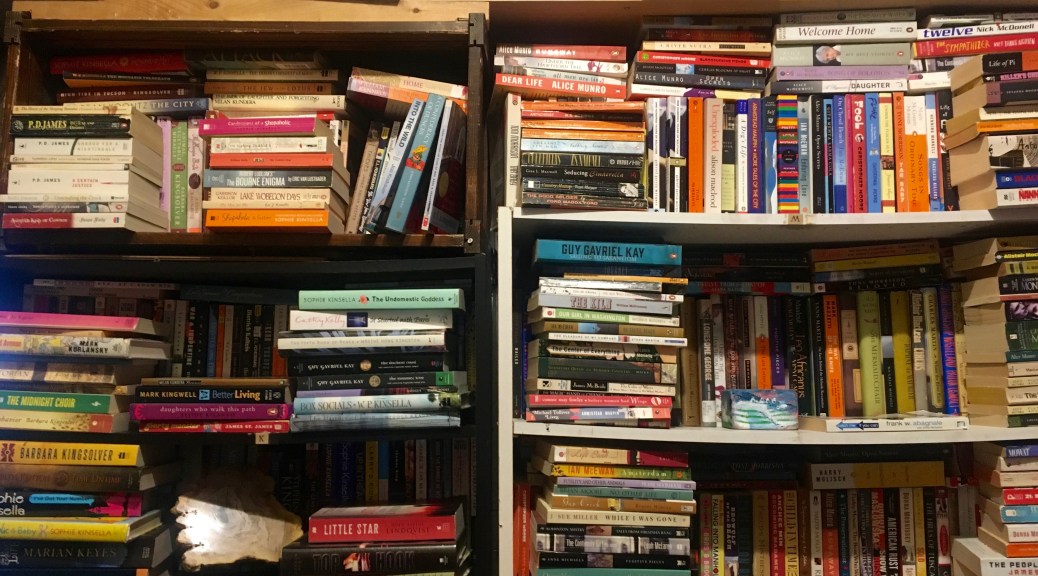
I love books. I love books and independent bookstores and used bookstores. I love reading and learning. I love being challenged by what I’m learning, or feeling my horizons expand. I love getting so deep into the notes and references and traveling wherever they take me, to other books and other authors. I love when books I’ve read are sources for other books, when writers I respect mention other writers I respect.

It was that love that drew me to BooksActually last weekend, one of Singapore’s independent bookstores. BooksActually is particularly special because it also operates its own publishing house, making it the go-to destination for books that are truly Singaporean and might not have a significance audience elsewhere. This is where I found I Will Survive, an anthology of stories from Singapore’s LGBTQ community. While much in the book touched me, it was a line in the foreword that first got me thinking. Juliana Toh writes, “I was left thinking of Henri Nouwen’s book Reaching Out, in which relationships are viewed as contexts for the creation of hospitable experiences.” This particular way of defining relationships was new to me and I found the idea of “hospitable” really compelling. Maybe it was because we’d just started school and my students were on my mind, or maybe it was because I was reading about LGBTQ young people, but I immediately extrapolated from Toh’s statement and began to wonder what our schools would look like if we moved from creating “safe spaces” for young people to creating “hospitable spaces” instead.

Defining
The word “hospitable” has two definitions:

  1. friendly and welcoming to visitors or guests
  2. (of an environment) pleasant and favorable for living in

It seems reasonable that a hospitable space would inherently be a safe one because anywhere that is “pleasant and favorable for living in” implies safety. I think this idea fits really well in the context of school settings. After all, school is where young people spend most of their time and we know that we all do better when we feel comfortable.

Take a moment to consider what we want for the young people in our care. We want them to learn, to grow, to explore. We want them to feel good, at ease, and valued as individuals. We want them to connect to each other, to create, and to become their best selves. We want them to see and care for those around them and we want them to make the world a better, more peaceful place.

Doing this work requires that our students feel more than safe, which is currently what we tout as a goal for our schools and classrooms. A learning environment in which the above aims can be realized would be closer to “pleasant and favorable” than safe.

Rethinking
In my eight years teaching, my classroom has always been a place where students wander in and out during breaks and before school and where they stop by after school to chat about a variety of things. Like the rest of us, students spend time in places that they enjoy, places that are welcoming and pleasant and where they feel affirmed, or perhaps part of a community.

So what would schools look like if we explicitly focused on creating hospitable spaces rather than safe spaces? The biggest difference, I think, would be in the ways we approach students as individuals. The goal of safe spaces is to provide a protective, inclusive environment that embraces diversity on a range of levels. I wonder, though, what would happen if we started emphasizing the need for welcoming, pleasant spaces instead of merely safe ones. A space can be safe without being welcoming, pleasant, and favorable, but places that are favorable to us, places we want to be, will more than likely also be safe.

Imagining
As a reader, I’m a believer in the power of language. George Orwell’s 1984 does a better job illustrating this than I could, so I refer you there. Now, let’s pretend “hospitable space” was a common phrase used to talk about schools, an idea accepted and embraced by the school community.

Creating hospitable spaces would require all involved to treat one another, at the minimum, as individuals with dignity. It would require authentic communication and connection, which would foster an environment in which adults and young people work together towards common goals and in which each learns from and guides the other. A hospitable space would be positive, energizing, and a place where we all enjoy spending time. It would be flexible, open-ended, exploratory, creative. It would be a space where we grow as individuals and as a community, a space where we’d recognize first our common humanity and then the diversity that makes us each who we are.

Imagine the learning that would happen in this hospitable space.

Moving Forward
Of course, not all of us work in school and with students. But we all develop relationships with others, whether friends or colleagues or romantic partners. We all want to feel loved, affirmed, and valued. We want to grow and help others grow, to become better tomorrow than we are today.

All relationships take on colors, flavors, and textures. All relationships are built inside a metaphoric space. So let that space be hospitable. Let yourself be open to others. All of our lives are better when we can take a breath and know that someone else is doing the same.

People-building

The difficulty in education is finding a balance. On the one hand, we’re tasked with delivering a curriculum. Be dynamic, we’re told. Get the students to discover, explore, and take responsibility for their learning. Give them options. Be accessible.

Oh.

And make sure they score well enough on the exam to get into a university of their choice. Show them how to be successful, provide ample opportunities to practice assessments, and give timely, constructive feedback.

Tension? Yes, without a doubt. But there’s also space. I think real learning happens within that space, learning in terms of how to be in the world.

This is the learning I like to think of as “people-building.”

The End
When it’s all said and done and our students graduate, what do we want? We want to know that we’ve raised good people who will do great things that have a positive impact on the world, on all of us. We want them to care about those around them, about their place in the world, and about who they are as individuals. We hope that they have grown as people, that they see themselves as agents of positive change, and that they recognize and uphold the human dignity of those around them.

At the end of the day, we hope we can say things like, “She’s come a long way” or “He worked so hard this year” or “I can’t wait to see what they become”. We worry about some of them, of course, but we hope we’ve set them up to live good lives.

We hope we’ve raised good people.

And we hope we’ve helped them understand who they are in the world around them, understand that they are part of building the world they want to live in. This is the learning that takes place in the space between curriculum and test. This is the learning that actually matters.

The Beginning
So how do we get there? Last year, I started the year asking my students about what they did not understand. A poster on my wall read, “What’s something you don’t understand that you want to understand by the end of this year?”. We returned to this question several times throughout the year and discussed it fully the last week of school. Some of the responses took me by pleasant surprise.

This year, though, I’m beginning with something slightly different. The question that I’m working on this year is deceptively simple:

Who do you want to be?

Not what. Who. Who do you want to be?

We spend a lot of time asking students about their future plans, even when we know their plans are often unrealistic and will likely change as they grow older and have more experiences. Becoming a certain type of person, however, matters a lot more as we choose whatever it is that we’re going to do.

Space
I’ve learned that there’s something special about asking a teenager, “What do you want to be when you grow up?”. It’s a different question than, “What are your plans?” because it allows them to imagine and it doesn’t presume that they have plans. Often, a dream exists but they don’t know how to get there. Acknowledging the dream means starting from a place of possibility.

But I’ve also learned that this question isn’t enough. A deeper question is “why?” – Why do you want to be a doctor? Why do you want to be a teacher? Why do you want to run a hotel? Why do you want to be a millionaire? Why do you want to be a firefighter?

It’s the “why” that brings us to “who”. I’ve known for a long time that I wanted to be a teacher. It took me much longer to figure out that I wanted to be a teacher in order to help young people understand their world. Teaching was the way I knew I could get there. I know more ways now, and think about them often. But who do I want to be? I can fill in a number of adjectives and I’ve learned that it doesn’t really matter what job I’m doing as long as I’m helping others see or experience something in a different way.

So what kind of person is that? Who is that? Those are questions I want my students to consider. I wonder what conversations would transpire if we focused on the internal elements of becoming rather than what it looks like on the outside. What we’re actually doing in any capacity with young people, really with all people, is making the choice to affirm or reject. The choice to love or be indifferent. The choice to accept or to disdain. This is what happens in the space between “dynamic curriculum” and “passing the test”. This is what matters.

People-building
Over the summer I met up with an old friend, also an educator now, and we talked about what matters with our students. At the end of the day, everyone will learn to read and write and do basic math. They’re going to be fine. The question is who will they become as individuals. In a perfect world, school would be about navigating what’s around us and about raising good people. But that’s not how the world is and that’s not how school is. There are other pressures, too.

I’ve found it helpful to remember, however, that what I want for my students, and what their parents want when we actually sit down to talk about it, is for them to be good people. What students usually want for the people around them, though it’s often harder to be introspective, is that they are good people. We tell students all the time, “This test doesn’t say anything about your worth as a person” and yet our education system and society are structured in a way that at least on paper, which carries a lot of weight, it does.

So as much as I can this year, I’m going to ask my students to think about who they want to be. Maybe we all have to play the school game to put them in a position to have choices, but good people generally turn out to do just fine. And maybe if we think more about who and why and less about what, we’ll be closer to a world that is better and more peaceful for all.

On Dreams

I think I’m a lucid dreamer. Or maybe this is just how dreams go. The science behind lucid dreaming is sketchy at best, as is much of the science behind sleep, but I know where I am in many of my dreams and make decisions about what I want to happen next. Once I’ve woken up, sometimes I can fall back into the dream and redo what has already “happened.” My own laughter has woken me more than once in the middle of the night, but I don’t think I’ve ever woken up in tears. I think the last time I had a nightmare was in college. I woke up with my arm outstretched, grabbing at something that wasn’t there.

I dreamed about this blog post last night. Or, rather, I dreamed about what I was actually thinking but couldn’t articulate when I spent a couple hours writing yesterday afternoon. That’s why I’m rewriting it.

We sleep. Neurons fire. Things make more sense once our brains have had time to process.

Last night I dreamed about love. I dreamed about what we used to talk about, where we used to go, what we used to do. I woke up with a physical ache that I soothed by resetting my breathing; I turned off that dream before rolling over to fall back asleep. I liked the memories. I didn’t like the longing. Dreams can pull us back into the past and the past can be dangerous. Just look at Gatsby.

I’ve learned that it is one thing to dwell on the past, to romanticize it and see it through rose-colored glasses, but it is quite another, I think, to look upon the past as an old friend, with the knowing smile that comes from the expected. The school year is ending, which means that this, too, will join the past. This is the time of year when I begin to look back on what was, which always leads me to think about what could be or could have been.

“The past” enters, stage left.

Since my life follows a school calendar, “next year” begins with the start of the school year in August and “this year” ends in just a week. Soon, I’ll speak of “last year,” meaning right now and the ten months preceding it. Where we are now, the “end of the year,” is a lot of fun, busy, and always bittersweet. At international schools, we say goodbye a lot and at least for me, it never gets easier. We turn over a lot of new leaves.

Sometimes I indulge when I find myself feeling sentimental. Sometimes I go up to the roof and sit in the dark, eyes closed, Lana del Rey or Bon Iver filling my ears, a soundtrack for feelings too wrapped up in themselves to be put to words. Sometimes I run through a few old favorites – things that were, unspoken dreams of things that will never be, imagination for what is still within the realm of possible but only on a technicality. My mind is filled with people I’ve known and loved, maybe for a long time or maybe they’re brand new. People come and go in transient cities, in international schools, and we’re often just counting time.

Thinking about the end of the year got me thinking about the past and is likely why I dreamed about a love I once had. The past becomes the story we tell ourselves, true or not, and it’s what we do with the story that matters. We write those stories all the time.

This is the end of the school year, prompting me to write the story about wanting to be better next year. This is the part when I am reminded of why, how, and who I was. Who I am. Who I can be. This is the part that reminds me of the people who have been with me along the way and I miss them, even if we have yet to be apart.

But of course, sometimes, my imagination catches me off guard, an enemy rather than a friend. Those are the times when I find myself angry or hurt, which are really just emotions that mask feeling fear. Maybe I don’t have nightmares because I can admit when I’m afraid. It doesn’t come up in the dark the way it used to and I don’t push it away as insistently anymore. I’ve learned to make my peace with people and times and events, recall what I’ve learned from them, and wish them well.

When I let my mind wander, I find myself writing stories about what I want and what I hope for, both for myself and for others. I invent conversations that I wish had taken place, rewrite conversations that could have easily gone another way, and imagine conversations yet to happen. Sometimes my imagination is like a tape that won’t stop running, no matter how many times I press stop. Sometimes it fills me such delight that it’s almost disappointing to keep my dreams to myself. And sometimes I catch myself with a silly grin on my face and can’t help but laugh out loud. I think about my people, the broad category that they are, and hold them tightly.

The end of the year is a time of transition. Living on a school calendar provides a convenient opportunity to make changes, restart, and try again, but it also forces endings and beginnings, often sooner than I’m ready for them.

But here we are. Already. So soon. And yet, we thought it would never come. Or so we told ourselves months ago. There’s so much time and never enough. This is the time to remember or say goodbye to people who have built my dreams, occupied a space in my mind and made it their own. It’s the time to send love and good wishes half the world over, to those gone, those going, and all of those I have left behind.

Thank you for being part of my story, part of my dreams. Lucky are those who will come to know you; lucky are we who already do.

DSC01276