
Different Eyes

“I don’t understand how you live in different places,” a close friend once said to me. “I just feel so much better knowing how things work.”

I can absolutely understand this. Sometimes, it really is tiring to attempt something utterly banal and find yourself needing to learn a new way of doing it. For example, ATM cards in Singapore only work in bank-specific ATMs and those of their partner banks. And I don’t mean being charged a fee – I mean the card actually being accepted by the machine. Just a few months ago, a quick trip to the grocery store for flour turned into a research project about which German flour is closest to North American all-purpose flour. So I completely understand my friend’s comment. Figuring out the intricacies of living in different societies, all the small things that we take for granted until forced to think about them, can certainly be inconvenient.

However, it can also be a phenomenal opportunity to learn that there are multiple ways of doing things; that there is not necessarily right or wrong, but often just different; that people of the world have so much to share with one another.

Life in Malaysia got easier when I let go of expectations for processes and procedures. The thing would happen, just on a different timeline and with more paperwork than I was used to. There would probably be setbacks and changes. No one else was agitated or anxious, so there was no reason I should be. Just because I wanted something and had a picture it my head of what that might look like did not mean it should, would, or needed to turn out that way. Things happened and society functioned. (Full disclosure: Steep learning curve and many tears, but I am far more relaxed about procedures and waiting times than I used to be.)

It’s not only a matter of bureaucracy, though. Being in a new place requires letting go of certain deeply ingrained values, or at least a willingness to look at them carefully. The issue of media censorship in Singapore was particularly interesting to me, as someone raised in American schools in which freedom of speech is touted as the value above all values. Just because I had always understood this issue one way did not mean I should only understand it one way. Just because one society functioned based on a certain set of norms did not mean the other should, or needed to, adhere to the same norms. My understanding of the word “free” has become far more nuanced, and I have a different appreciation for the types of roles that governments take.

More recently, a comment to a friend that came as naturally to me as breathing has given me pause. I listened for a few moments and responded, “Sounds like a productive day,” something I’ve said without thinking in response to many descriptions of many days. And then came the reply: “It was a nice day. A good day. It didn’t have to be productive.” Oh. Right. (I knew I moved to Europe for a reason.) We went on to talk about productivity as an American preoccupation, one used to judge how worthwhile our lives are. A few years ago, I wrote about the problems that lie in looking to be, and claiming to be, constantly busy. I argued then that we can choose differently. In my own life I often do, but there’s clearly a deeply rooted cultural understanding or expectation of which I was unaware.

It is interesting to have this pointed out, and confronting in that it requires me to look into myself and at how I am made. We are all shaped by our experiences, and I find these compelling to dissect. This does not mean discarding all of the “old” in favour of the “new”, but rather understanding the influences I want to maintain in my current worldview and those that might benefit from revision.

As I see it, cultivating open-minded curiosity about the world around us is how we grow. This is what I have learned in my journey through the world, and this is what I hope to continually learn as the journey moves forward.

“The voyage of discovery is not in seeking new landscapes, but in having new eyes.” – Marcel Proust

Coming of Age

I remember the moment when I realized I was no longer a child. But I know a few things about memory and I know that we make mistakes. Recall is often error-filled. It is malleable, fluid, heavily influenced by context and those around us. Yet, I would like to think that this moment existed as I remember it. And even if it did not, even if it’s entirely a figment of my imagination, it frames the beginning of an era that was significant to how I understand myself, others, and the world we share.

I am part of the American generation that finds commonality in where we were on September 11, 2001, the beginning of a time in which the US entered wars that are still ongoing. I remember where I was and what I said, or I think I do. But that is not the moment when I realized I was no longer a child.

I remember my dad watching TV in my parents’ bedroom and I remember asking him to explain to me what was happening. He talked about people doing terrible things and I asked why. I can’t remember what he said, but I walked away understanding, for the first time, that hatred and war don’t only exist in books.

That moment, I knew I was no longer a child.


There is a clear separation in my mind between life before and after grade 6, a separation that I knew existed but one that I did not delve into until a handful of years ago. When my parents split up for just under a year, I learned that adults are people, that love takes work, and that bad things really happen. They don’t only exist in books.

It is hard now to think about the anguish I felt as a not-quite-child at that time. It is hard to think about how awful I was in my actions towards people who were deeply hurting, even as I knew I was screaming only because there was something ripping me apart and I couldn’t make it stop.

The opening line of an essay I wrote when applying to university: “I used to make him cry and I did it on purpose.”

I was 11 and my world had shattered.

I was 11 and my world had shattered, which meant that I knew worlds could shatter. I knew impermanence, disappointment, fear, and a thousand emotions I could not name then and cannot name now.

But I learned, I think we all learned, lessons that I would not have learned any other way. I have always known that relationships are a choice. They take work, they take communication, they take people who care enough about each other to do something to be together. Love is a verb and sometimes the word itself is not enough. I have understood this for a long time.


Suicide bombers flew into Manhattan’s Twin Towers. Two months and two weeks later, my family lived in two houses and I watched adults cry. I cried with them and I was no longer a child.

However, it is one thing to understand and another thing to do. It is one thing to be aware and another thing to act. Lots of walls, lots of work, and so much safer to rebuild the walls than to stand tall without them.

We’re all afraid of being hurt, aren’t we?

And I have never wanted to hurt anyone. I do believe that most people feel this way. And this is what makes it hard to not only know what the right thing is, but to do it.


When I learned that the world and my world could change in seconds, I was no longer a child.

And there was no turning back.

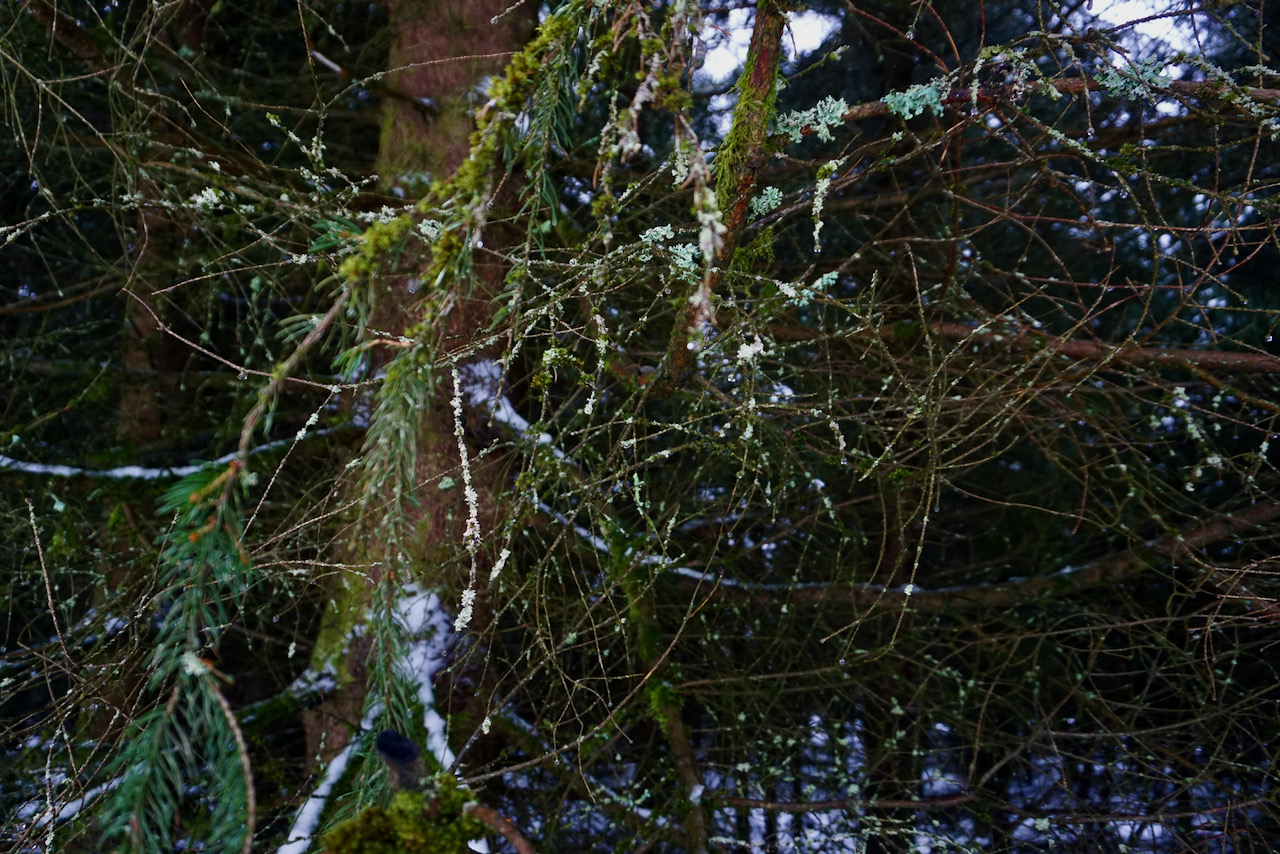
Thüringer Wald – January 2022

Six Months and One Year

I arrived in Germany six months ago. This is significant because six months is generally my benchmark for how I feel being in a new place. In the past, it has taken me six months to adjust, to feel comfortable, to feel like I know how to live wherever I’ve landed. It was like this in Malaysia, in New York, and during both of my stints in Singapore.

Interestingly, it has not been like this here. I’ve been here six months but I’ve felt right about being here for much longer, right in that the world I am living in makes sense to me. It’s been a while since I’ve known this feeling.

Certainly, it took time. July in particular was a rough month, one of those times I expected but for which there is no way to prepare, and my chest tightens just thinking about it. School started in August, which meant I had a purpose and a schedule, responsibilities and things to do. I met some people, started climbing in earnest again, met some more people. I felt and continue to feel incredibly fortunate.

Time moved. The weather changed. Days and weeks found a rhythm, the weather changed again, life took on a new pace. I learned to let go a little, to walk a little more slowly. I have become more comfortable focusing on walking rather than arriving, being rather than doing. Questions that had once been scary seemed not as scary, and the things that keep me awake at night (I’ve never been good at sleeping) have shifted in form and morphed in time.

The first time a friend said, “Welcome back,” I really was glad to be back. That has been true each time since.

If I’m honest, I am surprised and it’s a lovely feeling.

I had hoped for this, even as I tried not to have expectations. It would be nice to rest for a while.


It has been a year since I knew I was moving to a town in Germany that I needed a map to place. A year since the pressure of finding a job morphed into the anxiety of actually moving. A year since almost everyone, laughing with me, asked, “Are you sure? What are you going to do there?” The comment that reassured me was a simple one: “You’re not really a city girl,” a friend said. “You’re a kopi at the hawker girl. You’ll love it.” (I’m not though I’ve tried; I really am; I think I could.)

One year ago, I couldn’t sleep because of all the silly but critical things that ran through my mind once the big things were decided and then immediately put on hold. I was preoccupied with a concern that, once raised, became a focal point, a representation of simple things that become difficult when life changes. How was I supposed to get a driver’s license?

Where do we go for answers in the modern age? Google. And then down the rabbit hole. Past midnight, of course. (My mum always told us that nothing good happens after midnight, which reverberated in my sore head as I opened tab after tab.) I read this page and then this page.* And then I read them again. I sent a panicked message to a friend and kept reading.

The problem is that my driver’s license is from a US state that does not have reciprocity with Germany. At that time, a year ago, I knew the German words that everyone knows (Guten Tag, Auf Wiedersehen, Danke) and I knew that there was no way, absolutely no way, that I would be able to pass a written driving theory test in German. Now that I’ve been learning German for a year, I’m a lot more optimistic that this would one day be possible. I have also since learned that this test is available in English, though I don’t know whether this is also the case with the practical exam.

Six months is important in the world of foreign driver’s licenses, which brings us to the present. In many countries, including Germany, you are allowed a foreign driving license for six months. (In Malaysia, by contrast, I owned a car and drove on an International Driving Permit for a year.) I haven’t yet driven here, but I did get very, very lucky. In the end, I converted my US license to a Singapore license because I could easily manage a written test (available in Singapore’s four official languages), photocopy, passport photo, and several fees. Singapore has reciprocity with Germany. More copies, official translation, passport photo, more fees. Give up the Singapore license and collect the German license.

Moral of the story: Always look into the process of getting a driver’s license wherever you happen to live, whether or not you plan to drive. You never know when it will come in handy.


Six months and one year later, and my world has taken on a form I haven’t known. An adventure, they say, a journey. It is and it continues to be.

I have often returned to a line from Coldplay’s “The Scientist”: Nobody said it was easy; no one ever said it would be this hard. We played it over and over in high school, and it got old to the point where people would leave the room when a certain friend sat down at the piano.

We didn’t know it at the time, but it was right. To live (and this is a verb) a life is not the same as letting life pass by. It is not the same as passively accepting whatever comes because that is what has come. But it is also not about fighting. In many circumstances, though certainly not all, to live is about the attitude and behaviour with which we walk through the world. It is about open-mindedness, curiosity, flexibility, and being part of what exists around us.

Six months and one year later, I can say that it is not easy and sometimes, it really is hard. But I can also say that I am at peace with the choices I have made. This in itself has a been an adventure and continues to be a journey.


*I include the German Way blog not because I get any kickbacks – I do not – but because it was helpful to me and will hopefully be helpful to others.