All posts by Rebecca Michelle

Educator, traveler, reader, blogger. Loves learning, black coffee, and friendly people.

On Yoga and Writing

Today I thought that maybe I write for the same reasons that I practice yoga. It’s a way of accessing another part of the brain, another part of the body. Perhaps, if you’ll allow me the liberty, another part of the soul.

I was introduced to yoga over ten years ago and have maintained a regular practice since the beginning. It has evolved over time, naturally, and I have written at length on this blog about my experiences with yoga. It tends to come as no surprise to anyone who knows me that I practice both yoga and meditation, light incense, look for the spiritual. By this I mean, yoga is a way of accessing, through the body and breath, a different outlook on the world. It is a way of reaching, physically, to parts of my body that I might not fully notice otherwise; it is a way of reaching, spiritually, towards both energy and stillness, towards forces in the universe I cannot explain.

Towards forces in the universe I don’t need to explain.

Maybe I write because writing is a way of expressing what lives in the body, the sensations of being alive on this planet and looking up at the sky. Writing is a way to capture the pulse of energy that sweeps you away when you let it it. Writing brings sensation back to a foundation, back to a centre where it can be grasped, felt, explored.

I write because I am feeling and I practice yoga in order to feel.

Sometimes, and certainly the case in much of my journal writing, I don’t understand what I feel until I write it down. Moving from sensation to articulation requires a conscious slowing down, letting go, a certain objectivity that reduces an emotional component, or at least requires me to detach from it just enough to inquire into it, unpack it. This is what I mean when I say, as I have known to be true for a long time, I think better on paper.

Yoga moves the sensation through the body and begins an exploration of how the body is connected, constructed, understood. I was first fascinated, all those years ago, with the shapes I could create with a breath. Perhaps years of dance training facilitated the ease with which I found my body in a new form, or perhaps innately understanding the possibility of movement in the body meant that I have always approached yoga with curiosity. Let’s see where I am in this body today. And then let go of the body and move with the breath.
Or maybe I’m trying too hard in linking these two aspects of myself together. I have had profound experiences in both contexts, that of doing yoga and that of writing. I do not aim here to explain what those experiences were or where they came from, but rather to make the bold claim that they existed. There are things in the universe we cannot explain, and the statement of such is what makes the claim true.

What is true, however, is malleable. There are days when the body and mind flow as a unit more smoothly than on other days. There are days where we walk easily, calmly, gently though the world. There are days when we are literally and figuratively bent out of shape, and we may or may not know why, or days when someone else knows something is wrong even before we know it.
I cannot write without being vulnerable enough to look inside myself and there is always the threat, sometimes realized, of finding something I don’t like. I cannot practice yoga without the willingness to sometimes feel a little foolish, or to be humbled by what my body is and is not capable of. There’s an element of letting go of control in both contexts and a requirement for honesty, authenticity, sincerity that strips away whatever masks I happen to be wearing. It’s a question of how much I am willing to give in that moment, and the question is answered moment after moment.

Maybe yoga is the physical manifestation of what I look for in writing, or maybe writing is the intellectual element of synchronizing the breath and the body. That they come together in this way is what drives the continued exploration. The satisfaction, the sensation of which lives somewhere beneath the sternum and is captured by clauses and phrases, is in the journey itself.

As for the universe, the magnificence of which is unexplained as far as I am concerned, there is no answer within reach because there is no answer to find.
The Sky

The sky is changing.

My bike spent time in the shop this week, which meant I walked to work. At first I was annoyed, because of course there were things I’d planned to do on that first surprising morning and I wanted to get to work early to do them. I took a moment to be frustrated and then, because there was no other option, pulled myself out of my head and into the day.

This is when I noticed the sky changing. The gray was no longer steely and imposing, but softer, gentler. The light not hours away, but minutes. People riding without bike lights were suddenly less foolish and more visible. Morning was not long in coming, but rather already here.

Just over a year ago, when I first knew I was moving to Germany, I received photos of snow from the colleague I replaced. This was atypical, I was told, and I have since learned that snow like that, snow like the snow I grew up with, only happens every ten years or so.

When I was a child, we waited impatiently for snow days that never came, no matter how many spoons were carefully placed under pillows or pajamas worn inside out. Rochester, New York gets a lot of snow, or at least it used to, and we lived with it. The climate has certainly changed, but my parents’ photos of snow still look like I remember it. Lake effect, they say on the news, as though the type of snow makes any difference to children playing. I only remember one time when a snowball thrown contained more ice than snow and a neighbourhood boy went home crying; I’m sure that happened more than one time.

I remember climbing on the piles of shovelled snow to see the white, white world from a point higher than the lamppost in our yard. I remember the time my dad left his car at the top of the hill behind our house and hiked down, snow up to his waist. I used to keep sandbags in the trunk of my car so that I could drive through the hills leading to our neighbourhood, though sometimes I took the long way to avoid the sharpest right. There was always the danger of missing it. Cycling up that hill in the summer was no one’s idea of fun, so we never did. From the top, there was first a red barn and then fields and then sky.

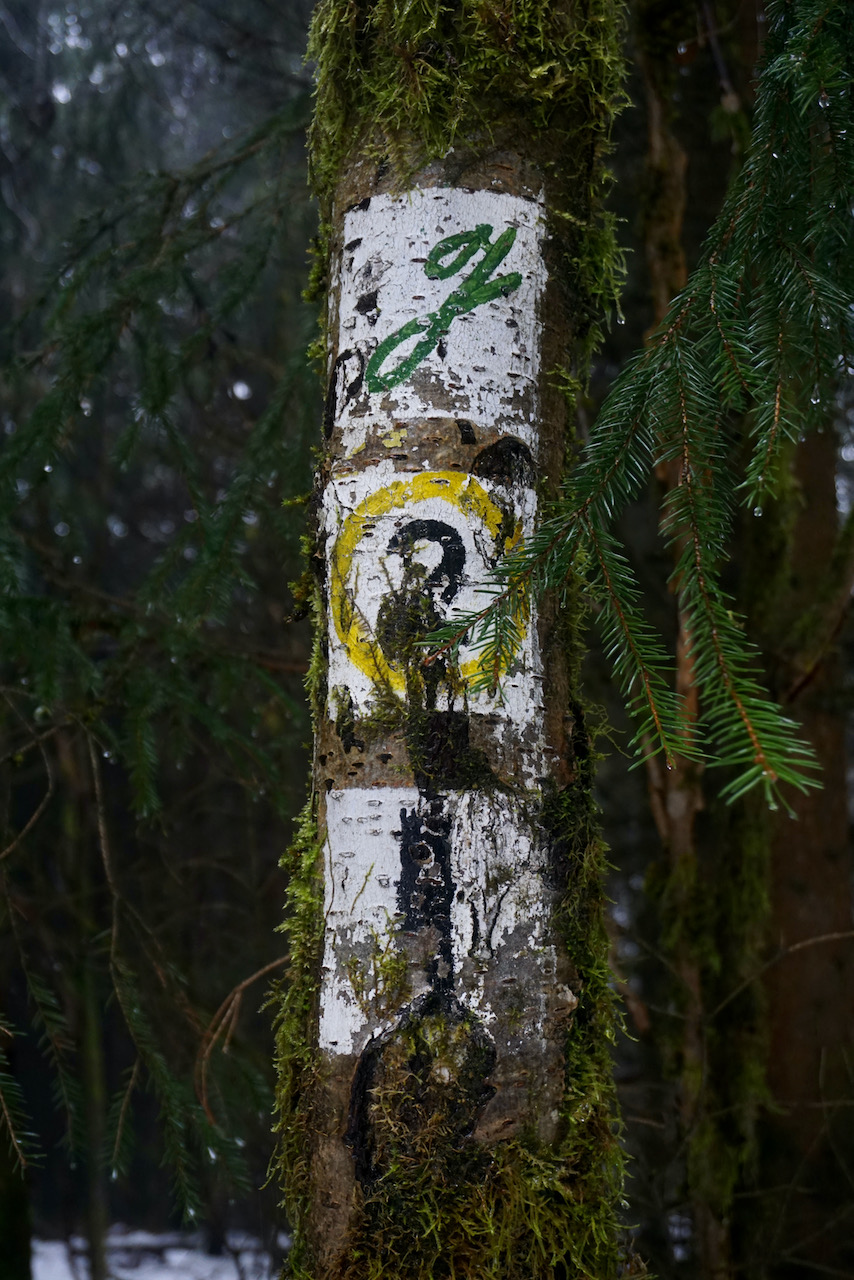
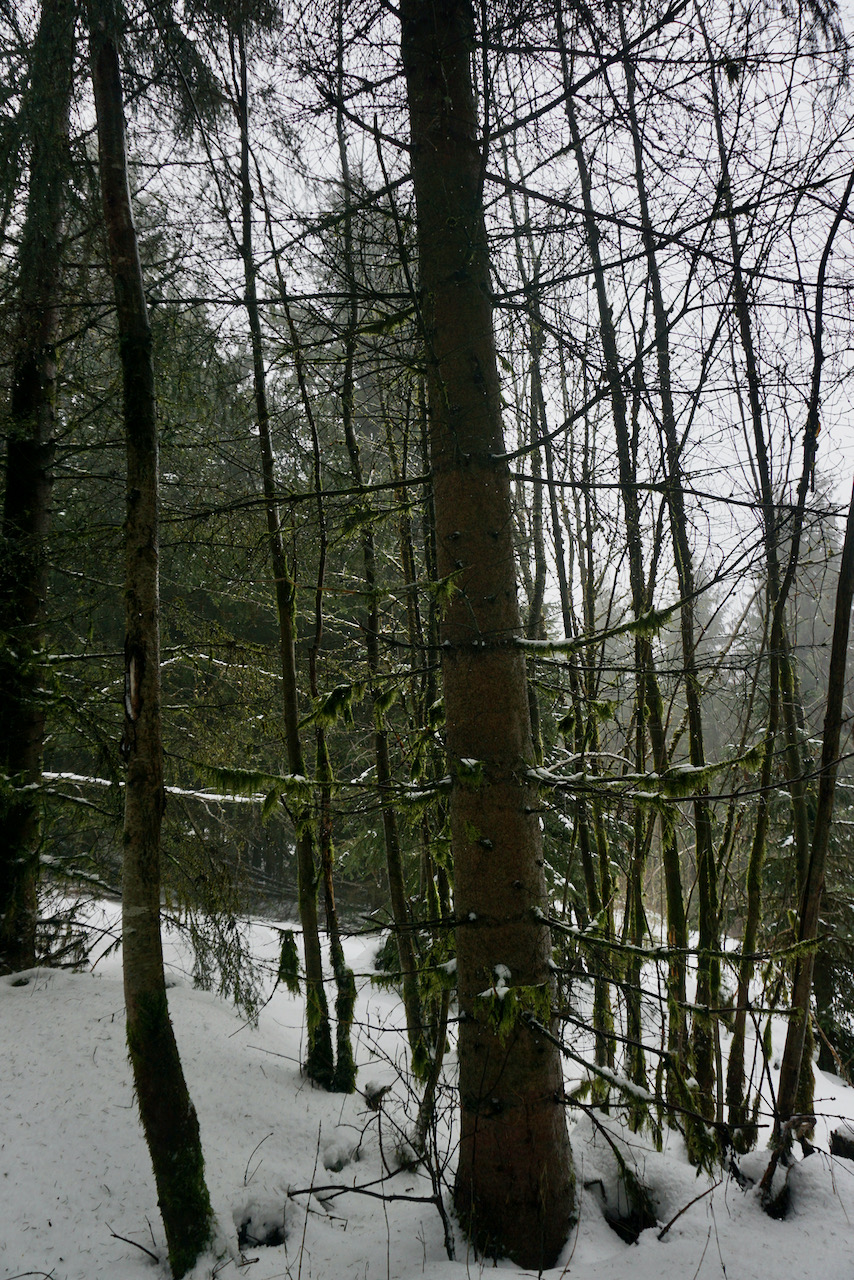
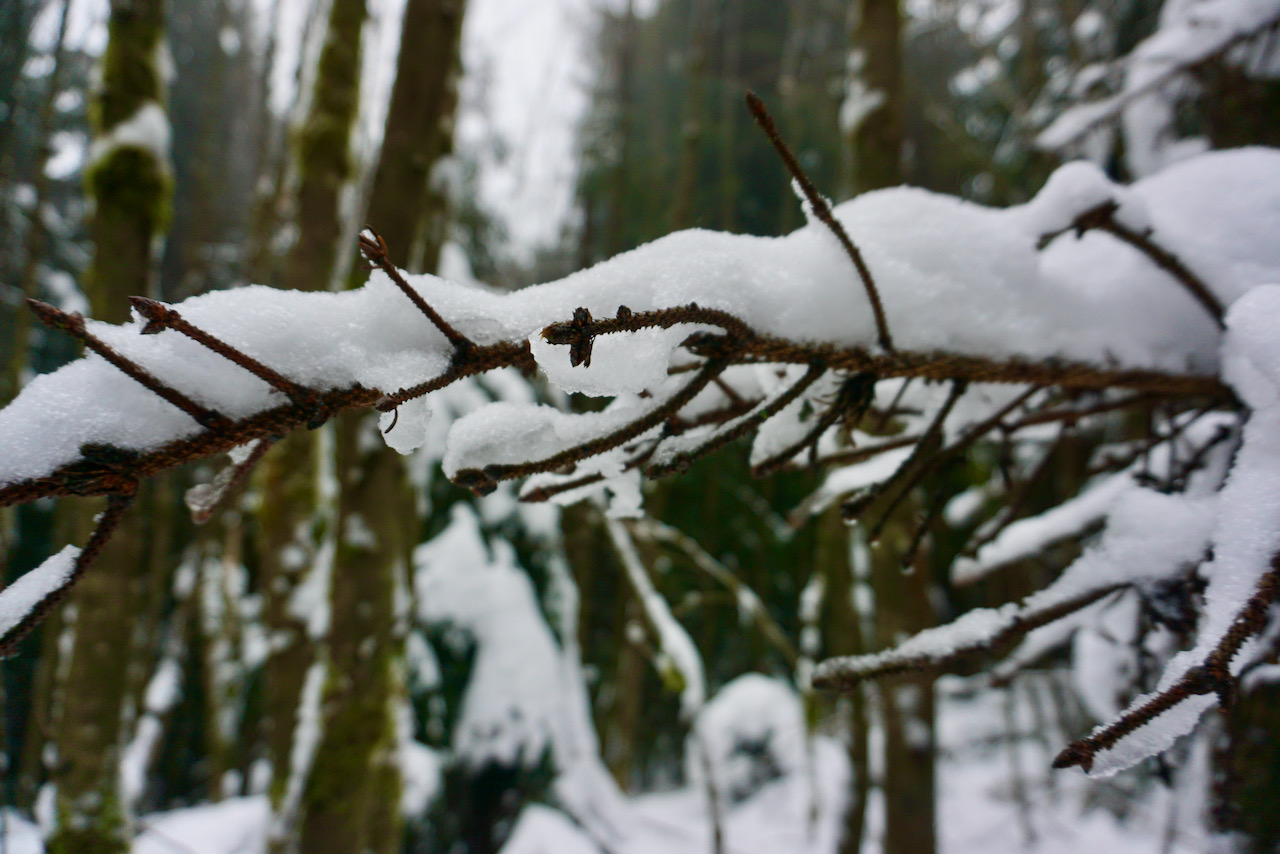
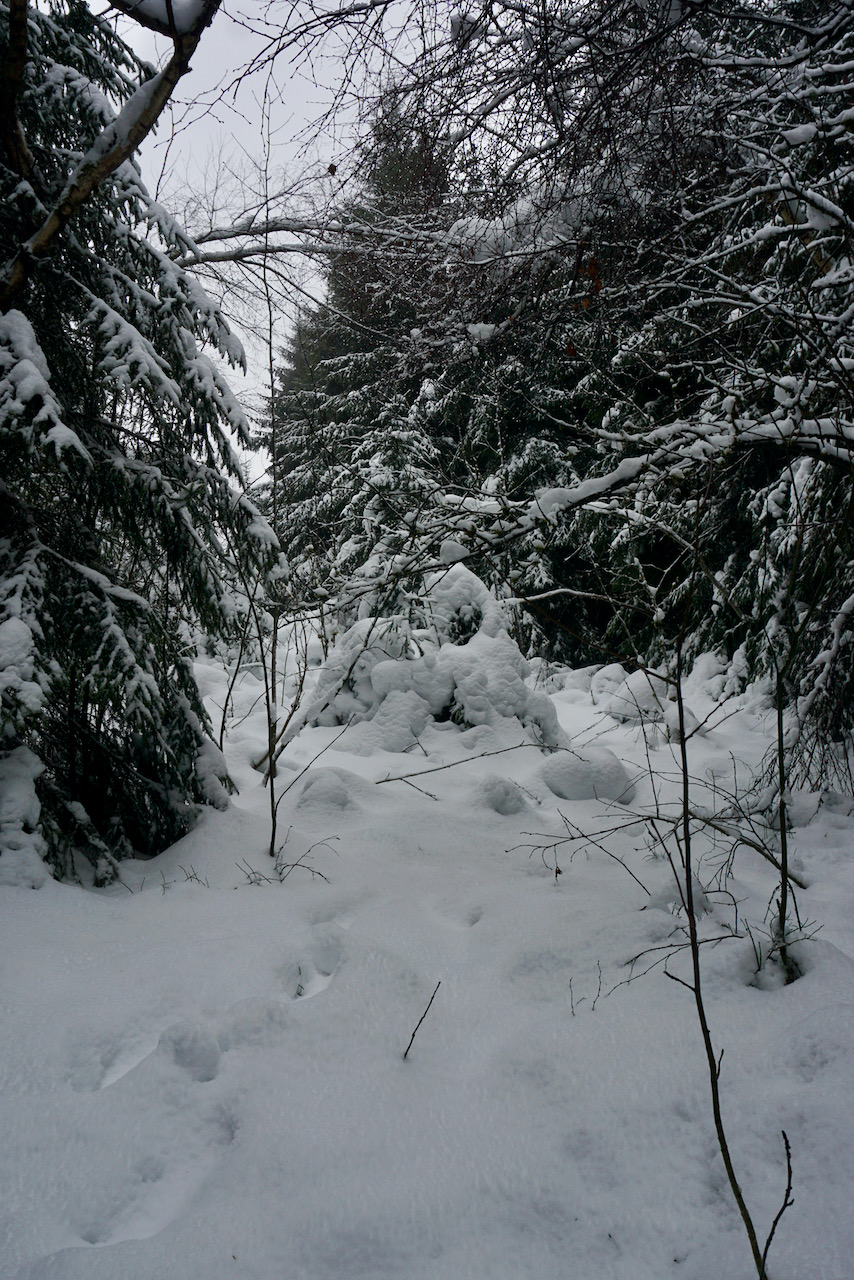
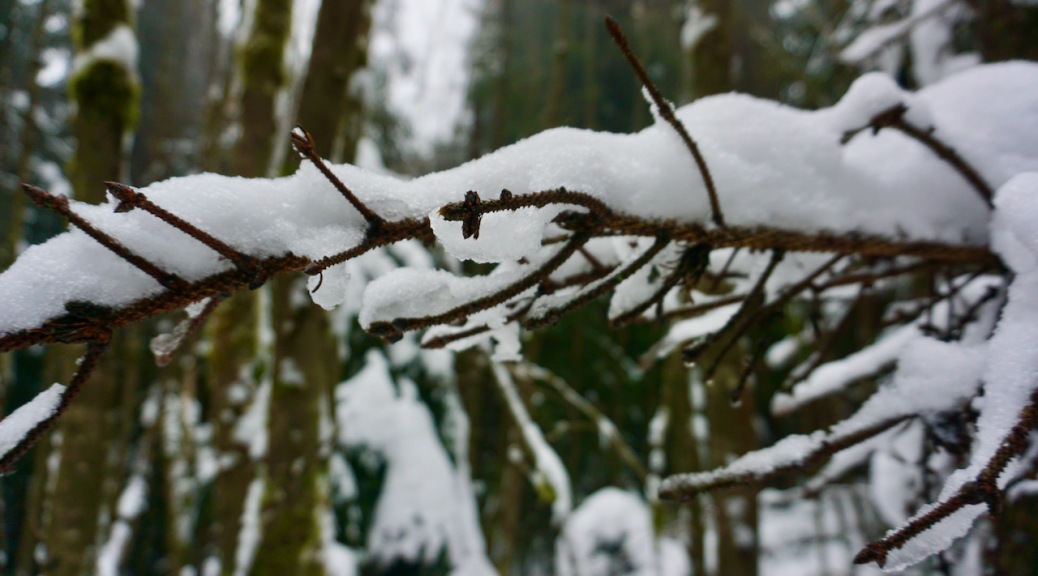
Two weekends ago, a group of friends headed south into the Thüringer Wald to go for a walk in the snow. There’s usually snow there, I’m told, though it rained there this winter, too.

We greeted cross-country skiers and children sledding and kept the dog away from other dogs. We climbed the tower and were forced back down by the wind, tossed two tiny frisbees, ate delicious muffins and other snacks pulled from backpacks. The boys had a snowball fight and I played photographer as the group built two snowmen. We played in the snow because that’s what snow is for.

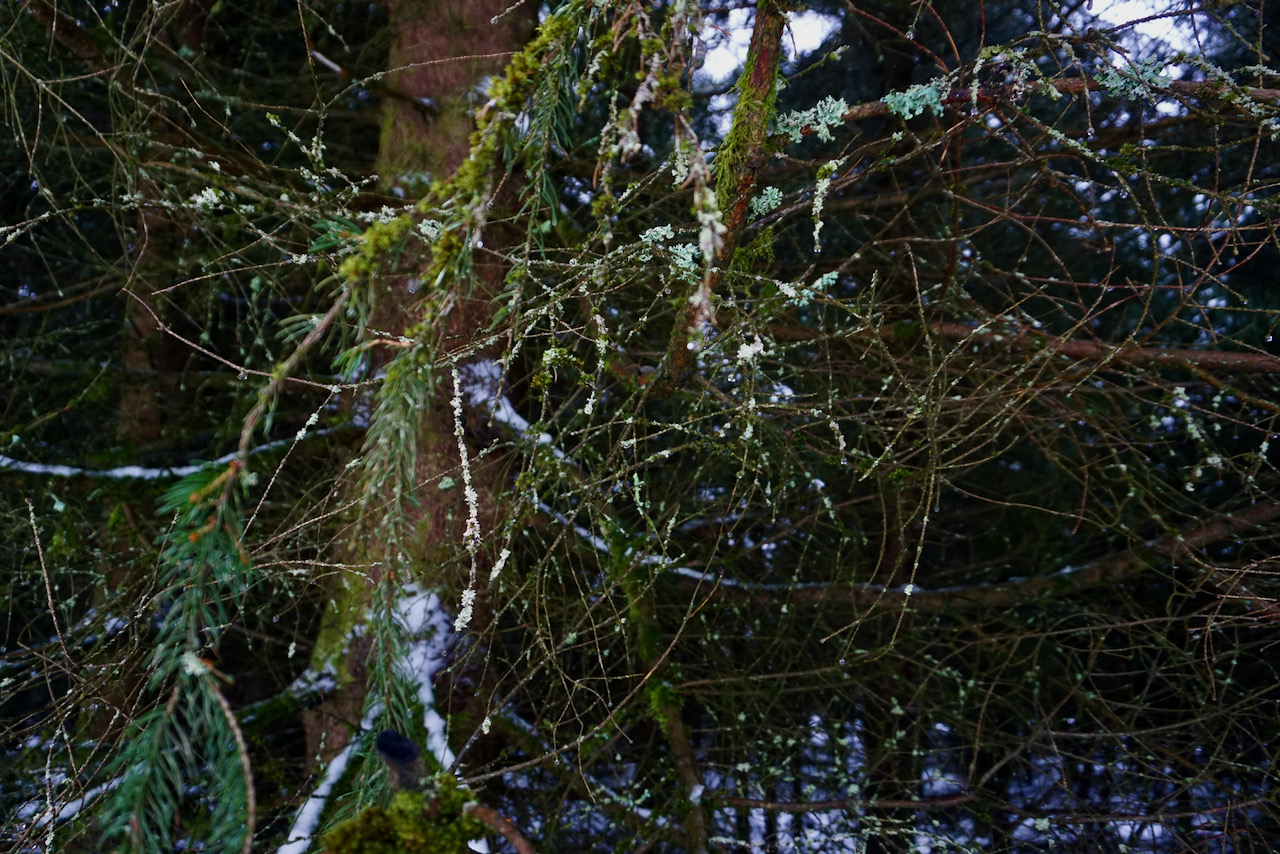
The sky was right there through the trees.

The house I grew up in was at the top of one hill and the bottom of a smaller hill, but a hill all the same. The cul-de-sac gave us a snow mountain that grew gradually larger each time the plows came around. As children, we named it after our street and friends from outside the neighbourhood would come over to play in the snow. Building a fort using recycling boxes was always harder than we thought it would be. My siblings and I used to dress our snowmen in Hawaiian shirts from our dress-up box; Mum always gave us a carrot for the nose.

You could see the world from the top of that hill. You could look out across neighbourhoods, across trees, and watch the leaves and the sky change. The atmosphere was peaceful well before I knew the world. Rochester is a cloudy place, a place where, on the rare sunny days, people suddenly come out of their shells. You see smiles where there were previously faces hidden in scarves or behind hoods of raincoats. People greet one another more warmly and the general mood is one of optimism and joy. I have never in my life known people so happy to see the sun.

I forgot that feeling, and then I left the equator and came to another place that is cloudy, a place where I have recently felt the sky change. In Singapore, my apartment looked out over a highway and then the towns to the north. When the sky took over the buildings in the distance, rain was coming. Sky in the tropics changes in a flash, in a second, and if you don’t look now, it’ll be different in a breath. Hours could pass watching it.

This week I saw the sky changing.

And today, clouds are moving across the sun.

Different Eyes

“I don’t understand how you live in different places,” a close friend once said to me. “I just feel so much better knowing how things work.”

I can absolutely understand this. Sometimes, it really is tiring to attempt something utterly banal and find yourself needing to learn a new way of doing it. For example, ATM cards in Singapore only work in bank-specific ATMs and those of their partner banks. And I don’t mean being charged a fee – I mean the card actually being accepted by the machine. Just a few months ago, a quick trip to the grocery store for flour turned into a research project about which German flour is closest to North American all-purpose flour. So I completely understand my friend’s comment. Figuring out the intricacies of living in different societies, all the small things that we take for granted until forced to think about them, can certainly be inconvenient.

However, it can also be a phenomenal opportunity to learn that there are multiple ways of doing things; that there is not necessarily right or wrong, but often just different; that people of the world have so much to share with one another.

Life in Malaysia got easier when I let go of expectations for processes and procedures. The thing would happen, just on a different timeline and with more paperwork than I was used to. There would probably be setbacks and changes. No one else was agitated or anxious, so there was no reason I should be. Just because I wanted something and had a picture it my head of what that might look like did not mean it should, would, or needed to turn out that way. Things happened and society functioned. (Full disclosure: Steep learning curve and many tears, but I am far more relaxed about procedures and waiting times than I used to be.)

It’s not only a matter of bureaucracy, though. Being in a new place requires letting go of certain deeply ingrained values, or at least a willingness to look at them carefully. The issue of media censorship in Singapore was particularly interesting to me, as someone raised in American schools in which freedom of speech is touted as the value above all values. Just because I had always understood this issue one way did not mean I should only understand it one way. Just because one society functioned based on a certain set of norms did not mean the other should, or needed to, adhere to the same norms. My understanding of the word “free” has become far more nuanced, and I have a different appreciation for the types of roles that governments take.

More recently, a comment to a friend that came as naturally to me as breathing has given me pause. I listened for a few moments and responded, “Sounds like a productive day,” something I’ve said without thinking in response to many descriptions of many days. And then came the reply: “It was a nice day. A good day. It didn’t have to be productive.” Oh. Right. (I knew I moved to Europe for a reason.) We went on to talk about productivity as an American preoccupation, one used to judge how worthwhile our lives are. A few years ago, I wrote about the problems that lie in looking to be, and claiming to be, constantly busy. I argued then that we can choose differently. In my own life I often do, but there’s clearly a deeply rooted cultural understanding or expectation of which I was unaware.

It is interesting to have this pointed out, and confronting in that it requires me to look into myself and at how I am made. We are all shaped by our experiences, and I find these compelling to dissect. This does not mean discarding all of the “old” in favour of the “new”, but rather understanding the influences I want to maintain in my current worldview and those that might benefit from revision.

As I see it, cultivating open-minded curiosity about the world around us is how we grow. This is what I have learned in my journey through the world, and this is what I hope to continually learn as the journey moves forward.

“The voyage of discovery is not in seeking new landscapes, but in having new eyes.” – Marcel Proust