All posts by Rebecca Michelle

Educator, traveler, reader, blogger. Loves learning, black coffee, and friendly people.

A Few Words from Ms. Frizzle

Children from the 90s (and probably their parents) will likely recognise the line: “Take chances, make mistakes, get messy!”. A bit of internet research told me that The Magic School Bus changed significantly when it was remade in 2017, the twentieth anniversary of its cancellation, and now I feel utterly ancient.

But that line, “Take chances, make mistakes, get messy!”, brings the same smile to my face as it did when I watched the fabulous Ms. Frizzle, the red-haired elementary school science teacher with the wildest themed dresses, bring learning to life. In elementary school I was given the character of Ms. Frizzle for a school play and I could not have been more excited. I had a denim long-sleeved dress that I used to wear with tights (elementary school in the 90s, folks) and my mum pinned toy plastic fruits all over it to create a Ms. Frizzle look. An older student wrapped my hair in bright orange yarn that was a nightmare to remove. But Ms. Frizzle I was.

This came back to me earlier today when I was riding my bike to school. I was feeling extremely pleased with myself for replacing the tube in the rear tire with a tube I’d previously patched, a lifeskill that I had just performed independently for the first time. It might be embarrassing that I’ve only learned to do this at age 30 but I was just so tickled by it. It was a lovely sense of accomplishment and its impact on me led to more significant reflections on my role as an educator.

As a high school teacher, I’ve spent my career encouraging young people to try new things. At my current school, we have gone as far as making our Theory of Knowledge course pass/fail in order to encourage students to take academic risks without having to fear significant consequences. With this model, we can fully live our words: It’s okay to try something and it’s okay if it doesn’t go well because we can try something else next time.

In a broader context, it’s easy to talk about creating safe, supportive, inclusive educational environments. But it is essential (and much harder) to build them with honesty and intentionality. We can’t claim that it’s important to learn from mistakes, for instance, if we don’t allow students the chance to make them without repercussions.

Anyone who has ever learned anything has likely experienced a moment of doubt. Doing something new for the first time certainly has that potential and this can be confronting. Yet, we demand courage of young people far more frequently than we, the adults, are willing to accept for ourselves. And even when we expect the mistakes from young people, we are often not particularly forgiving when they occur.

The gravity of these thoughts are in sharp contrast to my experience in yesterday’s bike fixing endeavours, which ultimately extended to the brakes and the chain once I headed out for a test ride. It took multiple scrubs in the shower to get the grease off my hands, feet, legs, and arms (mhm true story) and I had to wash the freshly washed floor (I wish I were kidding) twice to get the black streaks off porous white tile. I giggled inwardly the whole time.

Imagine if more of our world could be like that.

We know that our early experiences socialize us to the world we live in and inform our understanding for a very long time. Some never learn to think beyond the black-and-white world of childhood, and others cast it all away without recognising its power or value. I think there’s a beautiful place to find in the middle when we have the opportunities to play in the sandbox with abandon, to make a mess knowing that putting it back together is feasible. Had I not been able to fix the bike, a few phone calls would have brought me to a friend’s house or to the uncle shop down the street. If I couldn’t scrub the floor to my satisfaction, they sell cleaning products for far bigger jobs than this.

And what this experience reminded me is that repairing and reconstructing is probably far more possible in most circumstances than we might think. A bit of courage and a lot of humility are appropriate here and this is all part of what it means to live fully. When the world seems too large to handle it not because it is, but because we have not put ourselves in a place where we’re willing to take the risks associated with trying to manage it.

“Take chances, make mistakes, get messy!” Ms. Frizzle taught. Worse comes to worst, we have to take the responsibility of cleaning up.
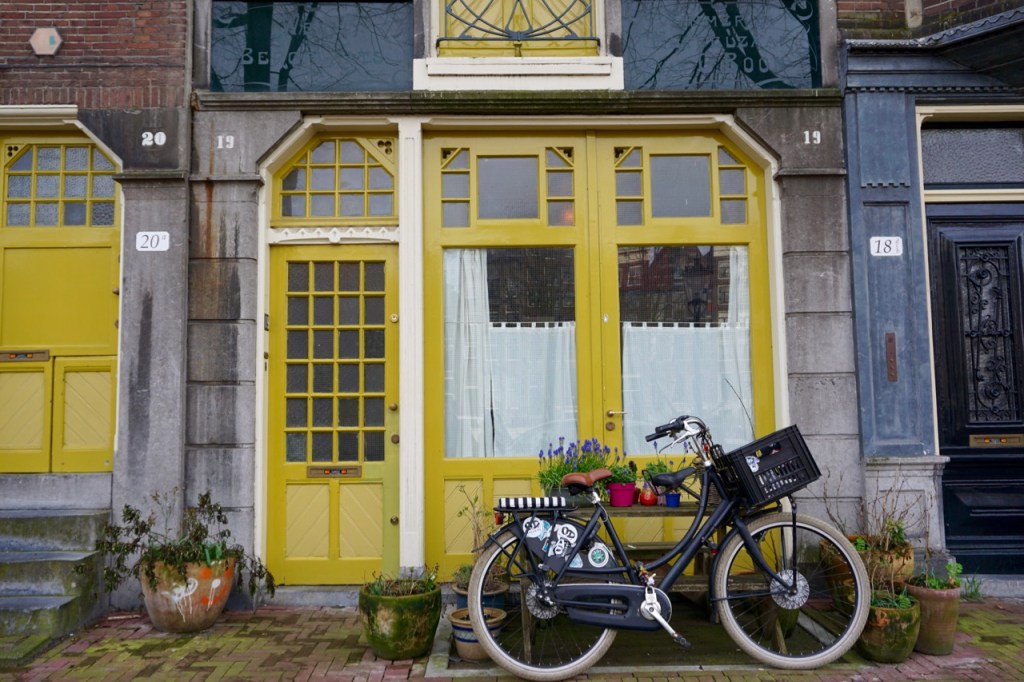
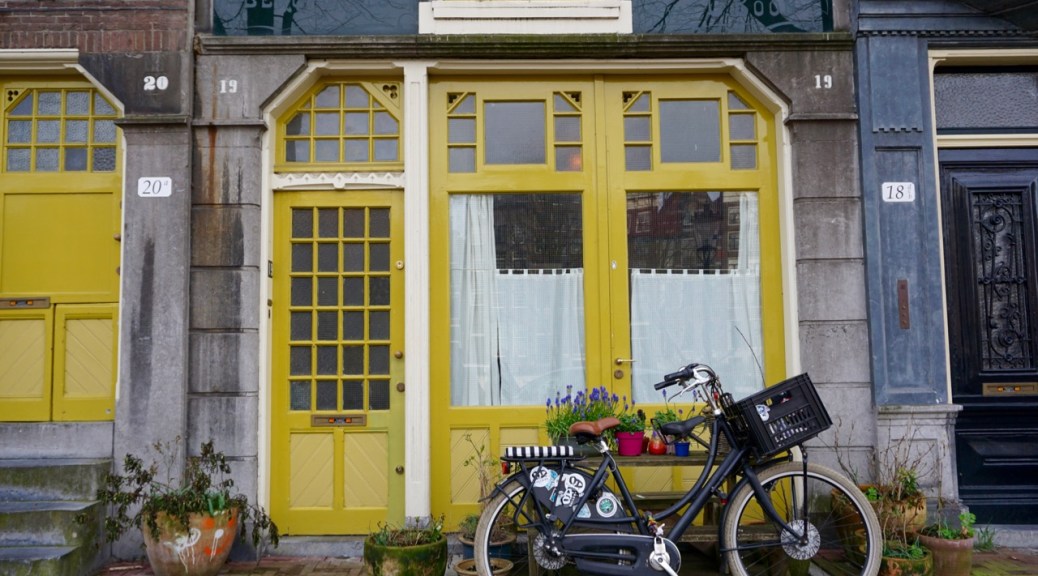
Amsterdam, Netherlands – April 2018

If you like what you read, you might also like these related posts:
What I’ve Learned from Plants

We had a beautiful rain Saturday night, a rain that I caught just at its hinted beginning while on my bike, a rain that I felt even while safe on the balcony. The rain cooled the earth, soaked into the soil, and was then gone from the sky, moving across vast oceans.

The following morning I was delighted by some new shoots from the seeds that I planted last week. I watered them, noting how the plants closest to the edge of the balcony were still a tiny bit damp from the rain. After a trip to the nursery for fertilizer and potting soil I cleaned up some dead leaves, planted new seeds, and basked in being part of the cycle of life. 

I used to get upset when my plants dropped leaves, used to ask what I was doing wrong. But I have learned a good deal over three years with this little garden of potted herbs and leafy, occasionally flowering plants. I have learned through the experience of people who have brought plants to life for much longer than I, and I know now that plants are hardy and wise. It is a pleasure to watch as older leaves fall to make room for new ones and to know that when herbs go to seed, they grow again. 

Sometimes the plants need more water or more space, but sometimes it is less water and bit of coaxing. They have taught me to be patient, to watch, to listen, and to look. These are active processes. Plants require that we care and cultivate and nourish. These are verbs. Verbs are actions.

And I wonder: If we cared as much for people as we do for our plants, if we cared as much for the Earth herself, what kind of world could we build?

These are the reflections brought to my mind on Yom Kippur, the Day of Atonement that comes ten days after Rosh Hashanah, the New Year, on the Jewish calendar. This new year is one that needs us to take action, to care, cultivate and nourish, to love. Many of us need to heal, need this year to be better than the last. 

What if we gave more to the people in our lives than we took? What if we expanded this awareness to acquaintances, or people we know only by sight, or simply the people we pass by in our daily routines? 

Do we dare go further? 

Could we act with awareness of people we’ve never met in places we’ll never see, people who have names we’ve never heard and speak languages we didn’t know existed? 

And further still, to the Earth herself?

A new year can be seen as an opportunity for deep introspection of who we are, who we want to become, and the world we want to create. My dreams for this world are simple in the sense that they exist in color and are textured with wind and water, mountains and stars. Any child could draw this, and then might add the people that I see smiling and holding and loving. 

But these dreams are impossible if I’m dreaming alone.

The solemnity of the Jewish calendar at this time of year, the emphasis on the collective and on one’s responsibility within it, reminds me that every time we water a new seed, smile at a stranger, hug a loved one, or share food with others, every time we partake in creating a better world, we are no longer dreaming alone.

Shalom aleichem, peace be upon you.

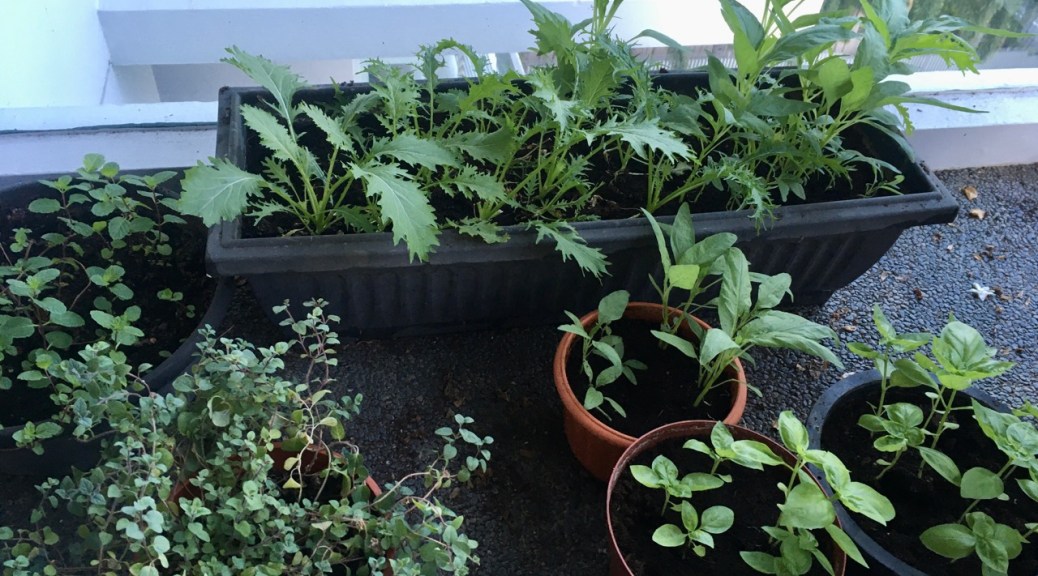
Some of my plants – September 2020

5781

Tonight is Erev Rosh Hashanah, the eve of the Jewish new year. We are celebrating 5781 journeys around the sun. These are 5781 journeys of love and loss, peace and war, fear and joy, hopelessness and solace.

Perhaps it’s because we’ve had such a strange six months that I’m not feeling the familiar ache to be with my family that I usually experience around the High Holy Days. I felt that ache acutely for weeks and weeks and perhaps I’m just accustomed to it now. I think the unprecedented life we’ve all been living is what has actually left me quite calm about my plans to welcome the new year quietly and with reflection rather than attending socially distant religious services in a normally communal environment.

Given everything, it seems fitting to begin a new year taking explicit action at making the world a better place – the world needs it. This is why I decided to go to the blood bank right after school. The queue both inside and at the door indicated that I was not the only one feeling the need to act and it was heartening to be in the company of so many strangers.

As I walked slowly home from the bus stop, I felt the strength of my heartbeat and I felt it working hard. The world needs us to work hard – it will not heal on its own.

As this year flows into the next my wish is, as always, for peace. Peace among friends, among strangers, with the earth, water, and air. And my commitment is to take actions to achieve it. I welcome all to join me.

Shana tovah u’metukah.

Auckland, New Zealand – December 2018