Category Archives: On My Mind

Saying “I’m Sorry”

A brief introduction to this post: I have been thinking a lot about growth lately. After reflecting on past experiences, I have watched myself act in ways that demonstrate that I have actually learned something. This has been critical but is not always comfortable. It is difficult to put myself in a position of vulnerability, but it is also the only way that I can live up to the pictures I paint on this blog. I am grateful for what I have learned and for all who have taught me. To those who were gracious enough to give me multiple chances, to those who heard my awkward apologies, to those who looked me in the eye when looking back was the hardest thing to do: I am still sorry and I thank you.

I am sorry . . . .
if
that
but
you

I thought . . .
meant
didn’t

But you . . .
and so
it’s just

I guess . . .
next time
differently.

It can be hard to apologize. It can be hard to admit that we were wrong, that we hurt someone else, that we misunderstood or misinterpreted or made a mistake. It can be hard to acknowledge that we didn’t behave in the ways that we should have and that our behaviour was harmful.

To apologize means to stand before another person and admit to being fallible, to having erred, to being human. It means wanting to do better and, significantly, taking the steps necessary to do so. To apologize means asking for forgiveness, and asking for forgiveness, we often think, means handing someone else power.

And that is scary.

I’d like to offer something else here: Saying “I’m sorry” and then acting upon what it actually means to be sorry is not only an act of courage, but also an act of recognizing the humanity inside someone else.

Saying “I’m sorry” acknowledges that a wrong has been committed, that a relationship has the potential for being repaired, and that this is work we want to do. And we cannot do it alone.

To come together and rebuild takes not only compassion, but also grace. It takes setting aside ego and hierarchy and control and everything that separates us, and requires us to sit down together and acknowledge, perhaps for the first time, that being human can hurt and that humans cause hurt.

Saying “I’m sorry” recognizes that maybe we are too far gone, and that maybe the gulf is too wide to cross again. Maybe the trust that was once between us has shattered into too many pieces to reconstruct. Saying “I’m sorry” admits that this might be possible.

And this is scary.

But it also might be the only way to move on, even if we aren’t moving on in the ways that we’d hoped. Sometimes life goes that way.

Given that our current cultural obsession with the self has created personalized environments in which each individual is at the centre, it is no wonder considering another perspective is challenging. After all, there are no other perspectives. It is no wonder that discourse and dialogue are anathema. After all, we “cancel” those with whom we disagree. To change one’s mind, which is what happens when we learn, is to flip-flop; to apologize is to capitulate, roll over, show weakness.

There is a great deal wrong here.

A genuine, heartfelt apology carries with it the possibility of making the world a better place. It is an act of building peace in our interactions, relationships, and everyday encounters. This is a powerful thing. No one ever said something so important was easy, though it might be easier than we think. Many things are this way when approached with honesty and openness rather than suspicion and competition.

Sometimes we are wrong, but we can mend those wrongs. This does not mean the harm disappears, or that everything goes back to the way it was before. It means that we forge new paths and learn new ways. We are marked by our experiences, and this is how our lives are constructed.

Treat others the way you want to be treated, or the way they might want to be treated.
Be kind.
Take a deep breath.
Do the hard thing.
Hold out your hand.

If we continue building this world into a better place, there will be someone there to take it.

Weimar, Germany – August 2021

Glow

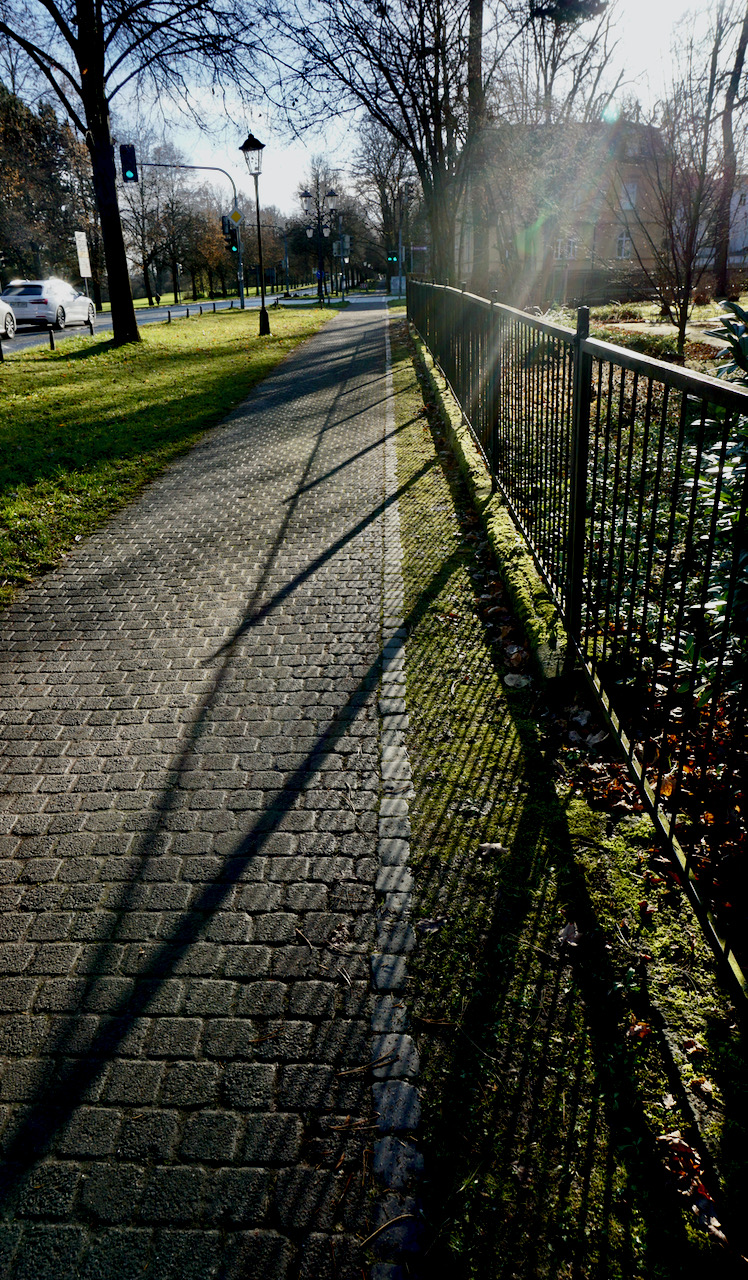
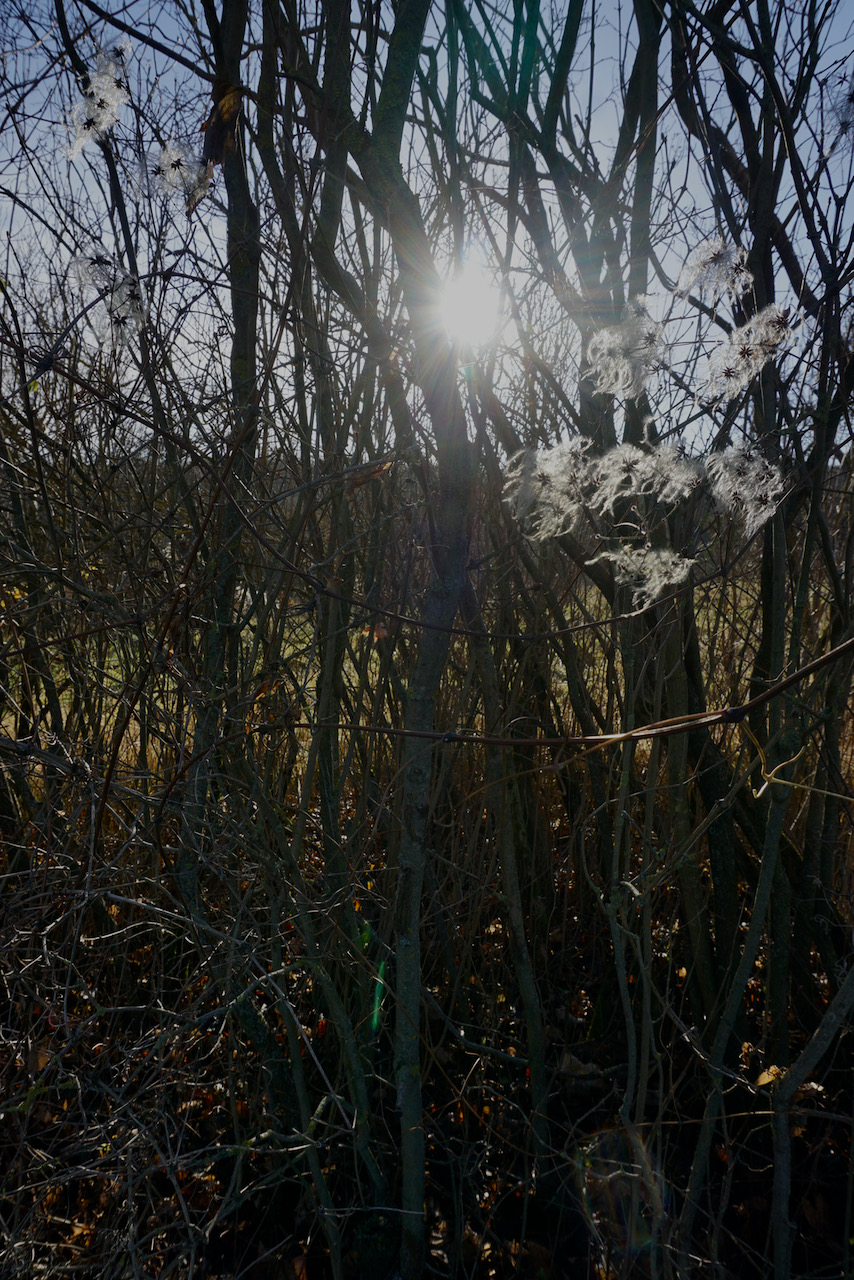
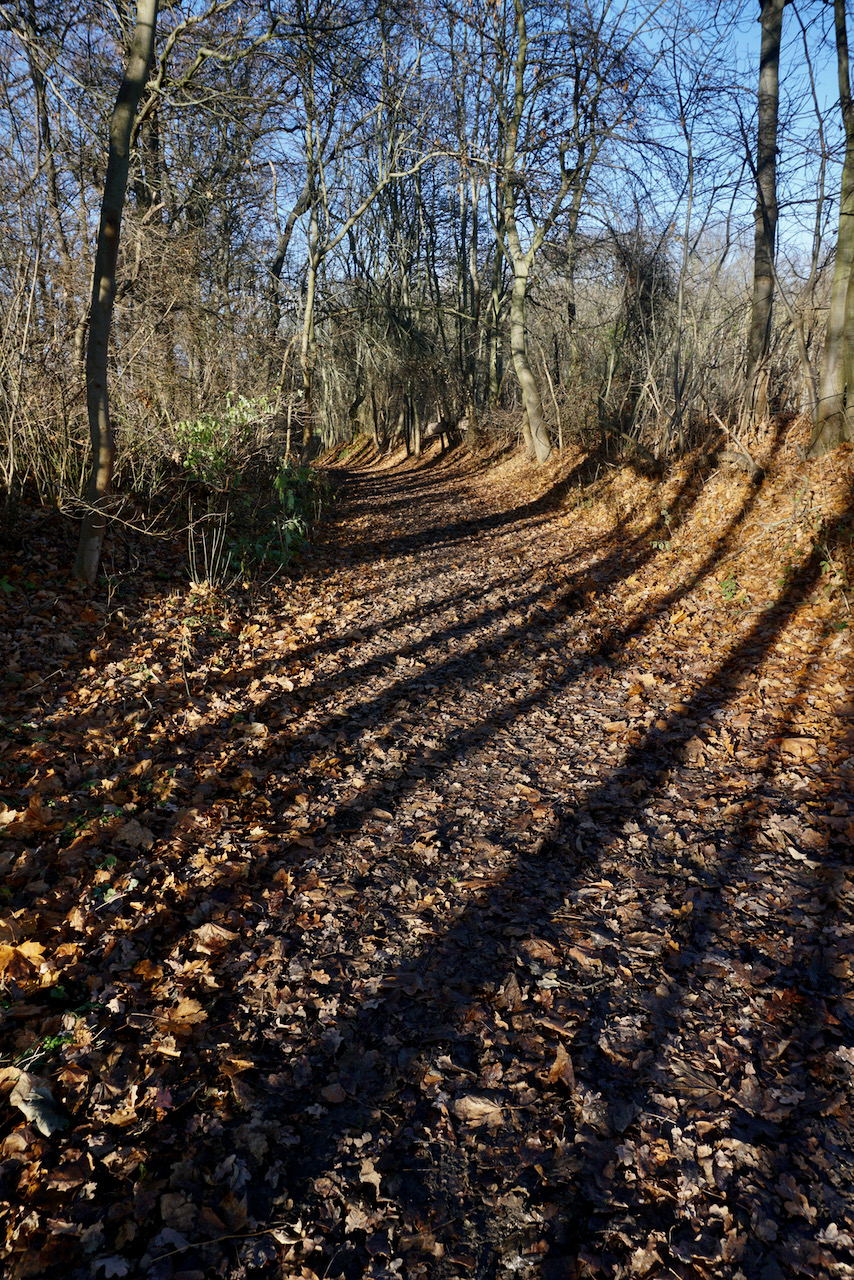
The weather gave us a gift this weekend. We had sun, blue skies, and temperatures perfect for being outside. (Although nothing really seems to stop Germans from being outside, which I like very much.) I was out late Sunday morning revisiting a route I’d taken with a friend some weeks ago. We had looked in vain for sunshine that day and the walk was bound to feel different this time.

One thing I have always noticed about walking with my camera is that my senses are sharper, and not just my eyes. I see the world differently, but am also more aware of how it tastes, how it smells, how it feels, and where I stand within it.

In other words, the more present I am, the calmer and more peaceful I feel. The camera around my neck acts as a reminder. Likewise, the more experienced I become in meditation, the more easily awareness seeps into my everyday life. I pause more frequently, slow down, notice, breathe. This is what it means to be mindful.

Lately there have been several loving-kindness, or metta, meditations in my routine. The warmth that I experience through these practices is not unlike the warmth I experienced last weekend in the sun. The world opens wide and it calls.

What I like most about metta meditation is that it makes obvious our connection with one another. There is a physical sensation, a warm glow, that comes from that realization.

There is a warm glow that comes from wishing loving-kindness to others, similar to the sense of rejuvenation that comes from being in nature. I have learned that these are needs for me, needs rather than wants. I would like to think that I am a better person to those around me for having learned this and sought this out.

It is easy to form connections that are light and fun, to play outside on a sunny day. It is not always so easy to get out in the rain or cold, not always so easy to touch another person. But so often, it is the experience of doing exactly this, of embracing difficult conditions and searching for the light, that plants us firmly on the ground.

And this is when we can not only look, but see.

This Time of Year

There’s a fun little calendar on the window sill. Its colourful flip pages track not only day of the week, month, date, and year, but also weather, season, and moon phase, which makes more sense when you consider that the day of the week and month are in Hebrew. I purchased this calendar at an art museum in Israel many years ago and it has travelled around the world with me. Before that, it sat on my desk when I taught at Catholic school. When an astounded student asked, “You can read that?” I had to clarify that Hebrew and hieroglyphics are not the same thing and my choice of the falling leaves picture (rather than sleeping forest animals, for instance) simply meant that leaves were falling.

Neither the illustrations of falling leaves nor sleeping animals have been used in quite some time. Seasons are far more subtle on the equator, signified by a shift in wind that changes the texture of the air and how it feels on the skin. There might be more or less rain, but that’s about it.

As I write this, I’ve flipped the weather image to “partly sunny”; we’ve been at “cloudy” for days. It is nice to watch the world change.

Last night, the air smelled like winter. Fresh, clean, sharp, coming down from high places rather than emanating from the ground like summer air. I could smell the grass when I first arrived here in July, and to say that I could not get over it is both silly and the truth.

Tonight is the first night of Chanukah, which I always think of, incorrectly, as a winter holiday. The lunar calendar shifts, after all. Chanukah commemorates the destruction of Jewish communities by the Greeks and the efforts made by groups of rebels to protect themselves and their Holy Temple. A tiny jar of oil burned for eight days, the story says, and we light candles for eight days in commemoration. Traditionally, there are delicious fried foods and a game that uses a spinning top called a dreidel in Yiddish. The only dreidel I currently have is a decorative one that I received as a Bat Mitzvah gift a shocking number of years ago. It hangs, as it always has, year-round in front of a window. My menorah (more accurately, chanukiah) was a Bat Mitzvah gift, too.

This brings me back to the calendar. My Bat Mitzvah, my coming of age in the eyes of the Jewish community, fell on the second night of Chanukah and also on American Thanksgiving weekend. It snowed that night.

We have snow in the forecast this week, as well, but right now we have a sunny morning. The sun came out in full force yesterday afternoon, and suddenly the world looked a little bit bigger. We were no longer huddled under a cloud. Yesterday, I was out in the rain to mail a stack of postcards and commented about the weather in all of them. I knew how easy it was to live on the equator, and I thought about it every time I ran out of the house in sandals and a tank top late in the evening because I suddenly decided I wanted a specific vegetable for dinner, but I didn’t remember how many actions were required to do the same when it’s dark in the middle of the afternoon and only getting colder.

I do think Chanukah comes at a good time of year. My consumption of fried foods will be limited, but I am looking forward to the glow from the candles. It feels different in a cold place.

May this time of year, with all of it festivals, traditions, rituals, and holidays, be a peaceful time for all. Chag sameach!

Weimar, Germany – November 2021