
Category Archives: On My Mind

Dear Diary

“I write because I don’t know what I think until I read what I say.” Flannery O’Connor

I was nine years old when I started keeping a journal, the first of many I received as a birthday gift. It was pink with some sort of design, possibly ballet slippers. It came in a little pink box with a clear plastic lid and keys that I kept conveniently tied around the lock.

I don’t remember why I started to write, but I remember sitting at the kitchen table one morning, looking over at my baby brother who was watching a children’s television show that I did not like. “Can I write that he’s watching a dumb show?” I asked my mum. “It’s your diary,” she said. “You can write whatever you want.”

That’s what I remember when people ask how long I’ve kept a journal. A long time.

I’ve recently spoken with a couple of people who look back on old writing. They write so they can reread later, verify their memories, reflect on situations and decisions, and understand who they are now. I’ve always just thought I’d burn everything one day.

When I think about reading old journals, my insides turn cold. My writing tells stories and relays events that I do not like to think about. I’ve been places I don’t want to revisit, and certainly not alone. My younger self needed to be held, needed to be shaken awake, needed to connect the dots in the writing on the wall, needed to learn, to grow, to love. The person I am now, as is the case with all of us, is a product experiences, responses to challenges, choices made. My writing on this blog tells me that I’m very consistent in many ways, but my personal writing is not nearly so tidy. Our public and private lives are often very different in that way. Is it enough to understand what is now without looking back to see how I arrived here?

And yet, there is a box of two decades of journals in my parents’ basement. Why did I once take the time to sort them, a harder task than it sounds because I didn’t always write the date when I was young? Why have I packed them into suitcases over summer holidays to place in that box? What am I saving them for? I’ve asked myself that question many times and I don’t know the answer. I’m saving them. The end.

I think better on paper. I understood what that meant to me long before I knew anything about cognitive processing, neural pathways, or emotional reactivity. I need to write like some people need a cigarette, and I get fidgety when I feel this way. I carry my journal around during difficult times and sometimes it’s enough to jot a note about what I want to chronicle (that’s usually the word I use) later on. It literally takes the edge off.

Sometimes I write with the intention of remembering, of preserving for as long as I can. But sometimes writing gives me permission to let go, to free up space in working memory so I can focus on something else. If it’s written down, I needn’t actively remember.

Writing is the only pursuit that I do not compromise, no matter how exhausting the day. At the minimum, it’s three things I’m grateful for. And I am grateful, every day, for knowing that there are things to be grateful for.
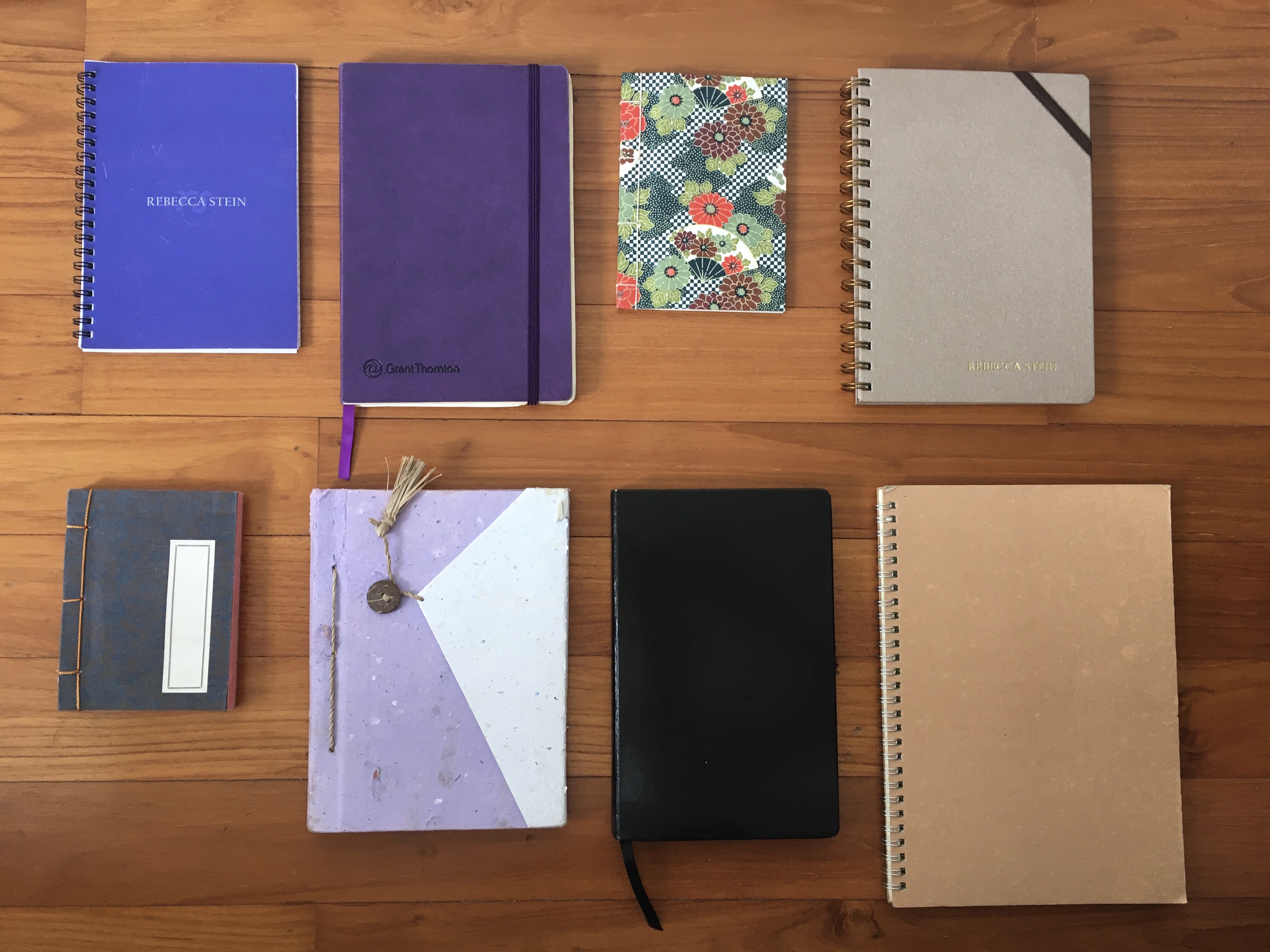
My journals: 6 June 2019 – Present

What’s in the News?

At the beginning of December, a student gave a presentation in which he noted that the headlines of every major news source referenced Covid-19. He’d had to click through a website to find an article on a shooting at Kabul University that left 22 students dead. Why, he wondered, was this not headline news everywhere? He went on to talk about bias in the way that knowledge is presented and his presentation was compelling enough that I am still thinking about it over a month later.

I stopped listening to NPR for several weeks back in March and April when it seemed like the US had just woken up to Covid-19 and everything that had happened in the rest of the world was completely irrelevant. The myopia was stunning and it was exhausting to continuously come up against individuals’ seeming inability to look outside of themselves. It didn’t matter that Covid-19 had been in Asia and Europe for months by then. All of a sudden, it was not only headline news but the only news.

I wish I had been able to experience a world in which news was not all-consuming. I wonder what it would be like to read about events like Covid-19, or democracy protests in Hong Kong and Belarus, or the insurrection on the US Capitol as they became relevant and not as part of communal obsession. I wonder why we can’t let go and why we refresh webpages by the minute hoping for an update. I do not know a world in which we have patiently waited.

What would it be like if global events were not immediate fodder for anyone with a smart phone? What is the psychological impact of the constant barrage of breaking news, memes, and opinions from people who may or may not be qualified to give them? Would we become more deliberate, more thoughtful, more willing to listen if information flow slowed down? And would we be more humble and less partisan as a result?

In order to make the world a more peaceful, more just place, we need to be informed. We need to know what is happening and why, and we need to talk with or listen to those who know more than we do. Many people speak of the importance of different perspectives, but are also unwilling to engage with those who offer them.

Learning is not a zero-sum game. Entering a conversation with one idea and leaving with another does not mean you have “lost” and they have “won”. Rather, it means that your perspectives have broadened, ideas have become more nuanced, and you are able to appreciate complexity. After all, if global problem solving were easy, we wouldn’t have global problems.

When information sharing becomes a battle of who can yell the loudest, we have moved away from the process that builds democratic society. We cannot live in a world that has abandoned dialogue.

I had a conversation with an administrator recently in which he lamented that students are not willing to talk about their concerns or about issues they have raised. They want not just a solution but their solution, and they refuse invitations to sit down and actually have a conversation. This is not a surprise, for dialogue is not modelled for young people today. It is not part of politics, it is not part of the media, it does not appear in formal debate. The other side is vilified when it is presented at all, and experts sneered at. Again, this is not a surprise in an age where anyone can present an opinion and start a campaign on the basis of how many people they can convince to join them.

Yesterday I read an article from the US that mentioned increased interest in civics education, but my thoughts immediately went to the political divisions that will only deepen in written curricula. I would argue further that a lack of civics education is not at the root of the problem of political polarisation. Rather, there is an unwillingness to take a step back and listen. Perhaps there is even a real fear of what we might learn or come to understand. This is preventing us from doing the difficult work of coming together.

And until we are ready to feel uncomfortable, to honestly say, “Thank you for explaining that. I hadn’t thought of it that way”, we are going to remain exactly as we are.

If They Saw: A Story

She’s not one to drink straight liquor during the day, and certainly not when she’s alone. She’s been a lot of places and that’s a place she doesn’t like. But late in the afternoon, sipping rum, putting black silky pen to the creamy paper of an artist’s sketchbook . . . well. Sometimes we get here, don’t we.

If they could see what I see. This is where we begin.

If they could see what I see, they’d see the child playing behind your eyes. They’d see the sand, the beach. Grasses. They’d listen when you wax poetic about scent, about fragrances we all know and about the raw living in a world that forces one to look and call it by name.

We are crumpled behind walls, preserving the vestiges of who we think we are, torn out and disentangled from who we thought we ought to be, folding into ourselves to protect . . . what?

Sometimes it’s hard to keep track.

If they could see what I see there’d be no end to the hands running across your face, your hair, along your back. No end to skin on skin.

Electricity.

There’s no waking from this dream but she doesn’t know she’s in one. Sometimes it happens like that. She’s lived a long time.

I can still see the hardness that shows itself around your jaw when you’re upset, a tightness that silently screams out to be heard. My stomach drops, just as it always did. And there’s the relief of a laughter that’s real, that comes from deep down where children chase fireflies. I could cry if I did that sort of thing.

The child behind your eyes looks uncertain, afraid. Disappears, runs back. A game of hide-and-seek but we don’t know who’s playing. Sometimes I can reach out and catch you but sometimes you’re gone to places I can’t follow. And so I wait, exhausted with tension, darkness closing in, for you to decide it’s time to return, sometimes with a vengeance and sometimes keening. I flip a coin.

I know when you’re hiding from me. I know when I’d like to do the same, and I know why I won’t. Why I never will. But there are days when you’ve already decided: There will be no smiling today.

When we float through the cobalt sky there’s magic and I have no doubt. But it’s never been about doubt.

A lifetime it has taken me to know you. A lifetime in a few short months, unnoticed. And in just as much time, you’ve pleaded, cajoled, and gone. There’s no place for me out there and I do not look for one.

She looks at the empty glass. The papers crumpled on the floor. The time. Her eyes widen. Memories of moments have taken hours. Too late for dinner and now the internal prohibition against liquor before sundown has no place. Glass is refilled.

If they saw what I saw they’d ask all the questions that were never mine to ask. They’d travel with you the world over and they’d hold your hand without letting go, the hand that was never mine to hold. If they saw what I saw they’d join you when you sang, they’d drink in the timbre of a voice that glides. I am reminded of skis over fresh powder. Do you know that sound? You, who speaks of the sea, do you know the sound of an open mountain with no marked trails? If they saw what I saw, they’d take you there.

But I swear I can hear you. I don’t always know where you’ve gone, in fact I only know the pictures I’ve painted on my heart, but I can hear you. Sometimes I busy myself to shut you out, to remember who it is that I am now that you’re a memory.

You’d vanish, wouldn’t you, if they saw what I saw. You’d breathe, settle, find the light that you used to tell me about, late, when you were supposed to be sleeping. You’d float gently away, so softly that I wouldn’t notice until you were gone. Or at least that’s what you say about me.

She doesn’t remember tearing the sketches but she has. At least they don’t bleed.

But can I blame them? Can I blame them for failing to see when seeing would require that of which we are most afraid? For if we see, we are responsible for the soul that has mirrored ours. I know what the ancients say about this. So can I blame them?

Rather than blame, and I think you’d like this, I’d like to teach them. To hold them while they cried and to encourage their tightly closed eyes to let in some of the colours we read about in stories. To hold them when it became too bright and take one step, together, one step at a time. I’d like to guide them to see through the tears and to hear, to hear that child singing. I’d be there the whole time, you know I would.

If they saw what I saw I never would have known you. You would have been beyond my reach before I even knew you existed. It is because, and it is always this way with me, it is because they did not see that I found in you something you’d forgotten.

Do you remember when I first made you laugh?

In the morning, she is surprised at the mess on the desk. She has fallen asleep fully dressed, a first since . . . a first. There are blank pages shredded all over the floor, faint markings erased. Drawings. Of what? She reads the neat words on creamy paper. These are not her words and not from her hand. But these are words she knows. These are words she believed a long time ago. These are words she fought until they disappeared.

These words are mine and I hear you laughing.