Category Archives: Travel Guide

In the Alps: Ötztal

The German word “Hochtour” literally translates to “high tour” and the term is used to describe a mountaineering trek through the Alps that passes through snow or over a glacier. Last summer was my introduction to the Hochtour along the Berliner Höhenweg and climbing the Zugspitze, Germany’s tallest mountain. This summer’s adventure took me, my partner, and a friend into the Ötztal, home of Austria’s tallest mountains. This year, rather than the glacier being part of the adventure, the glacier was the adventure.

Day 1: Vent to Martin-Busch-Hütte

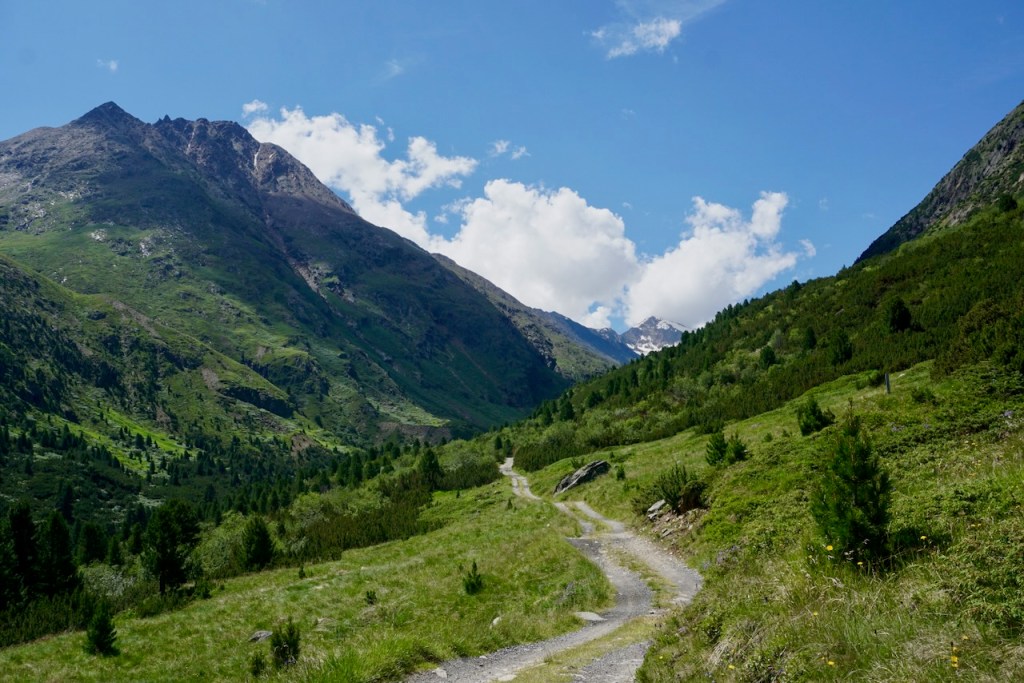
We began in the tiny town of Vent, following a trail that was steep immediately.

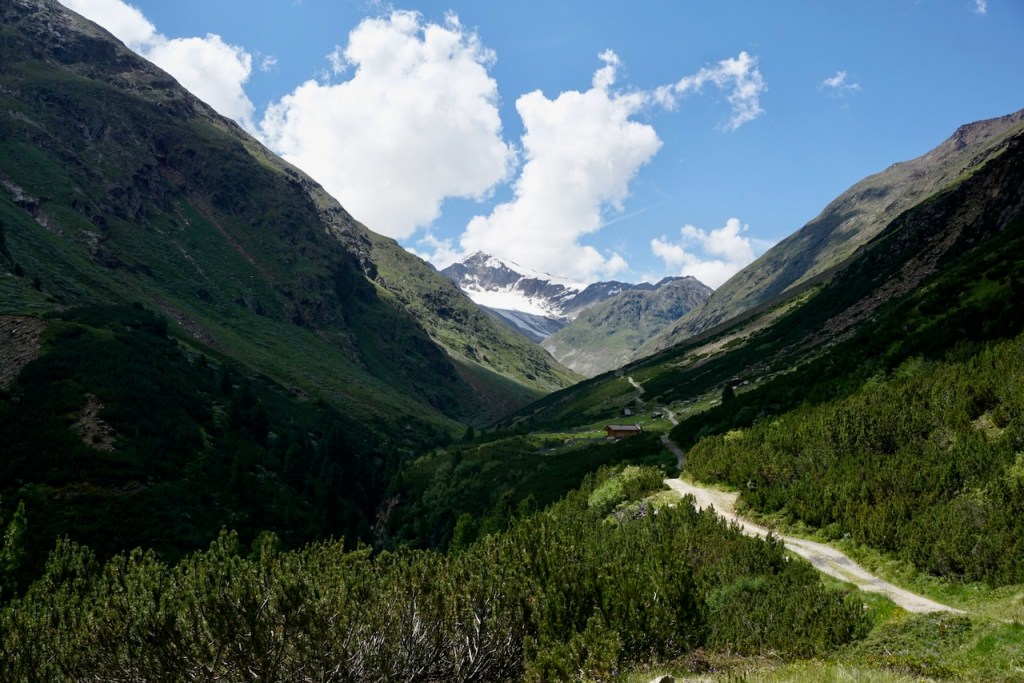
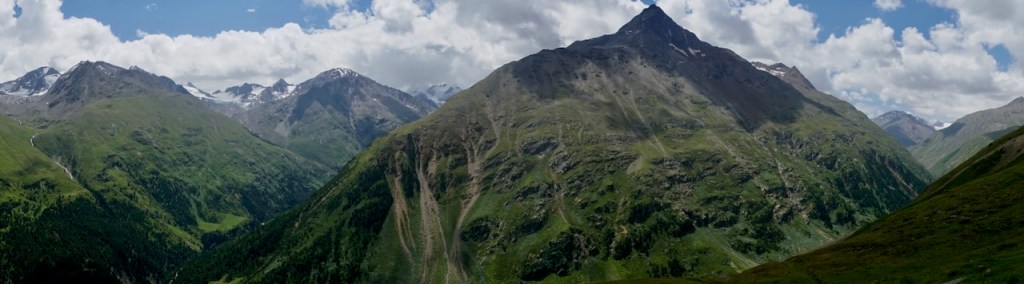
We walked toward glaciers in the distance, following the river that cut through the rock, witness to millions of years of time.

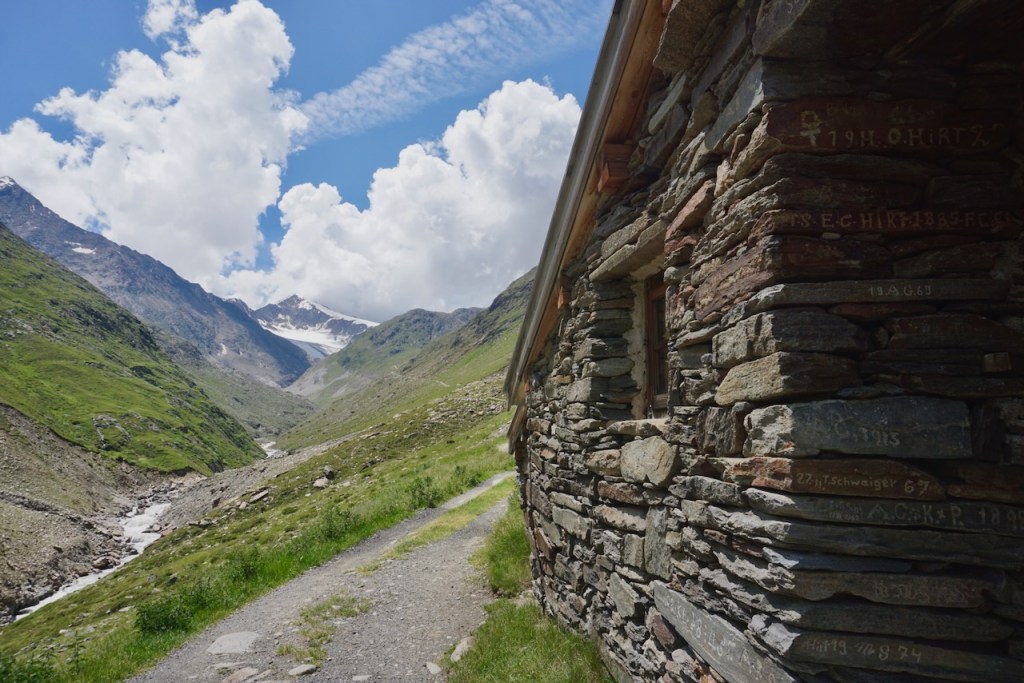
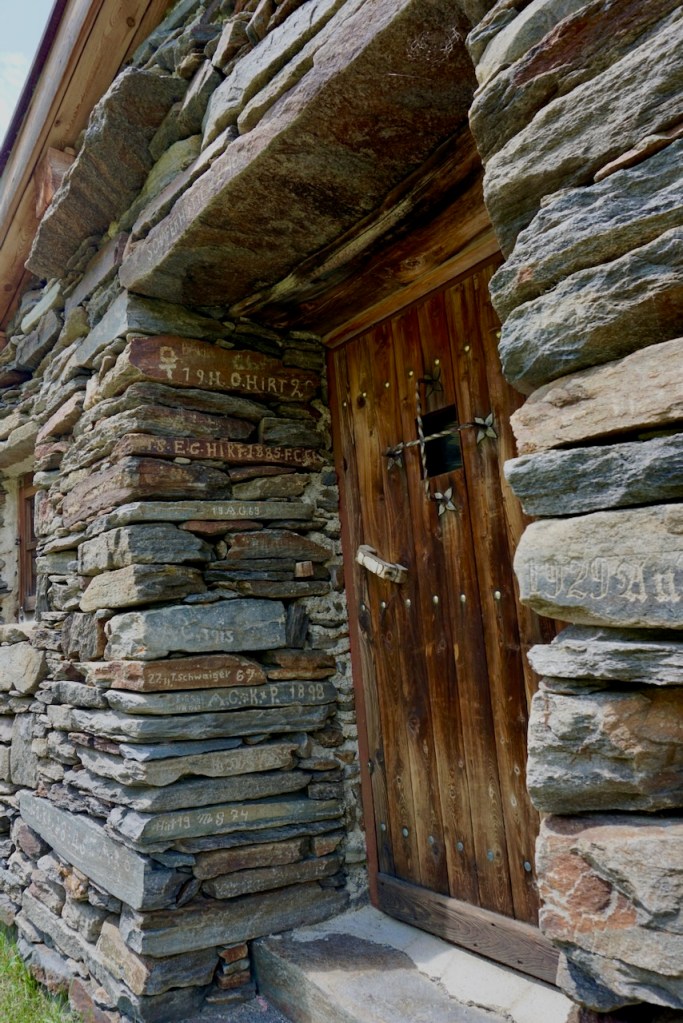
We passed an old shepherd’s hut, and we didn’t know it at the time, but we’d meet the shepherd and his dogs another day. The much more modern house we had passed earlier was his.
After a few hours, eight kilometers, and 600 meters of elevation, we reached the end of civilization and the beginning of our adventure. We would spend two nights at the Martin-Busch-Hütte, allowing us the luxury of leaving many of our belongings behind for our summit tour the following day. As the sign said, we were in the last spot for cell service.

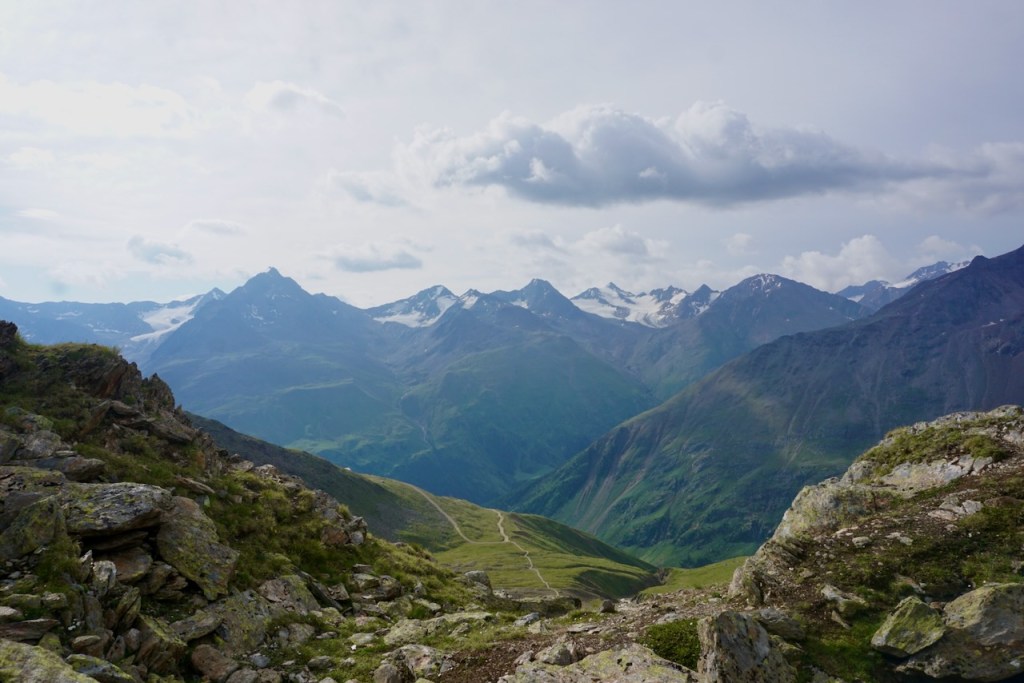
The hut is located at 2,501 meters and after a snack and a shower, we went for a little walk to look around at the world we had entered.
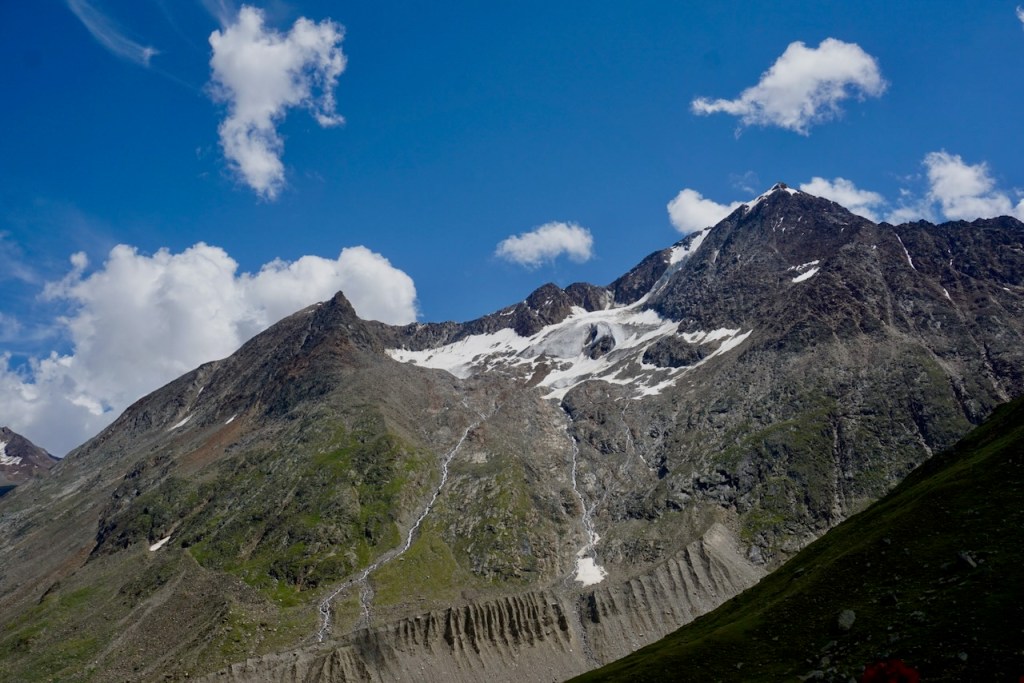
Day 2: Similaun

Summer mountaineering requires an early start because summer in the Alps is thunderstorm season. You cannot be on a peak when lightening strikes, and this means being down low enough to avoid being the highest point anywhere. We check weather forecasts, watch the clouds, and rely on the hut personnel, locals with experience, to give us the best tips on how to time the path ahead. The rule of thumb is to start early.

The way ahead was rocky and climbed steadily. We passed a sign showing the way to the archeological site where 5,300-year-old Ötzi the Iceman was found in 1991, which I’d love to go back to visit someday. On this day, there was a mountain to climb.
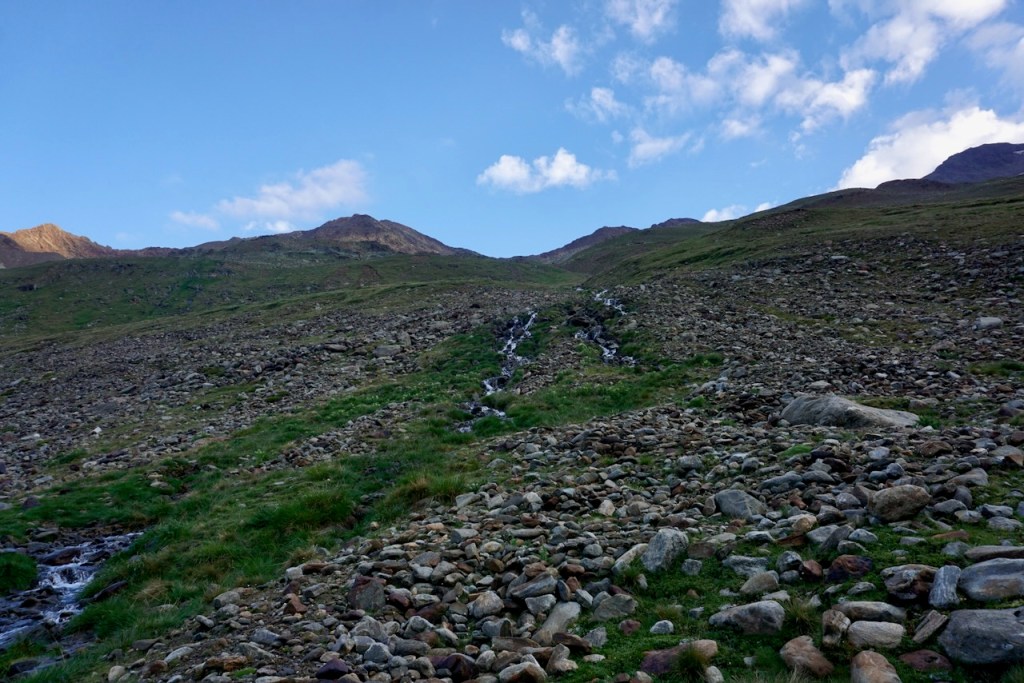
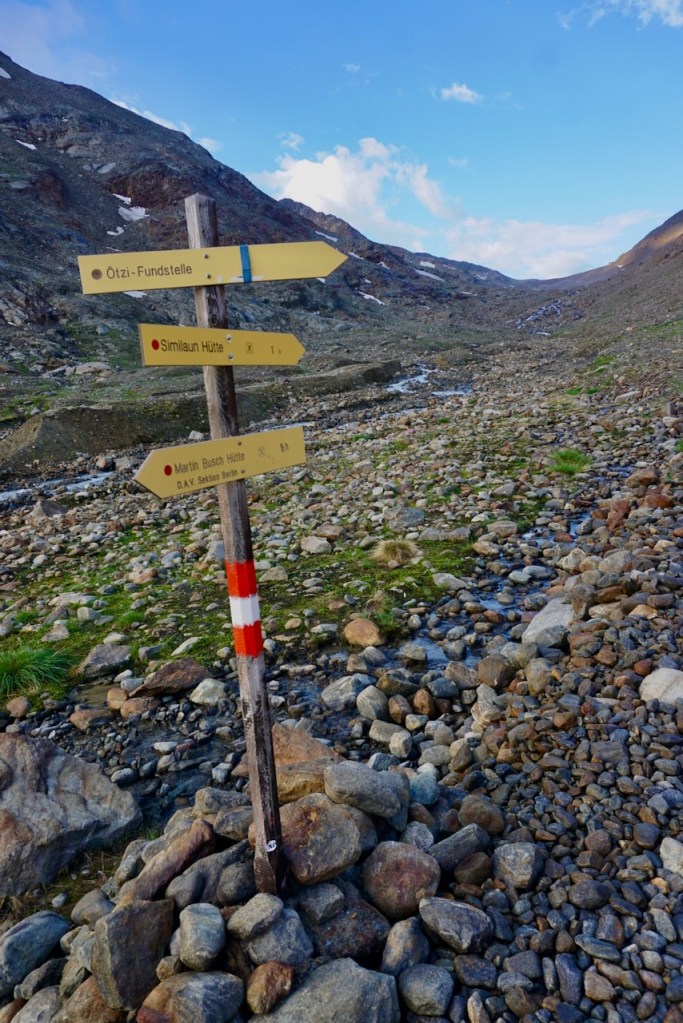
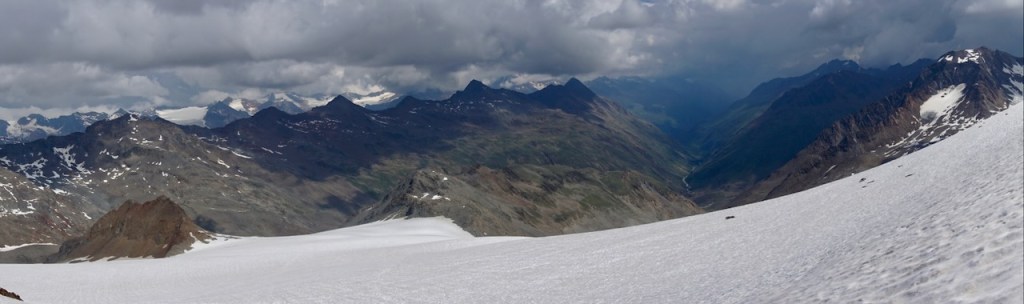
To reach the summit of the Similaun at 3,606m, we would gain almost 1,100 meters of elevation. The effect this has on the body is not be underestimated, and we were all grateful for having included jogging in our training. Although I can’t say I felt it, it must have helped! We paused when we reached the Similaun Hütte just over the border in Italy and gazed at what awaited us.

At the edge of the glacier, we prepared: Harness and helmet on; pre-organized carabiners, slings, rescue gear, ice screw attached to harness; crampons on; ice axe in hand; butterfly knots in the rope and figure-eights clipped to us. As the most experienced, my partner went last to perform any needed rescue manoeuvres should one of us fall into a crevasse. Based on negotiation, I went first to follow tracks and find the way.

Breathing was difficult. The thighs burned. I couldn’t always find the way leading us away from crevasses and up the glacier, and we took a slight deviation from the proper way when fear of the unknown got to me. Our friend in the middle of our rope said that she was using a mantra to put one foot in front of the other, but my mind had gone in the opposite direction. As we climbed, I was already in a mindset of not wanting to be there, which is the primary reason that I don’t know if I will do this type of mountaineering again.

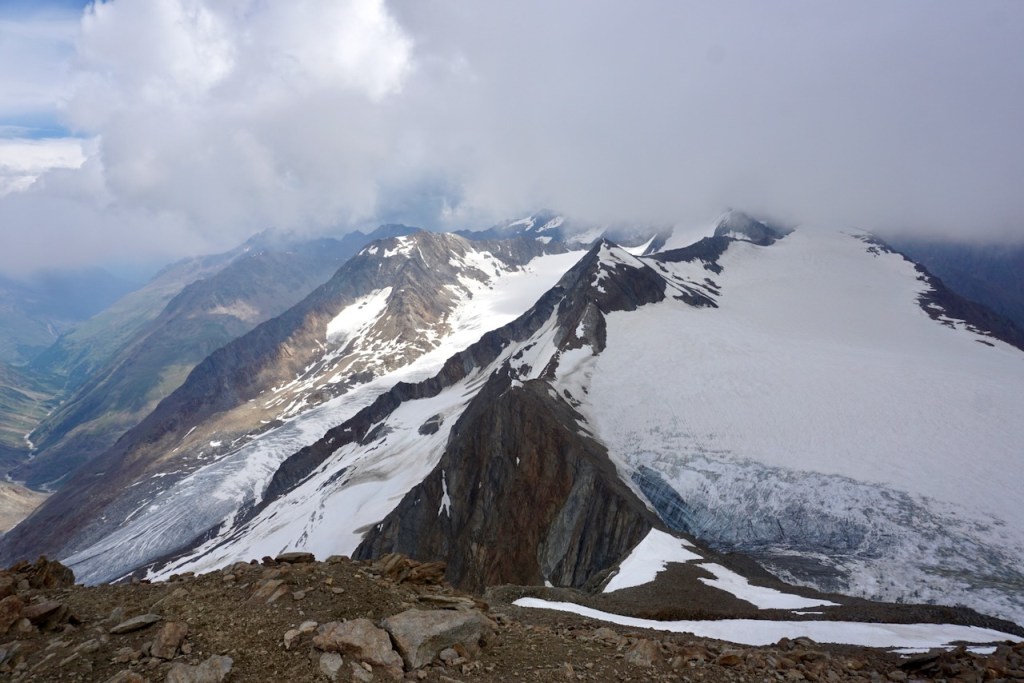
As the clouds rolled in, we reached the end of the glacier and the rock scramble along the mountain ridge began. This is the part I enjoyed because this is where I could feel my body again – I am a climber, after all. We reached summit and looked down into Austria on one side and Italy on the other.
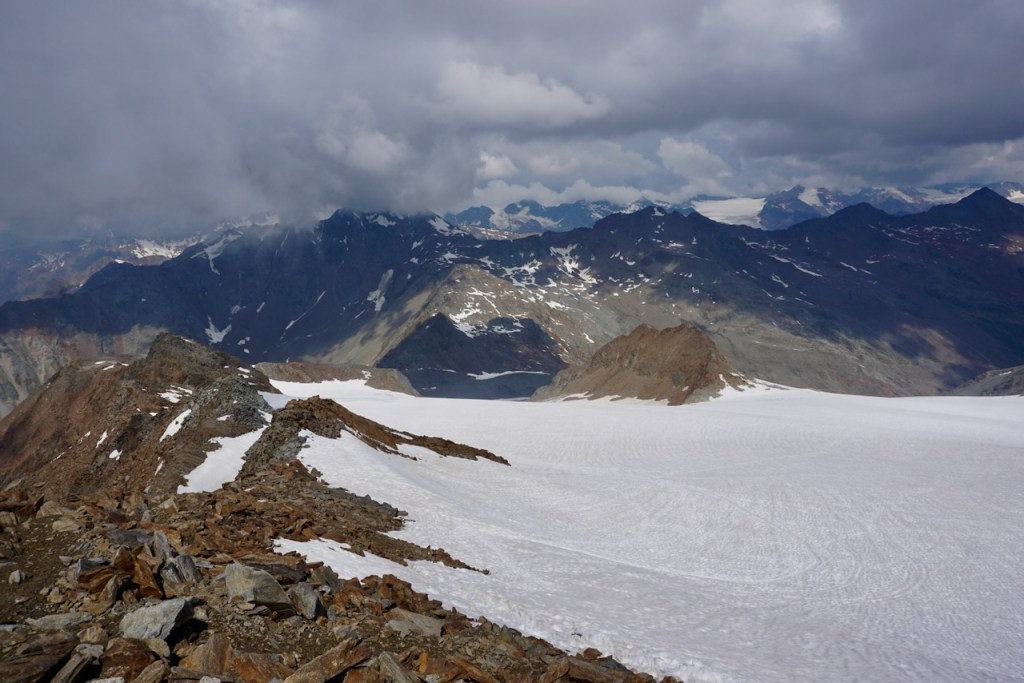
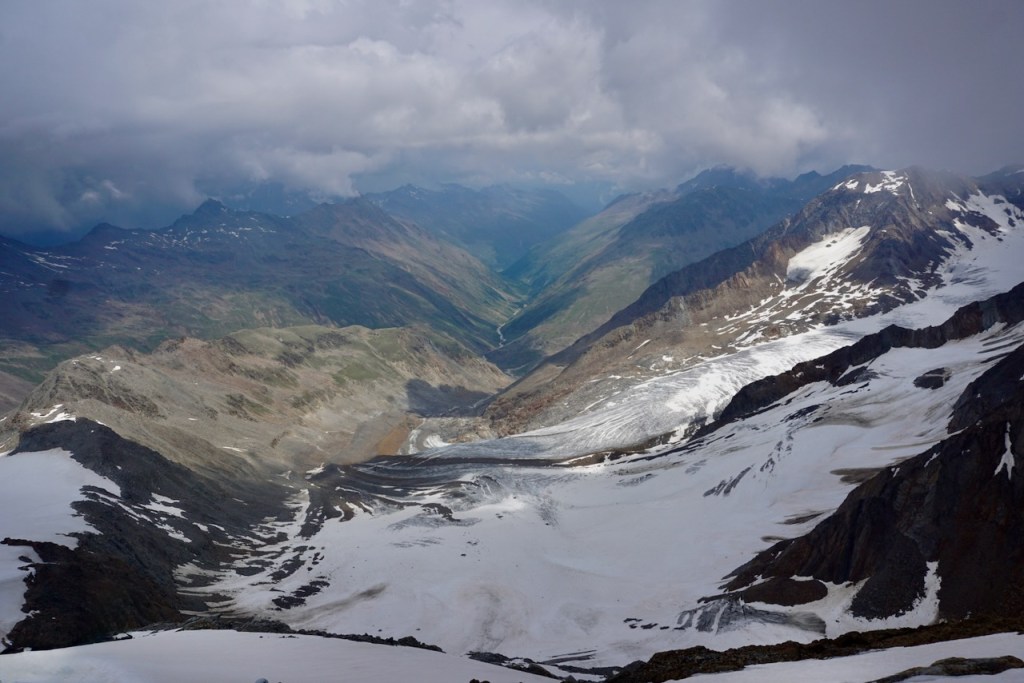
We heard a clap of thunder after we had already begun our descent. The sky darkened as we returned to our gear on the glacier and we ran. This is is the part where, like my friends, I should have thought, “Wow, now we’re really mountaineers!” But the negative mindset from before set in. As the hail began, which turned to rain as we descended, that’s not where my mind was.
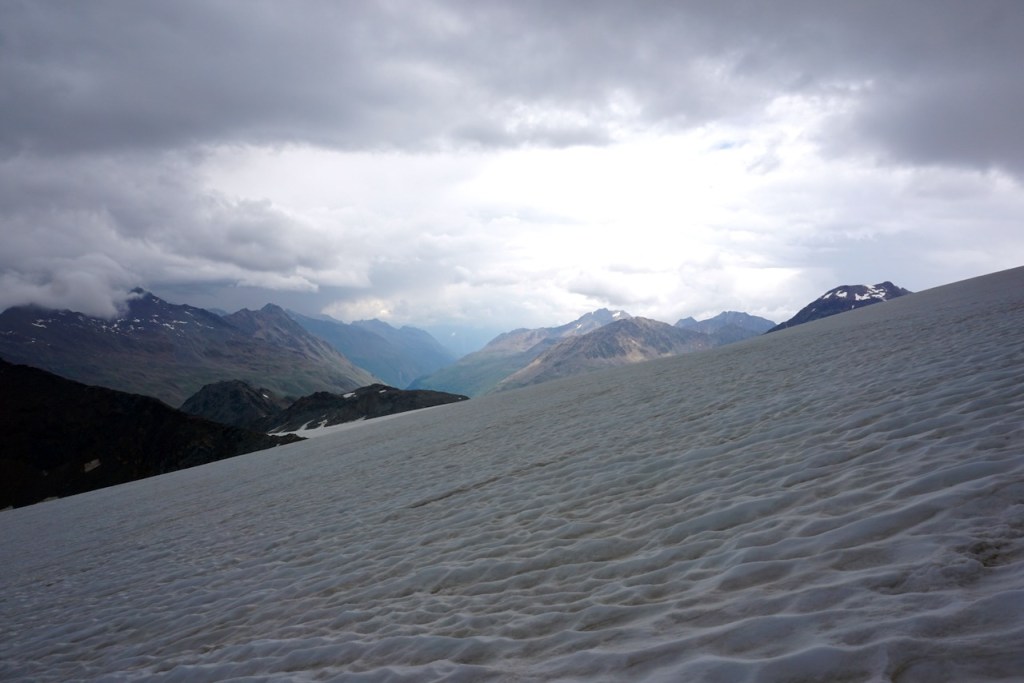
The weather changes quickly in the Alps and the rain had let up by the time we reached the Similaun Hütte and stepped inside to take stock of ourselves. Not having had time to put raincovers over our backpacks, everything was soaked. As the sun began to shine, we heard another clap of thunder from above, but this time we knew – it was one weather front meeting another rather than the sign of a coming thunderstorm.

Later on, I reflected that had the weather held during our descent, I probably wouldn’t have fallen apart. The negative film running through my head would have faded and been replaced by the accomplishment of reaching 3,606 meters. But I know how the brain works, and we remember the peak and the end of experiences. I’ve dreamt every night since of being on that mountain, and my dream self has reacted differently, more bravely, more calmly. The sun shines in my dream. My actual self was mentally crushed.

It was a relief to reach the Martin-Busch-Hütte and lay our things out to dry. We talked over weather, the day, and conditions with the men sharing our room and marvelled at the weather cells in the Alps. Just on the other side of the valley, they hadn’t had rain at all.

Day 3: Martin-Busch-Hütte to Breslauer Hütte

The purpose of the next day was to reach our second and final hut of this trip, the Breslauer Hütte located at the foot of Austria’s second-tallest mountain, the Wildspitze. From the beginning, the Wildspitze at 3,768 meters had been the goal. However, because of my experience the day before and the not-so-promising weather forecast, we decided a change of plans was in order.

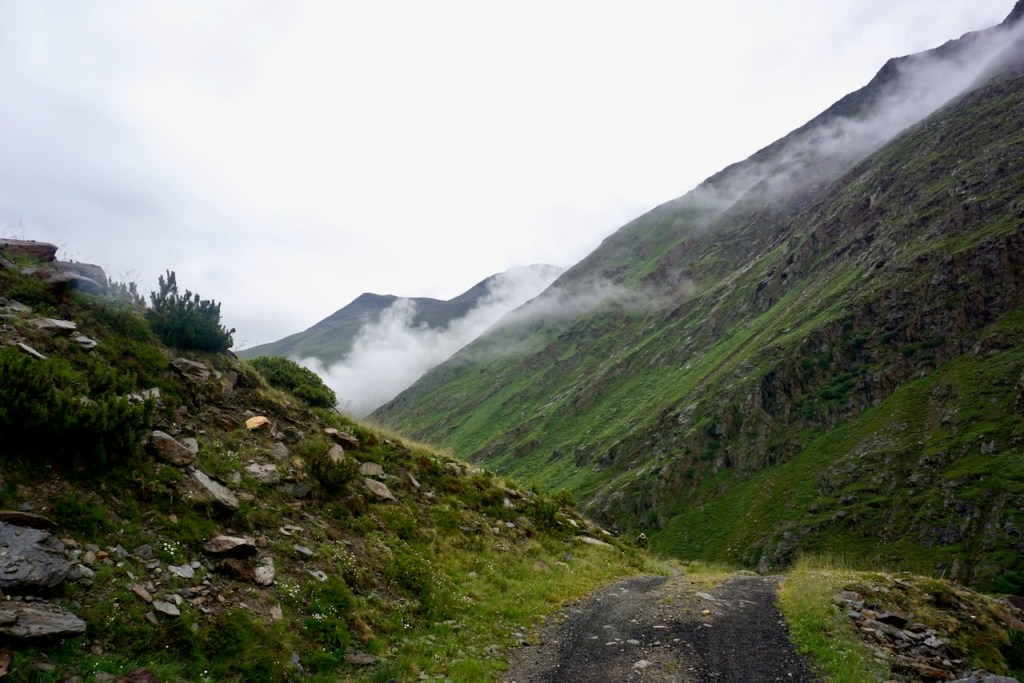
We left the Martin-Busch-Hütte in the rain, which is no problem when you’re prepared for it. The landscape was dreamy as we descended, kissed by clouds.

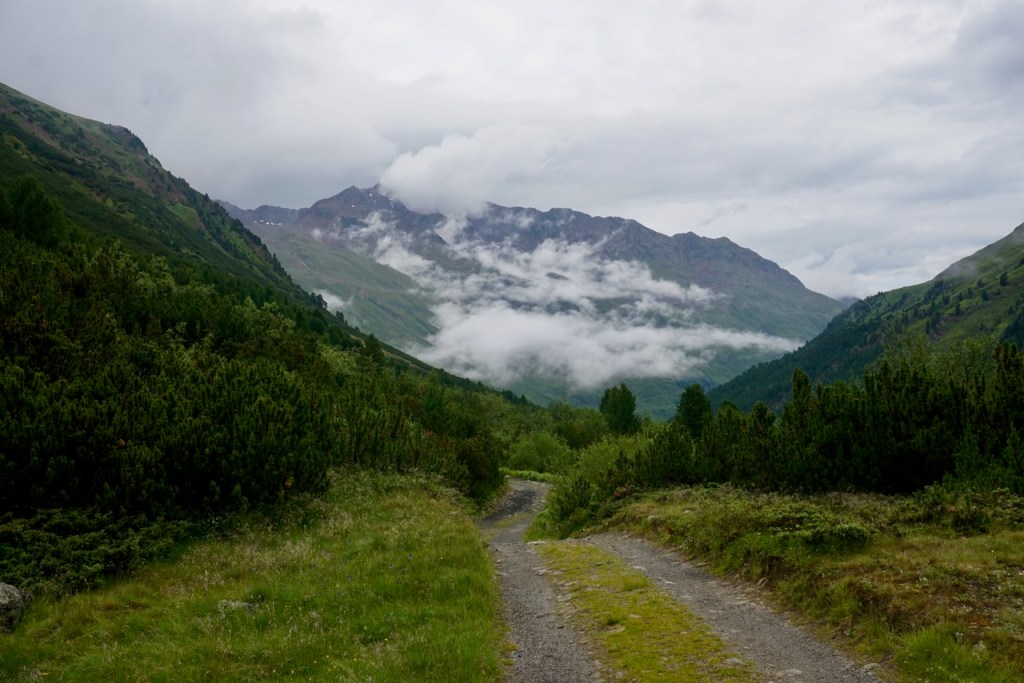
The sun had come out by the time our ascent began with over 900 meters in elevation gain comprising the last few kilometers. We passed gazing cattle . . .
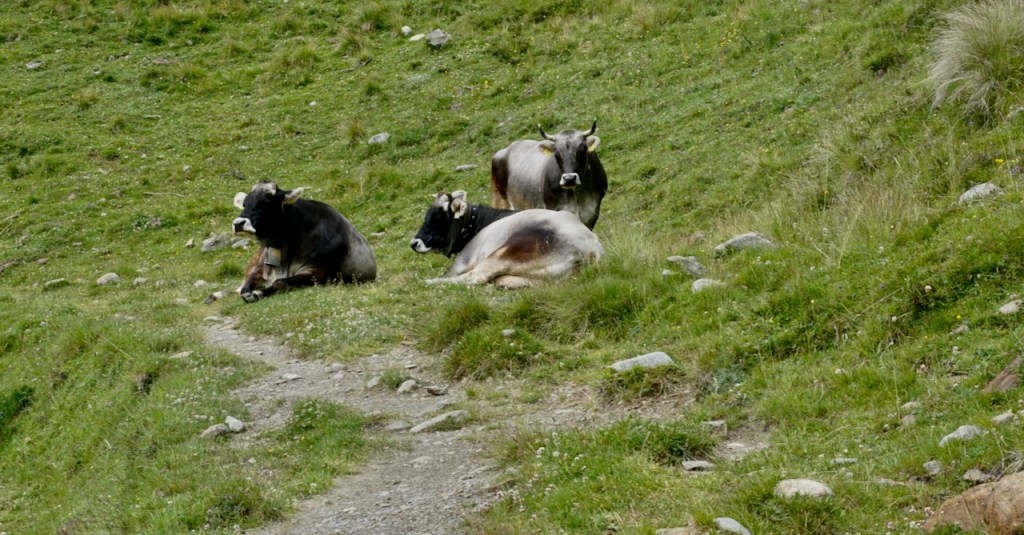
. . . stopped to rest on a plateau surrounded by peaks . . .
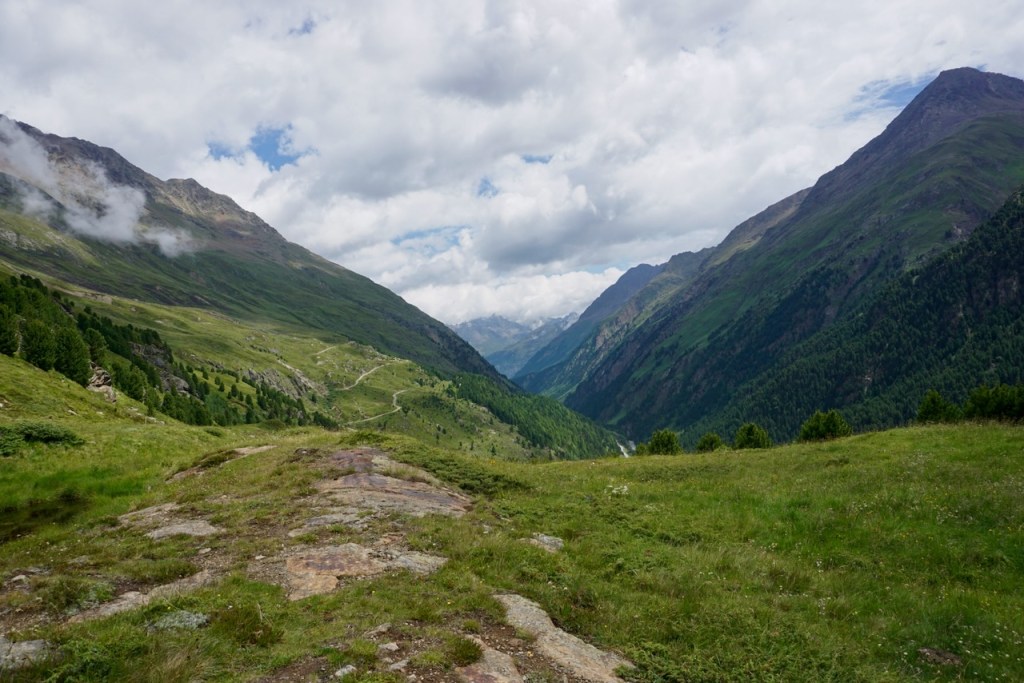
. . . and made our way along steep ridges, past more peaceful cattle, through rocky terrain that told of mountains from long ago, and across a river. Some of this had been glacier once.

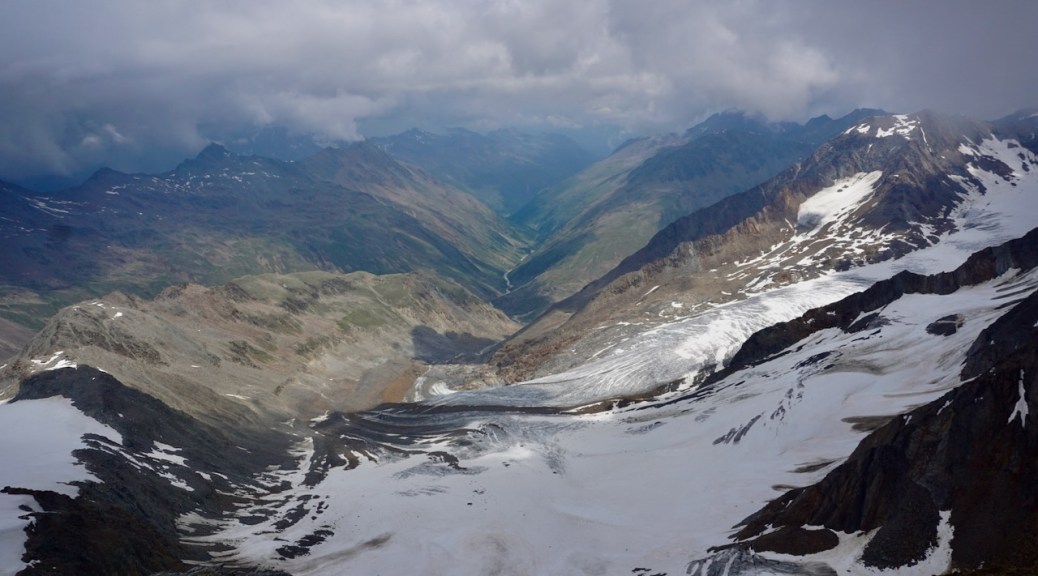
It was a long way up to the Breslauer Hütte, and hard going. We covered 12 kilometers that day, and, upon reaching 2,844 meters, we certainly felt it.

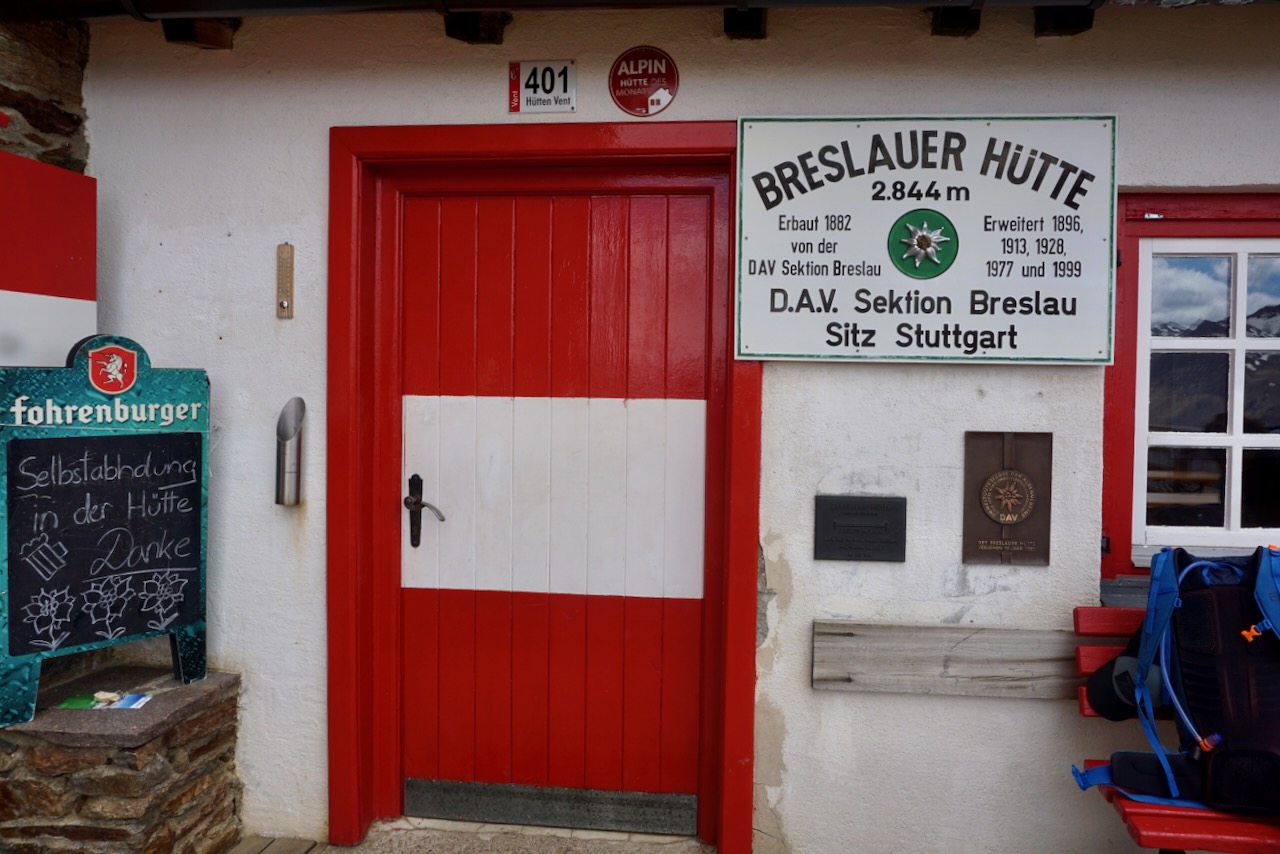
That evening, we watched the sunset.

Day 4: Breslauer Hütte to Vent

The following morning began with a strange feeling. The clientele of the Breslauer Hütte could be easily divided into two groups – mountaineers and hikers. As we decided not to attempt the Wildspitze this time (my friends have now bookmarked it for the future), we were clearly in the hiking group, despite having the gear and experience of the mountaineers. We had come to this place with a purpose and were leaving it behind.

It wasn’t only because of me but it also wasn’t not because of me that we changed the plan. I’m grateful that my friends made the decision that they did, and I will be cheering for them when they head back there next time. But that didn’t prevent me from feeling, as they were, a sense of loss.

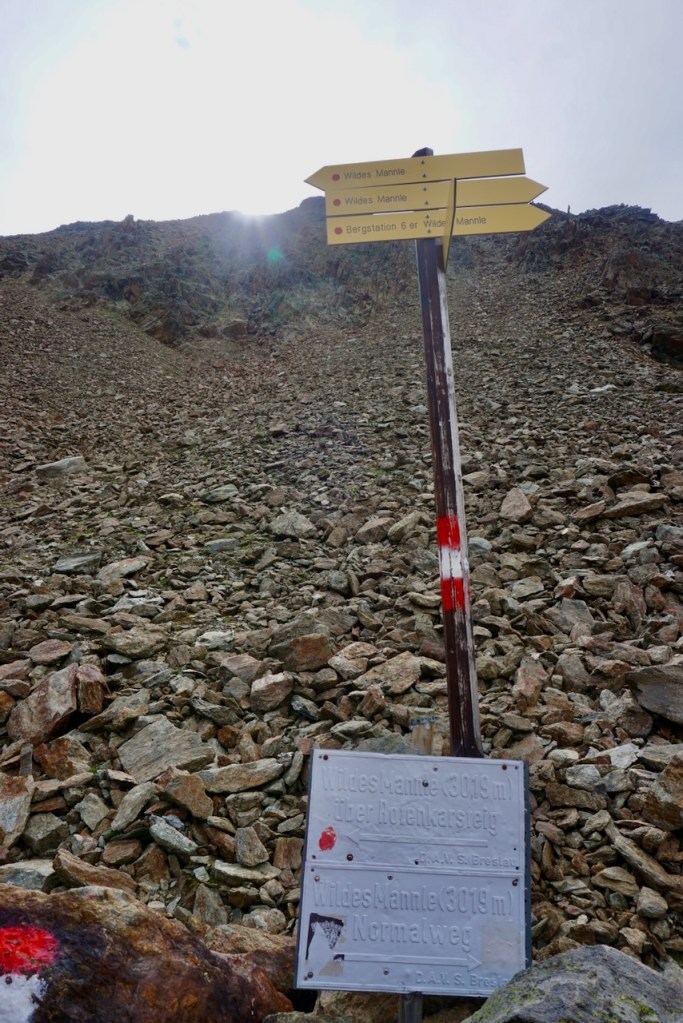
Nevertheless, we enjoyed the easy scramble up to Wildes Mannle, a 3,023 meter peak nearby.

We crossed the river we’d seen the following day . . .

. . . and climbed the ridge to the summit, looking over into the distance where we knew the Wildspitze was.

From there, we began our descent, again past the cows . . .

. . . and into a green oasis, welcome after the rocky terrain a thousand meters above.
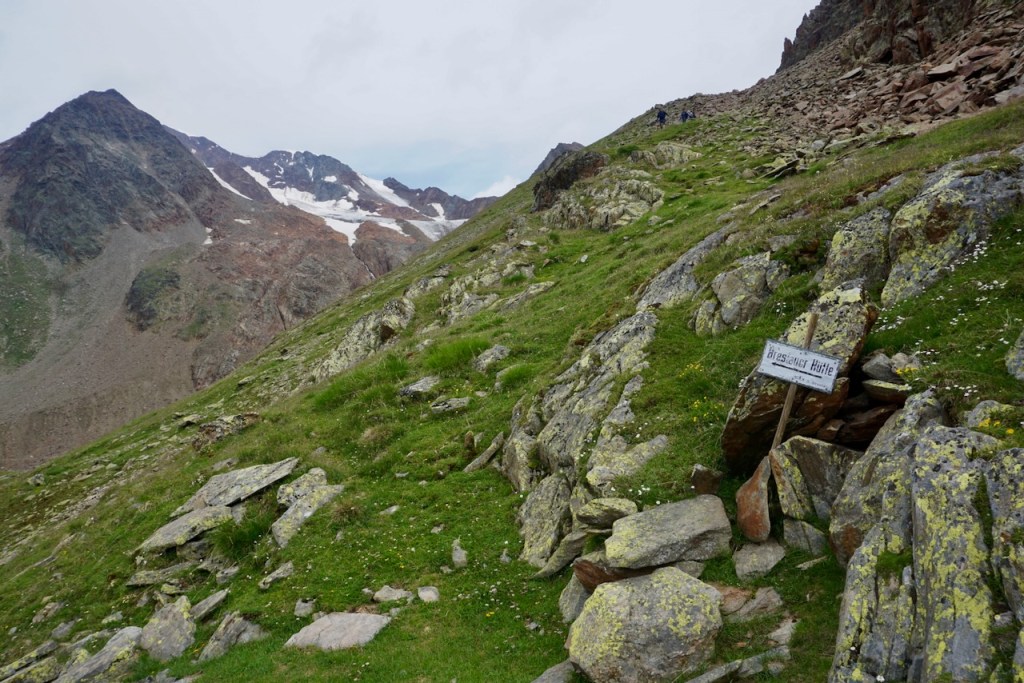
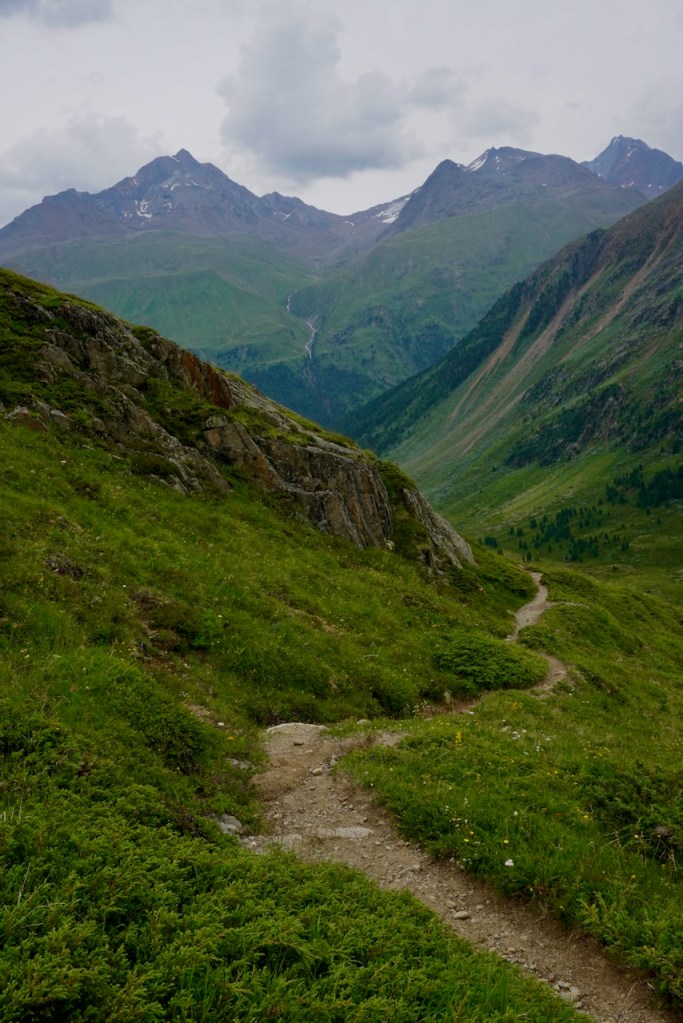
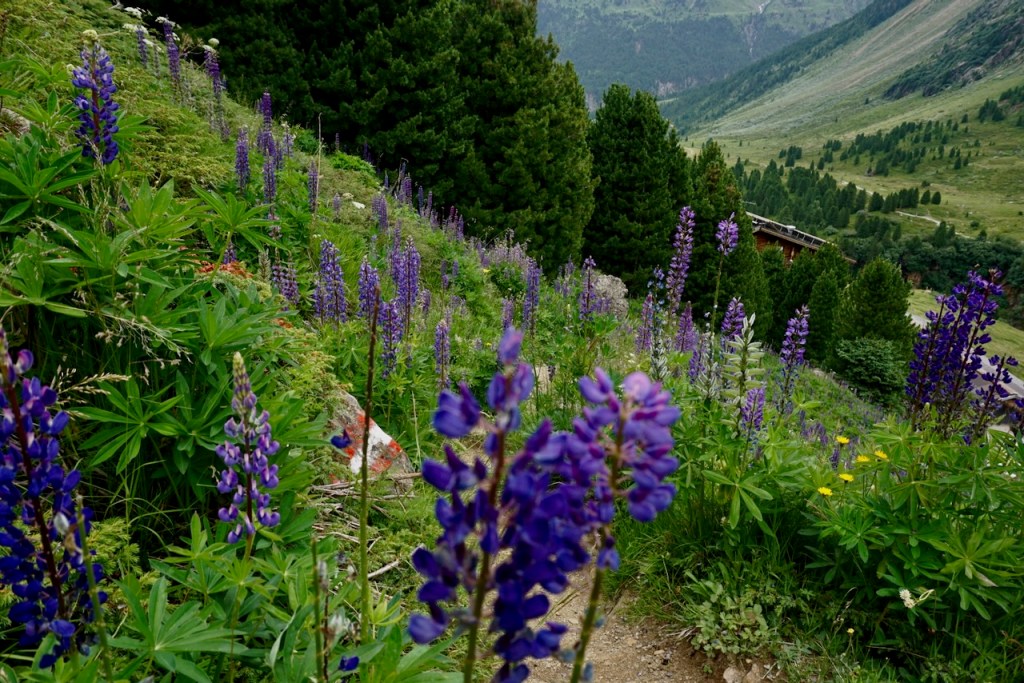
With the challenges of ascending behind us, I took the opportunity to photograph the alpine flowers that guided us along the way.
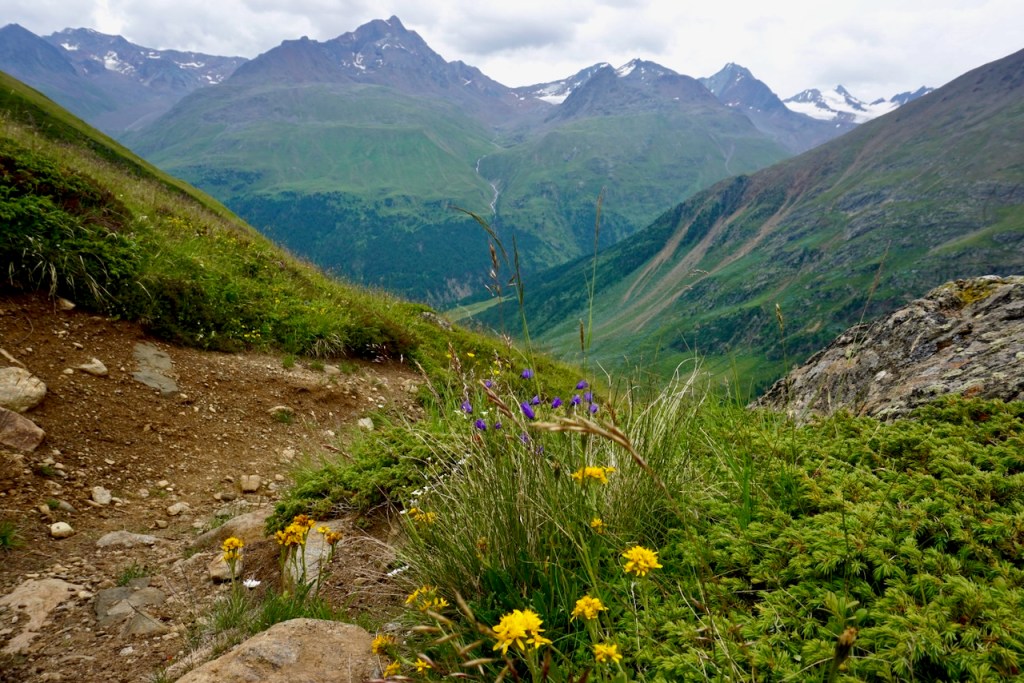
Upon reaching civilization, we crossed a bridge over the river . . .

. . . walked past one last herd of grazing horses . . .

. . . and looked in the direction of the Wildspitze again, invisible now.
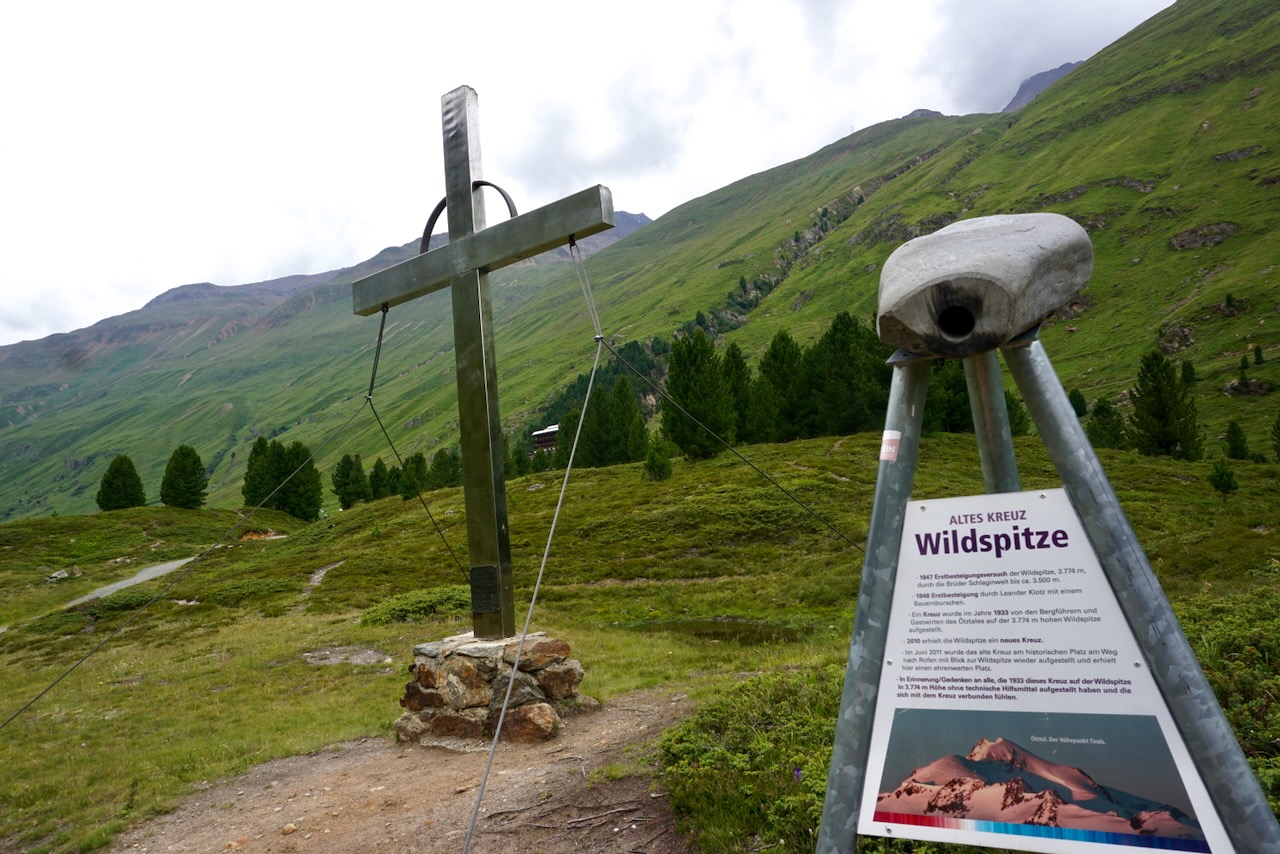
This was not my mountain to climb, but I have no doubt that my friends will climb it one day. If I’ve learned any lesson, it is this: If one cannot go calmly and steadily, one need not go at all. The purpose is to be there, not to get there.

And if I can focus on the being rather than the doing , then I have learned something indeed.
Travel Guide: Porto to Lisbon

I think it was over a year ago that a girlfriend first mentioned the possibility of a trip to Portugal together. Our partners had been each other’s travel buddies before we came into the picture, and they were more than happy to let us take the lead on planning. Their plan was to see pretty sights and enjoy one another’s company. In the end, that’s what we all did. Knowing more or less where we wanted to be, the four of us spent a week strolling through narrow alleys, taking endless pictures of tiles, and eating excellently, which is saying something when one member of the group is not only a vegetarian but also gluten free.

Because of the way the week flowed, one day of wandering into the next, I’m breaking with established patterns and writing about the whole trip in one post. We rented a car for the days in the middle but were otherwise on foot, averaging 10 kilometers per day in spite of some good rain. The experience of being in Portugal was one of getting turned around in twisting streets, marvelling at the hills and stairs, and alternately admiring and lamenting the old buildings in various states of restoration. It was an experience in being rather than one of expectations, and we let ourselves be surprised.

Porto

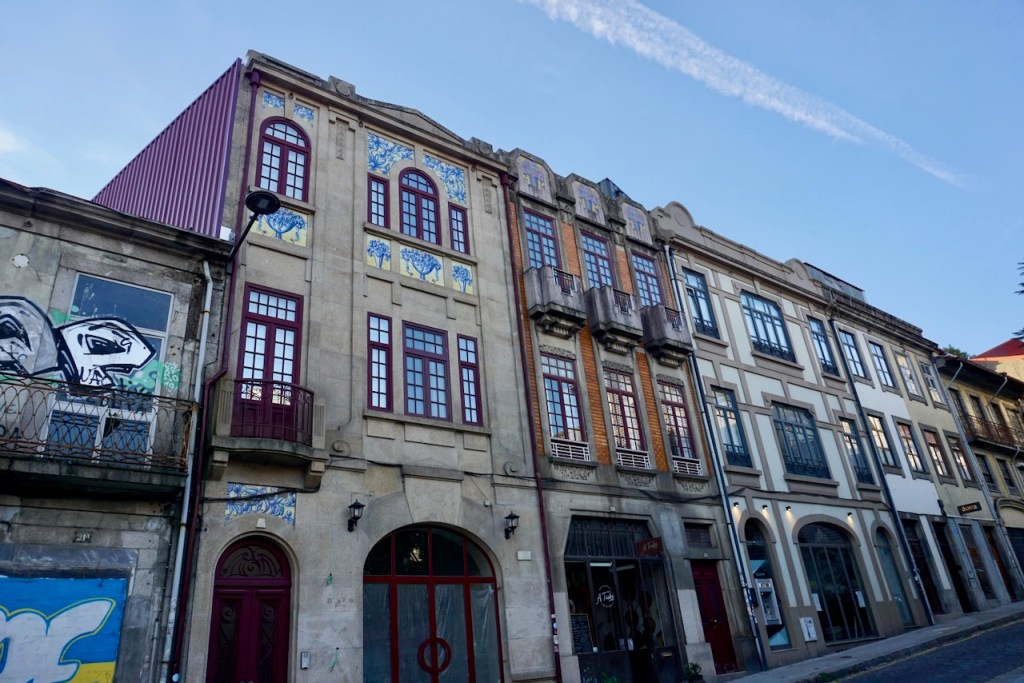
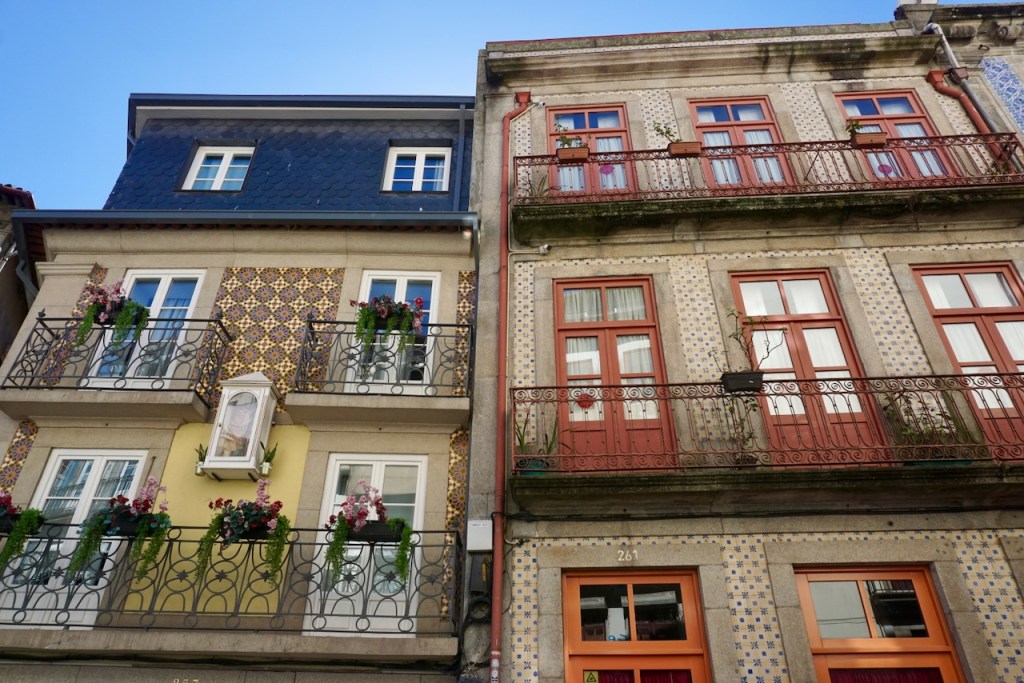
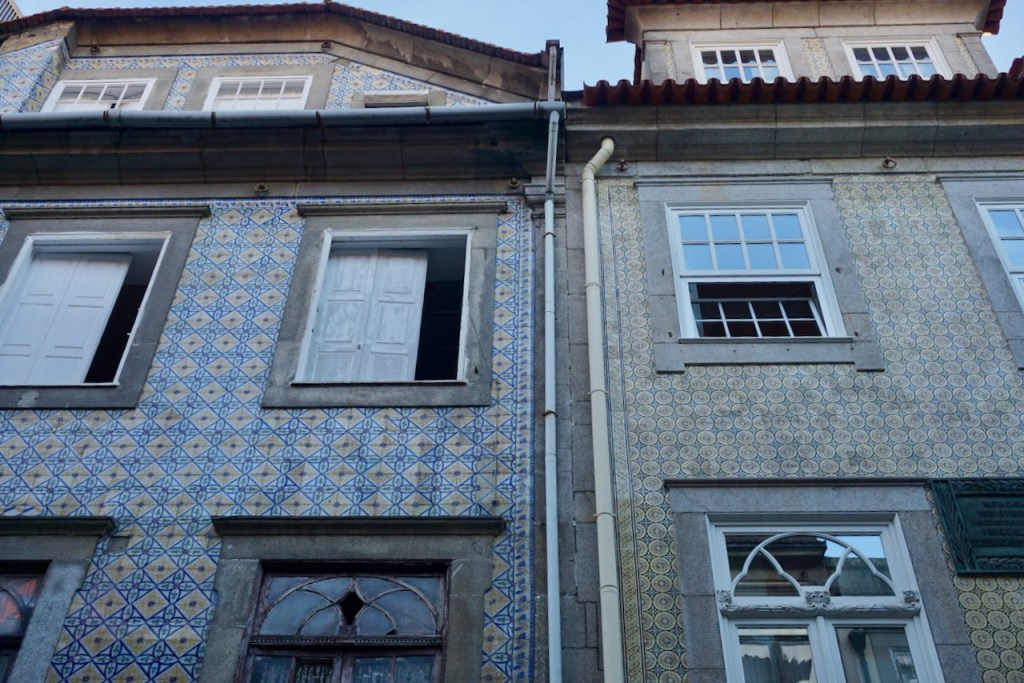
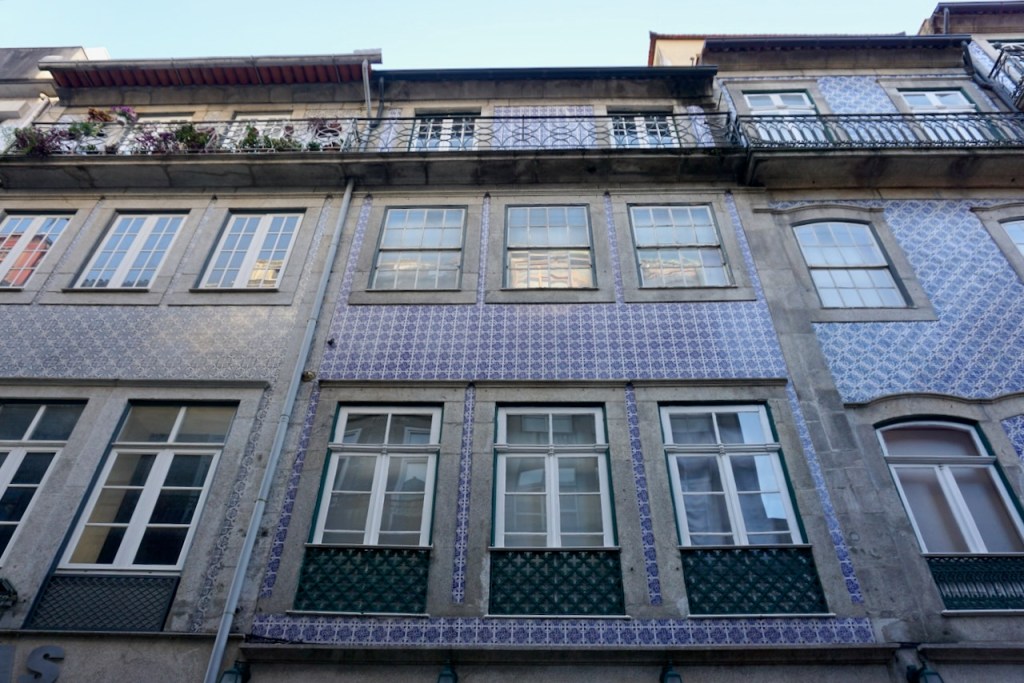
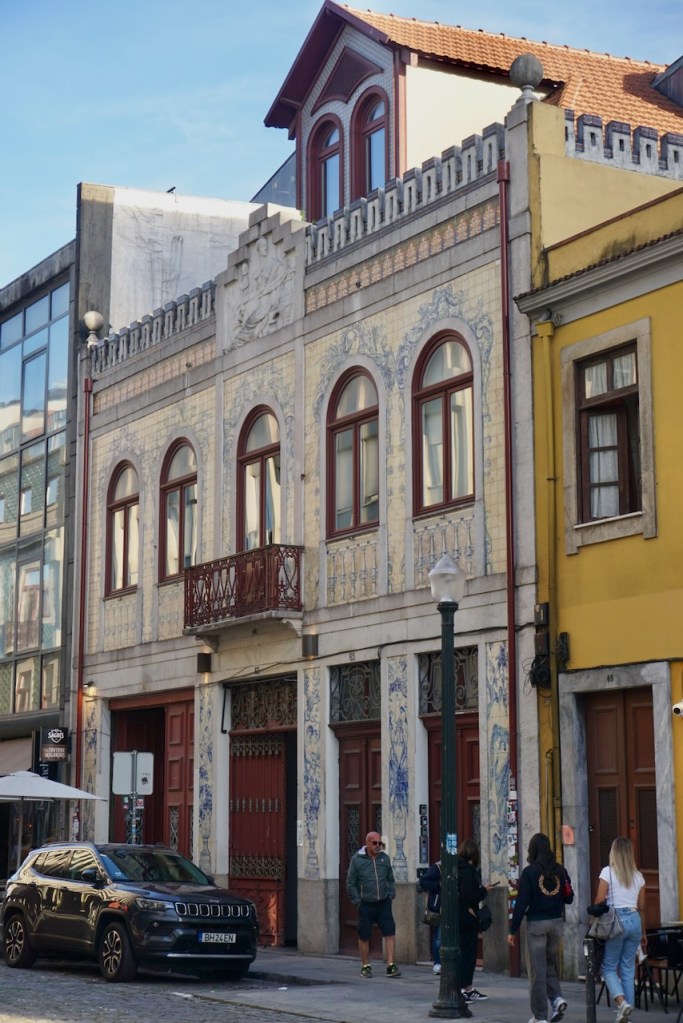
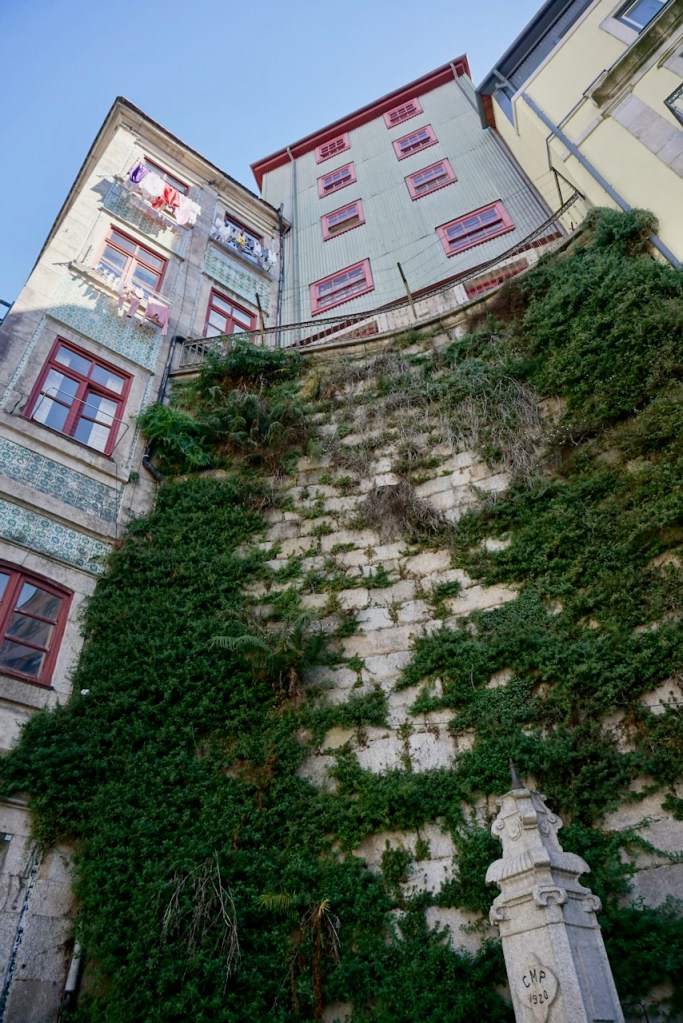
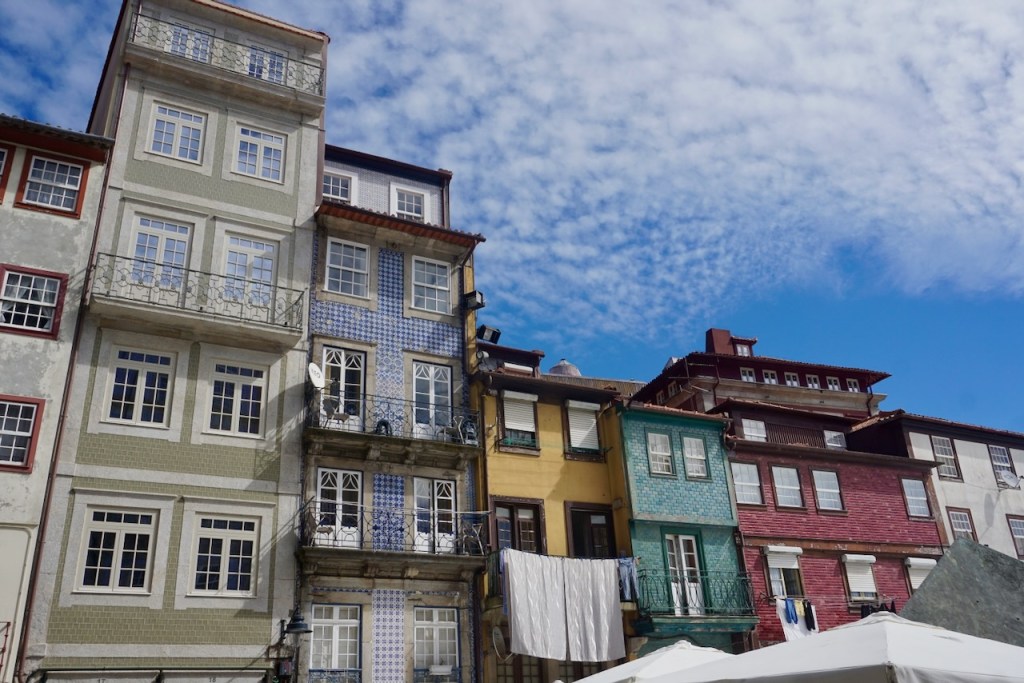
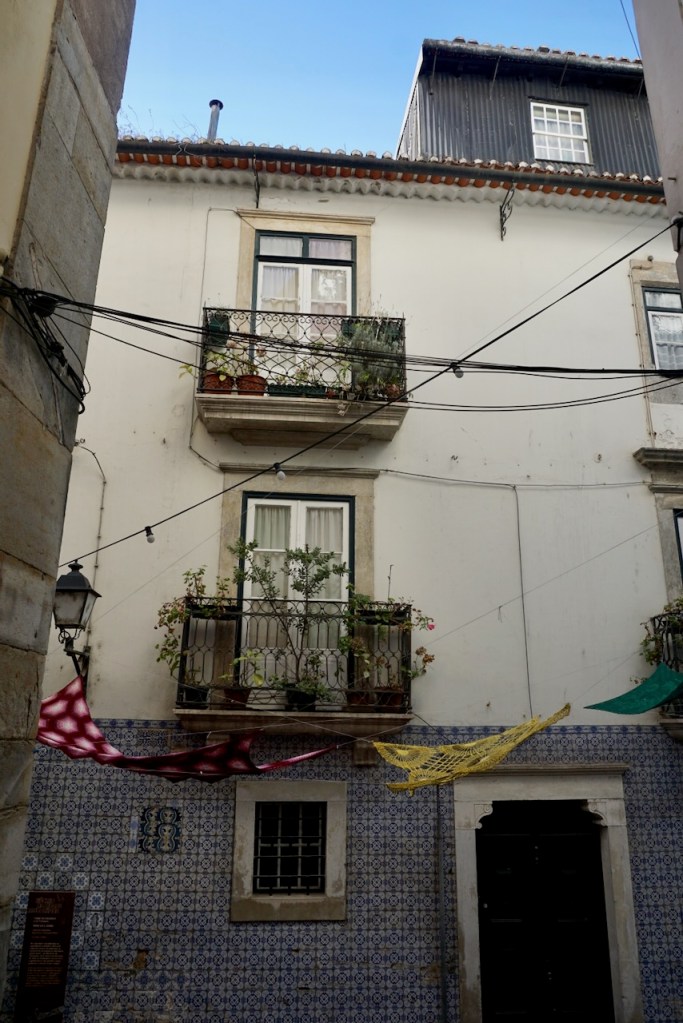
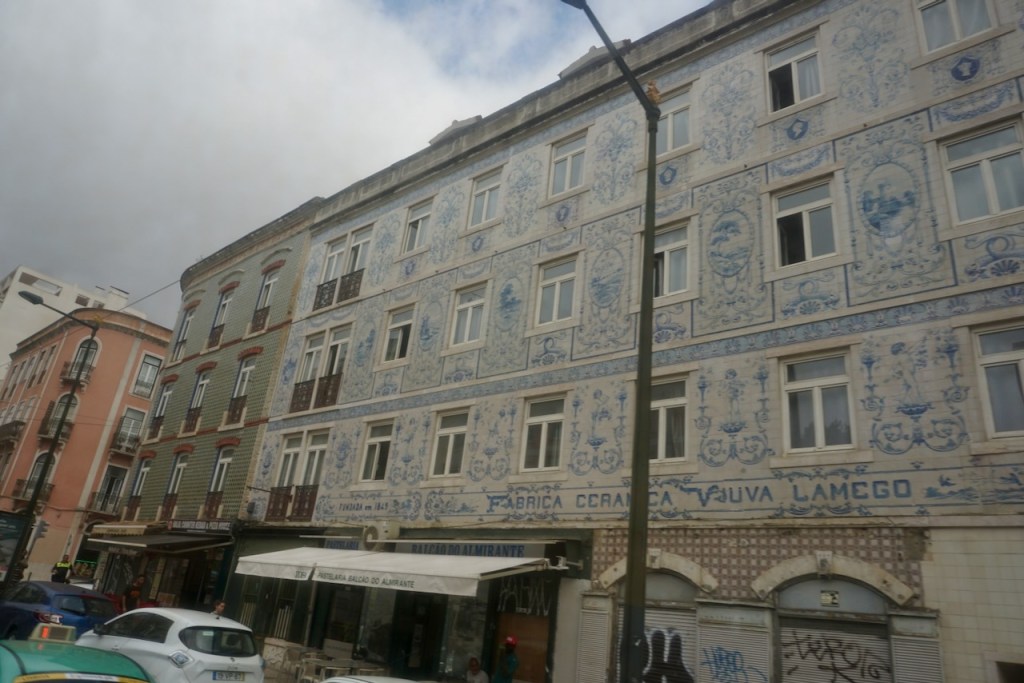
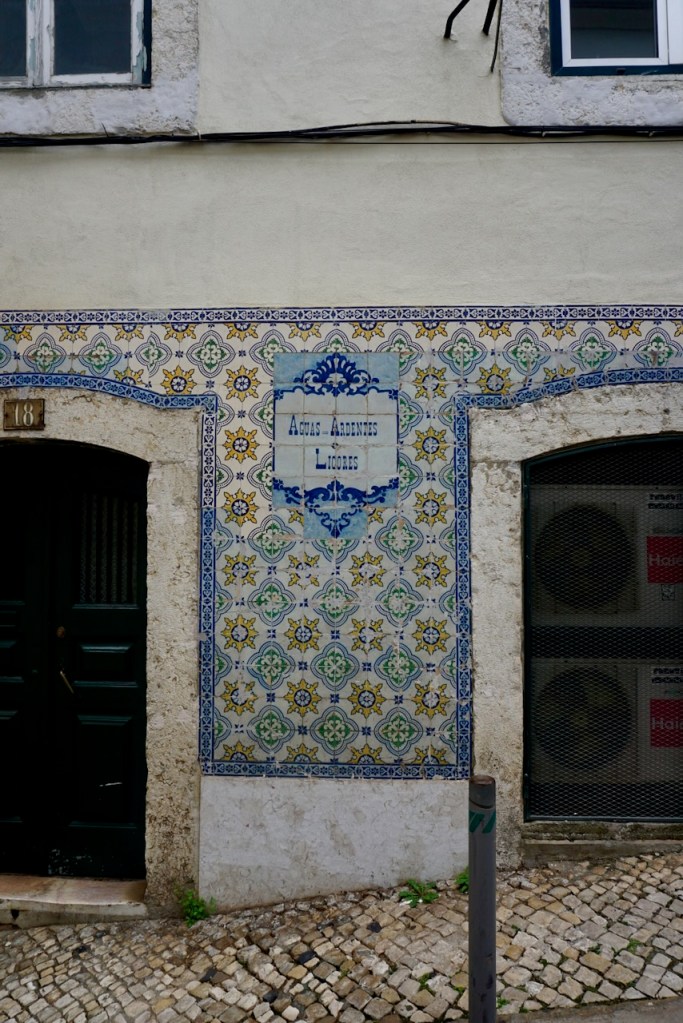
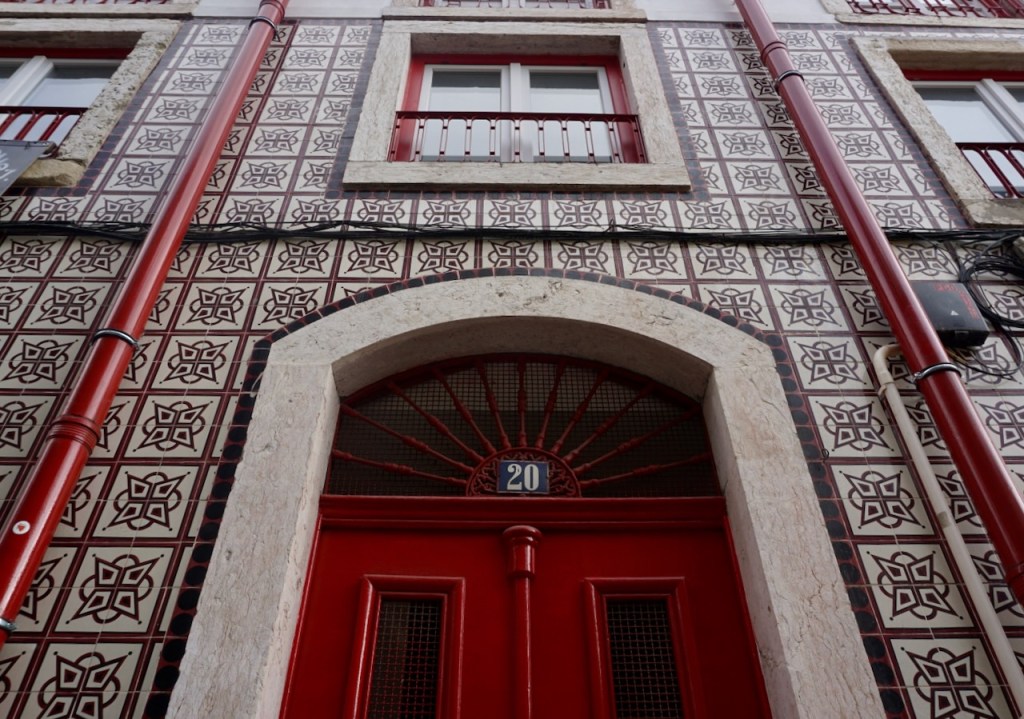
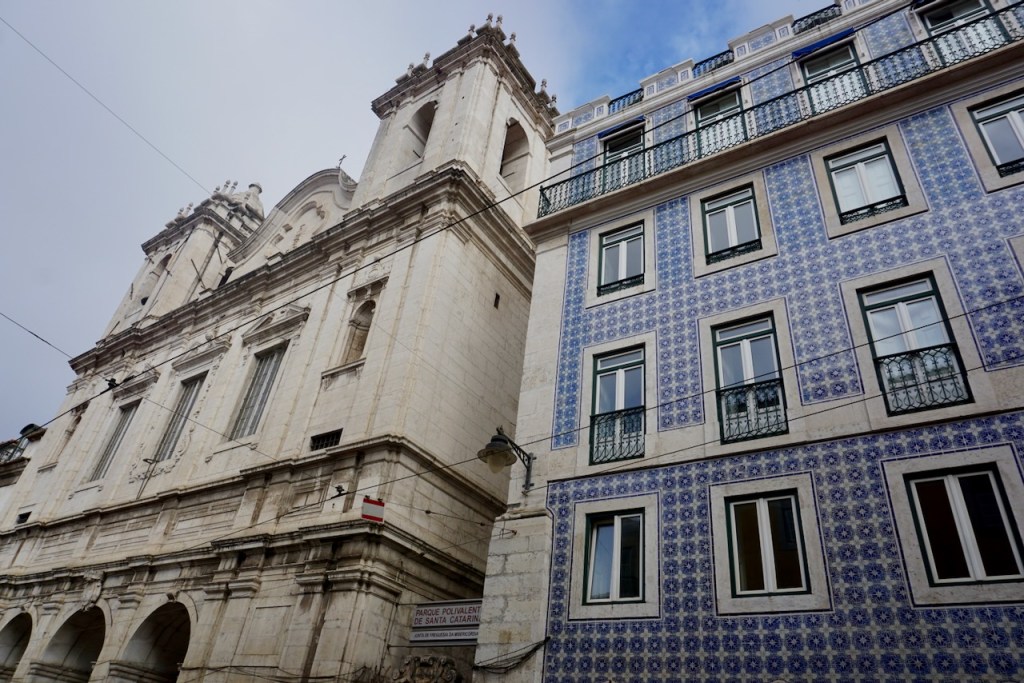
We arrived in Porto late in the afternoon and hungry, but eating needed to wait because most restaurants in Portugal, as we learned, open first at 7:00 or 7:30 for dinner. So, as would become routine, we walked. That evening and the following day we exclaimed at the tiles covering the buildings . . .
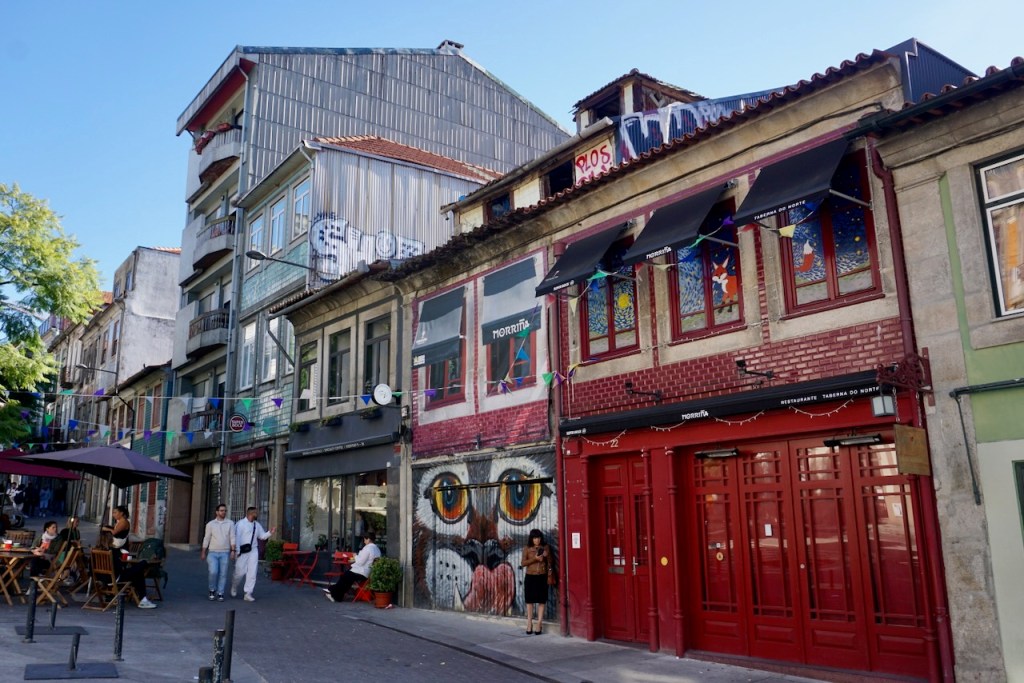
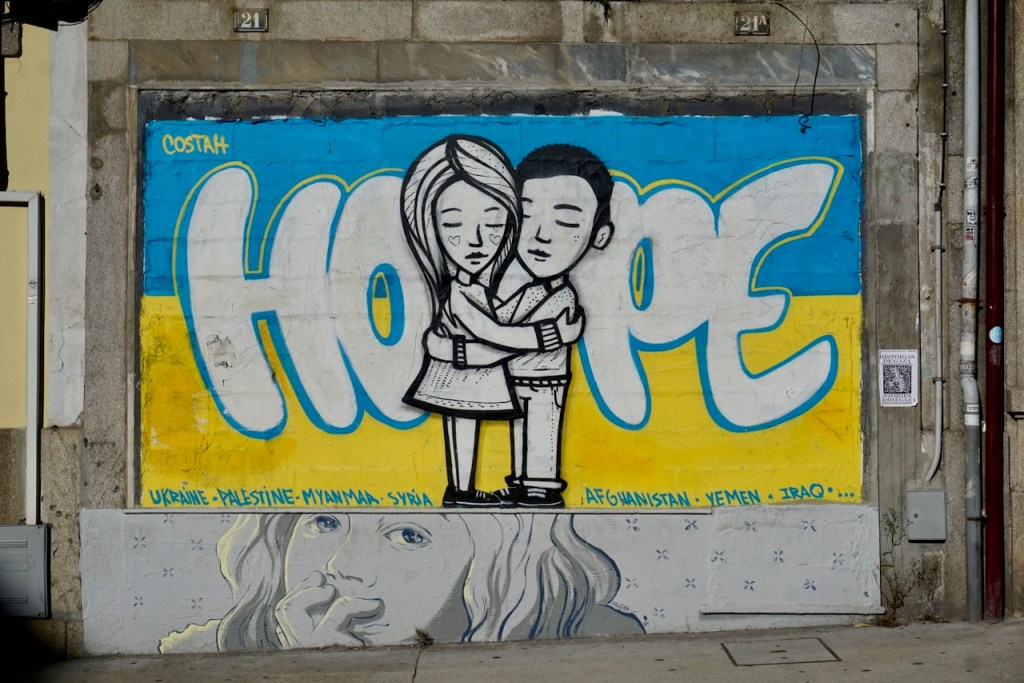
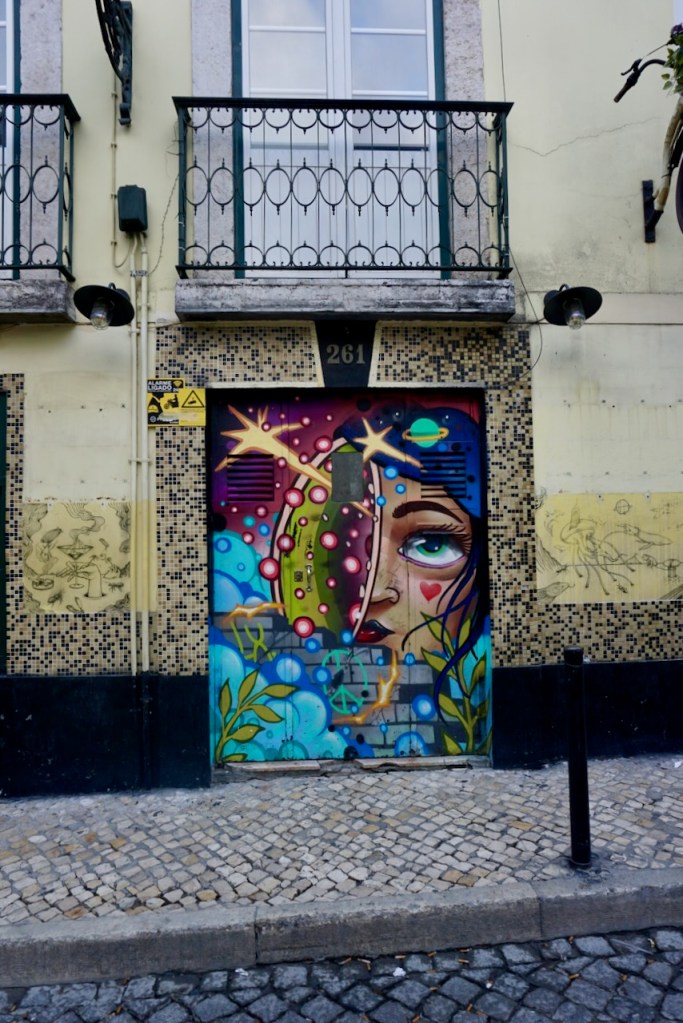
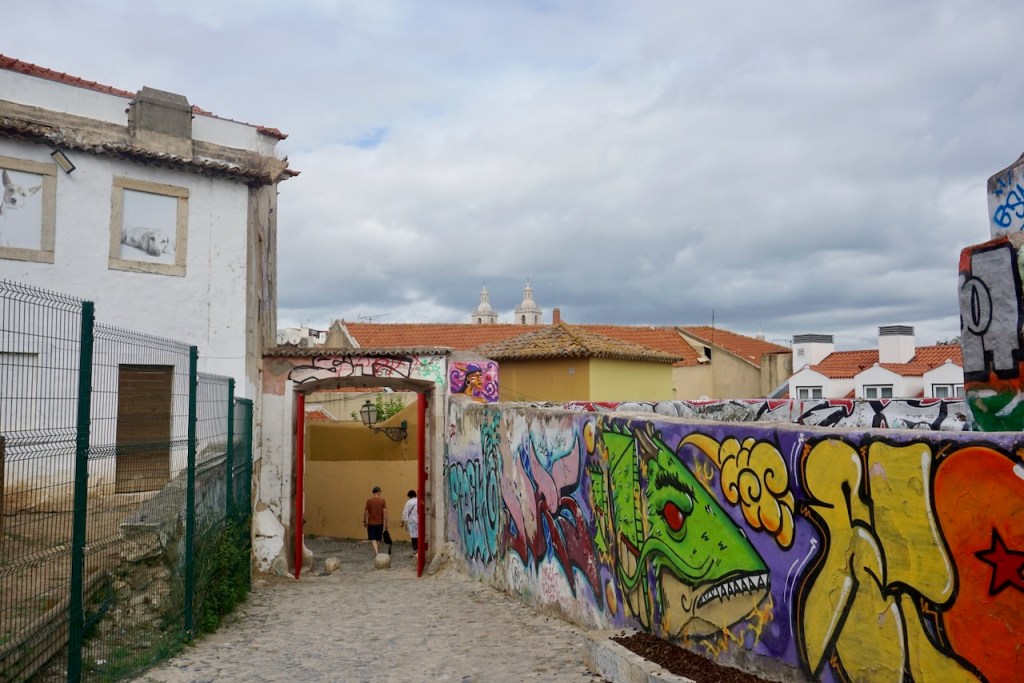
. . . the prevalence of street art in the Ribeira neighbourhood and elsewhere . . .

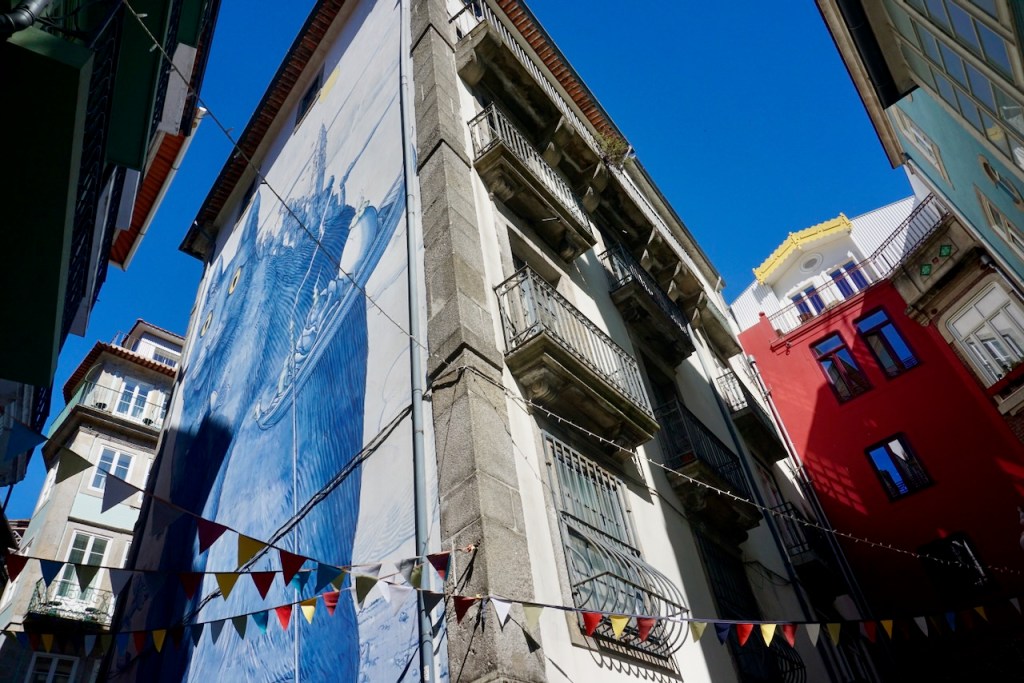
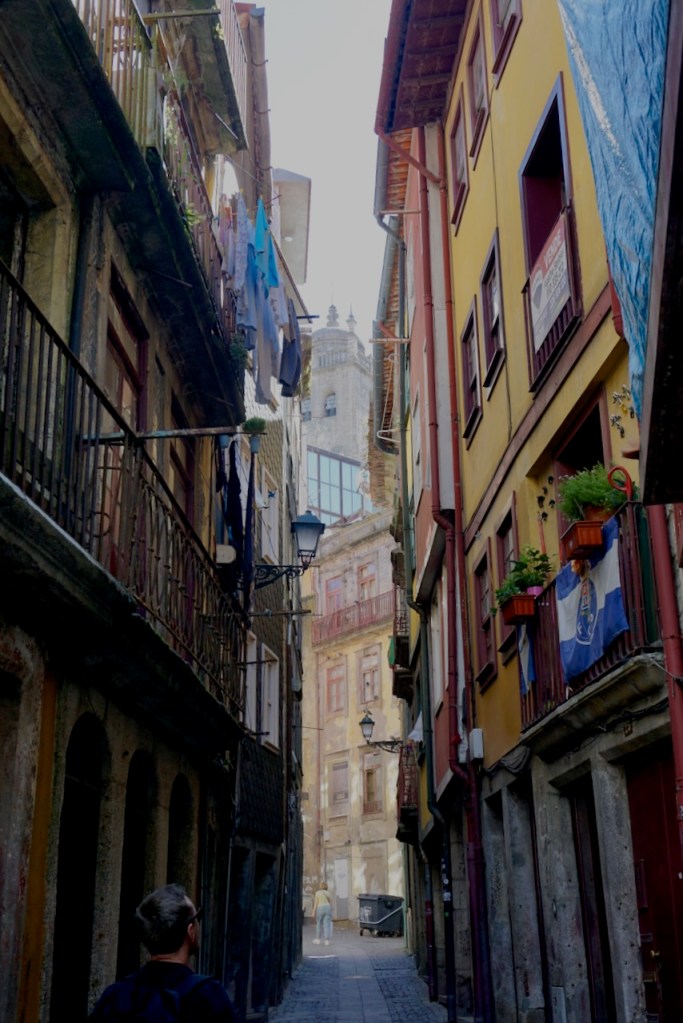
. . . and the surprises hidden in little alleys, which always seemed to be built following the curves of hillsides.

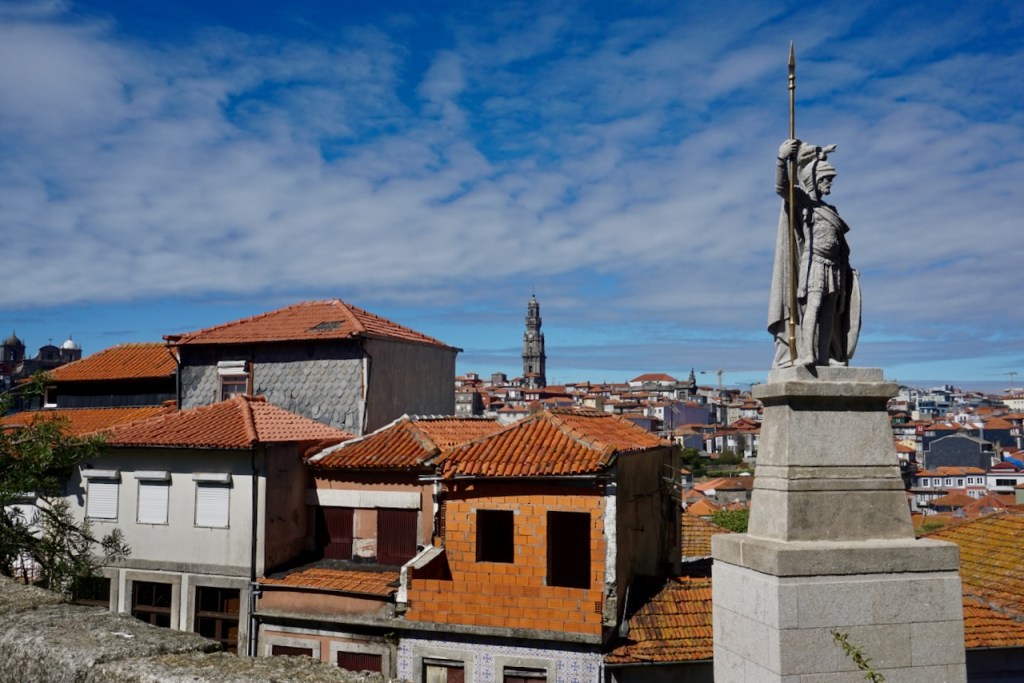
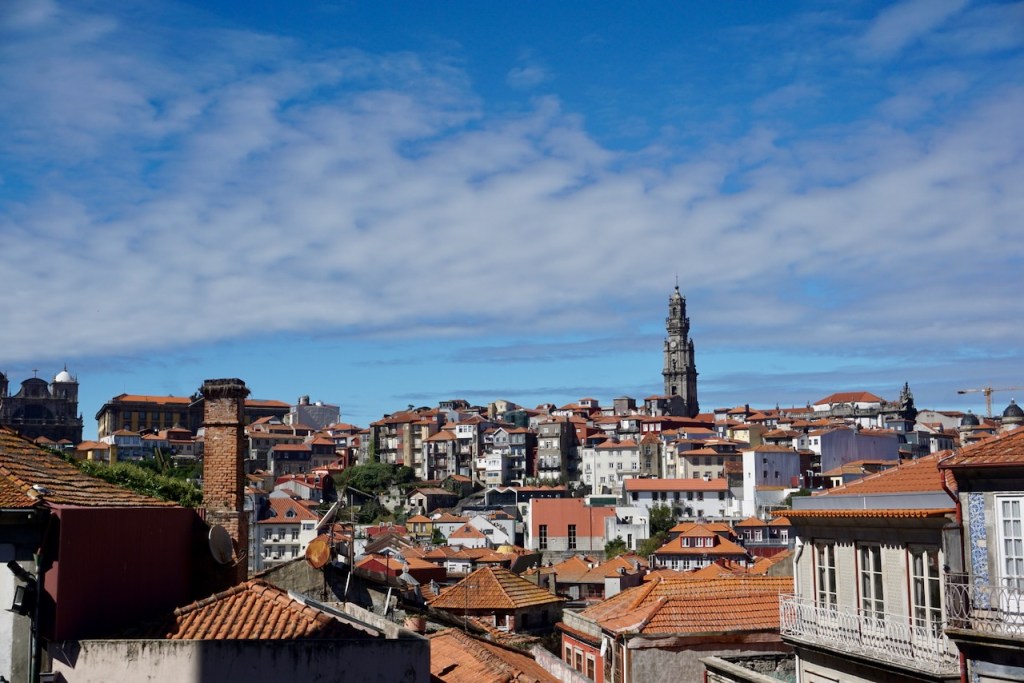
We saw some important sights, as well, such as the Torre dos Clérigos . . .

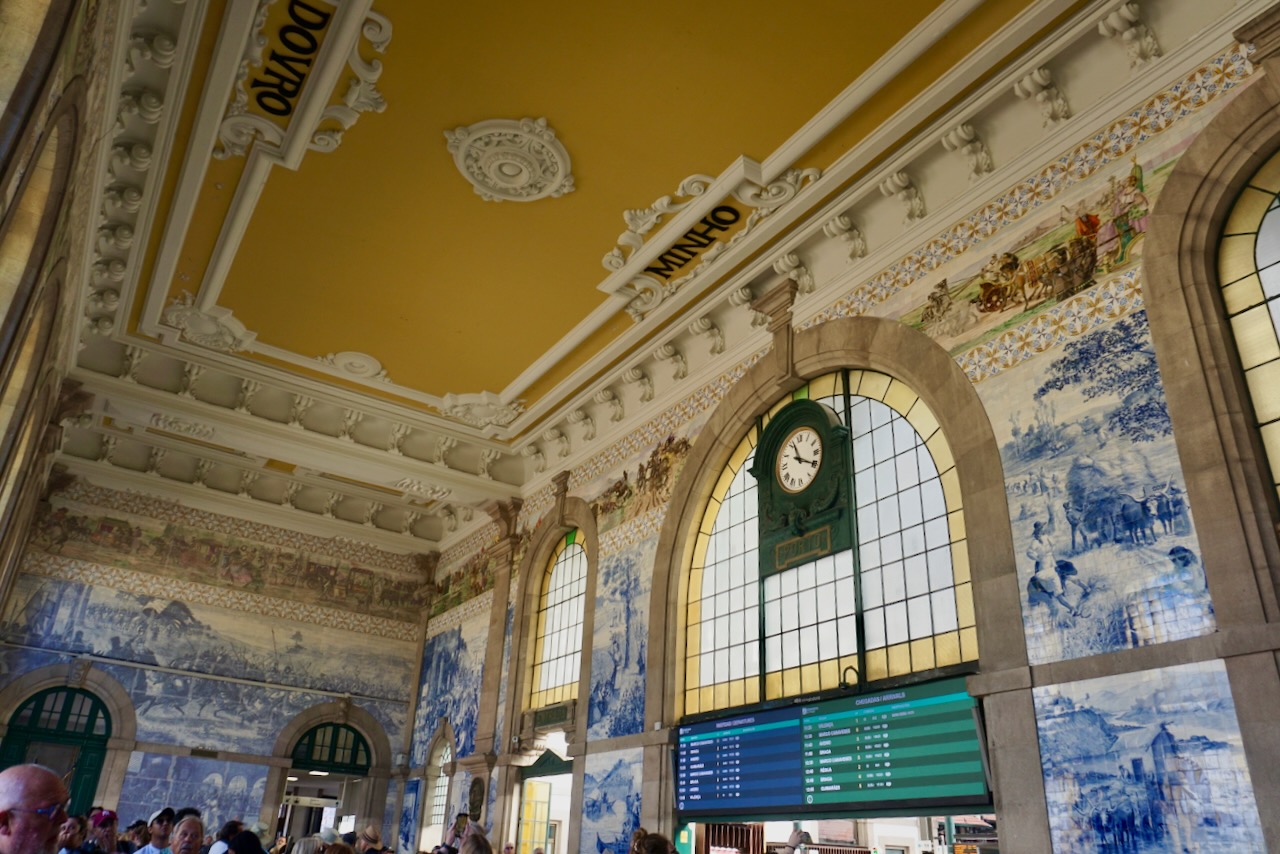
. . . the train station . . .

. . . and the Igreja do Carmo, which caught our attention because of, again, the tiles.

We paid for relatively few “attractions” on this trip, but were more than happy to buy timed tickets and wait in line for Livraria Lello, a bookstore described to me “like walking into Harry Potter“. And it was.

As we found out at the end upon paying for our books, the ticket price was discounted from our purchases, which struck me as a rather clever business model.

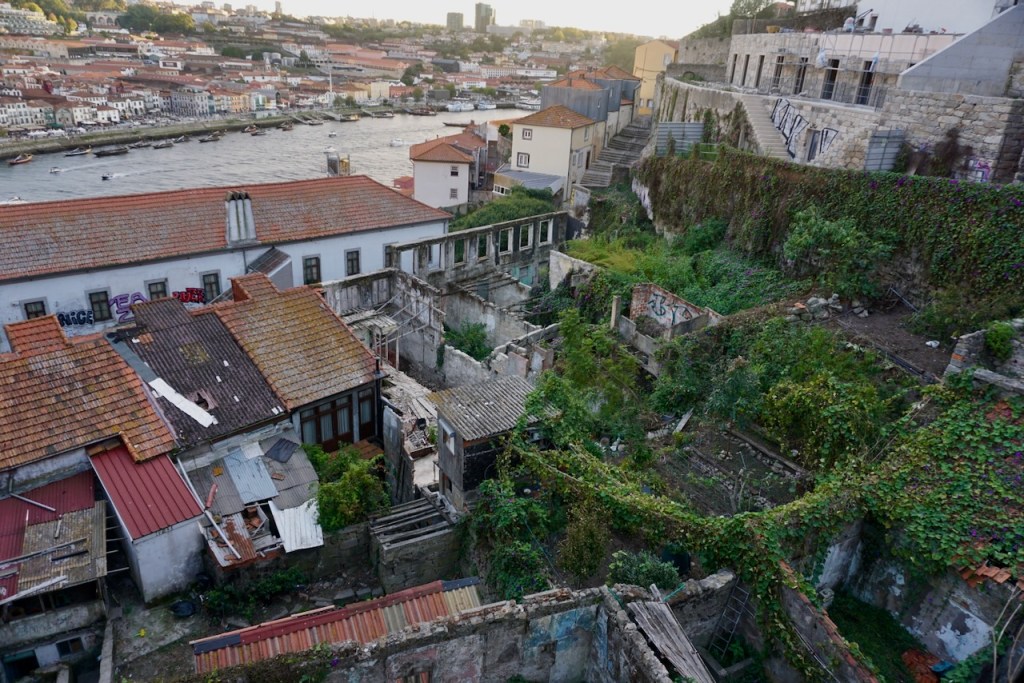
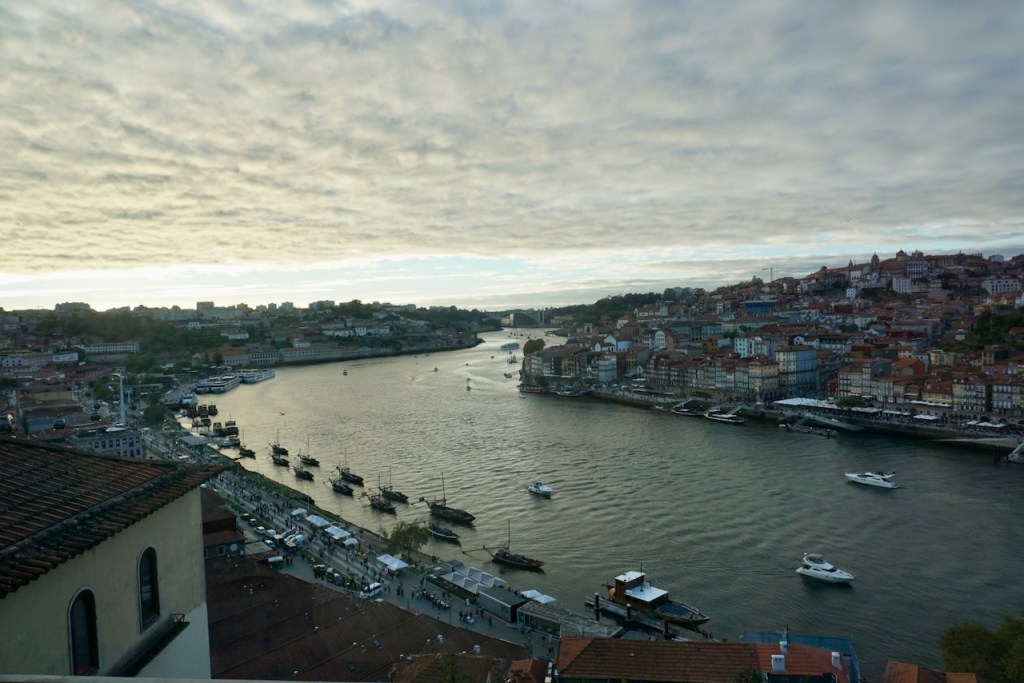
In the afternoon, we climbed all the stairs to the Sé do Porto, the cathedral, and found ourselves far more interested in the view than the building itself.

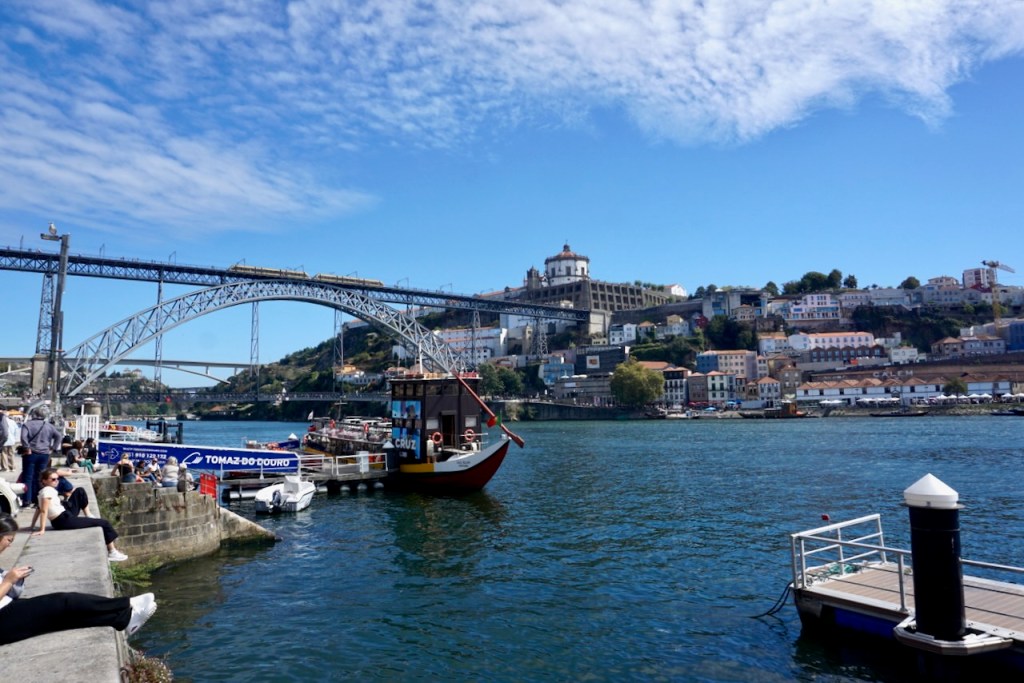
From there, we headed down to the water for a snack before crossing the river to taste some port. We’d had a glass at dinner the previous night, and that was fine, but I found three tastes to be rather a lot. Port tastes like it smells, thick and syrupy, and I think it was the amount of sugar that left me with a headache the following morning. National beverage aside, that was the end of drinking port.

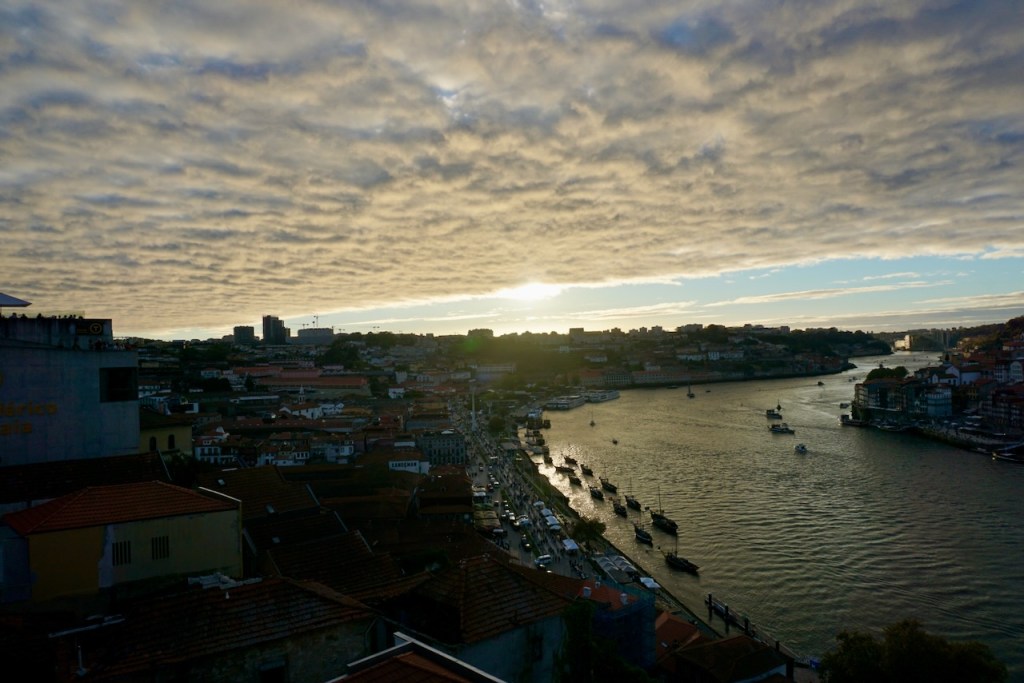
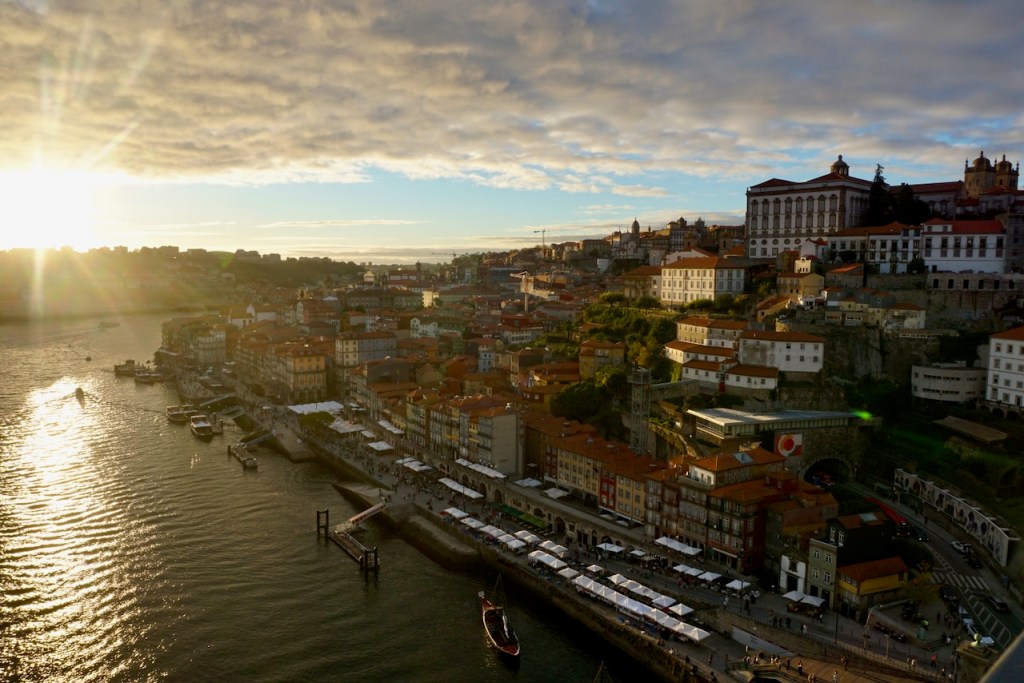
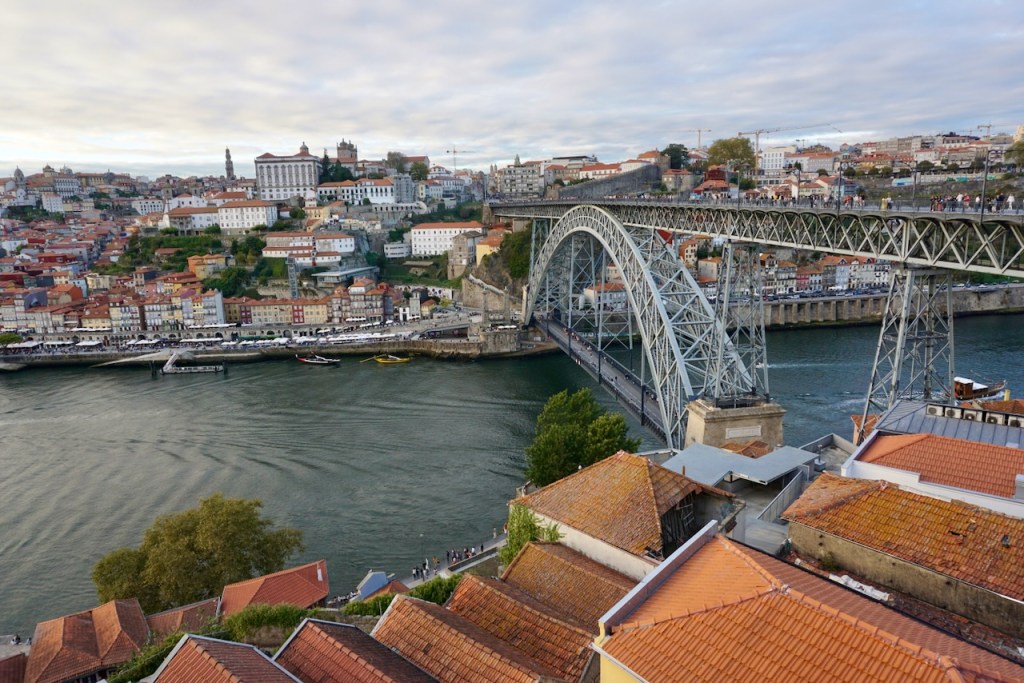
For the sake of the view, we took the Gaia cable car back to the bridge after a stroll along the Duoro River. Crowds of people had gathered to wait for sunset, which we took in while walking across the bridge in the direction of downtown.

I found this a fitting end to our time in Porto. We had the feeling that we had at once seen the whole city and nothing at all. We had wandered and tasted and gotten lost and taken detours, and we picked up our rental car the following morning thoroughly charmed by the experience. There’s not much more one can ask of a city.

Aveiro

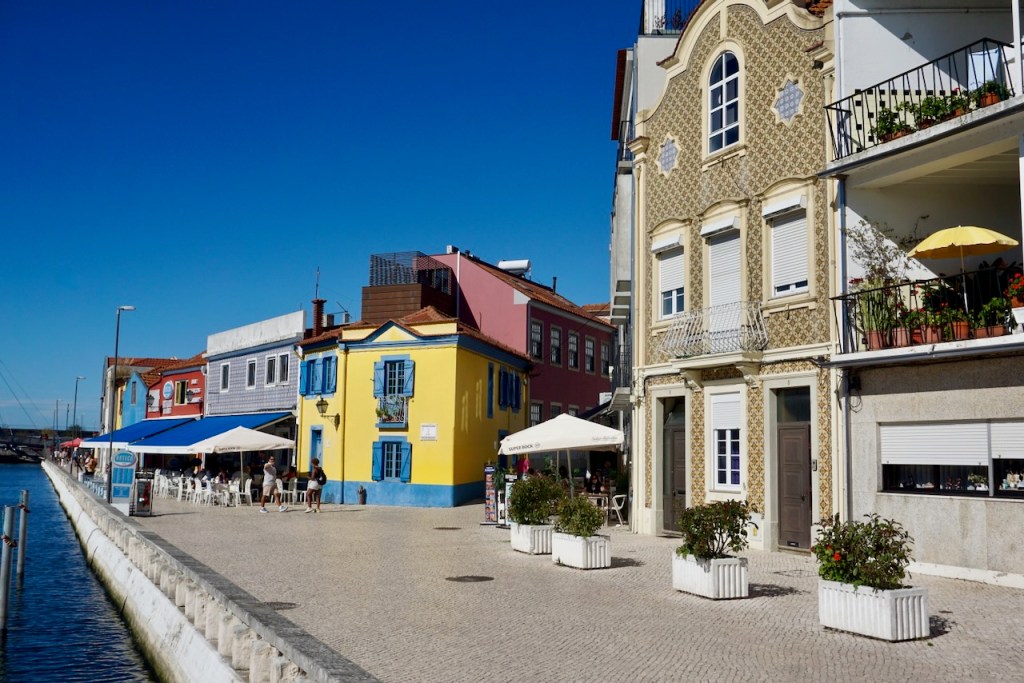
Our first stop on the road was Aveiro, a little town built along a system of canals stemming from a nearby lagoon. For reasons that we couldn’t discern, the bridges were festooned with ribbons on which messages, names, and dates were written, giving everything a rather festive atmosphere.

After getting our bearings, we headed into a plaza for ice cream and made good use of the handicrafts souvenir shop nearby. It always makes me smile to see perspectives of the world from elsewhere.

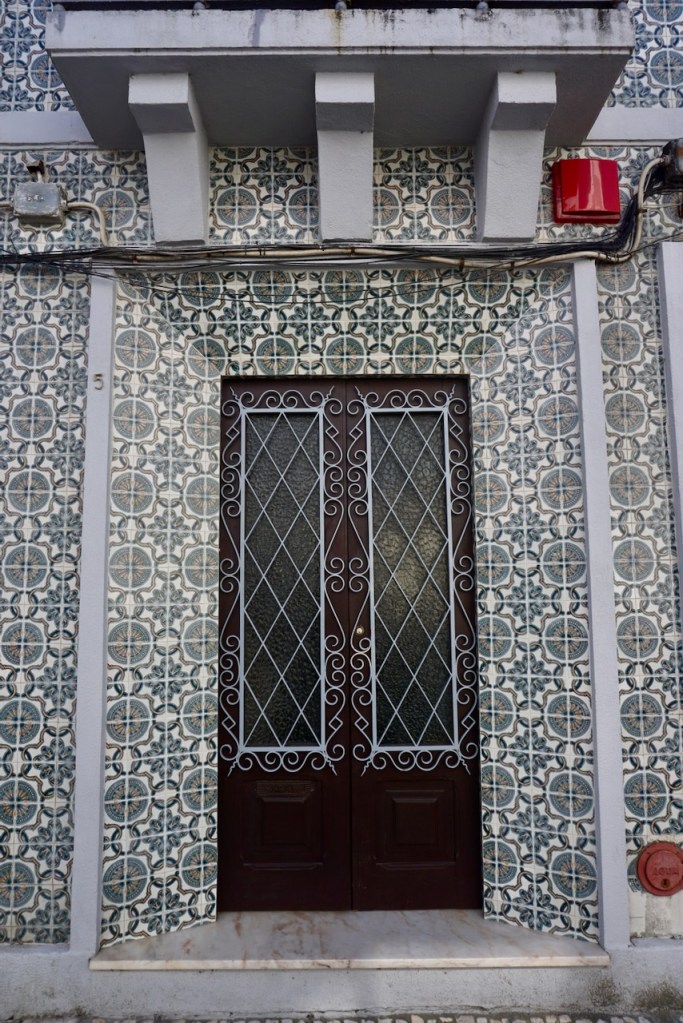
As always, we appreciated the architecture and the tiles; many of the buildings here had an Art Deco flair, lending Aveiro the feeling of walking through an old film set.

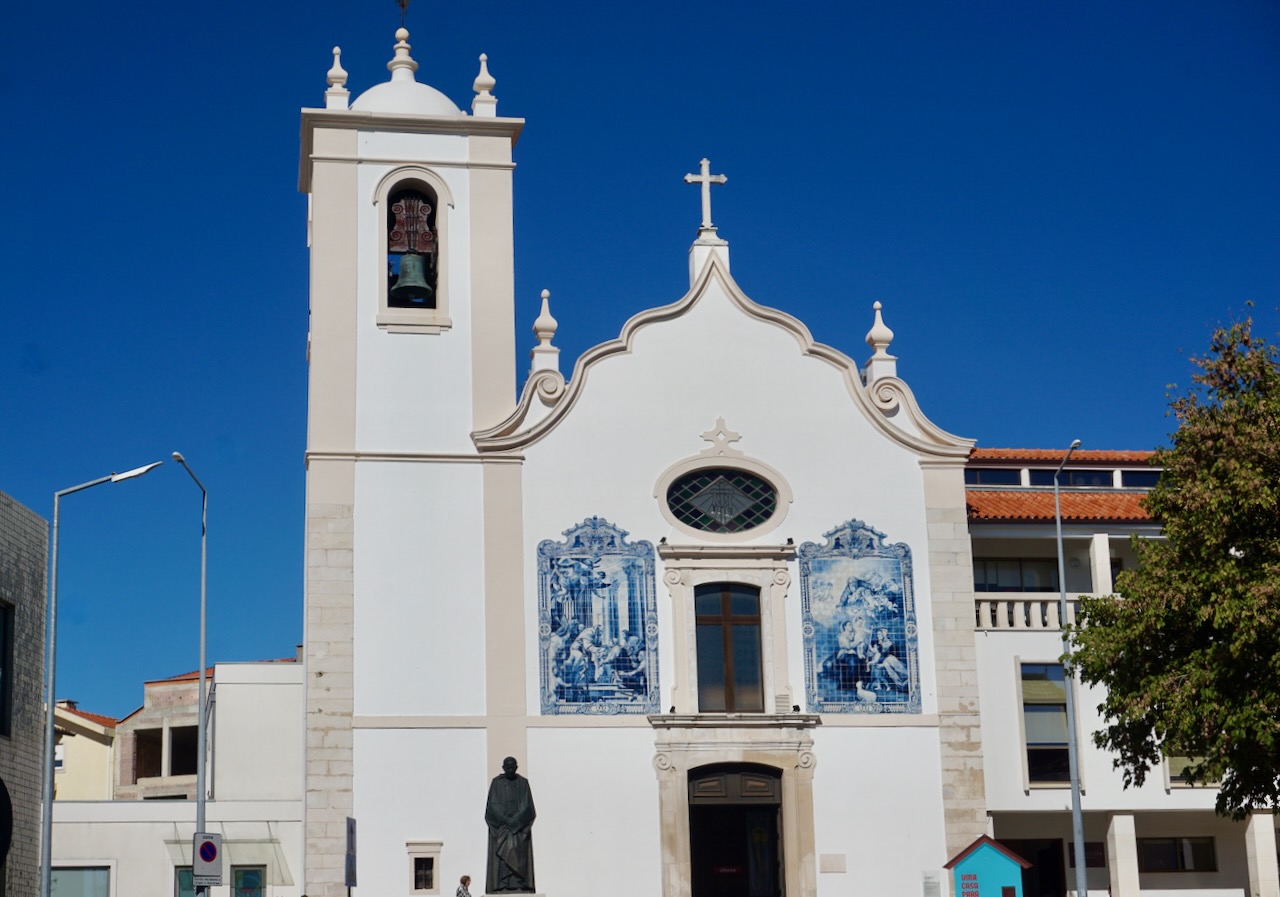
As in most towns in Europe, there was naturally a church to see . . .

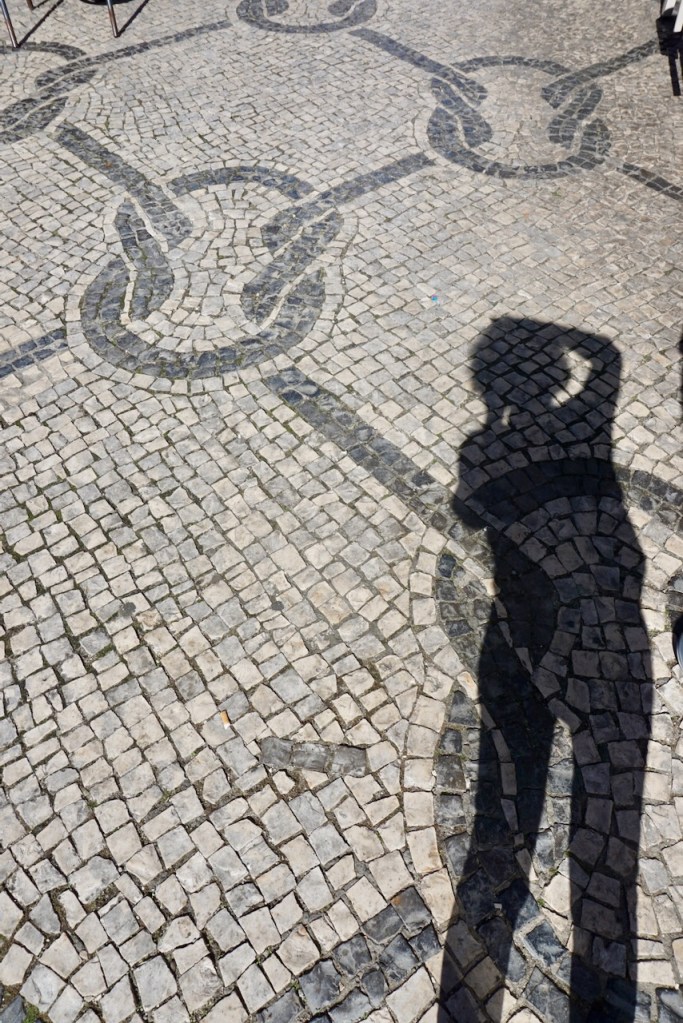
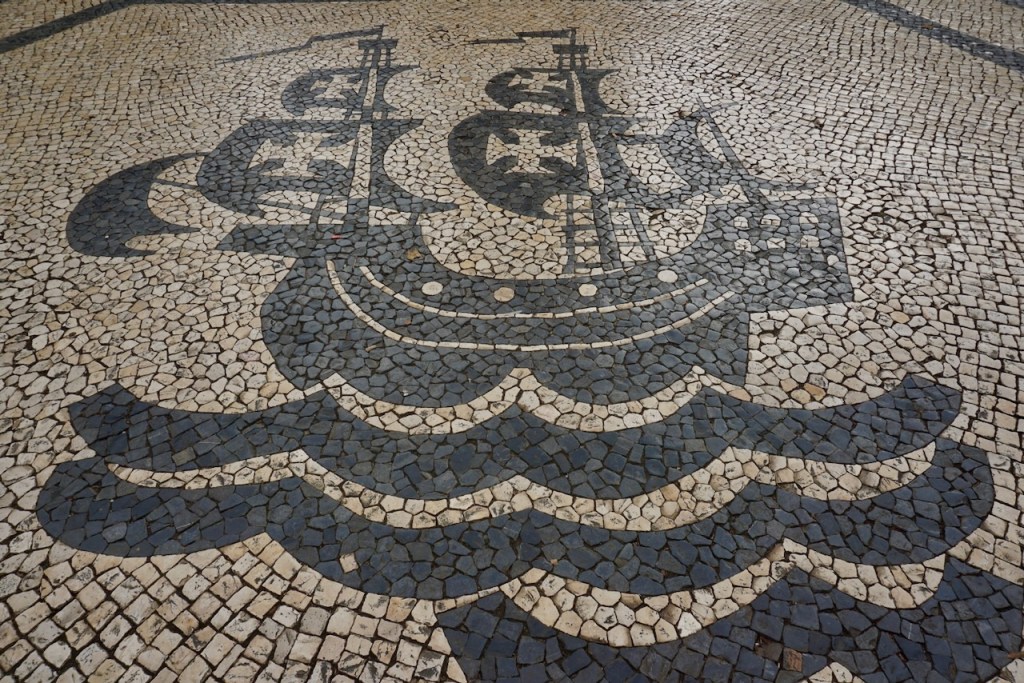
. . . and the mosaics covering the ground nodded at the importance of fishing to the area.

After a brief stroll to stretch our legs, it was back to the car to make it to our next destination before sunset.

Coimbra

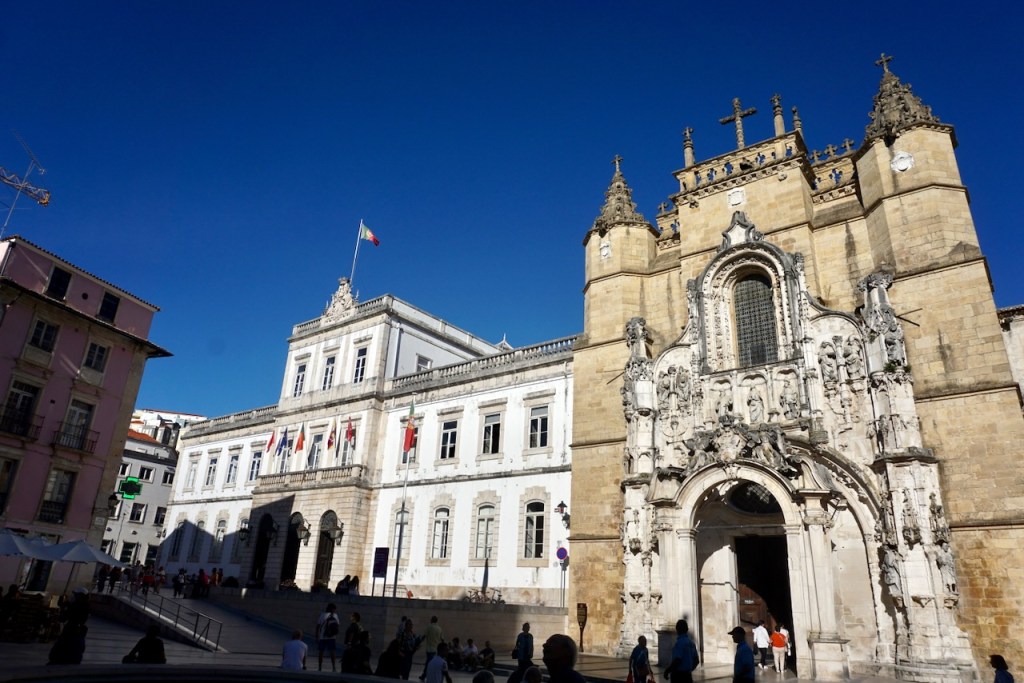
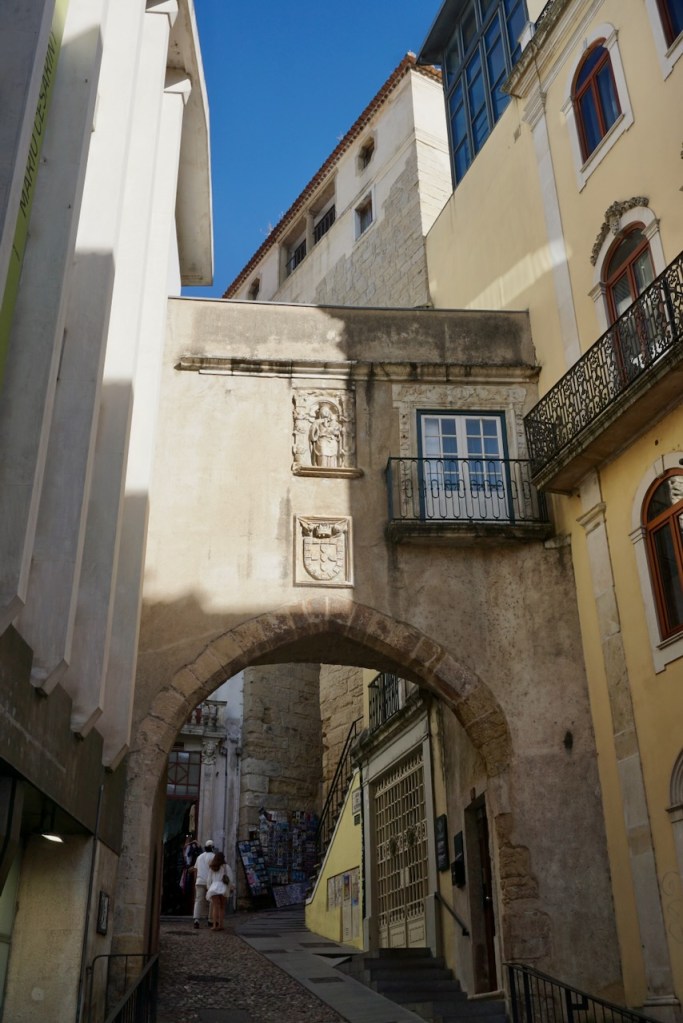
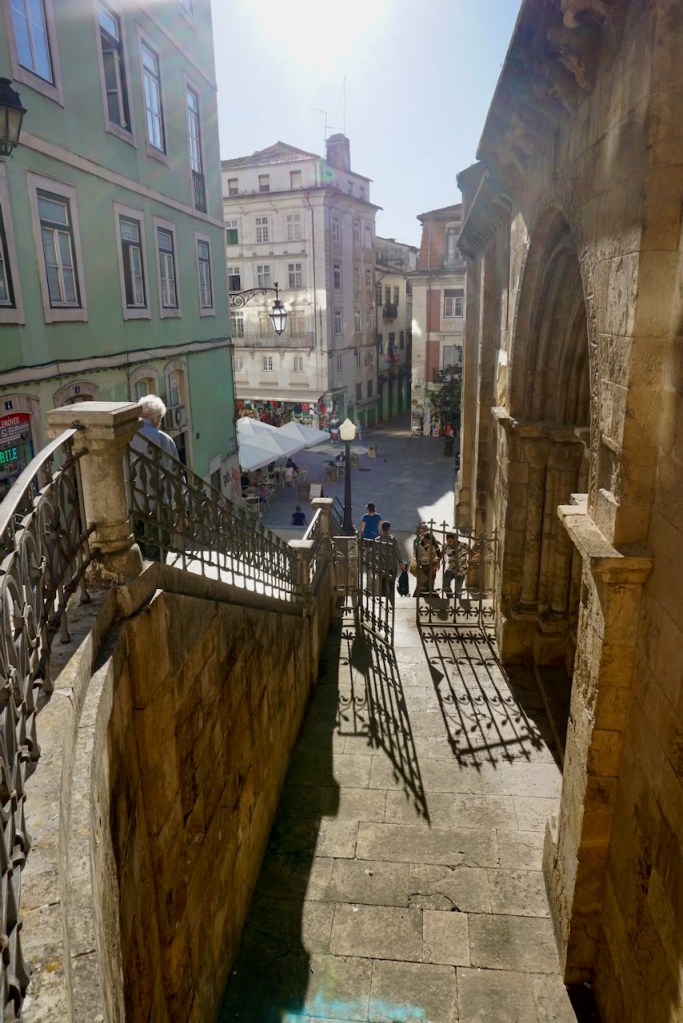
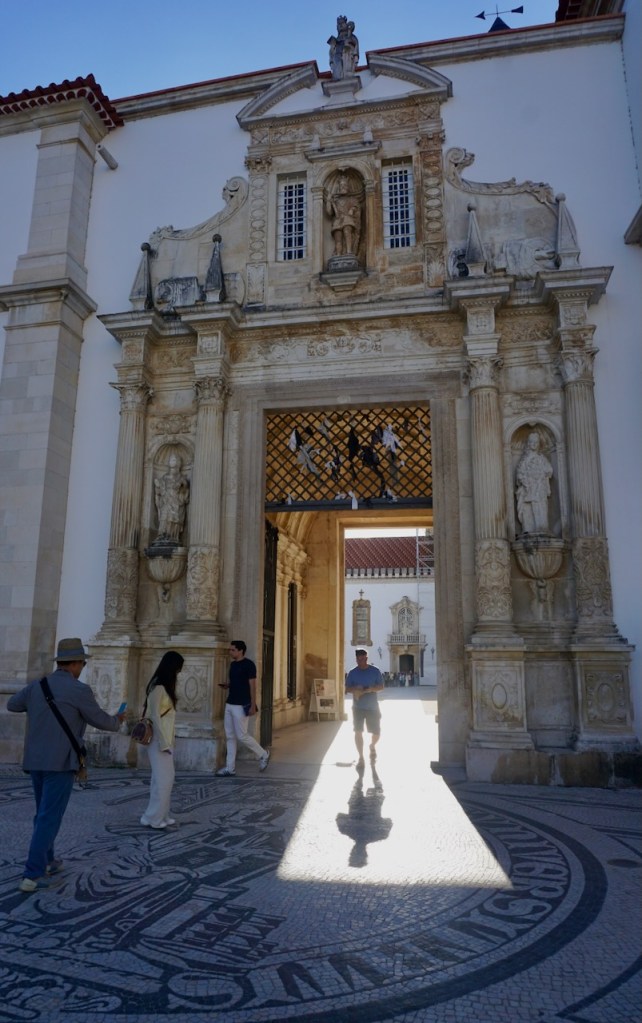
The first thing that strikes about Coimbra, as everyone had told us, is that it’s old. It has a history dating back to Roman times, many medieval buildings, and a university also from the Middle Ages. The construction and stone work differed from what we had seen before, and the layout of the town curved upwards, staircases and streets spiralling, winding, and becoming narrower the higher we went.

At the university, the most famous building is the library, which we admired but did not pay to visit.

Coimbra is a student town and the atmosphere of such a place was present in street art, installations, and many buildings.

It was dusk when we left Coimbra and dark when we arrived at the beach town where we’d spend two nights. As we found out in the morning, we were a world away from touristy hot spots.

Figueira da Foz

Due to globalization, it’s sometimes easy for the English-speaking traveller to forget that there are places in the world that still exist unto themselves. Figueira da Foz was just such a place. Located on the beach, there is some tourism when the weather is right, but not enough that people working in bakeries or grocery stores, with one single exception, spoke English. And I am again reminded what a privilege it is to be able to travel through the world speaking my own language.

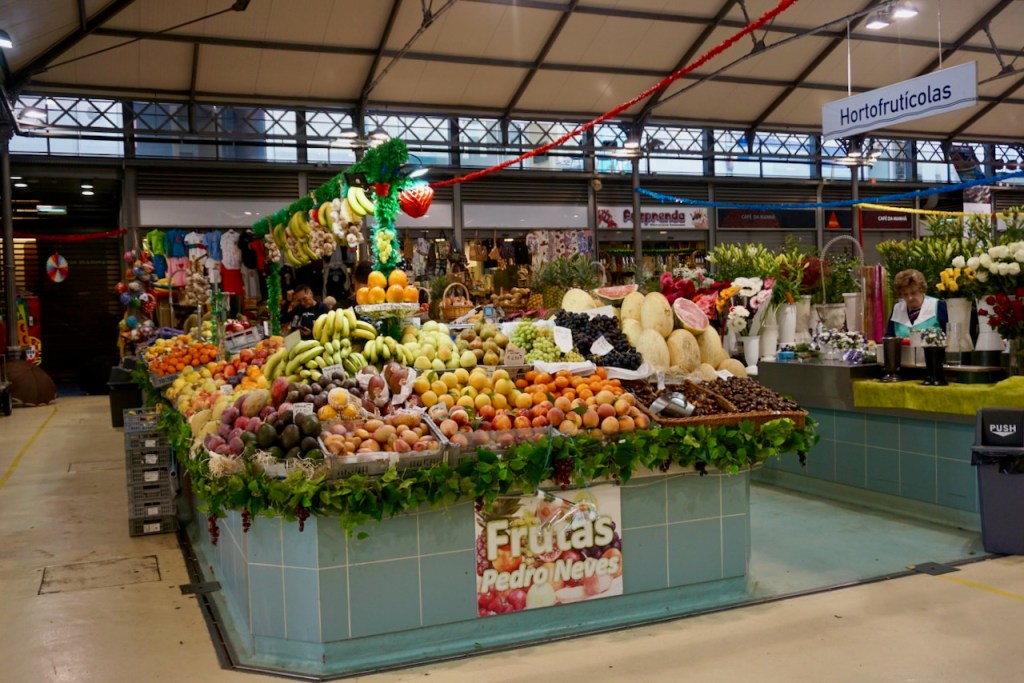
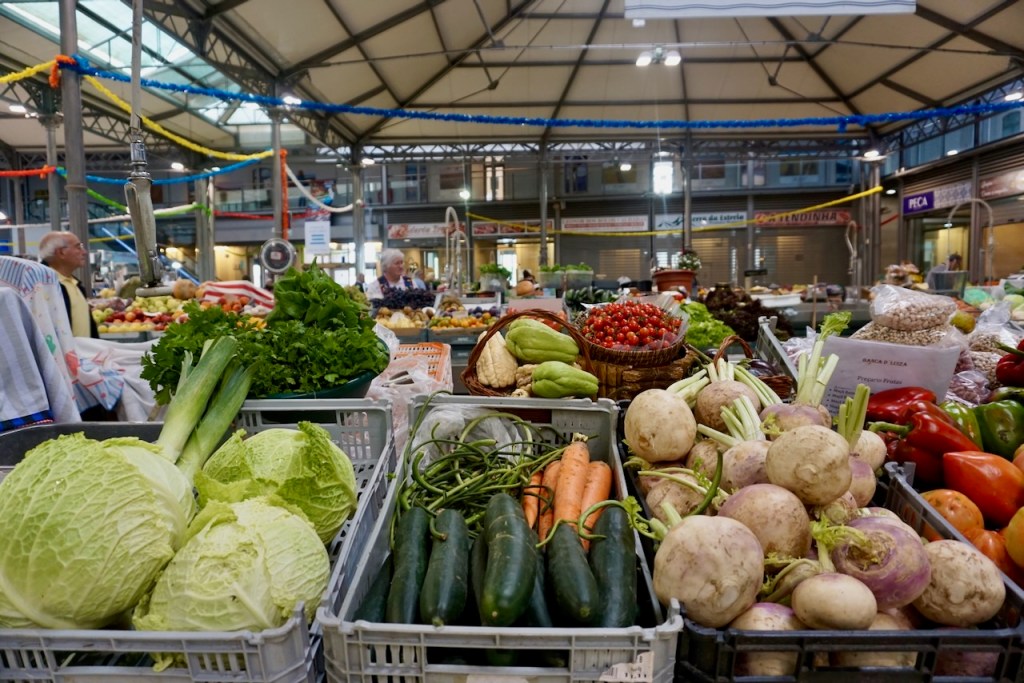
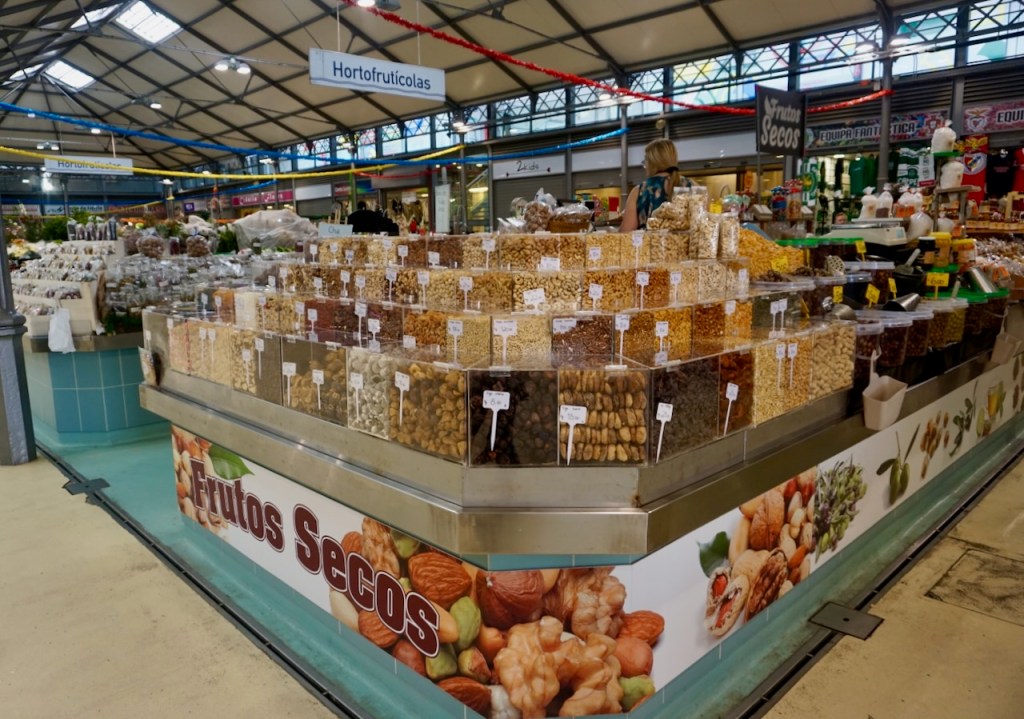
After an unsuccessful attempt in pouring rain to find gluten free breakfast, we headed to the local market. Figueira da Foz has multiple supermarkets (we visited out of curiosity to buy snacks that we don’t have in Germany) but the market was visited by elderly people doing their shopping and simply meeting one another. I would be very glad to have daily access to something similar. We bought fresh and dried fruit and loose tea, and I wished that we had proper kitchen utensils in our accommodation to make ourselves a real meal.

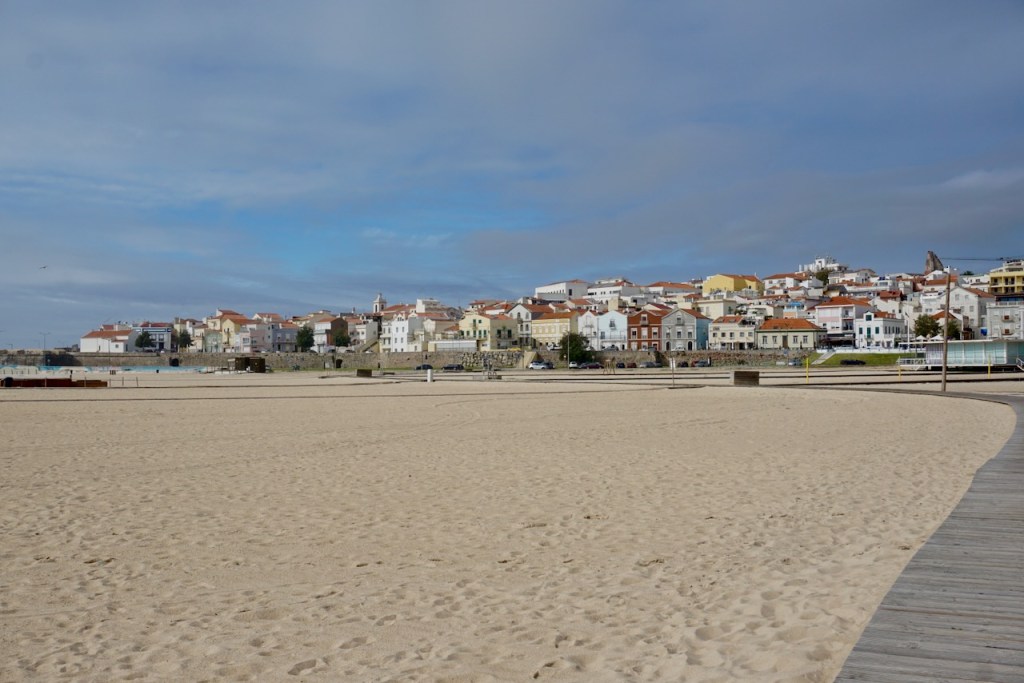
When the rain stopped in the afternoon, we walked for a long time along the beach, testing the cold Atlantic with our feet, laughing and running away from the waves that came up sharply and suddenly, far higher than we expected. This is not a surf beach; the wind and waves were far too dangerous for that.

We were pleasantly surprised by the excellent meal of traditional tapas (heavy emphasis on seafood but plenty for the vegetarians) accompanied by local red wine. And we had the distinction of being the first people in the restaurant, again driven by rain, and the last ones out. We talked and laughed and it was a pleasure to sit cozily inside, the lighting dim, enjoying the time. Considering we would be on the road again the next day, it ended up being a rather late night.

Sintra

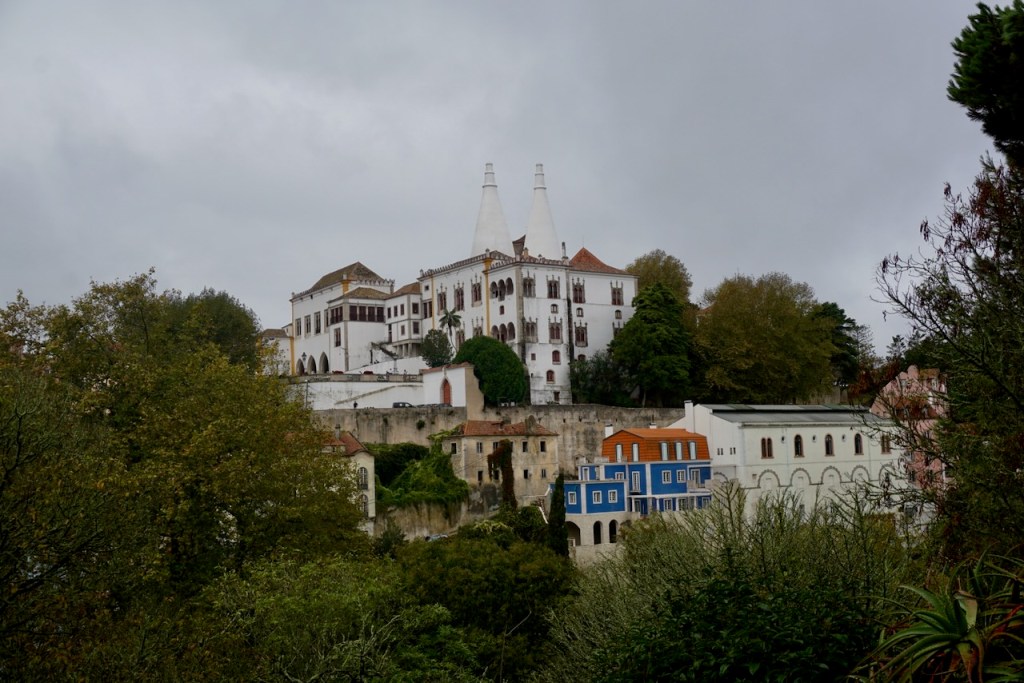
In the rain again, we stopped in Sintra, parking as required in the city before making our way on foot past the train station and into the old town where parking is prohibited. Like everything so far, we had no real plan for Sintra, other than to see castles and gardens. As we found out, however, Sintra requires tickets, some timed, for everything. The rain let up and we began to walk in the direction of the next set of hills, following signs pointing to castles built, as always, as high up as possible. Already, the town had a mysterious air to it.
It soon became clear, however, that rain was coming in again and that it was much too far to walk in our jeans and street shoes. We found a bus stop, did some quick inquiries with the aid of technology, talked to the next bus driver, and bought round-trip tickets that took us back down to where we started before heading up the impossibly narrow roads through the old town and up the hill. I quickly understood why cars weren’t allowed.

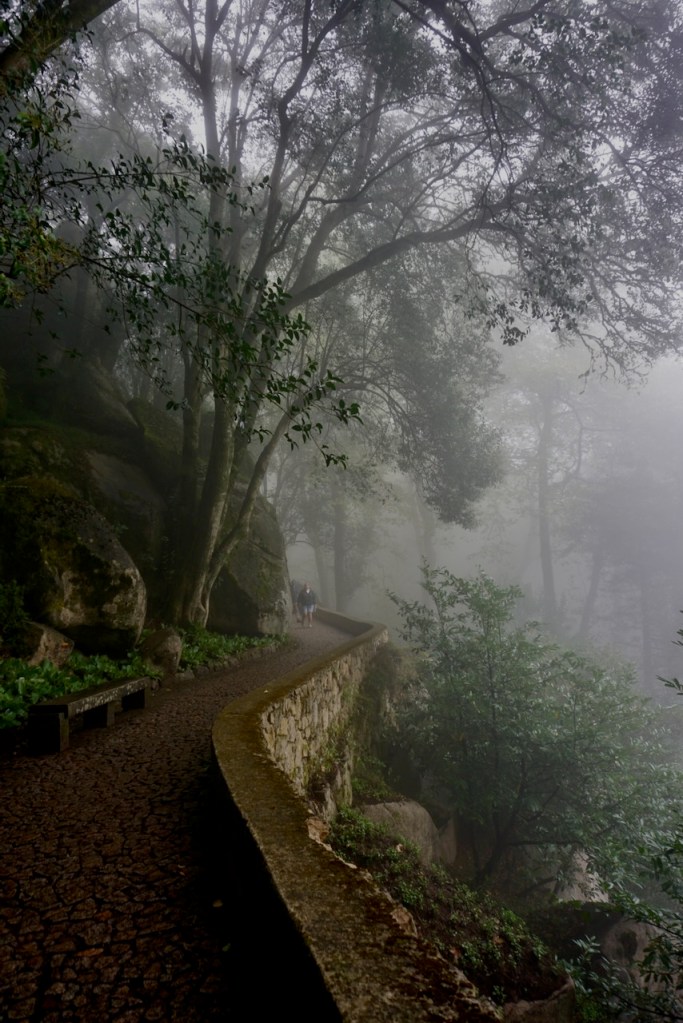
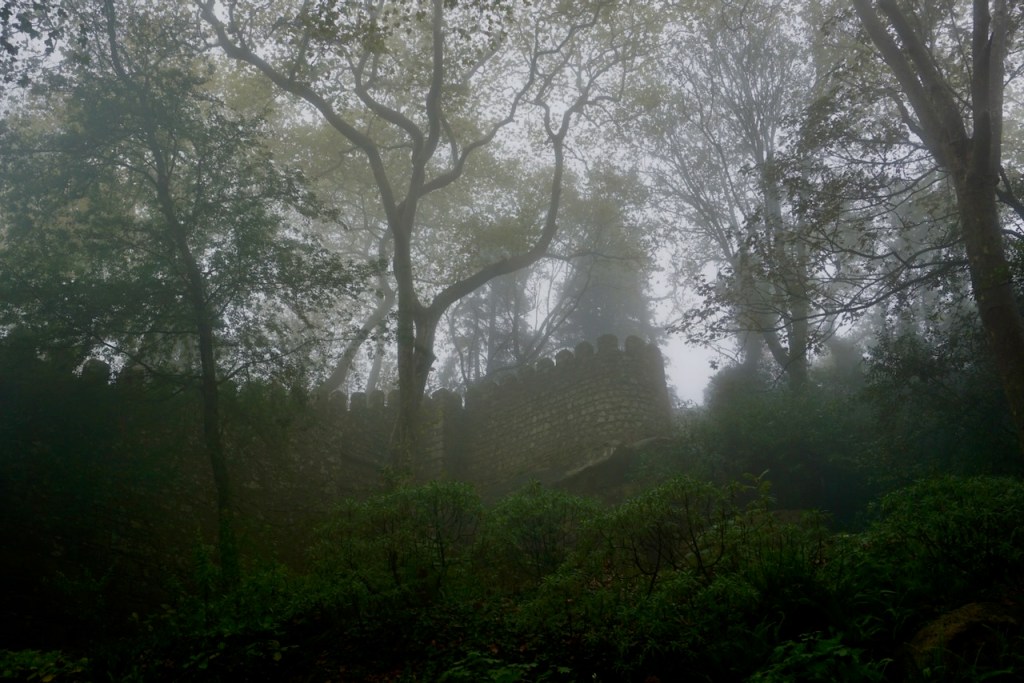
The drive up to the castles overlooking Sintra was like entering a portal to another world. It began to rain in earnest, giving what was already a unique place a mystical, ancient feeling. There were secrets here, there had been lives lived, there were stories told and to tell.

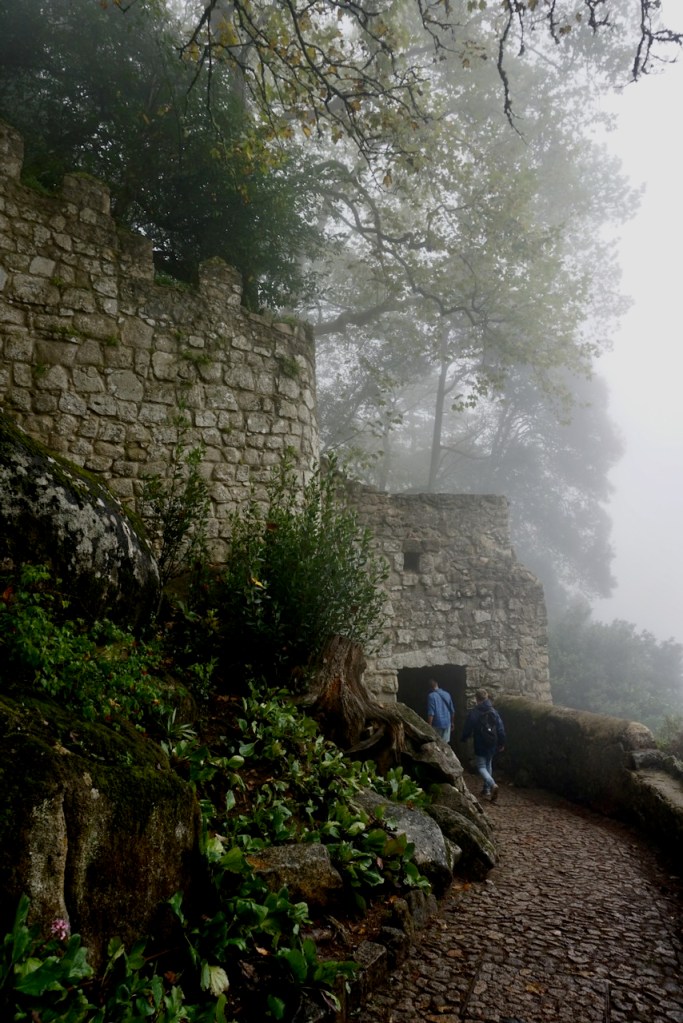
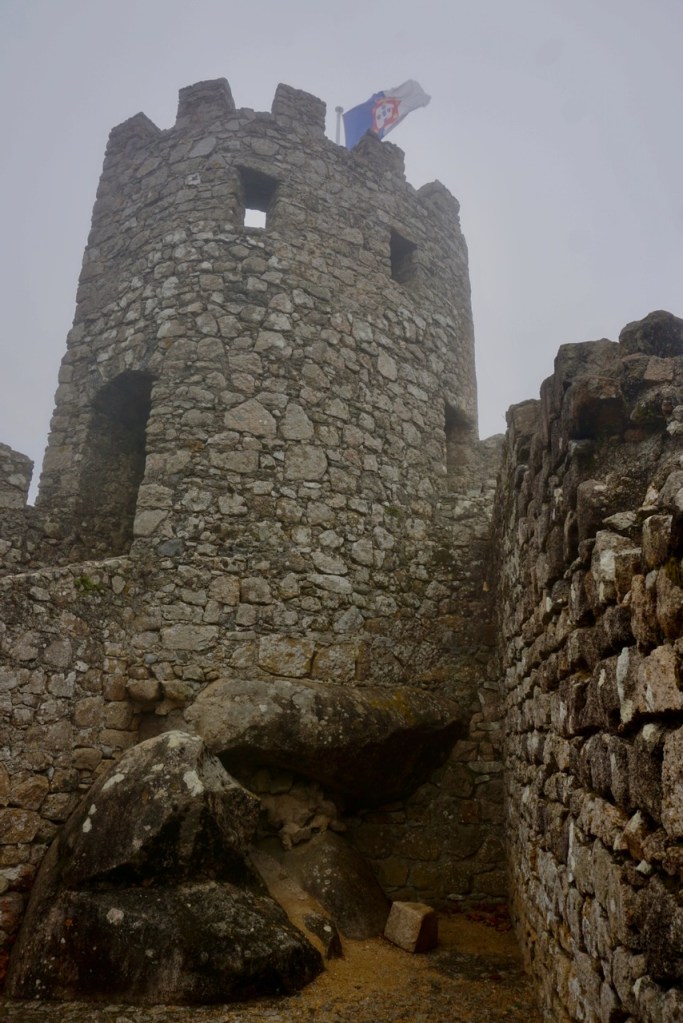
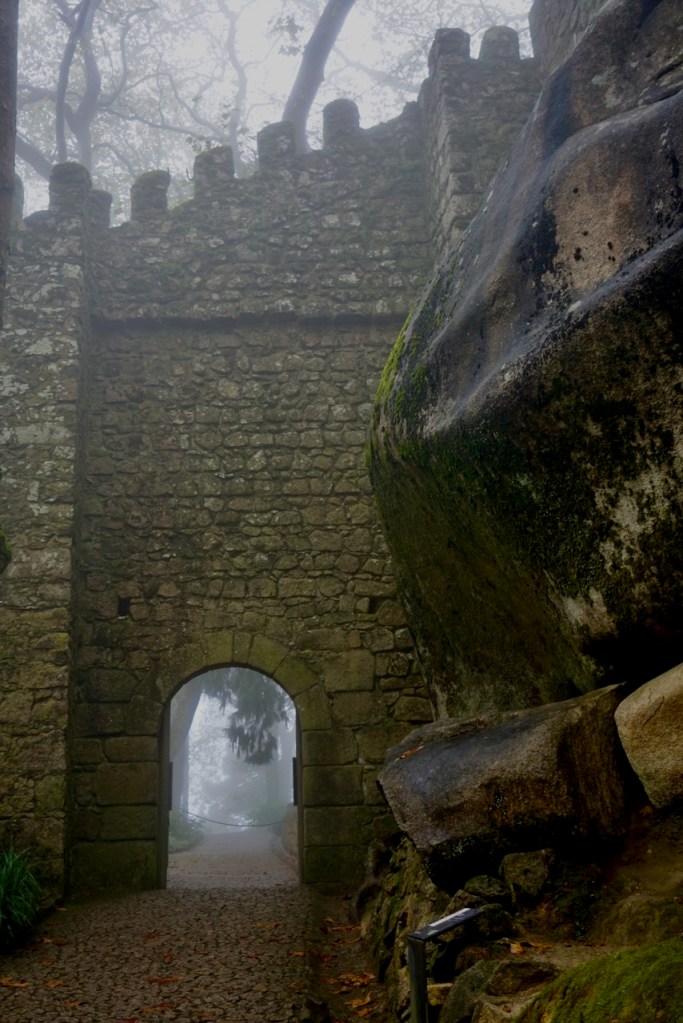
As every castle charges an entry fee, we made our choice based on where we got off the bus and bought tickets for Moorish Castle, a fortification dating back to the tenth century. We saw ancient cisterns, walked along the fortress walls, and looked at evidence of the confluence of Islamic and Christian history in the area.

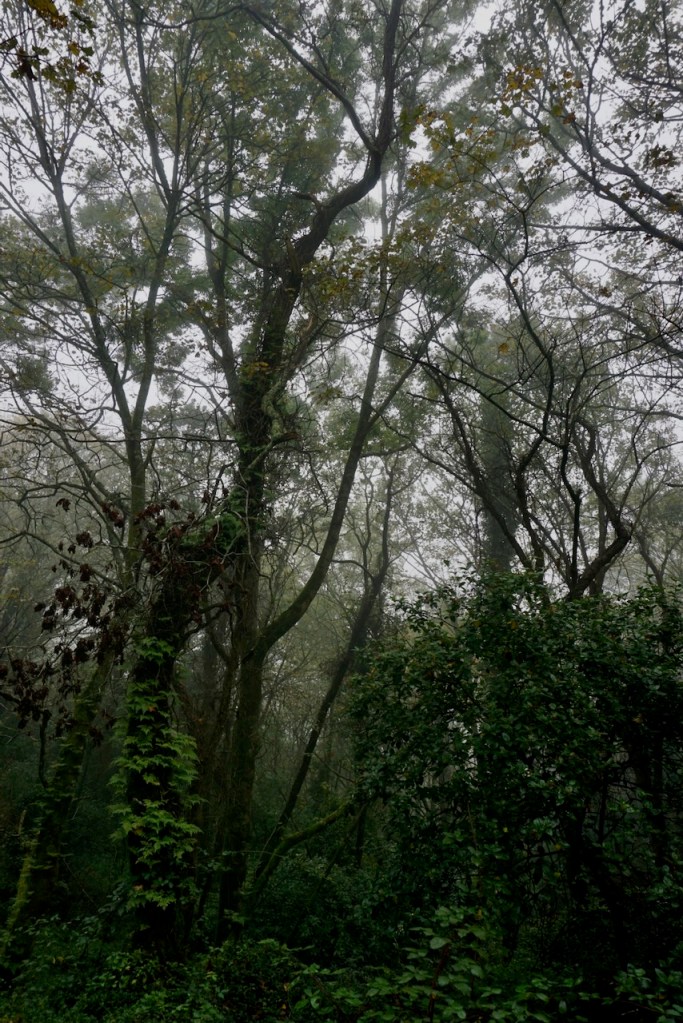
The air temperature was different up here, the greenery so lush as to create a microclimate completely juxtaposed with the palm trees below. This was a magical sort of world, a different place, an ancient time. The rain didn’t invite us to linger, but being there was a far more immersive experience due to the rain than it would have been without it.

Lisbon

A broken entry gate in the parking garage greeted us in Lisbon and we were instructed to simply drive around the block and try again at the other entrance. In other parts of the world, there might have been a sign, but I have to admit that I do like the casual, relaxed lifestyle of southern Europe.

Lisbon was instantly all-consuming in the ways that big cities often are. Loud, busy, fast, a buzzing that excites the senses. I enjoy feeling the thrum of a city and I enjoy the exploring that comes with it, but I feel myself having slowed down a lot since moving to a small town. As we had throughout Portugal, we spent our time in Lisbon just walking and looking, and therefore doing everything at our own pace.

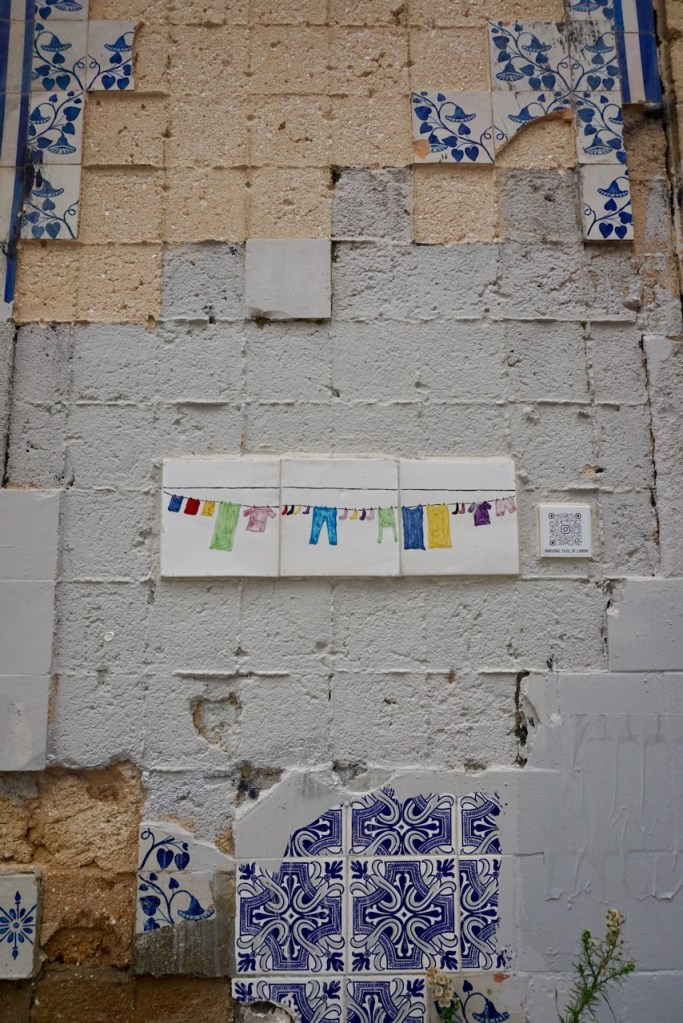
As usual, we were enamoured with tiles . . .

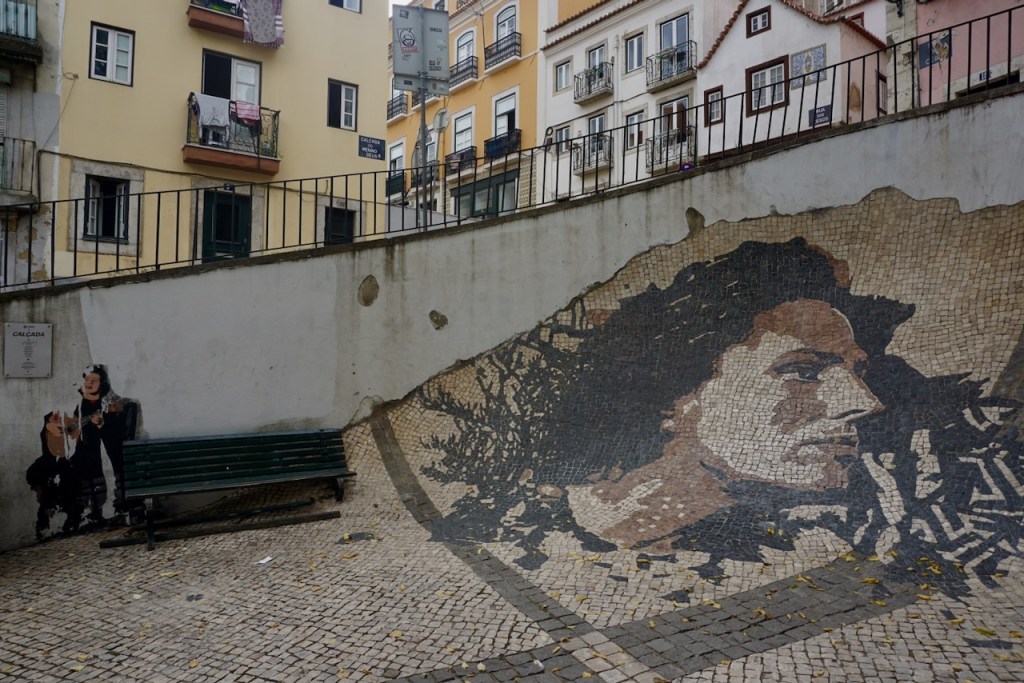
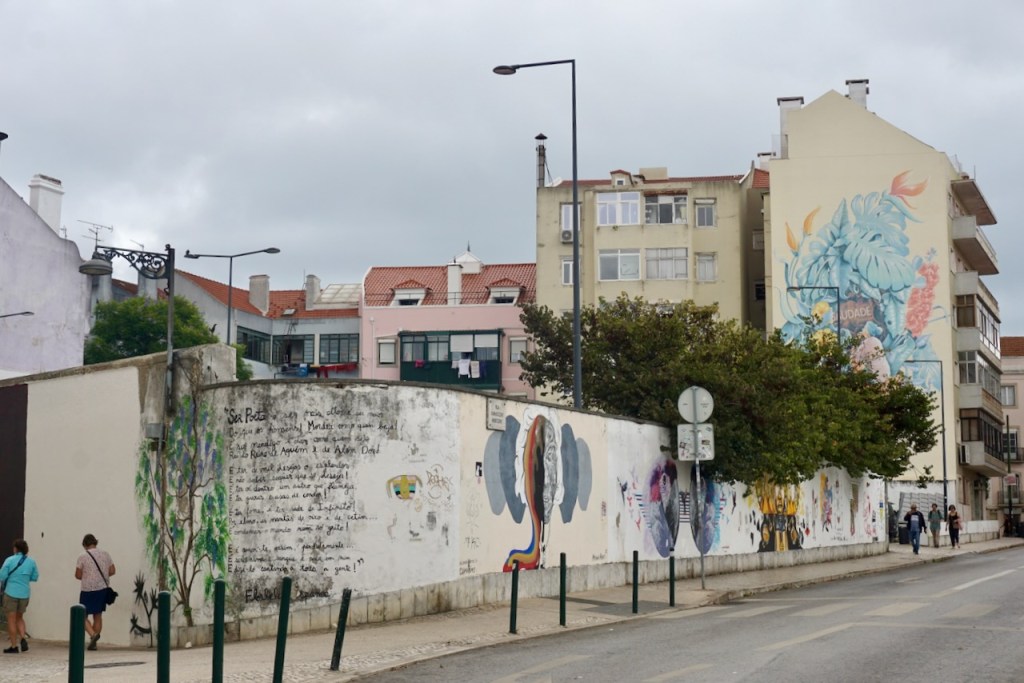
. . . the street art and symbols of human creativity . . .

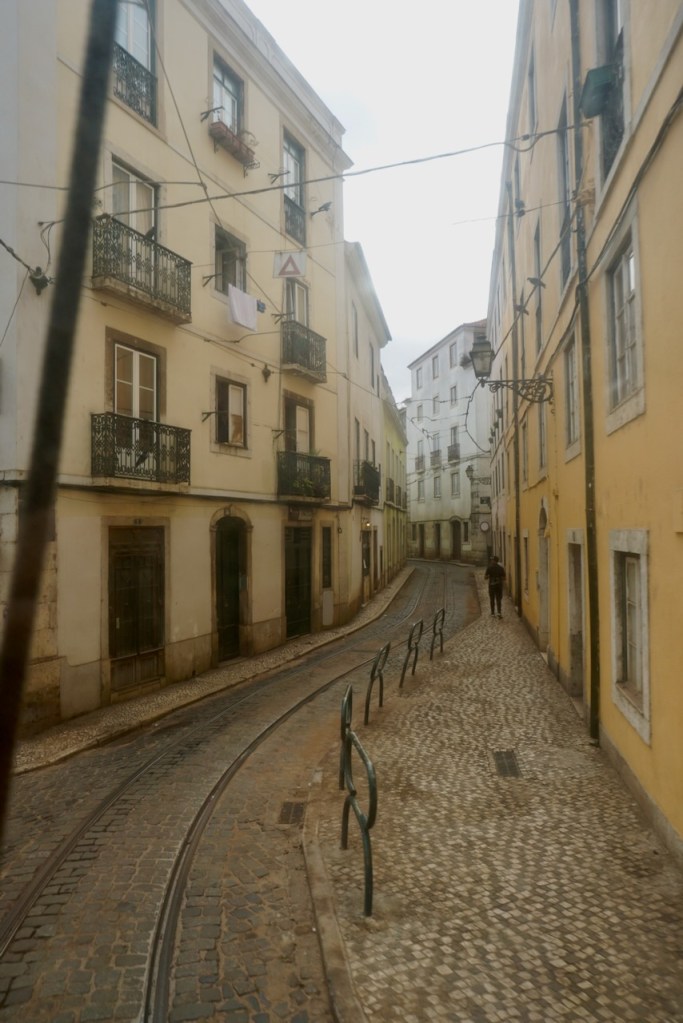
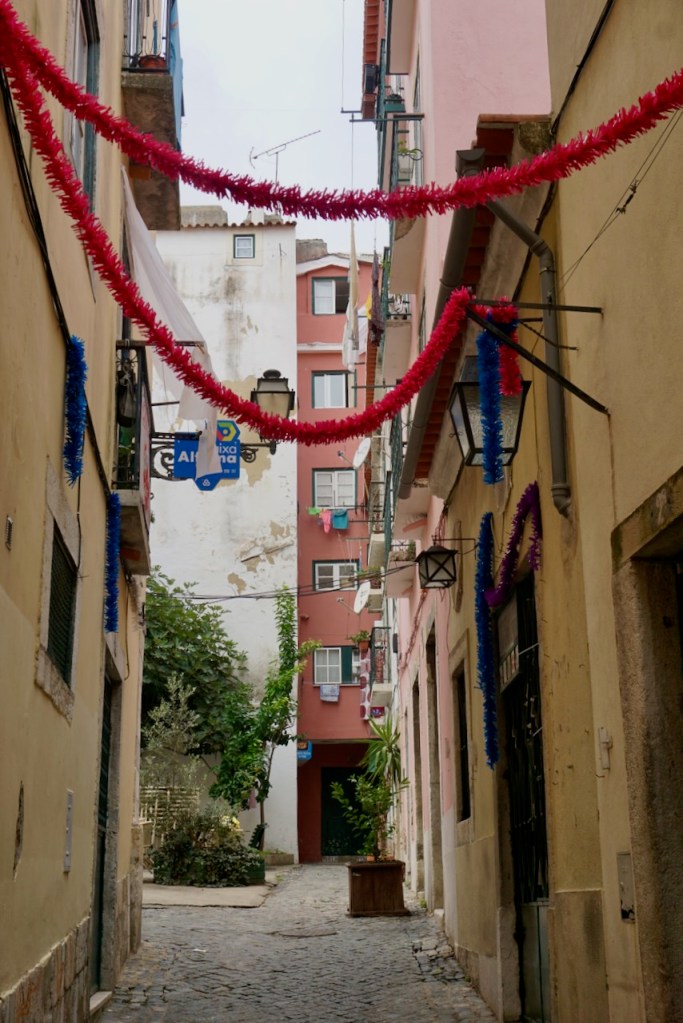
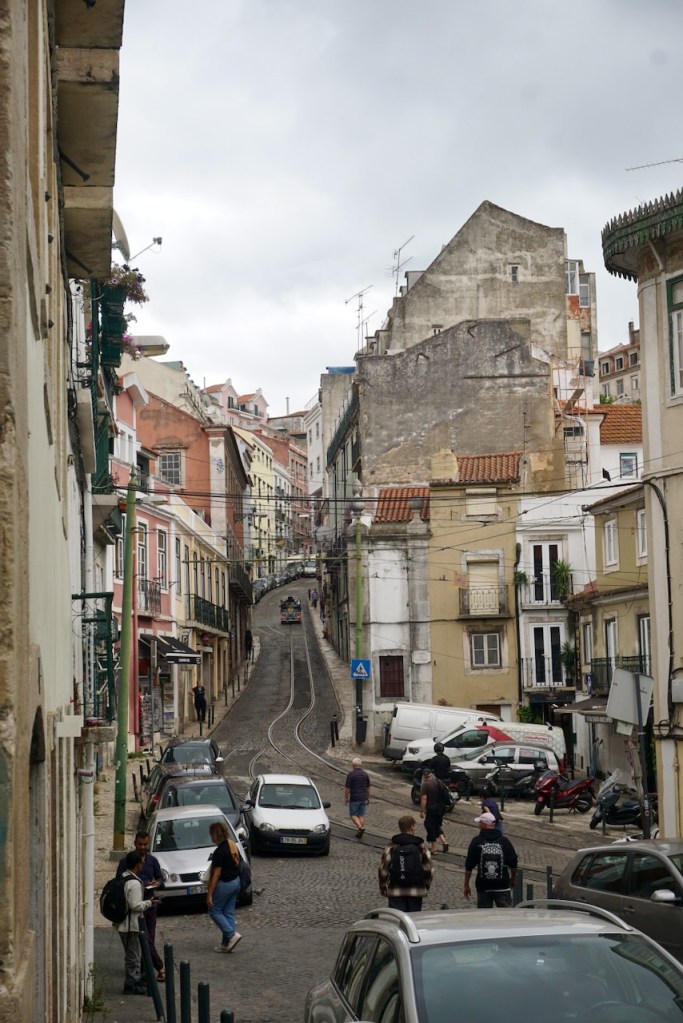
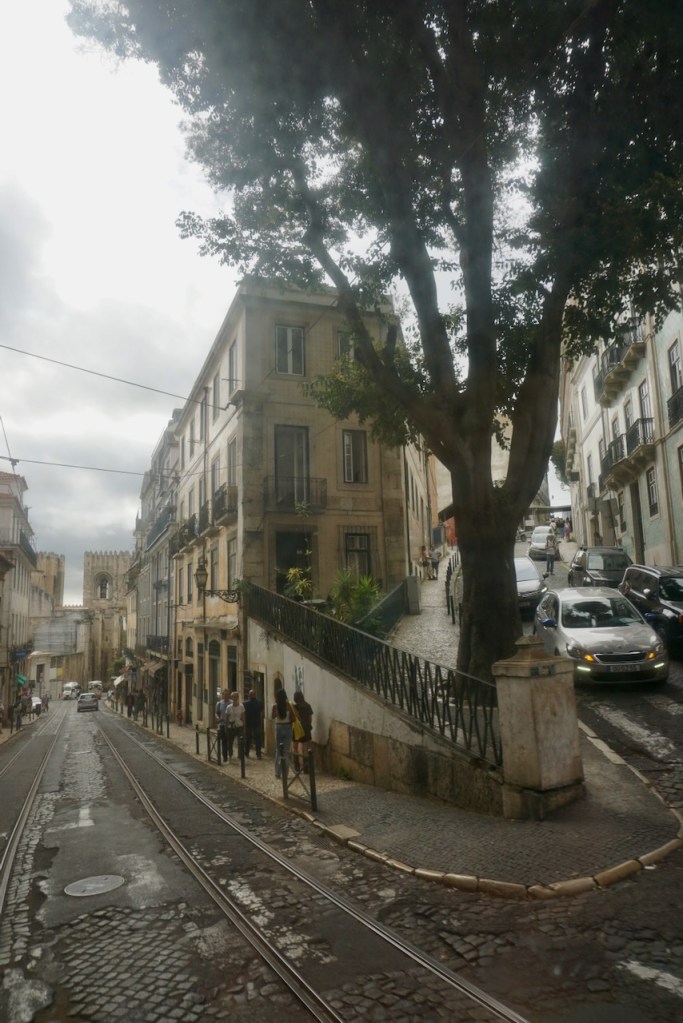
. . . and the twisting, winding streets built into the hills that make up the city and the Alfama, the old town.

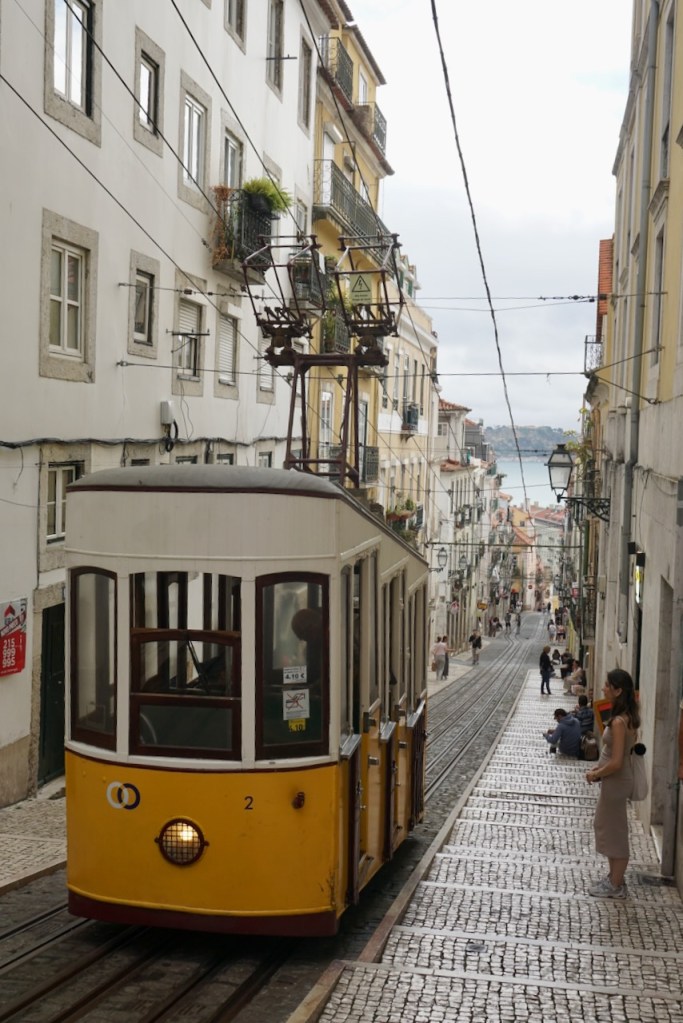
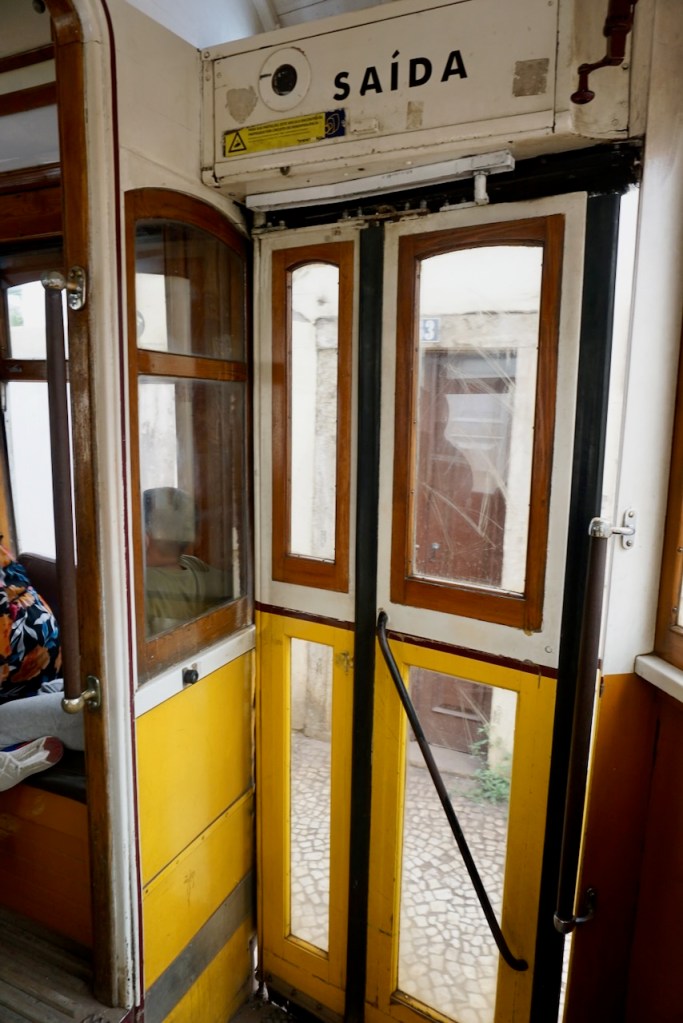
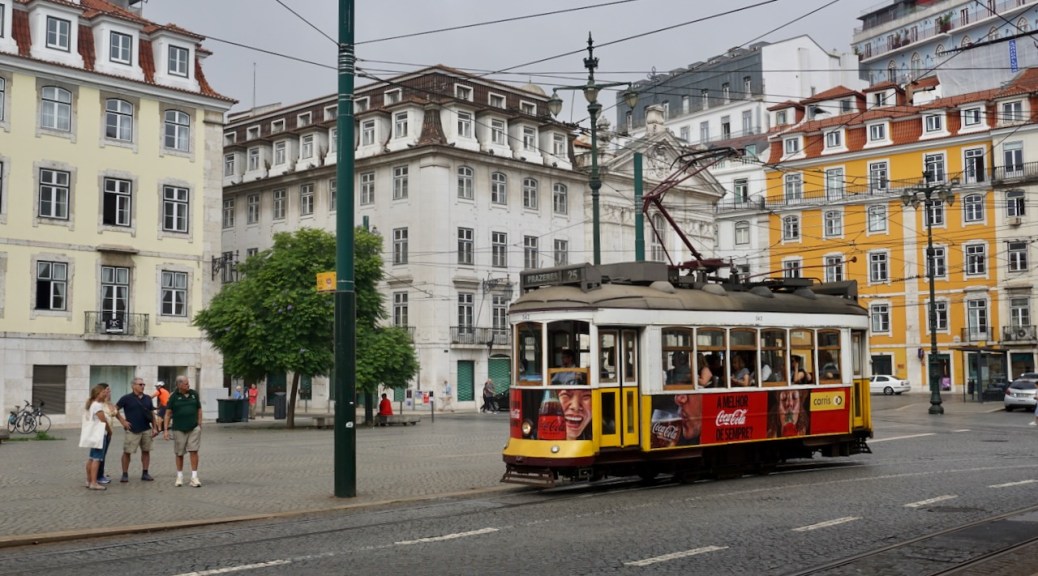
Streetcars and old trams are a particularly charming feature of Lisbon and we went for a ride on Line 28E, taking it from its starting point to its terminus. I hung on in the back, trying to take photos out the windows, and found the speed rather alarming.

We had not expected so great a presence of tuk tuks in Lisbon, but they were everywhere. A glimpse at the prices convinced us that we were better off walking, but they probably are a great option for some, particularly those who would have a harder time with the stairs and hills.

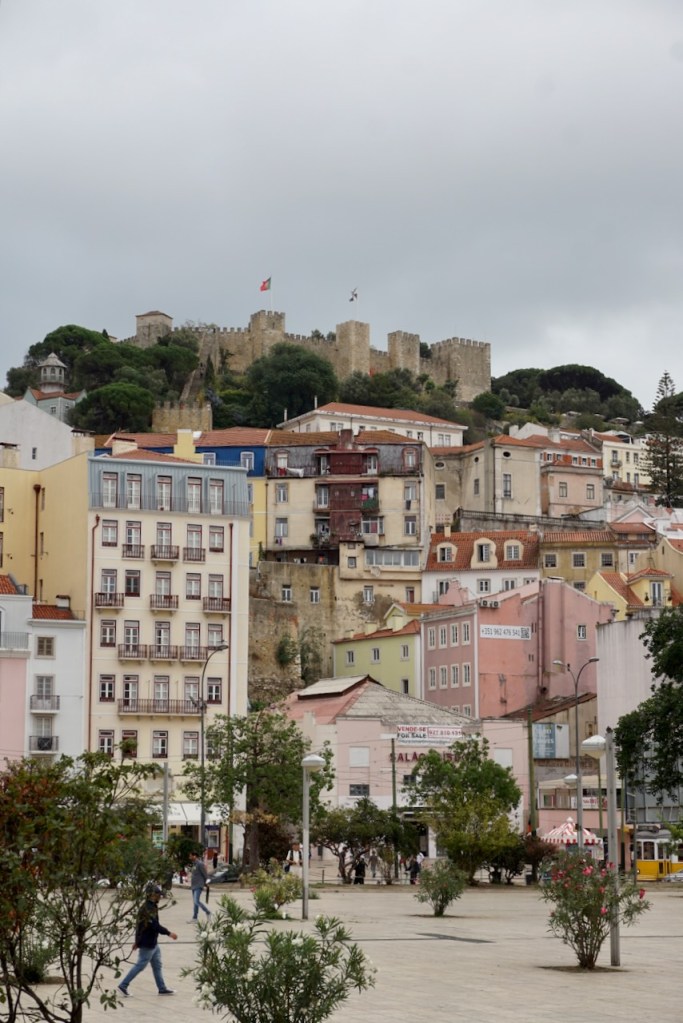
We walked up to the lookout point Miradouro da Senhora do Monte, from which we could also see São Jorge Castle, and gazed down at Lisbon, listenting intently as the tour guide next to us described the stages of building in different neighbourhoods.

While we didn’t go inside the castle, we were tickled by the peacocks that came out to say hello.

Another aspect of Lisbon that we really enjoyed was the nature that popped up everywhere, despite the tiled walkways and streets that seemed to be giving their best efforts to prevent just that.

It is worth remembering that Lisbon is old, actually ancient and prehistoric, and cities that old have walls. It was really nice to see shadows of Lisbon’s history in the ground that we walked on.

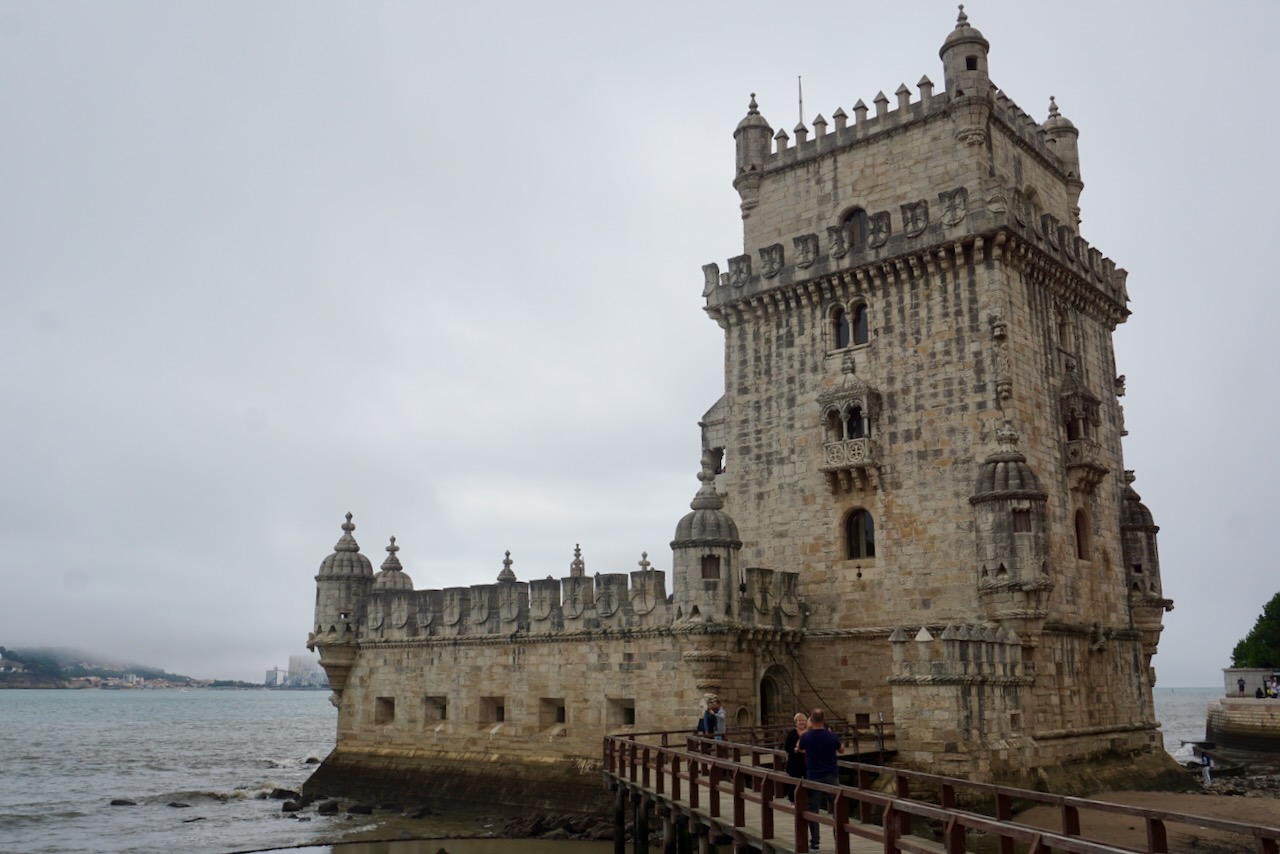
On our last full day in Lisbon, we walked to the Torre de Belém, a tower fortification built to control the shipping and commerce that made Lisbon famous and Portugal, the first of the European explorers, rich.

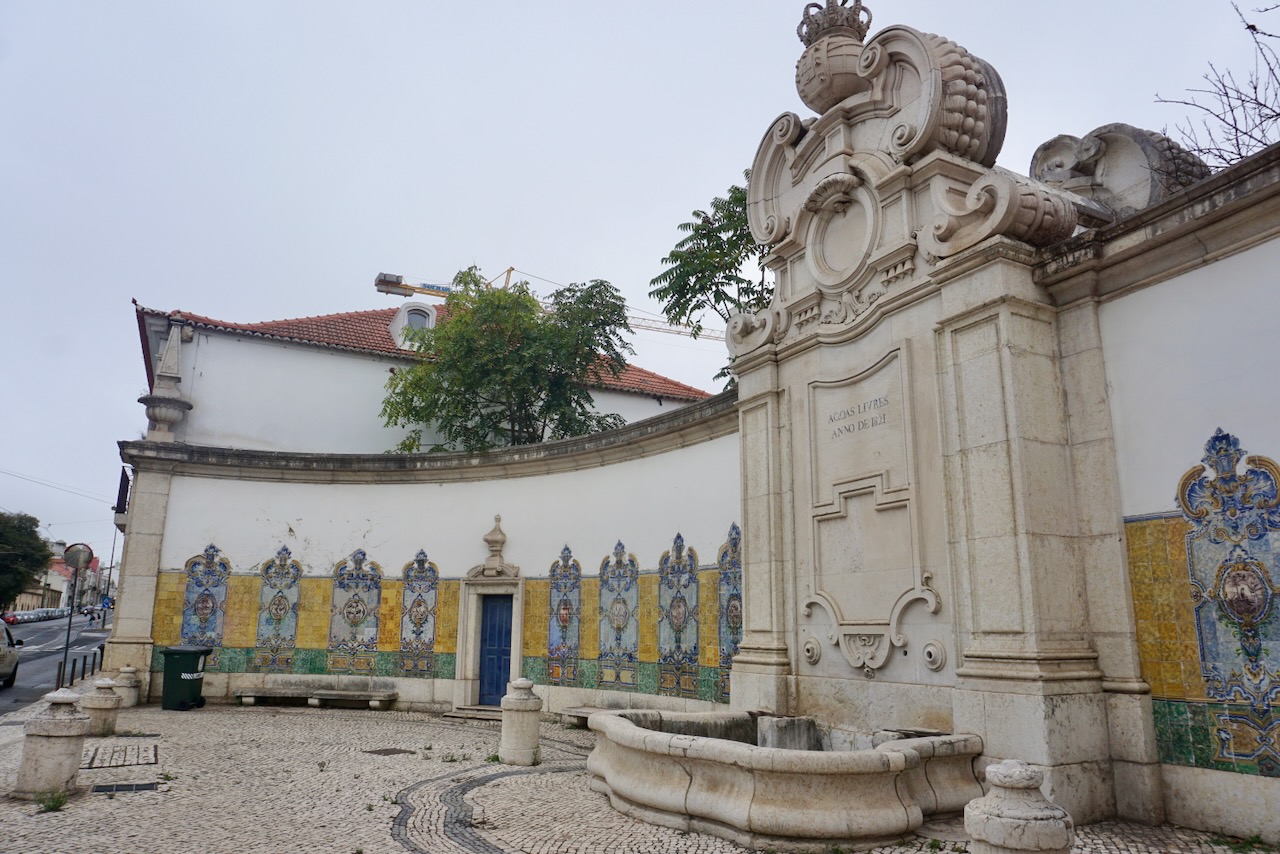
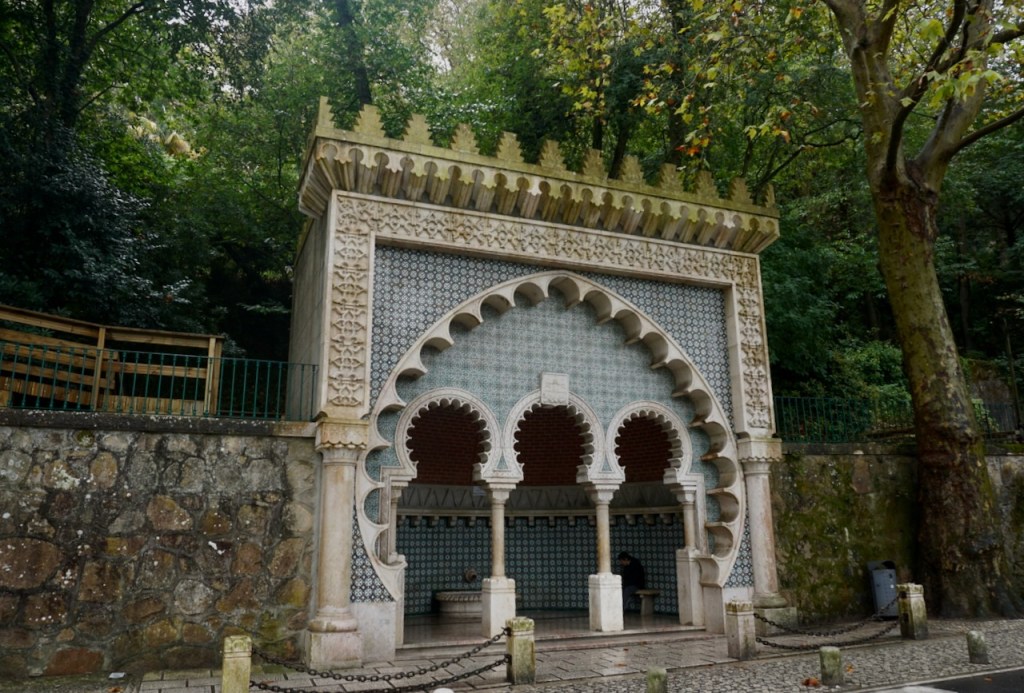
Along the way we passed a fountain that seems to commemorate the aqueducts built to provide water to the city (I could not find any data to verify this, so please jump in if you have details) . . .

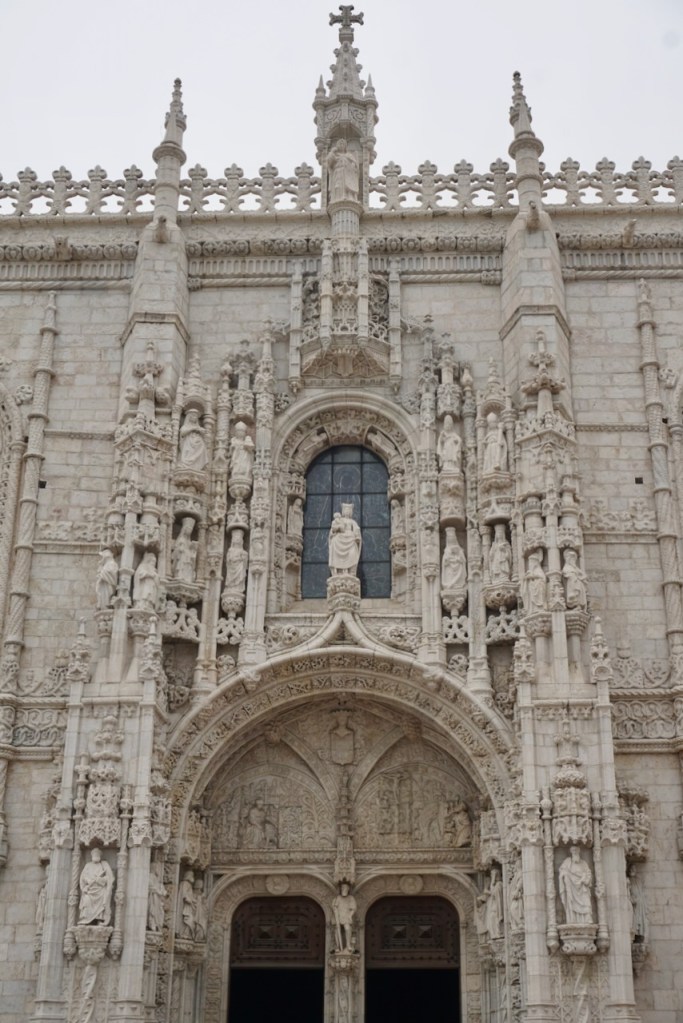
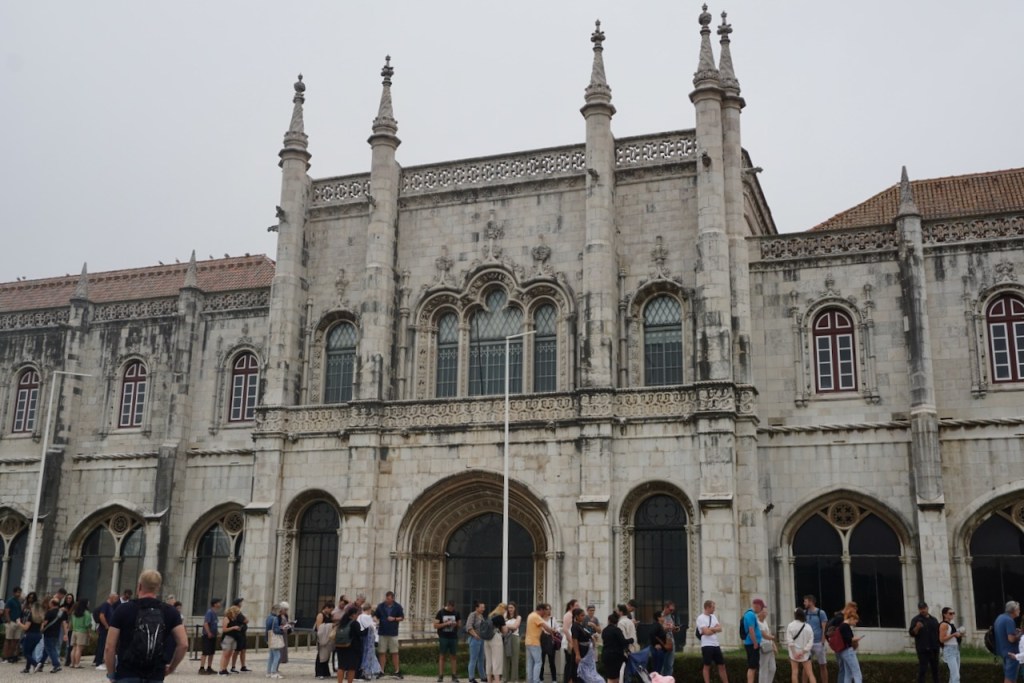
. . . and Jerónimos Monastery, which was stunning enough from the outside. Judging by the lines of people, there’s also a lot to see on the inside.

The clouds began to shift as we arrived at Belém Tower, where I once again have to give credit to indefatigable lines of people. The waiting time was listed as two hours because only 150 people are allowed in at once, and we opted not to wait.

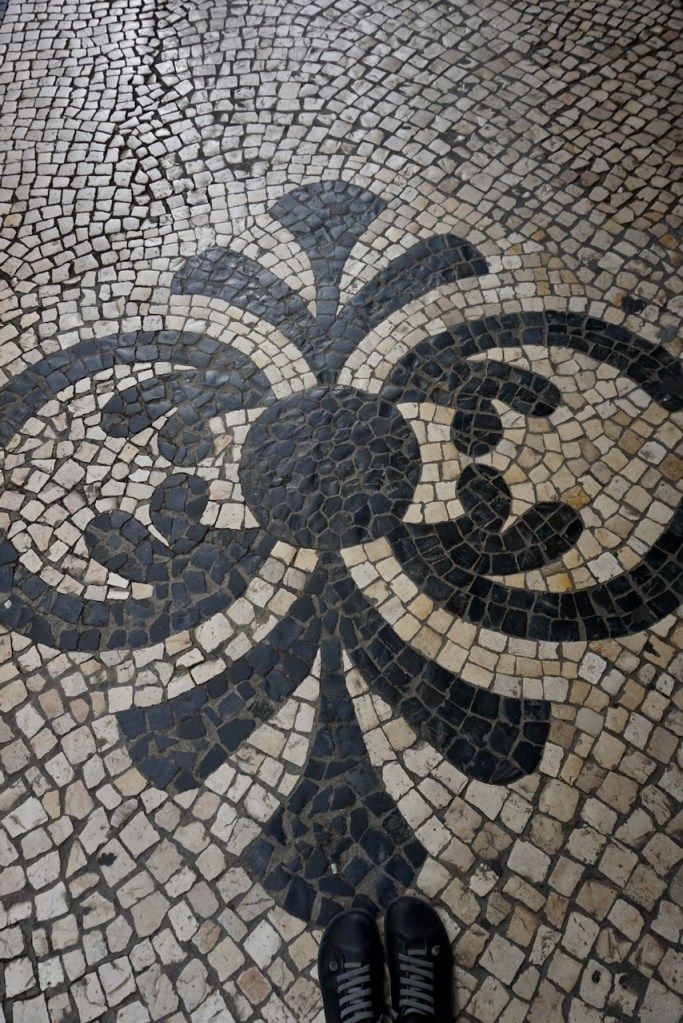
On the walk to the bus stop (public transit in Lisbon is incredibly easy), we passed the Monument to the Discoveries, which included a tiled map on the ground of places the Portuguese had developed colonies. As I took the photo, I couldn’t help but think that the monument didn’t quite fit with a time period when so much of the world is reckoning with colonial history. The Padrão dos Descobrimentos was built in 1940 and that was a rather different time.

We ended our time in Lisbon with a cocktail in the rain at a rooftop bar, a bar fittingly located on top of the parking garage with the broken entry gate. The people of Lisbon know how to have a good time and that was also apparent in the flavour and feel of the city. I don’t know if we’ll make it back to Lisbon, but it was definitely not the last visit to Portugal. “Adeus” until next time!

Travel Guide: Lake Bohinj, Ljubljana, Lake Bled x2

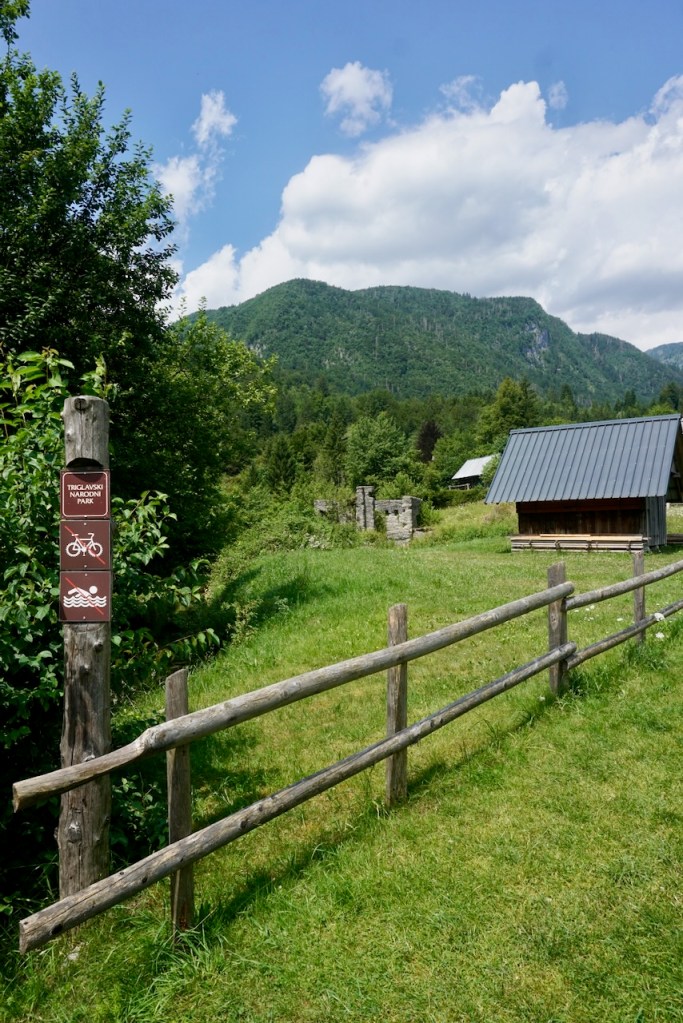
I had wanted to return to Slovenia since a trip there in the winter several years ago, and this was the perfect opportunity. We spent five nights in the village of Stara Fužina by Lake Bohinj at the foothills of Triglav National Park in the Julian Alps, which gave us ample time for some much-needed relaxation and immediate access to all the nature we had missed while in Venice. The village had two grocery stores, a snack bar, two restaurants, two churches, and a fire station. The primary business seemed to be tourism with a good amount of farming, and it seemed like everyone knew everyone else.

As we would learn, the church bells next door to our accommodation ring promptly at 9pm and 7am – and by ring, I mean clash and clang. Insistently. For several minutes. Our host told us that she likes them; being on holiday, I was rather less fond of the 7am round.

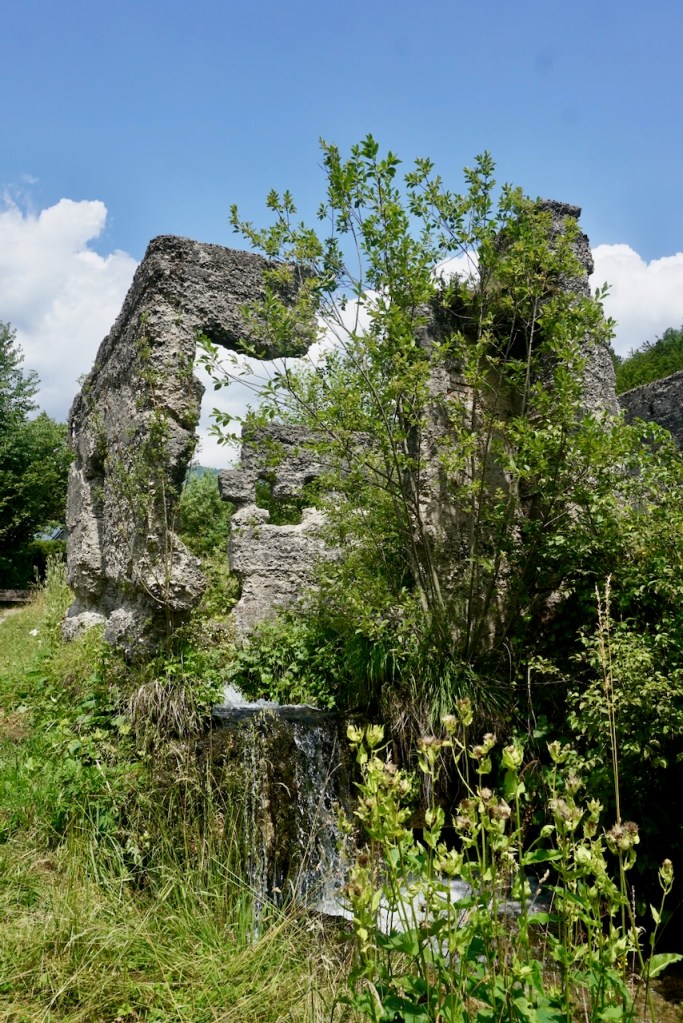
Our time in Slovenia was mostly spent enjoying Triglav National Park. On our first full day, we hiked past the fields at the edge of the village . . .

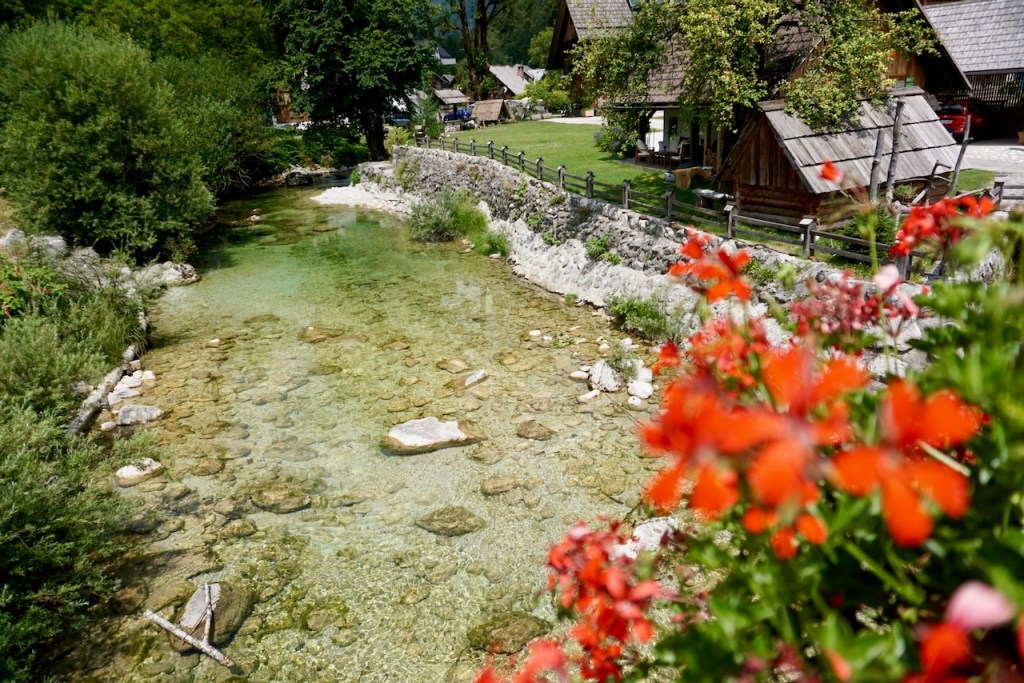
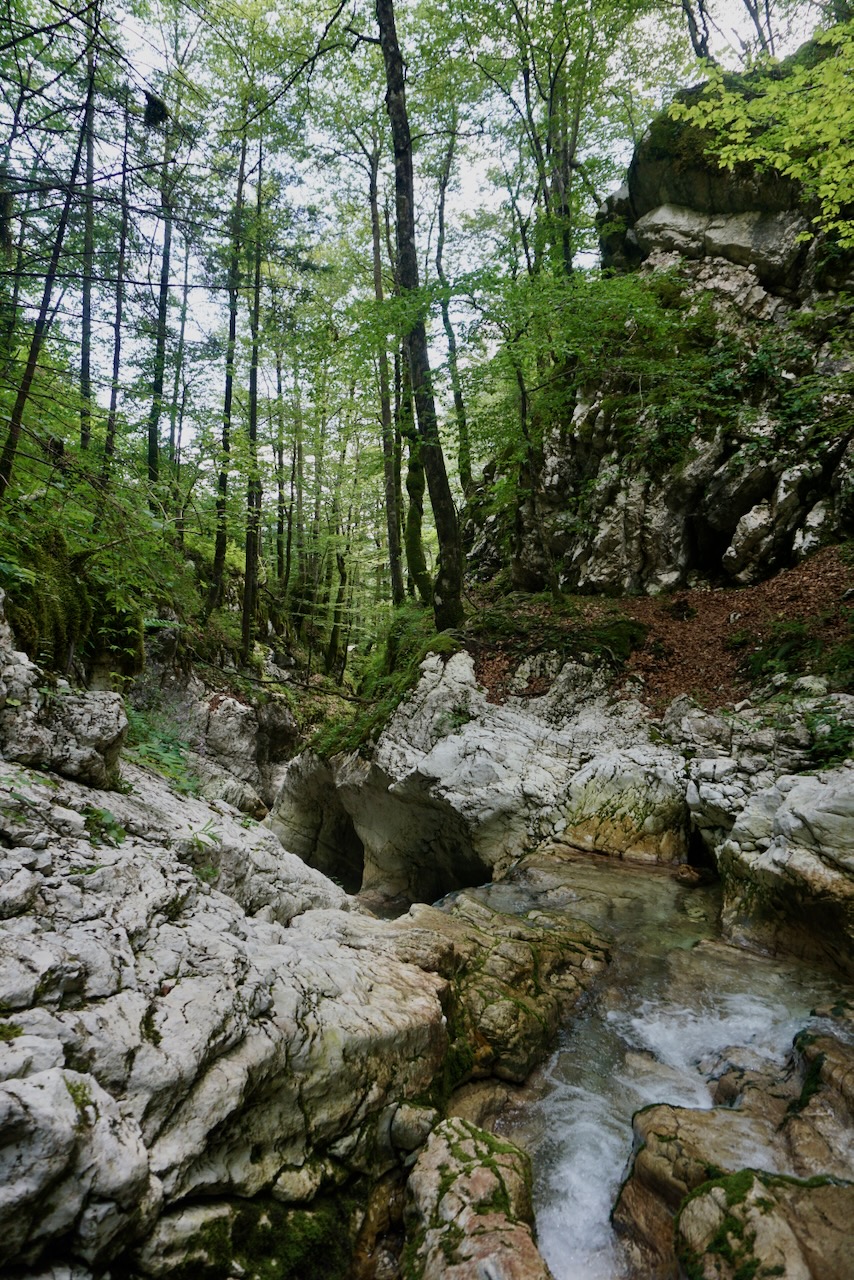
. . . through Mostnica Gorge with its deep caverns of bitingly cold water that provided relief for our feet . . .

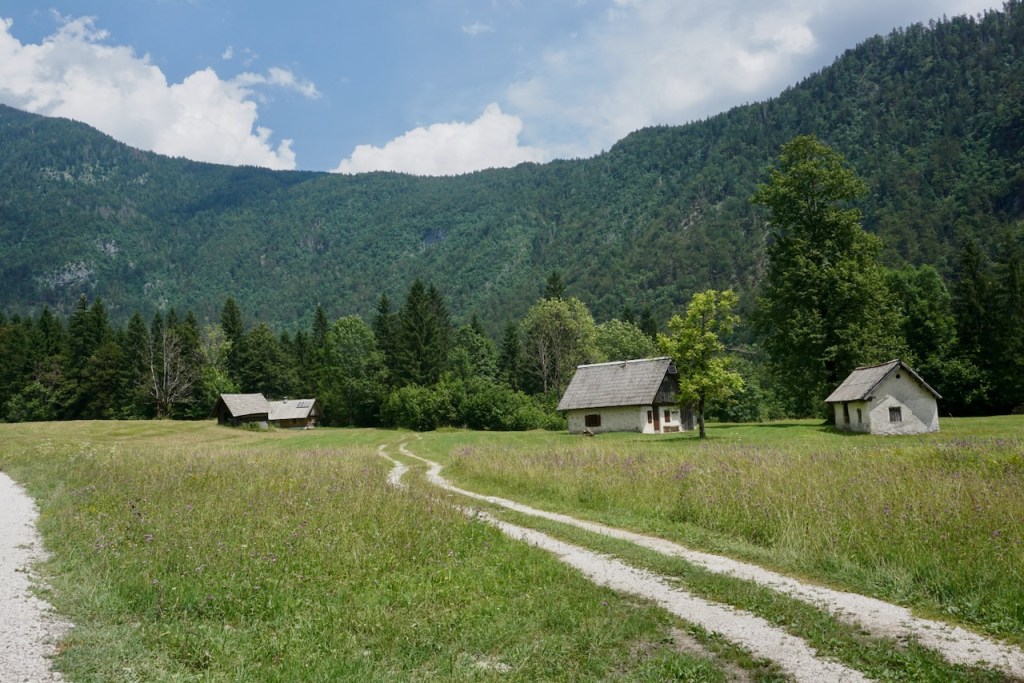
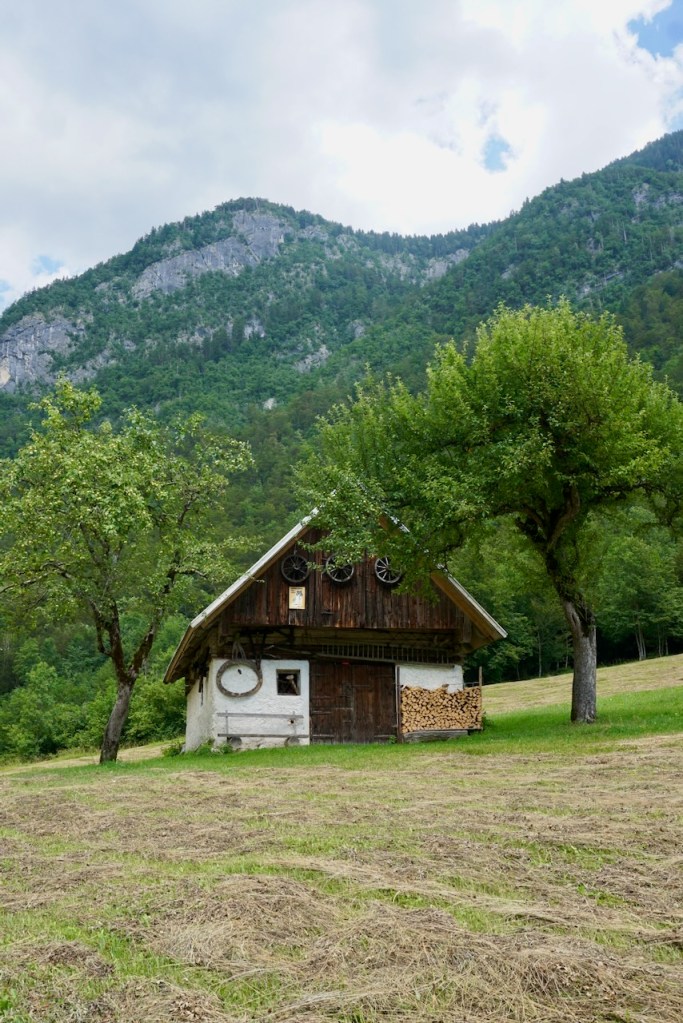
. . . and alongside fields owned and operated by farming families . . .

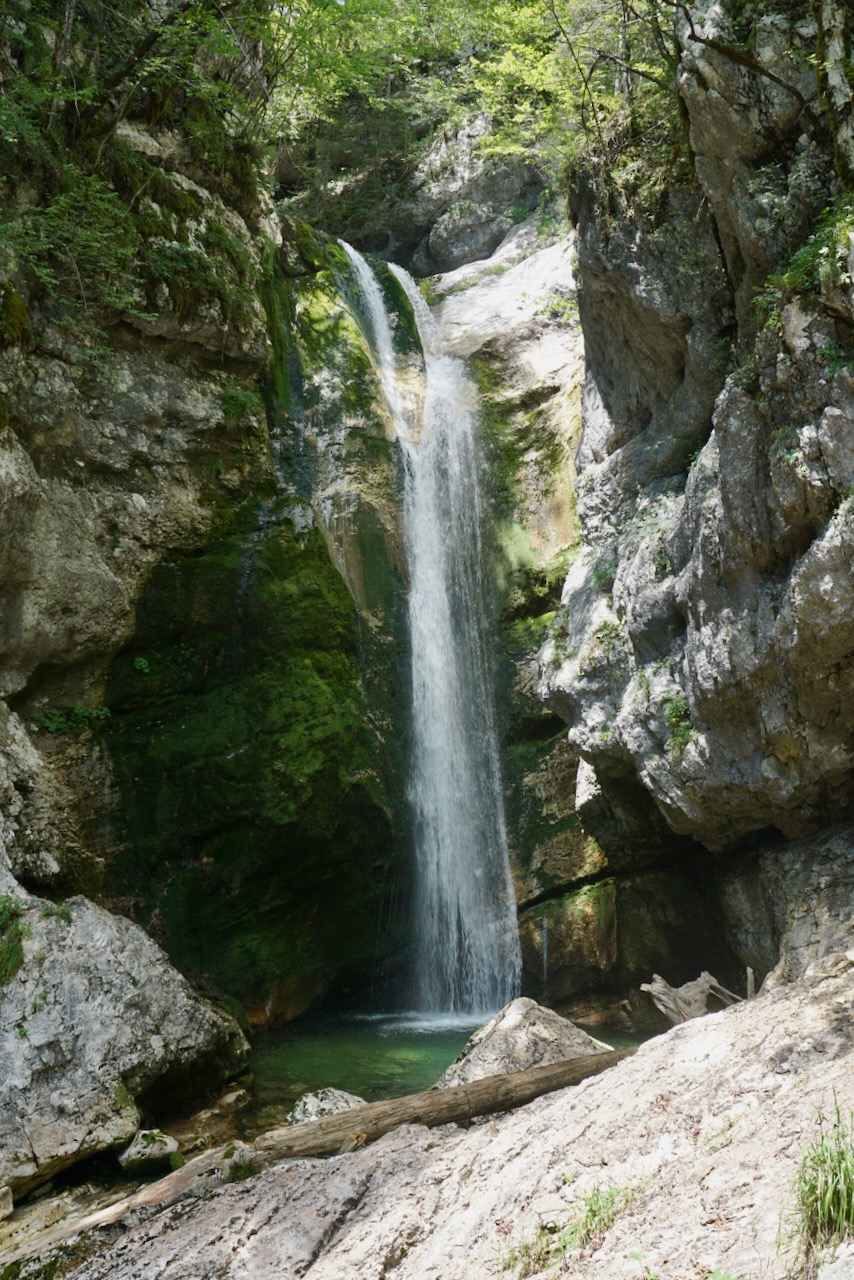
. . . before arriving at the main attraction, the Mostnica Waterfall.

It was here where we picnicked on the rocks before heading back in the direction of the guesthouse we’d passed on the way. There would be a cold drink there waiting for us.

The next day, we walked in a different direction through the village and past the fields . . .

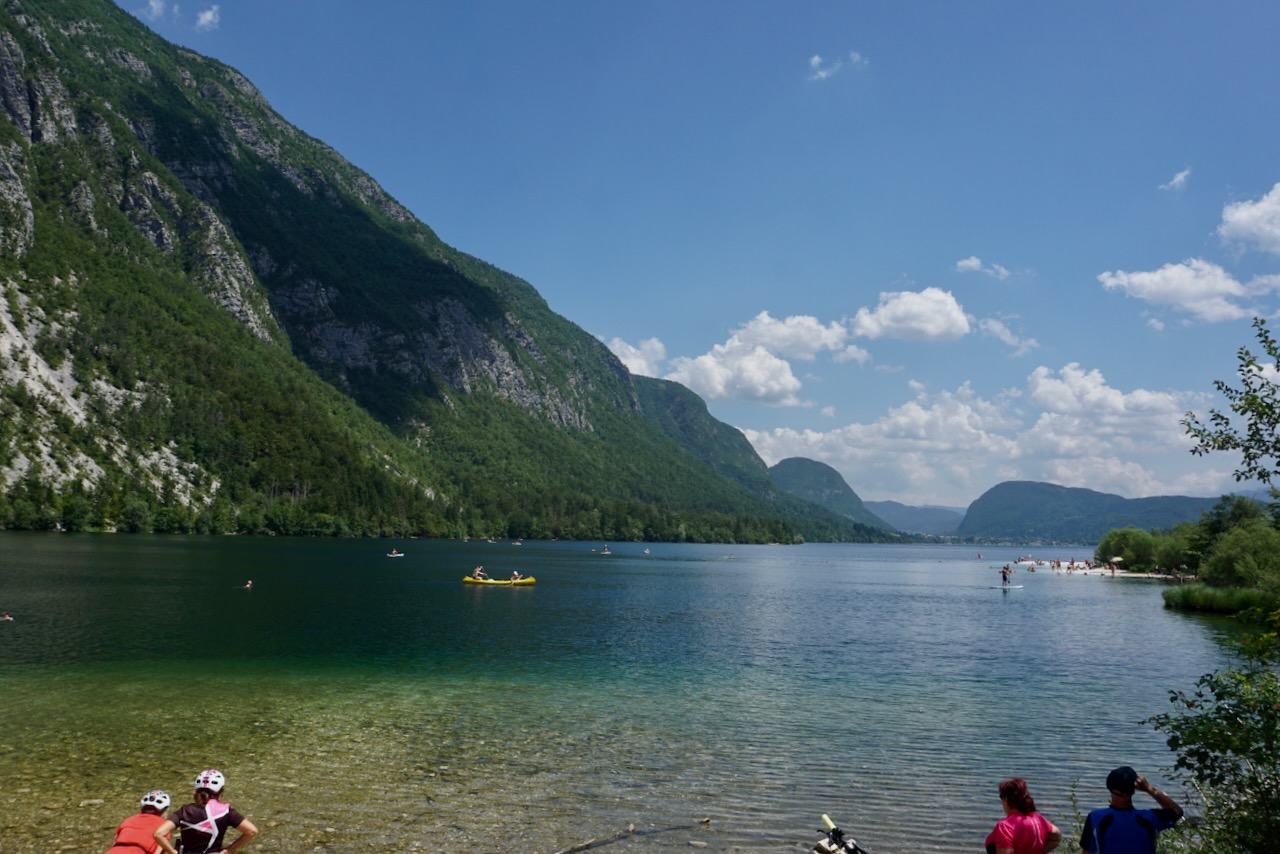
. . . to reach the path that runs the length of Lake Bohinj. We stopped for ice cream, our usual picnic, and to sit for a while by the water. Despite wearing a bathing suit, I only went in as far as possible without getting wet. I am not fond of hiking in wet clothes and we had a ways to go.

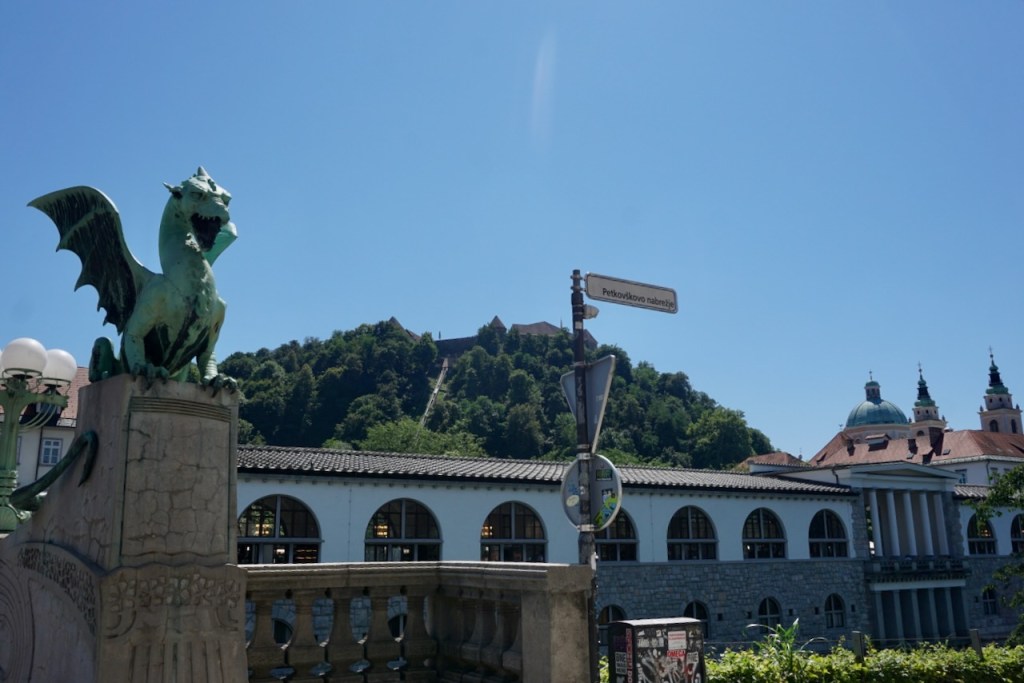
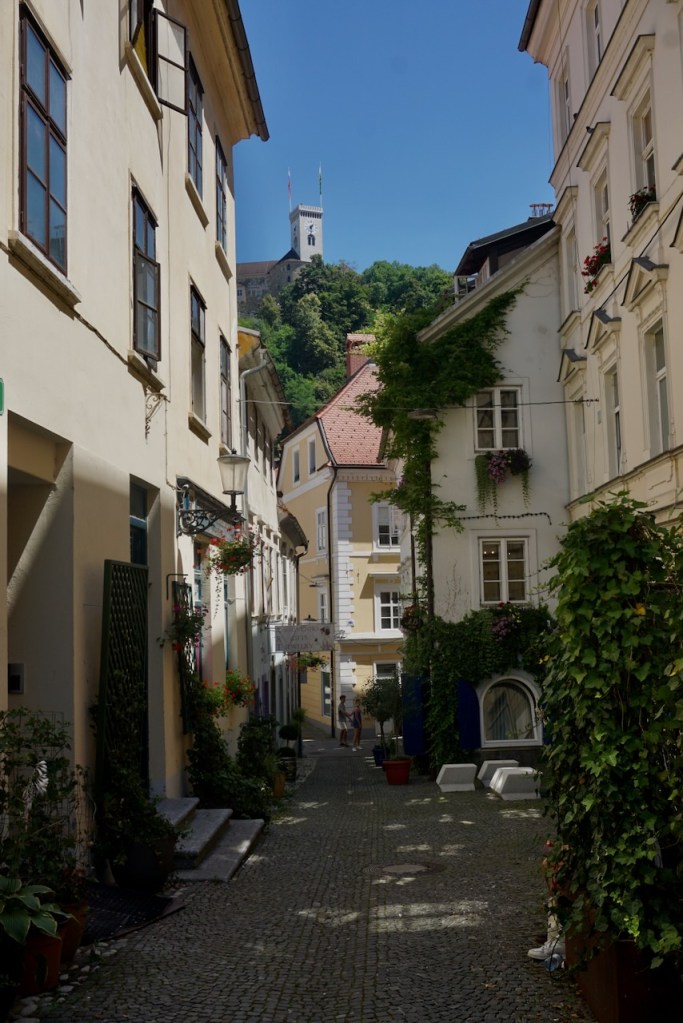
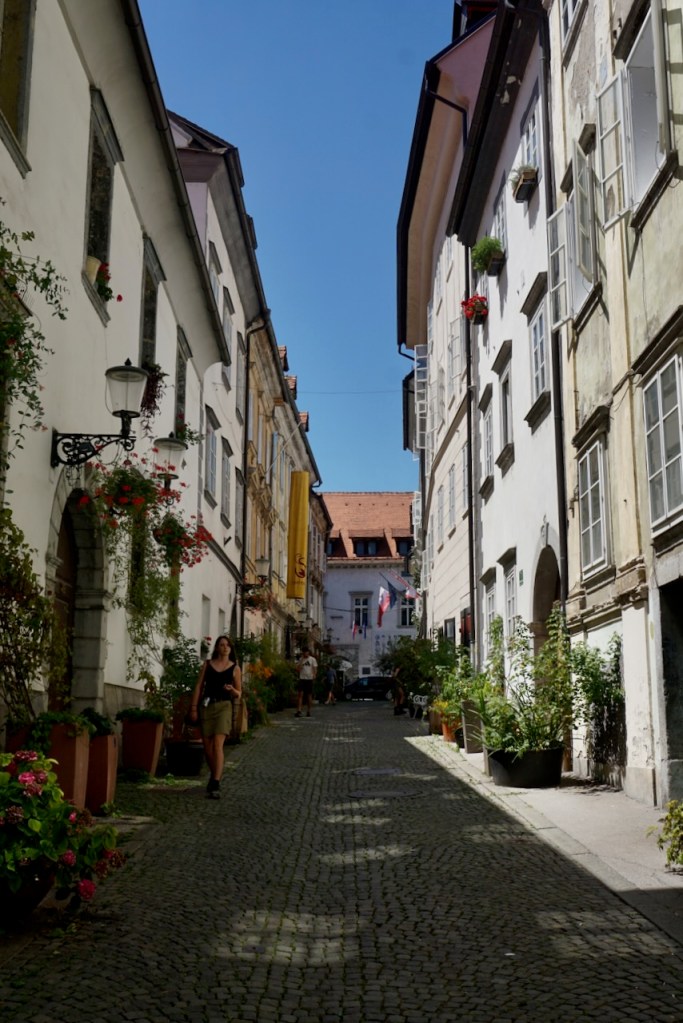
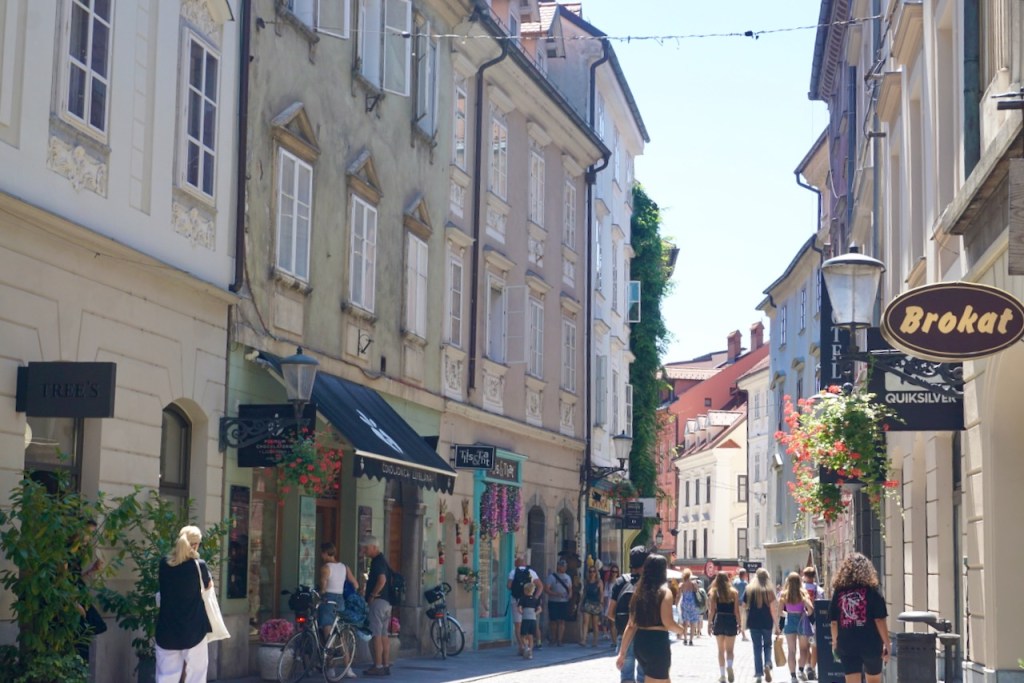
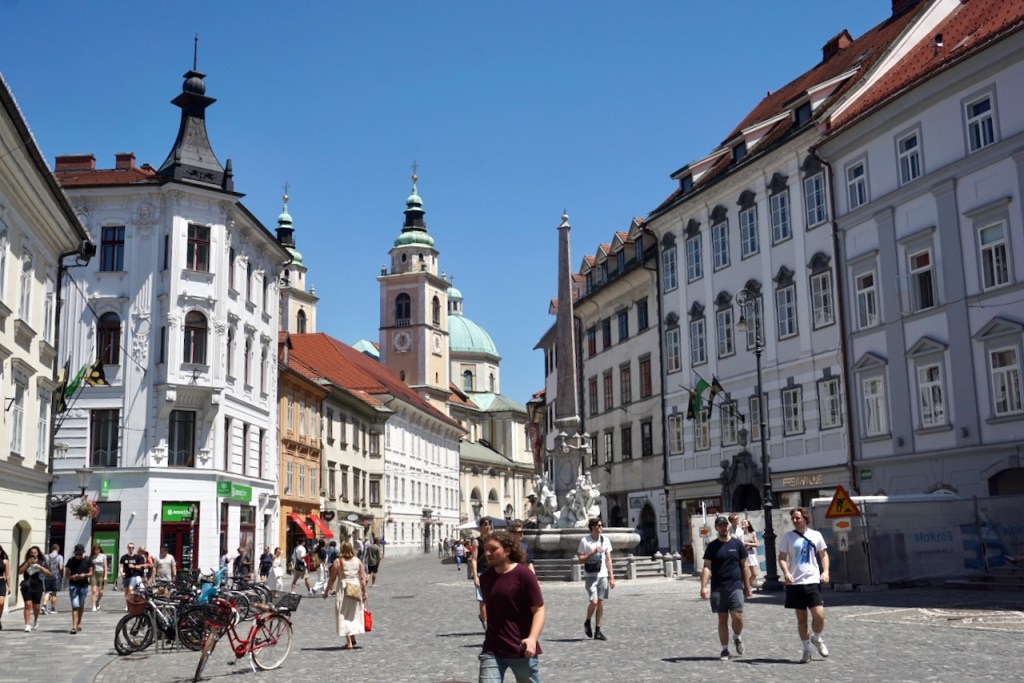
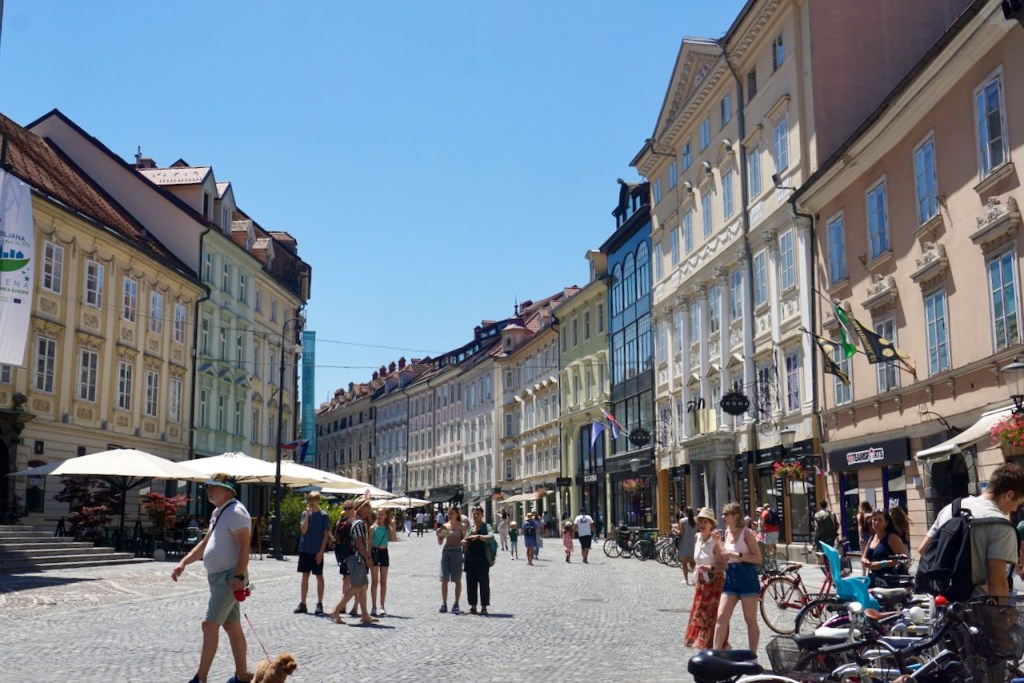
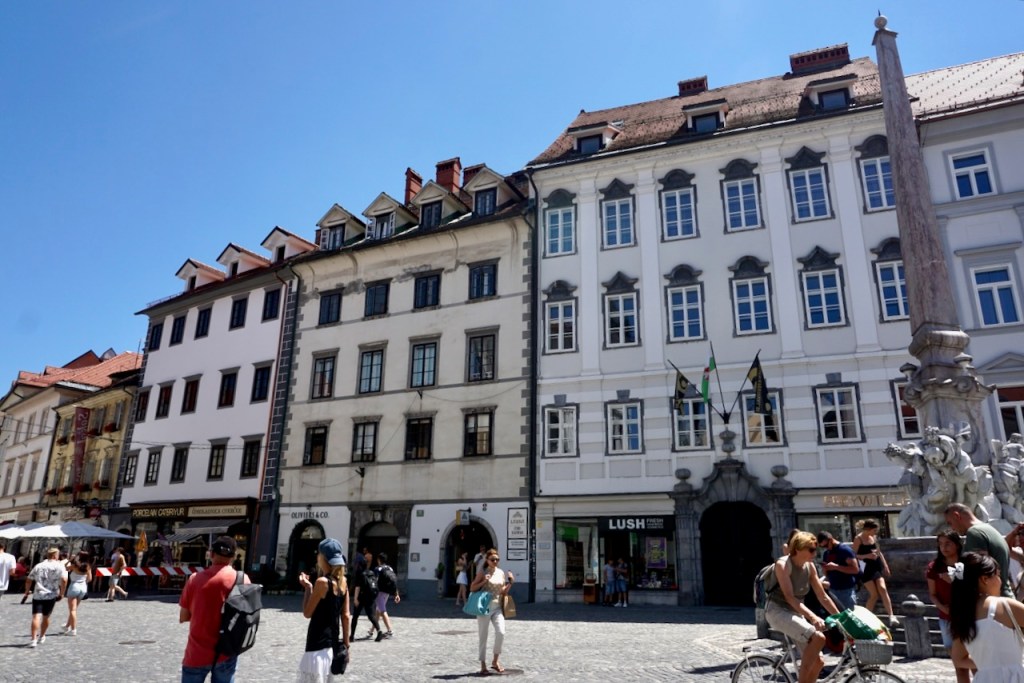
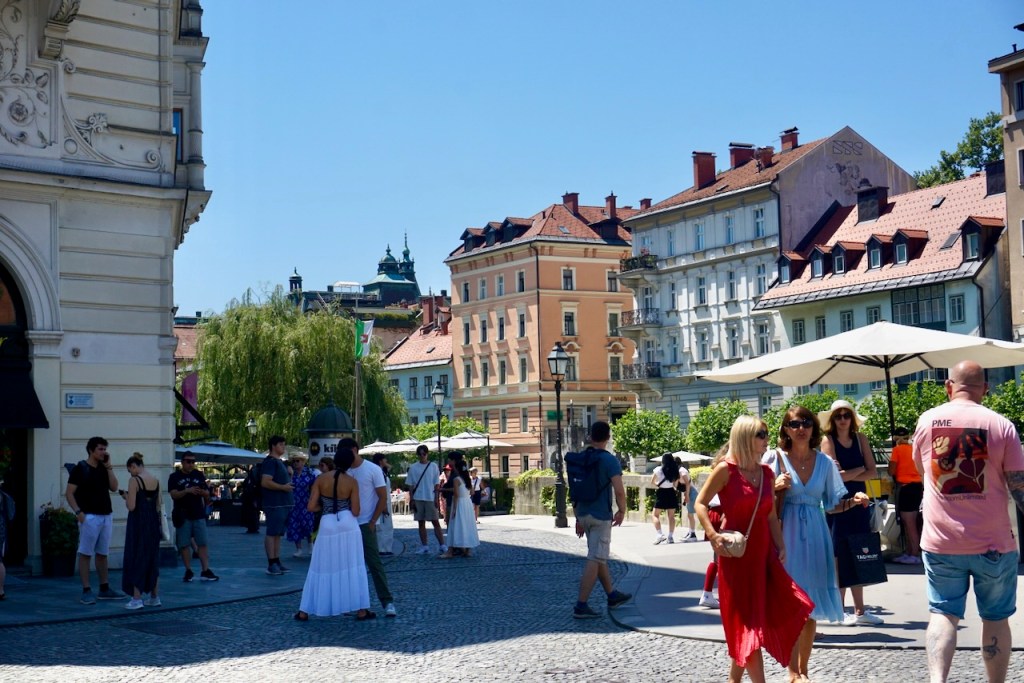
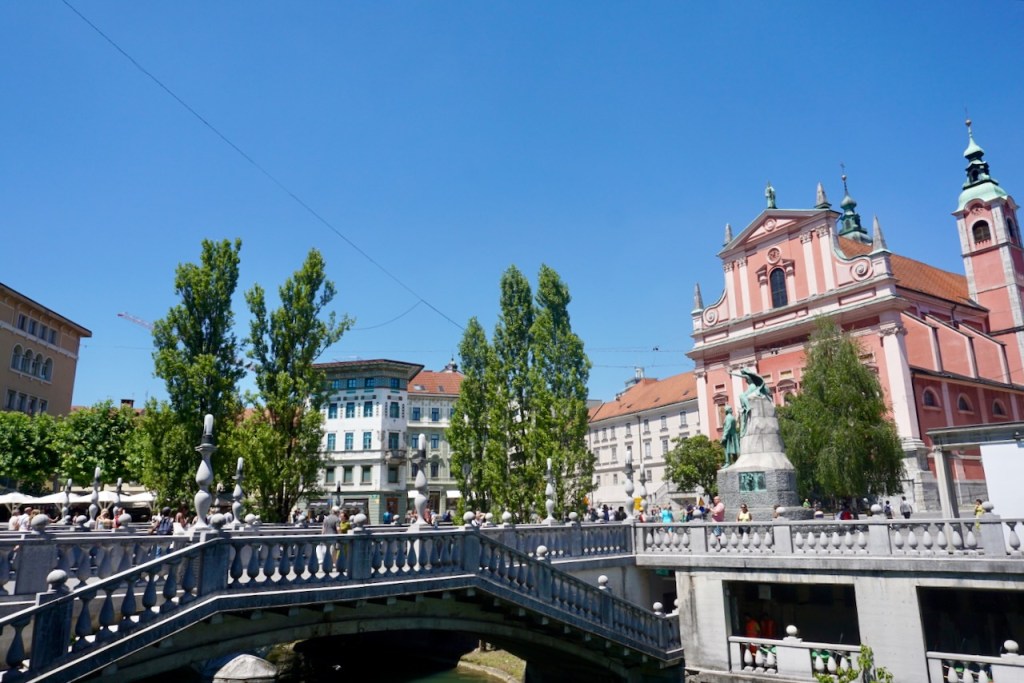
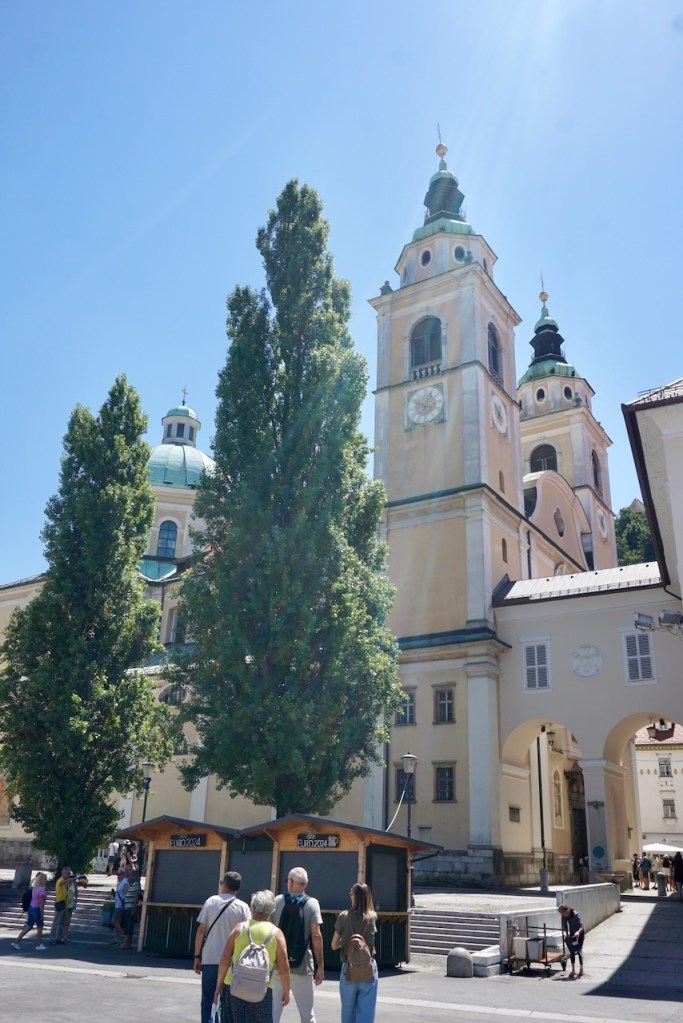
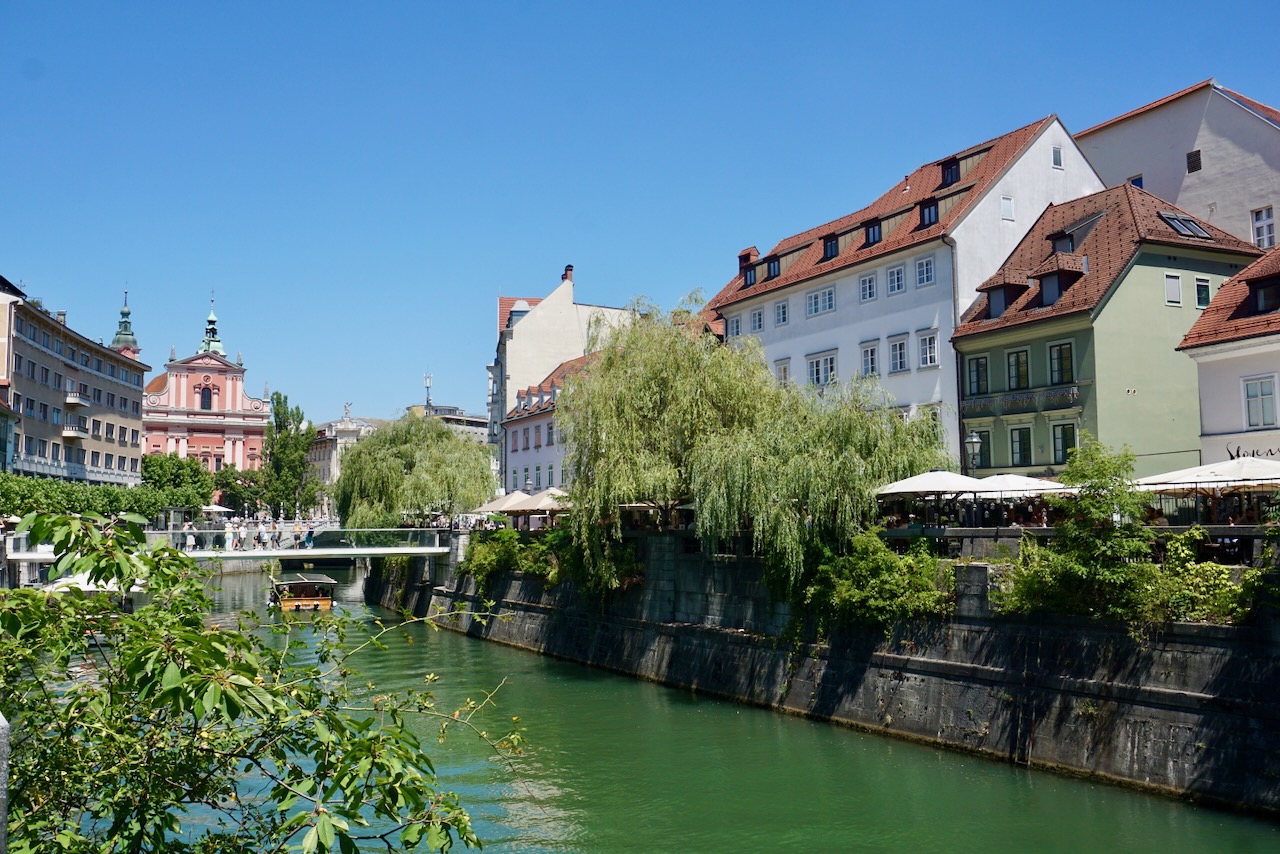
The following day, we visited Ljubljana, Slovenia’s capital, where I hadn’t been on my first trip. The city felt like many around Germany with narrow side streets, pastel buildings, and open squares. The amount of German being spoken by tourists only augmented the sense of familiarity. The castle on the hill and the city’s dragon symbol added an air of the medieval.

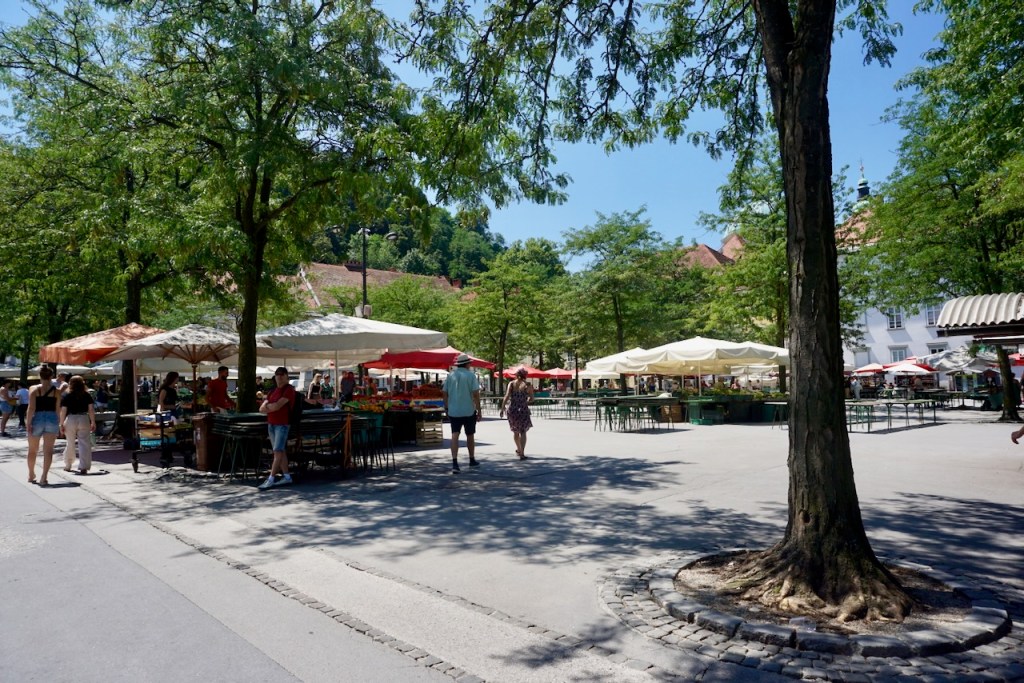
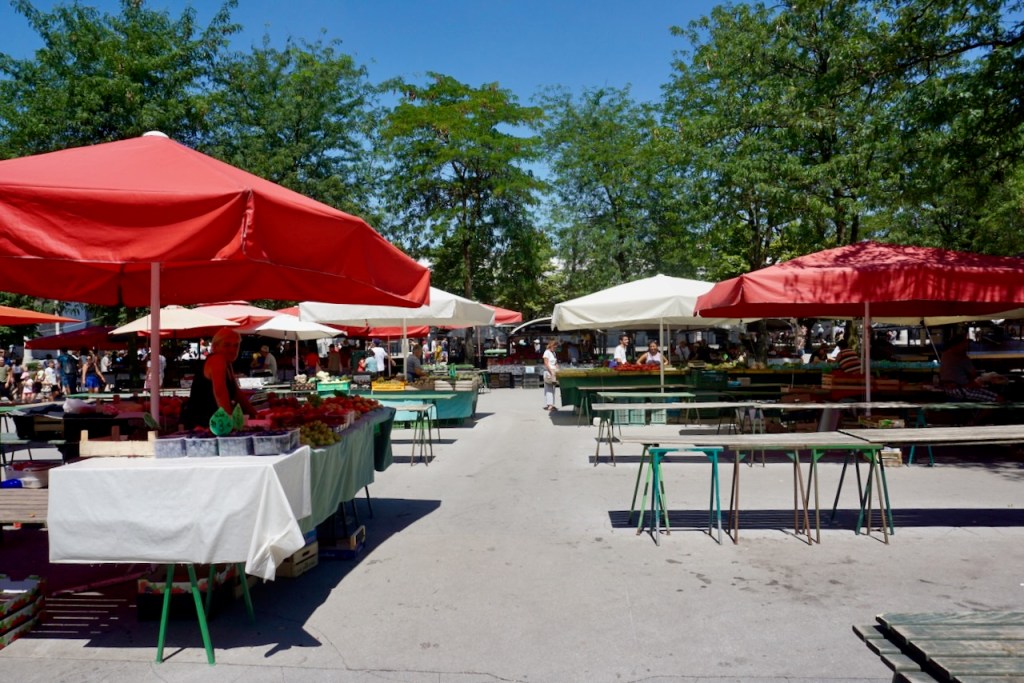
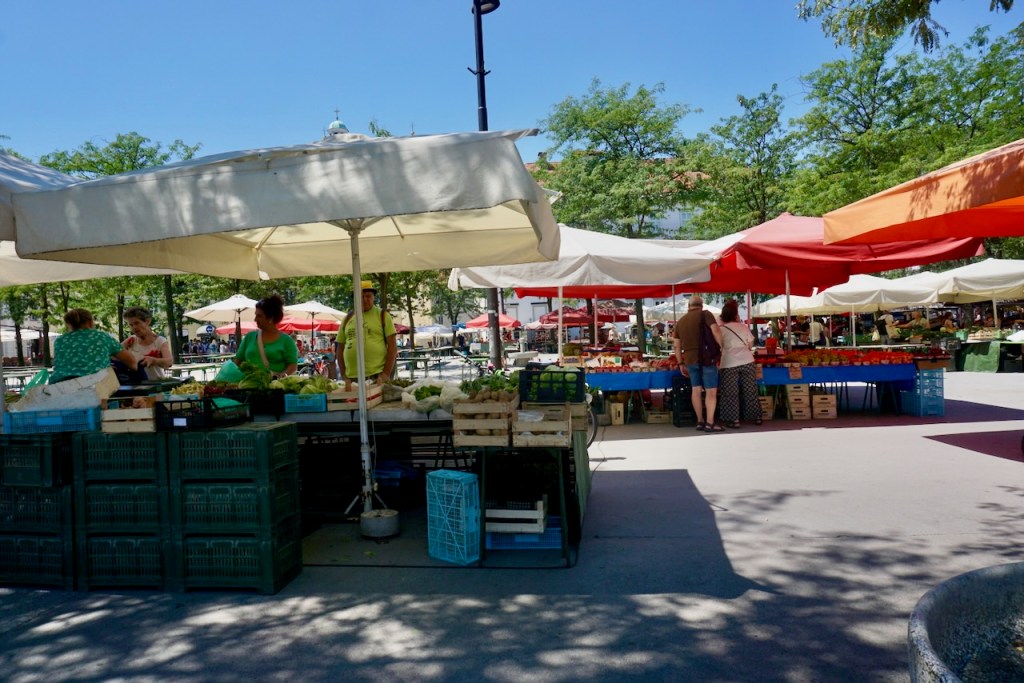
I enjoy any city with a market . . .

. . . or on the water . . .

. . . and Ljubljana’s car-free old town was pleasant to walk through. It is also very small, making it easy to take everything in. I especially appreciated aspects of Ljubljana that hinted at the daily lives of the people who live there.

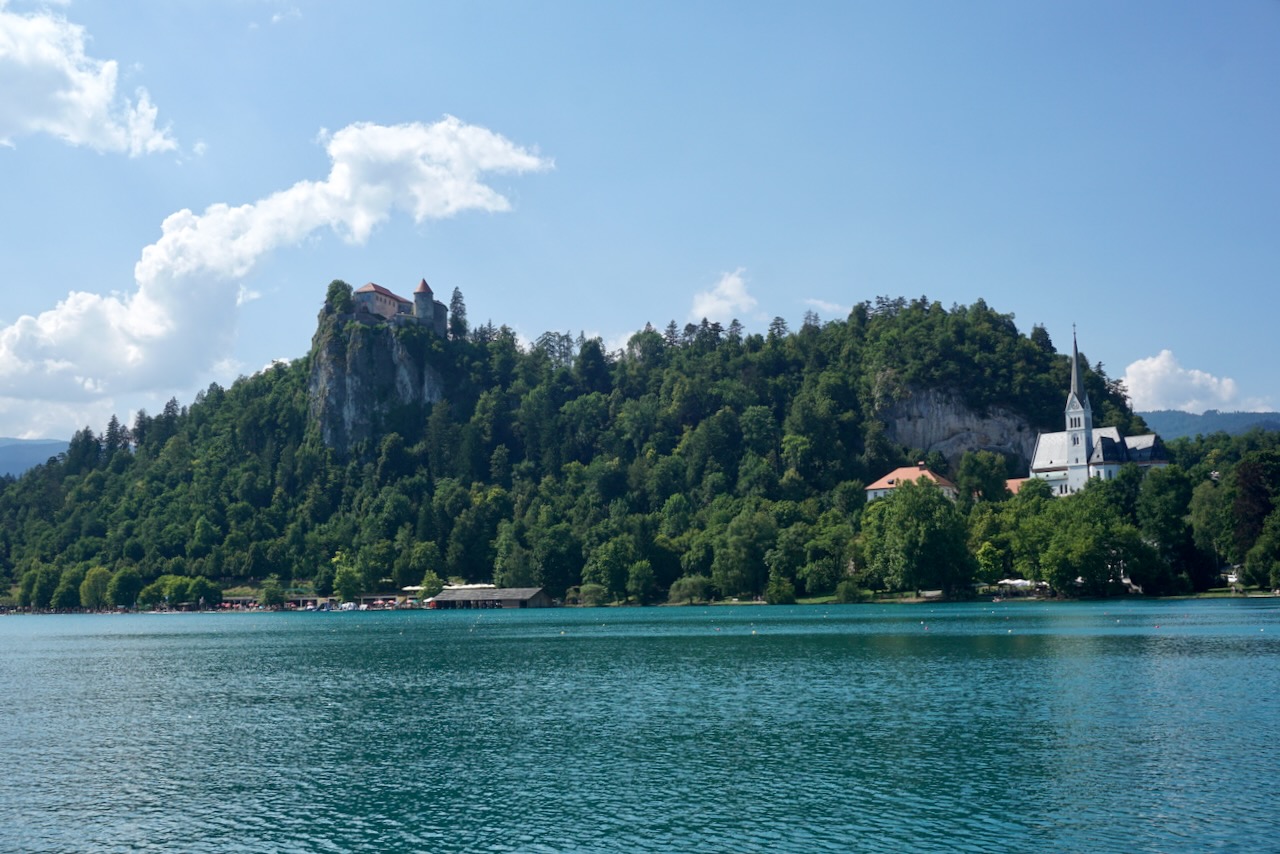
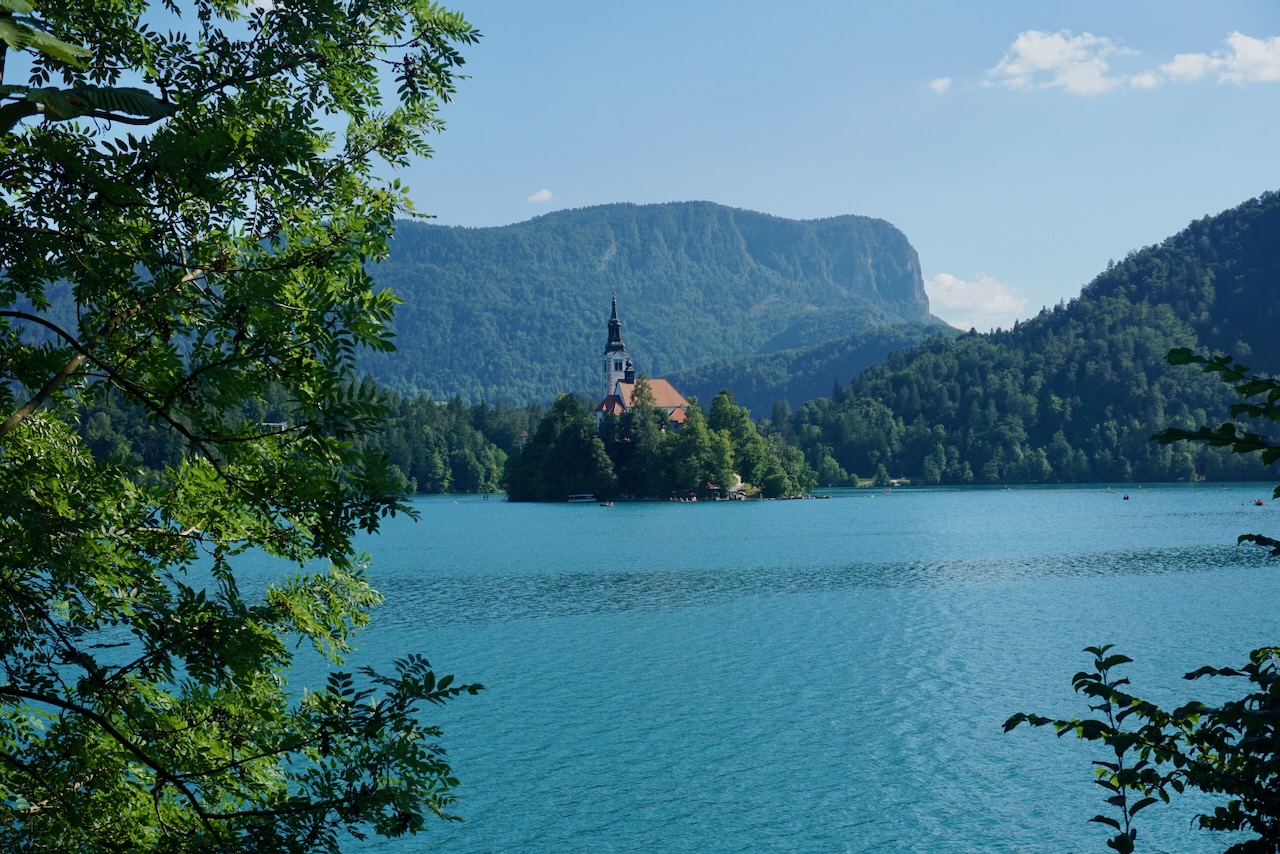
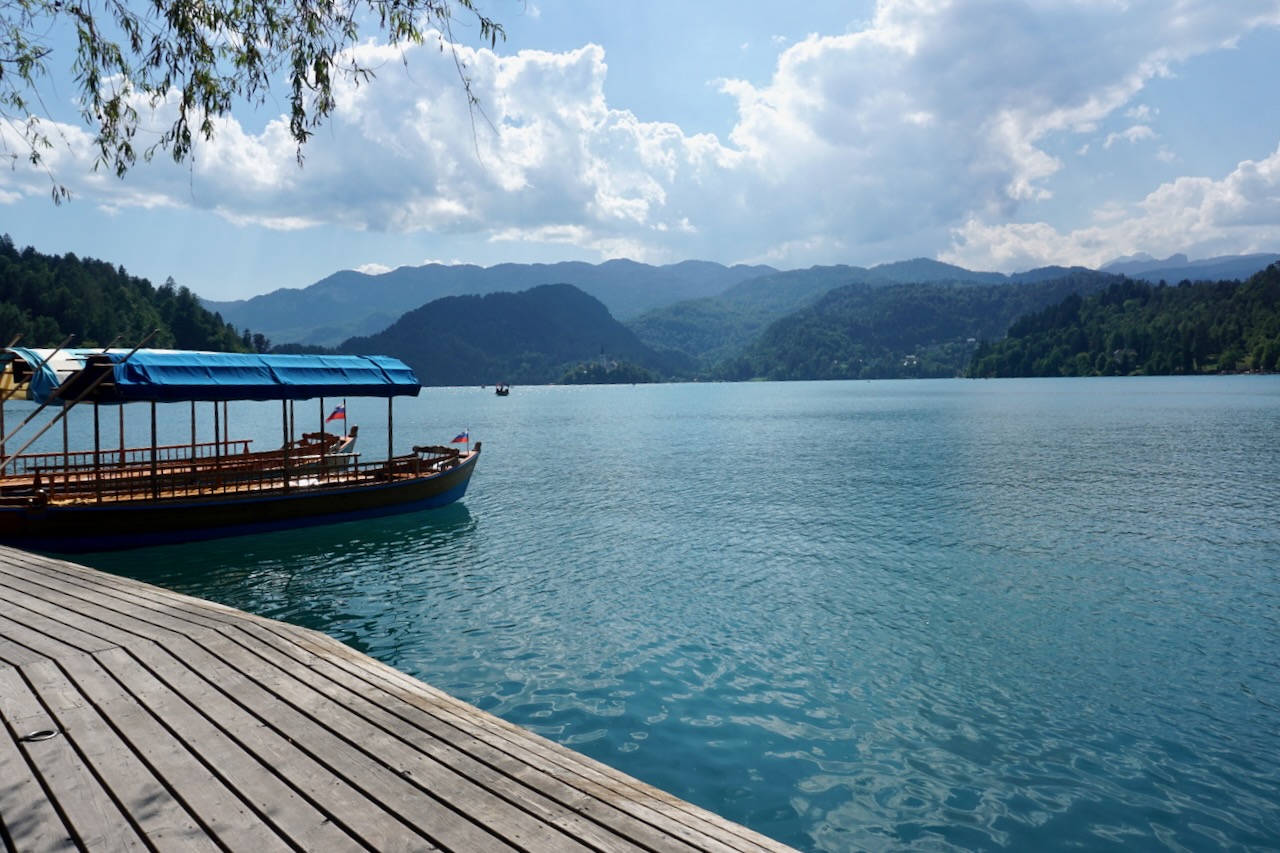
On the way back, we stopped in Lake Bled. The lake was an almost unreal blue, and we were, as always, enchanted by the mountains in the distance.

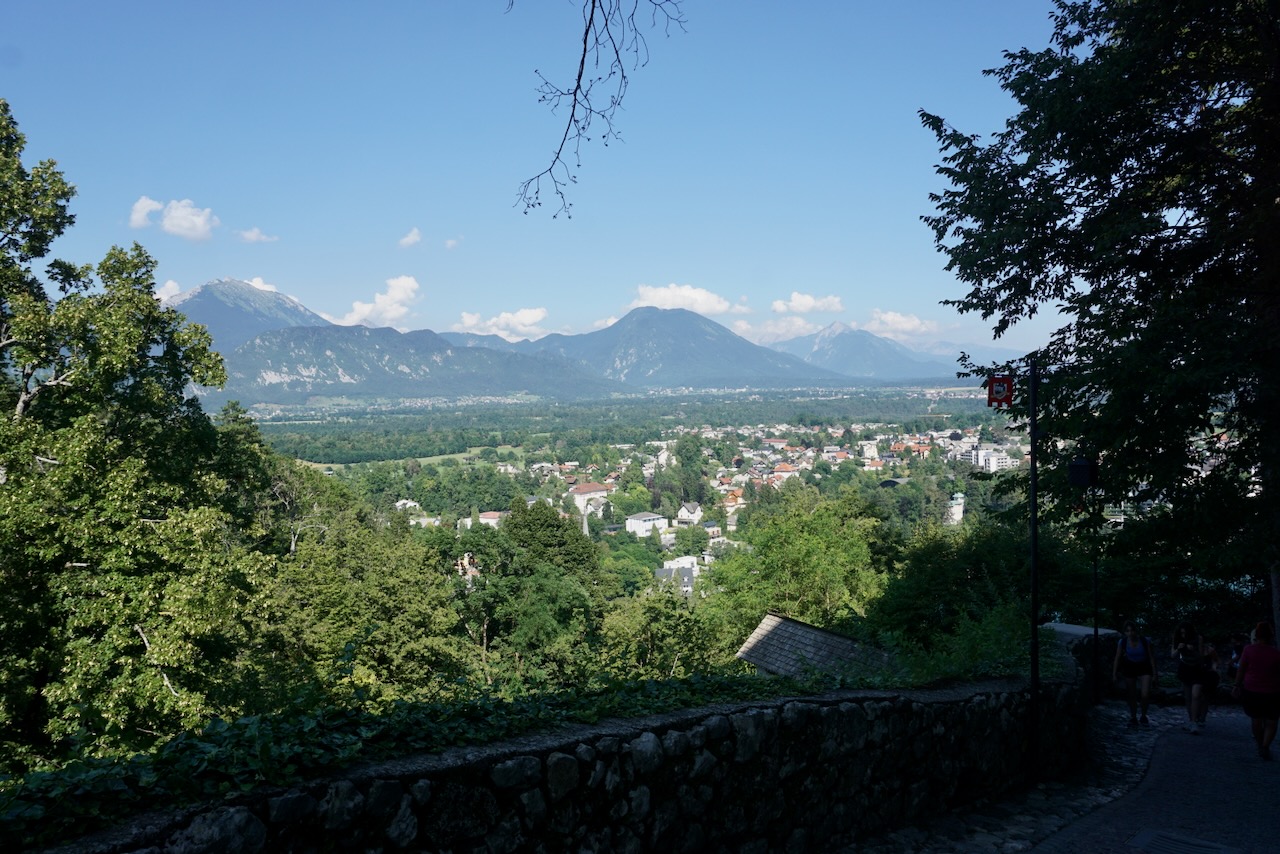
We walked up the path to Castle Bled, stopping just before we had to pay admission to look down at the valley through which we had driven on our way there.

We spent our last day in Slovenia having a beach day at Lake Bohinj. We spread our towels on the grass under a tree, bought ice cream bars from a kiosk, went swimming, and paddled our rented boards. It had been very hot the last several days and the water was delicious.

Rejuvenated from the slow pace and having spent nearly a week surrounded by the Julian Alps, we were excited to get back into the mountains for one final adventure: Germany’s Zugspitze.