On Action

It seems out of place to comment on the situation (conflict? war? – When does the headline reflect reality, and does it even make a difference to the people who are there?) in Israel and Gaza, but also out of character to say nothing. There has been plenty of politics, plenty of musing over religion on this blog. But I think, or I would like to think, more focus on peace. At least, this is what I hope.

But I know that hope isn’t good enough, that the achievement of peace can mean fighting, it can mean anger, it can mean bloodshed. That the world established an international organization to keep peace after the Second World War says everything I think we need to say about what humanity can do; that the organization is toothless, impotent, rife with its own governmental conflict, gripped by fear, and therefore ineffective tells us about what world governments are afraid of – ceding their own power to do what is better for the whole.

And what we see in situations like this, in all forms of conflict, is that the people who are most affected are very often those who are least involved. Don’t we all want to come and go without fear, hug our loved ones without thinking about a ticking clock, believe in the wishes on stars that we whisper together with children?

I am experienced enough to understand that no, it’s not all as charming as this picture I’m painting, that in fact some are so consumed by rage that they have made it their life’s work to spread hate to others. But I am also experienced enough to know that while the actions of single individuals cannot stop the violence that comes from rage and hate, the actions of single individuals can cause others to stop in their tracks, to reflect, to think twice and then again.

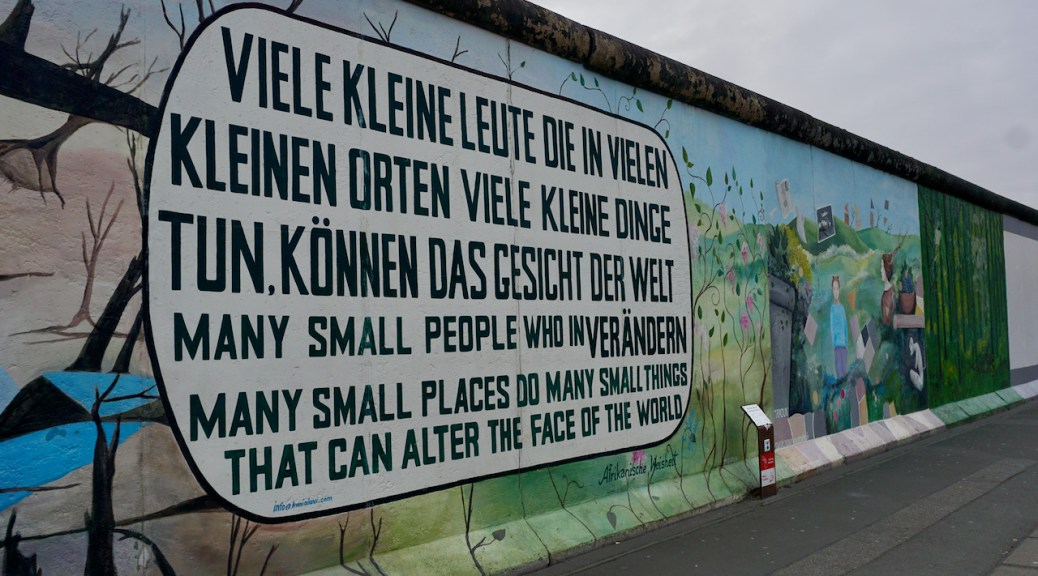
Although I appreciate them because they come from a good place, I do not believe that “thoughts and prayers” make a difference; it is rather action that position everyday people as participants in the wider world. If one person makes the choice to do the right thing, that is one more right thing. And maybe one more leads to yet another. And maybe the realities of everyday people dawn a little brighter.

I am, as always, on the side of humanity, on the side of innocent people, on the side of what is, at the core of my being, right. Don’t we all learn to help elderly people cross the street? What I feel in my heart is the desire to wrap my arms around everyone, all of you, but I know that my circle of influence is far smaller than my circle of concern. So I stretch out my hands to those I can reach, and I hope that you, wherever you are, will join me.

Berlin, Germany – December 2021

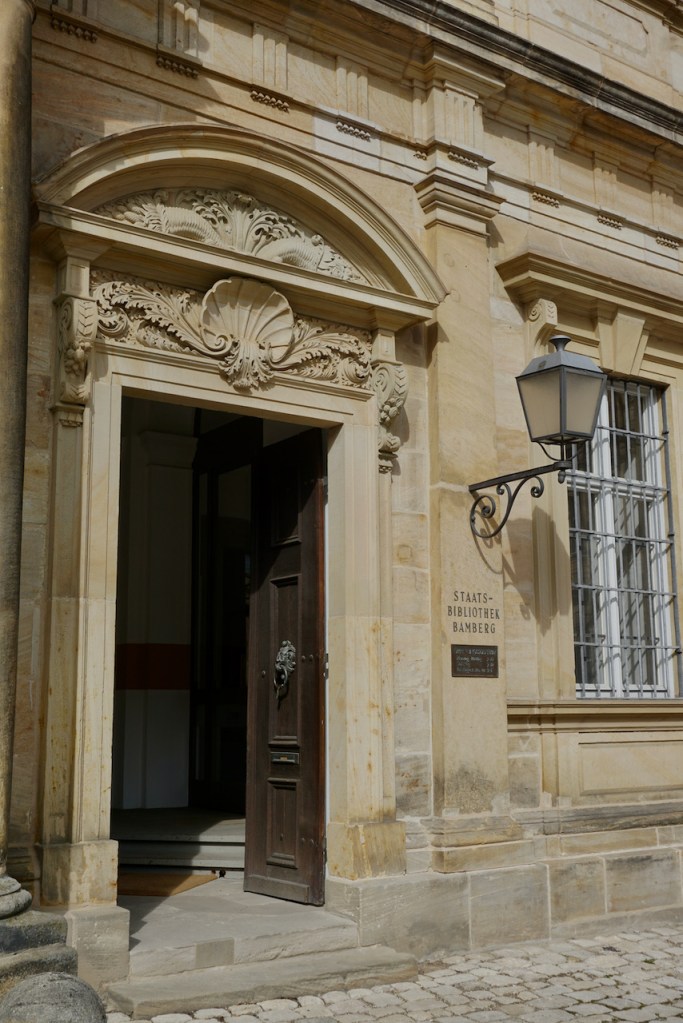
Travel Guide: Bamberg

Bamberg is located in a region of Bayern (Bavaria) called Franken (Franconia), and the regional slang and cuisine are Fränkisch rather than Bayrisch. I was pleasantly surprised to find that Fränkisch slang really is slang – the people generally spoke Hoch Deutsch (High German) and I could understand the accent. (This was hardly the case when I visited Munich, for example, where Bayrisch is really the local language. And rest assured, I have equal problems when people speak Thüringisch from here in Thuringia. An ongoing pattern when I learn a new German slang word is to clarify whether the word is Hoch Deutsch or Thüringisch; the distinction is important for my sometime-in-the-future German language test.)

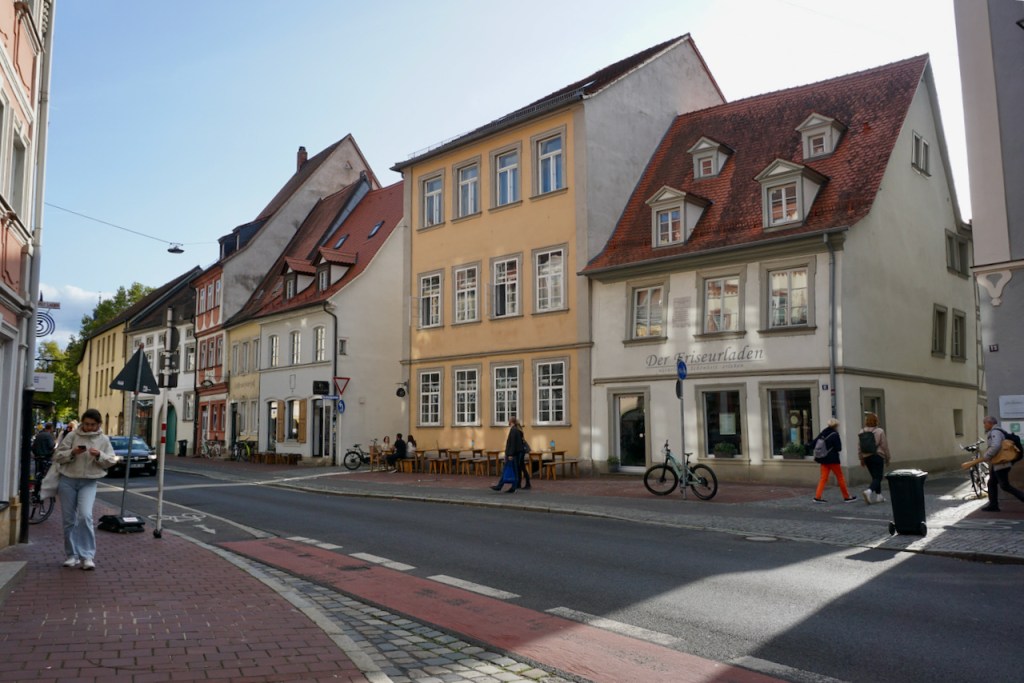
These stark regional differences make travelling even a couple hours away feel much farther, and it’s a lot of fun to hear difference forms of language, taste local beers, and experience local culture. We spent two nights in Bamberg and were delighted by what we found. The population is just a little larger than that of Weimar, but the town sprawls across seven hills. We spent our time in the old town and new old town on the opposite side of the river, going everywhere by foot, and we were pleased to see really excellent bicycle infrastructure everywhere. There were bike lanes and bike parking areas on every road, as well as pay parking in areas that would be free by us. And it definitely seemed like the population got the message! The number of people on bikes was correspondingly greater than I have seen in other German cities.

One element that makes Bamberg really special is its location where the Regnitz and Main rivers meet. There are canals that have been built to link the rivers and bridges to carry pedestrian, bicycle, and car traffic, so you’re never far from the water.

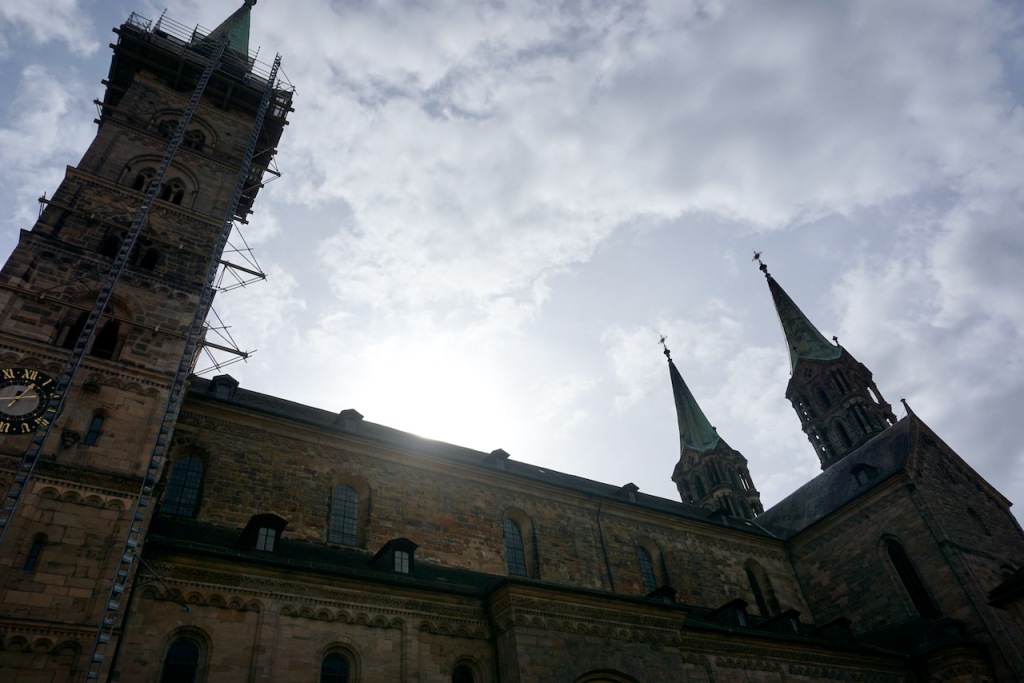
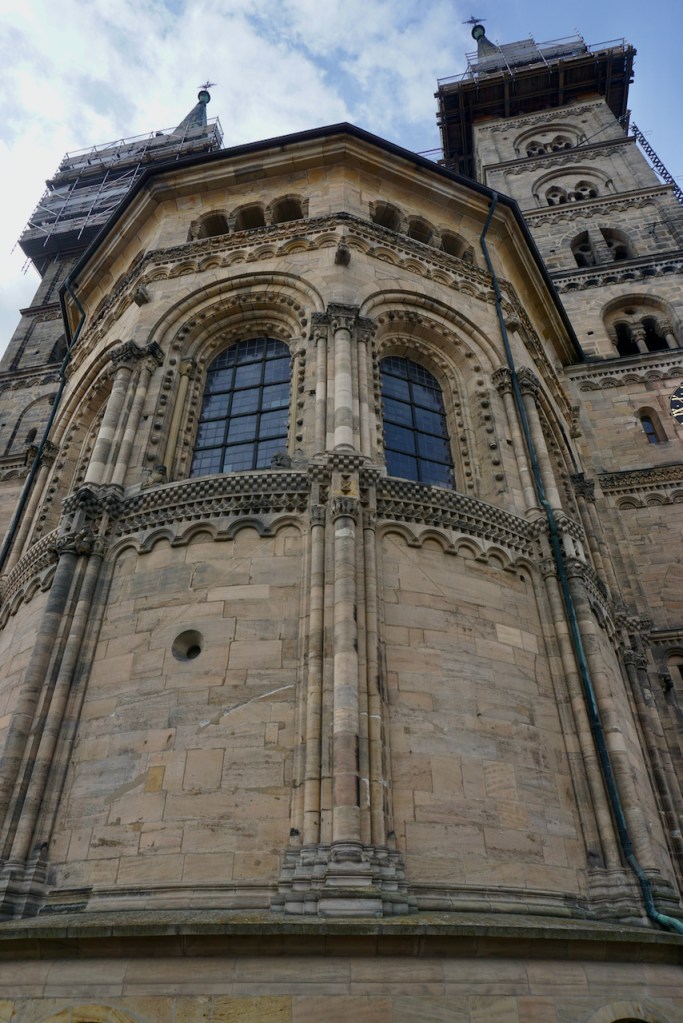
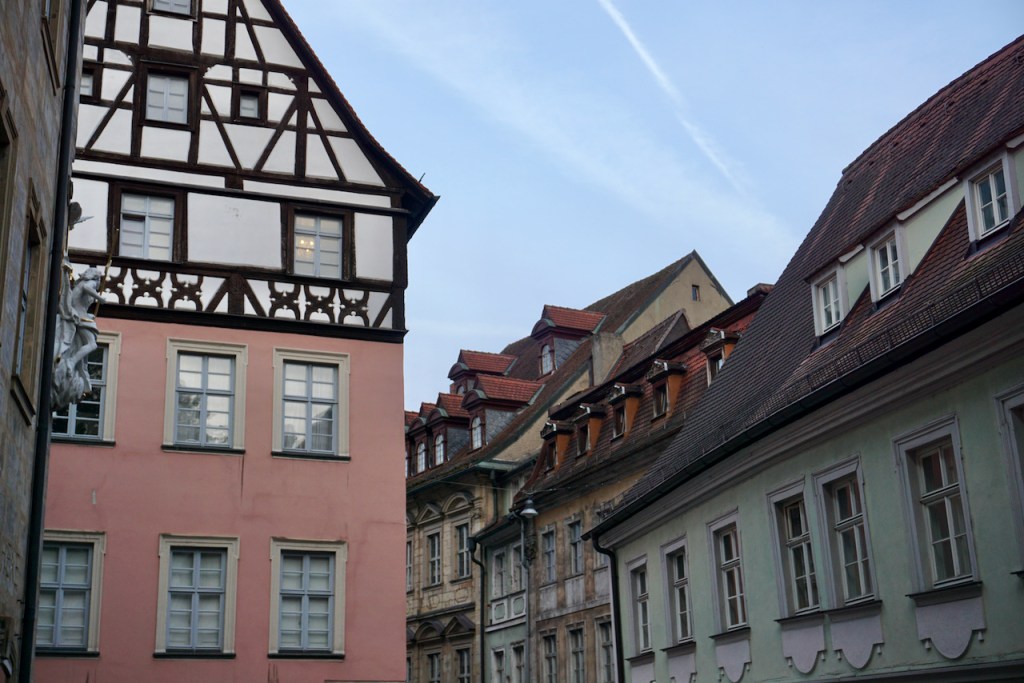
It didn’t take long to assess the wealth of this city, extending back hundreds of years. Each of Bamberg’s seven hills has a church, and Bamberg is host to a cathedral and monastery.

The old Rathaus, or town hall, is the highly decorated signal that one has entered the old town, and we photographed it at various times of day from different angles to play with the light.

We essentially stumbled into the courtyard of the old palace . . .

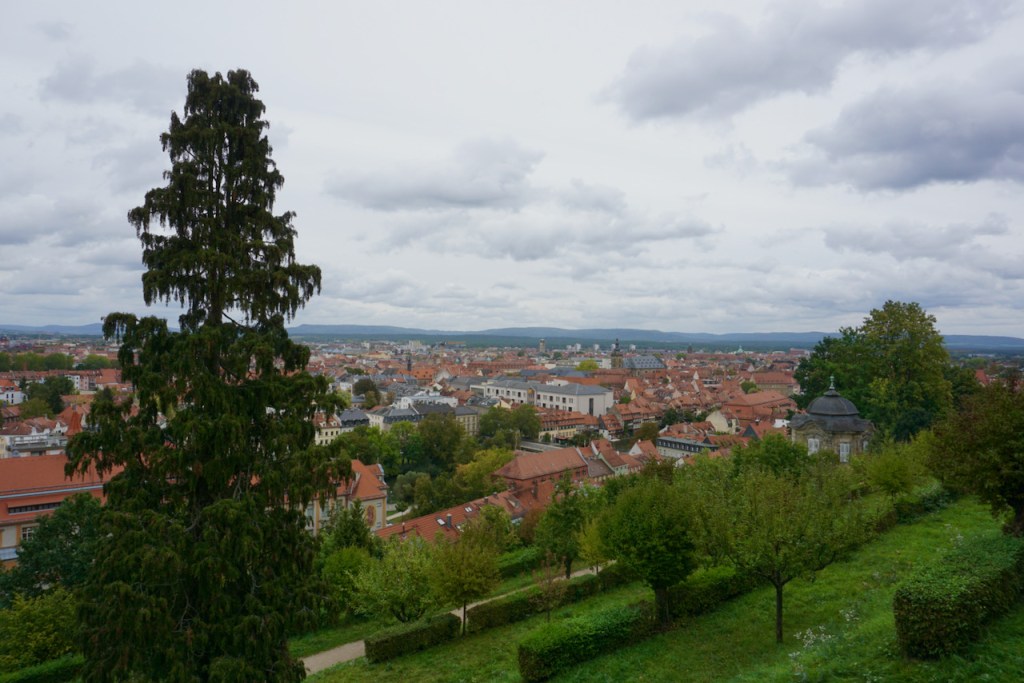
. . . just after a look at the city from the garden of the new.

As always, we climbed to the highest point, this time at the monastery that towered above everything, and looked down. The red rooftops all over Germany never fail to put me right back into a child’s storybook.

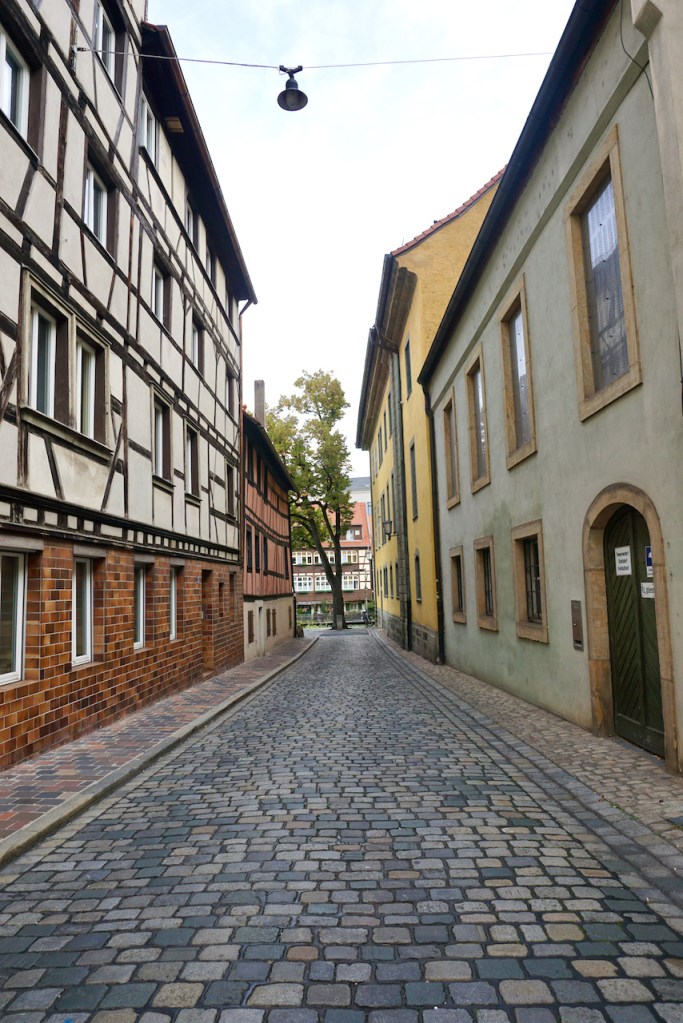
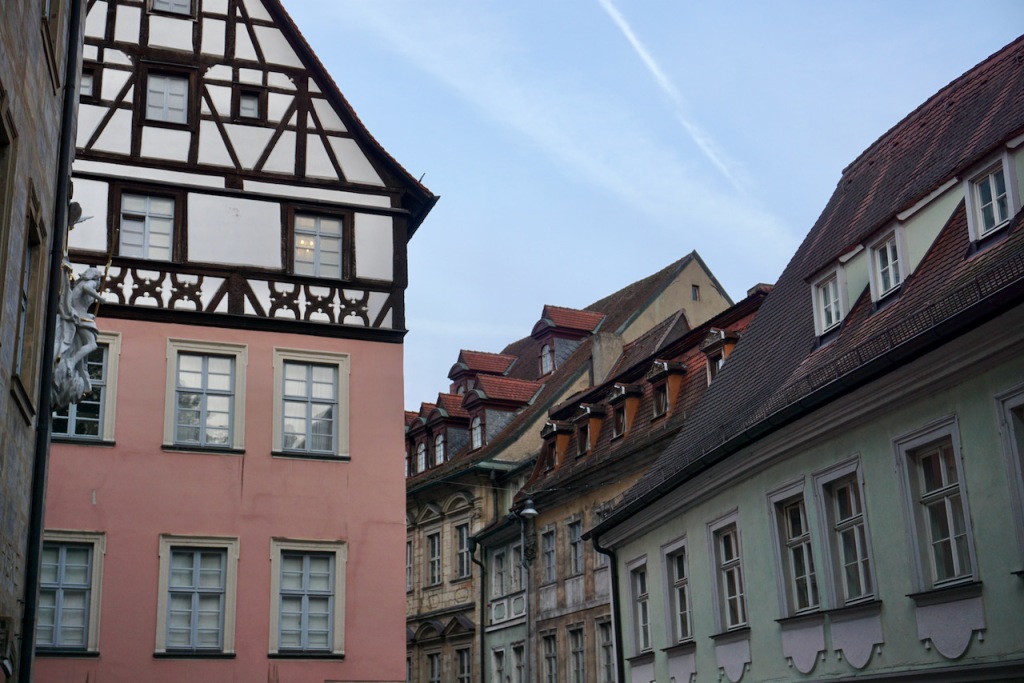
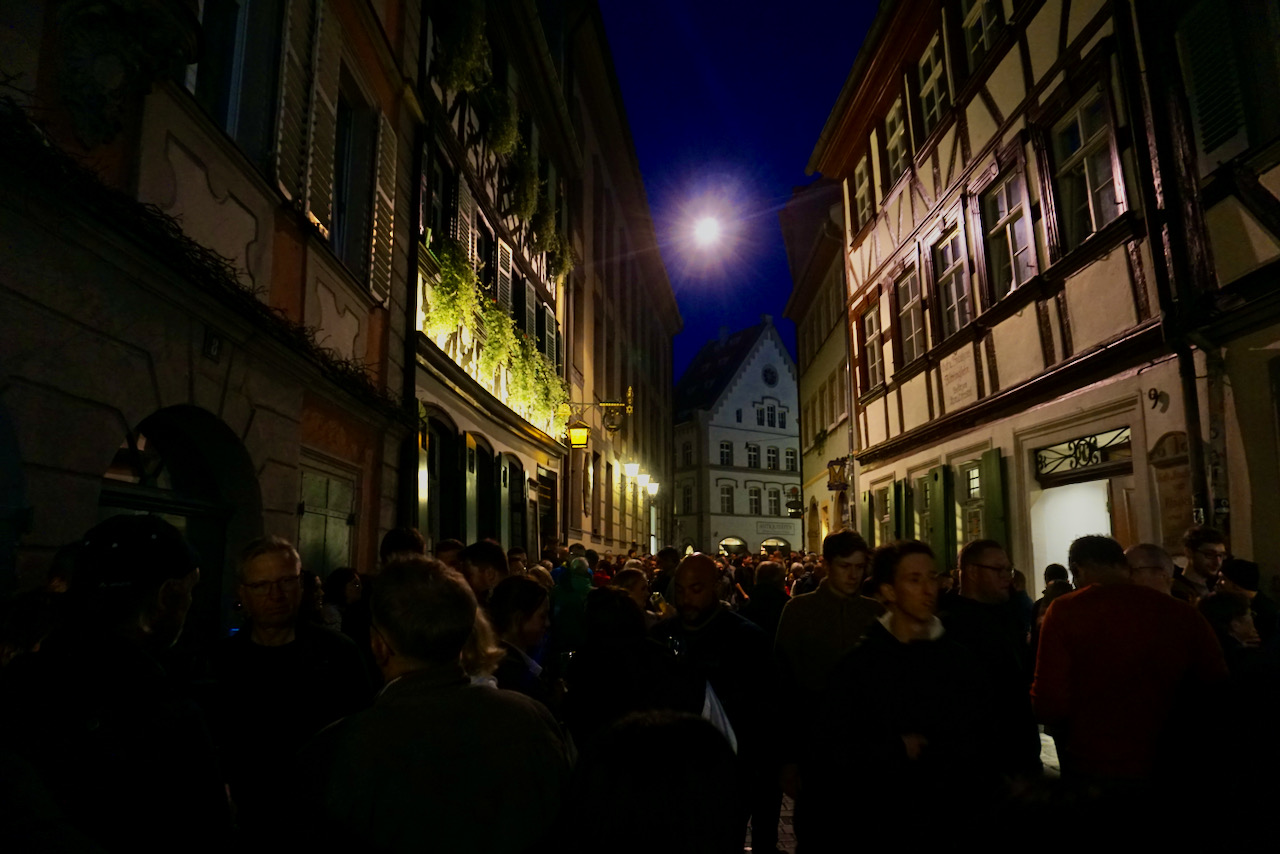
Another aspect of Bamberg that I really liked were the tiny alleyways that twisted into each other, occasionally broken up by the large squares that characterize many European cities. The buildings were ornate and detailed, another sign that this was a city that controlled trade and therefore amassed wealth.

Bamberg is known for its beer and Frankisch beer is distinct in multiple ways. Rauchbier, or smoked beer, is really only found there (it can stay, as far as I’m concerned) and the beer styles are somehow crisper in both colour and taste. Each pub is a brewer of its own beer and some have been operating since the 1400s. We visited the beer museum up at the monastery to learn more, and this is clearly a history that runs deep.

Additionally, a local tradition is the Stehbier, or standing beer. You walk into a brewery/pub/bar/restaurant and order a beer (or wine) to go. You pay the deposit on your glass and walk out into the street. The atmosphere was festive, though the environment was clearly entirely normal for the locals. By us, people bring bottles of beer and wine to the park. In Bamberg, you stand in the streets closed to cars. After all, taking part in the local culture is an essental part of travelling.

After two nights in a medieval town full of breweries, bookshops (I really couldn’t help myself), good food, and cheerful people, we drove about 20 minutes outside of town to climb in the famed Frankenjura. There are many reasons why this is one of the most popular climbing areas in the world, and climbing on the limestone there was a new experience. We’ll be back – after all, there’s climbing and beer.

Voice Memos

I hadn’t meant to spend the night reading, but that’s what I did, reading punctuated with a phone call and then another phone call, reading punctuated with the smiles I could hear in the voices over the line. I hope they heard mine, too.

I guess I’ve settled in. I’m in the process of, as they say, settling down. And it’s a far cry from the voice memos I listened through recently, the reminders of a searching soul. Maybe it’s the years of memorizing and performing monologues that comes through when I need to stand outside myself to look at myself. Maybe it’s the need to say aloud, quietly and under the cover of darkness, what I would scream into broad daylight if I were braver.

But maybe that’s defeatist.

Maybe I record my thoughts only late at night because the day brings the active work to forget them. Maybe it’s because at night, when the mind is tired, I let down my guard and speak to what’s buried somewhere in there. There’s hope during the day, hope demonstrated by the fact that the voice memos are time-stamped very, very late.


Many years ago, during a particularly turbulent time, I found myself recording voice memos at night when I couldn’t sleep, which was often. The voice memos, most of which I saved simply as “Night”, range from around 20 seconds to nearly 8 minutes, the pitch of my voice swinging between whispers and the scratchiness of unrealized tears. Until recently, I never went back to listen, and I recently listened through only the most recent because of the significance of the dates. Sometimes I want to shake my younger self back to her senses and other times I want to wrap her in a hug. Looking at those dates reminds me how quickly something can change.

I’ve returned to that habit only sparingly, having gotten a bit of a grip on my place in the world and learned to have hard conversations instead of imagining them. What is striking is not that I almost always fall asleep from either exhaustion or relief once my words are out of my system, freeing me from mulling them over, but rather that my hesitancy of going back over these thoughts is quite like the way I don’t read over old journals, except when looking to corroborate something I think I remember. It’s not quite an aversion, but I stay relatively removed.

And I’m not sure why that’s the case. A fear, maybe, of hearing, in daylight, what I don’t want to acknowledge, or maybe embarrassment at the melodrama of lying awake. It’s interesting to notice, and I was not at all surprised when I quieted swirling thoughts recently by recording my first voice memo in a good couple years.

But then I did something differently. I wrote down the thoughts, too. And I said them out loud. And the thoughts became a conversation, and the conversation reached a conclusion, and the vortex stopped swirling. It’s different when the whole thing plays out in real time and not just in my head. It’s a whole rather than parts.

And it means that a solitary night reading is nothing more than exactly that.

Photos, travels, musings, and ideas on education by someone trying to make the world a better and more peaceful place