Tag Archives: Climbing

Travel Guide: California National Parks (and a Day in San Francisco)

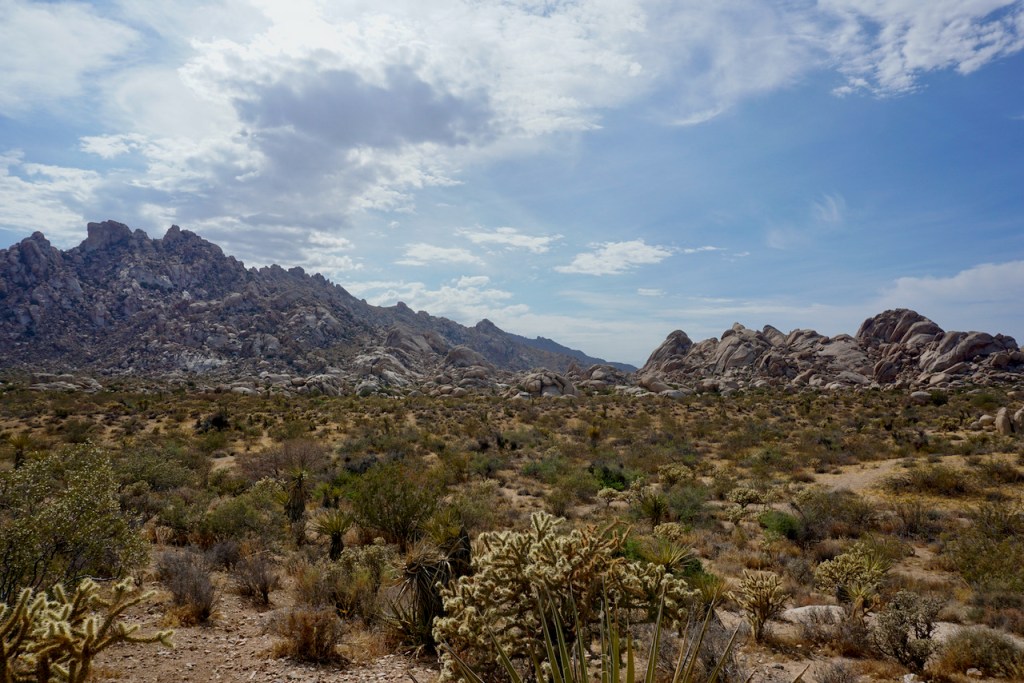
Upon leaving Nevada, we admitted that we were desperate for greenery. The desert is beautiful but we come from green places, and the lack of lush foliage was starting to wear. We would find green in California, but we first turned in the direction of Mojave National Preserve, which was a far rather different desert than we had expected. Rather than flat and endless, the drive was rather bouncy as we passed the many signs announcing: “DIP”. The temperature was cooler, as well, rendering the Mojave surprisingly comfortable for the ten minutes we stepped out of the car to look closer at the plants.

It’s a little strange to write and post this now because the area we drove through is currently on fire. The theme of fire, of which we had seen traces throughout our travels, only grew as we entered California; my concern for the planet, as I now experience a very wet summer with crops rotting in fields, has grown in parallel.

Our drive also included elements of desert travel along Route 66 that we had come to know, elements of the uncanny punctuating the stark landscape.

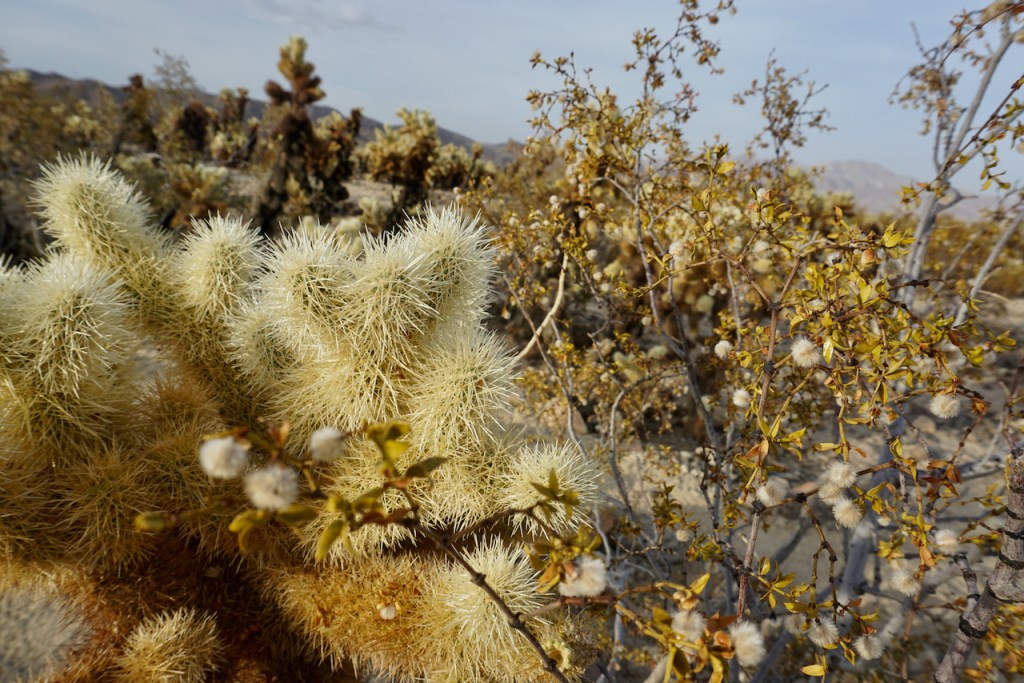
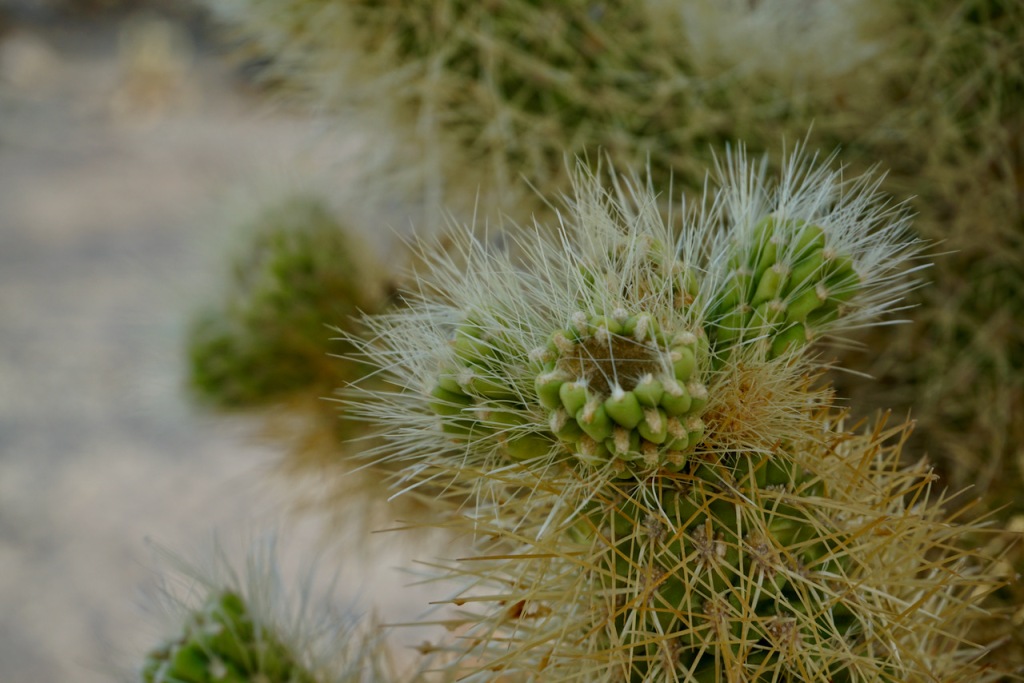
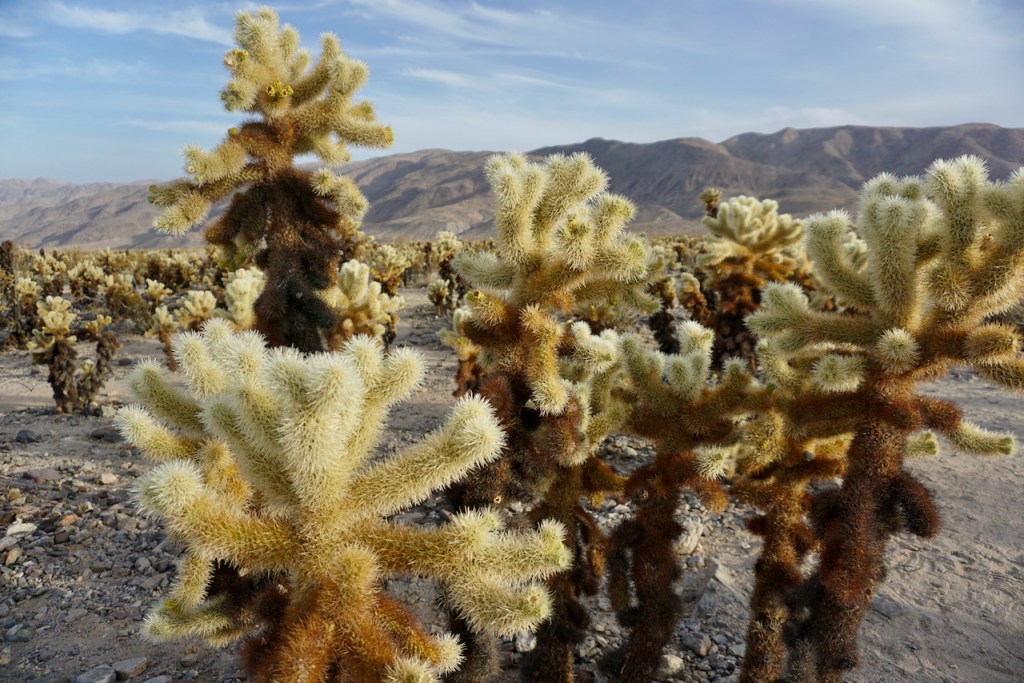
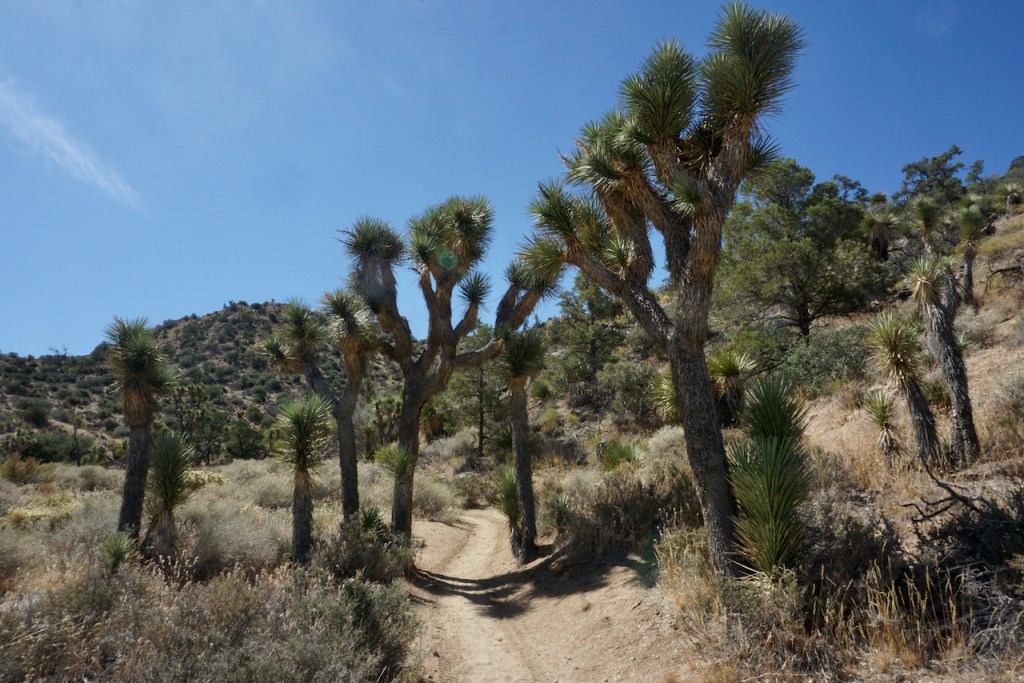
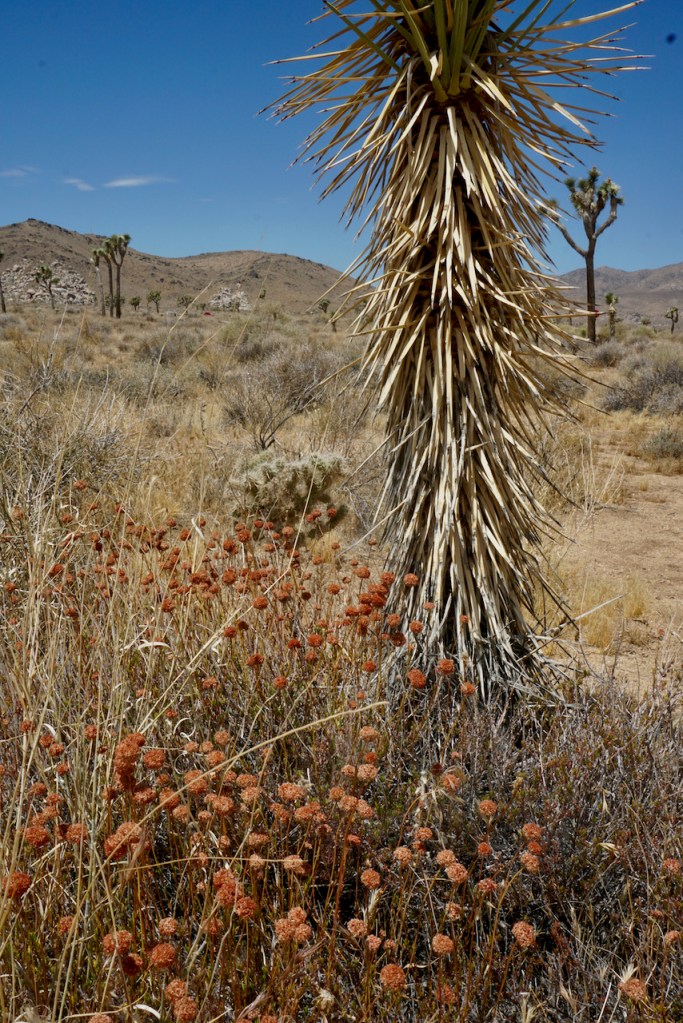
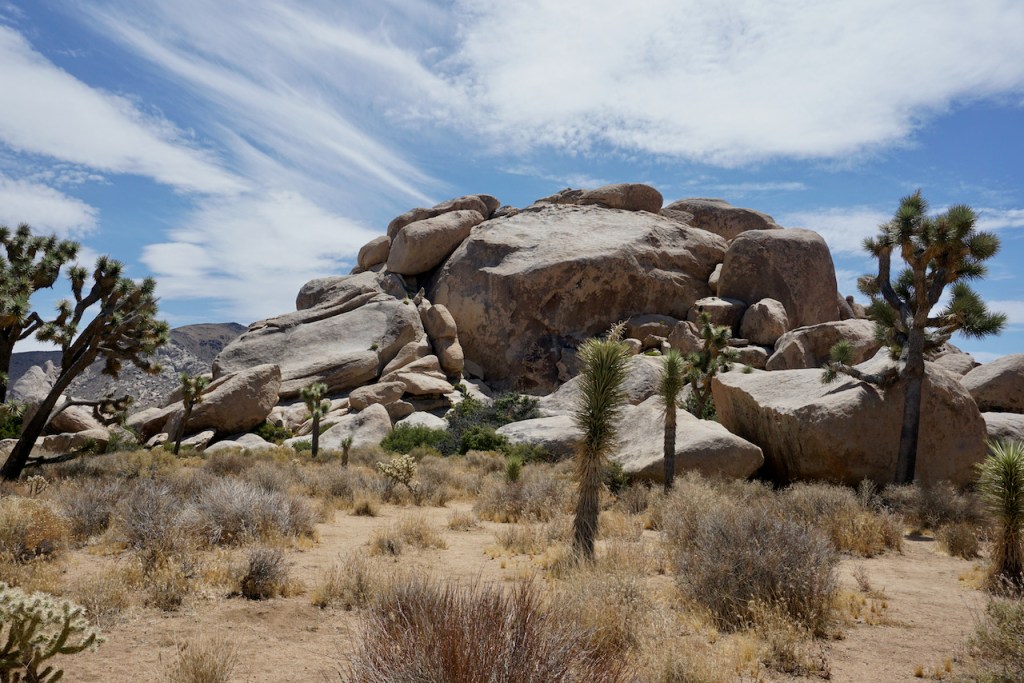
That evening, we arrived in Joshua Tree National Park and went for several walks as the sun began to set. We caught the last of the day’s light on fuzzy-looking cacti that I wanted to touch (but refrained) . . .

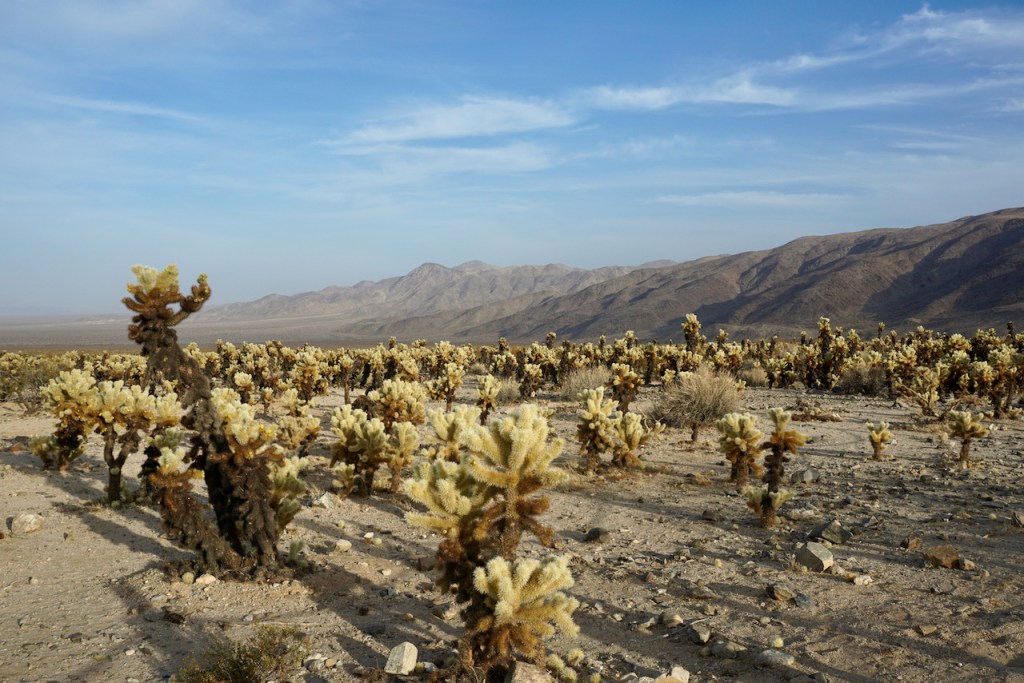
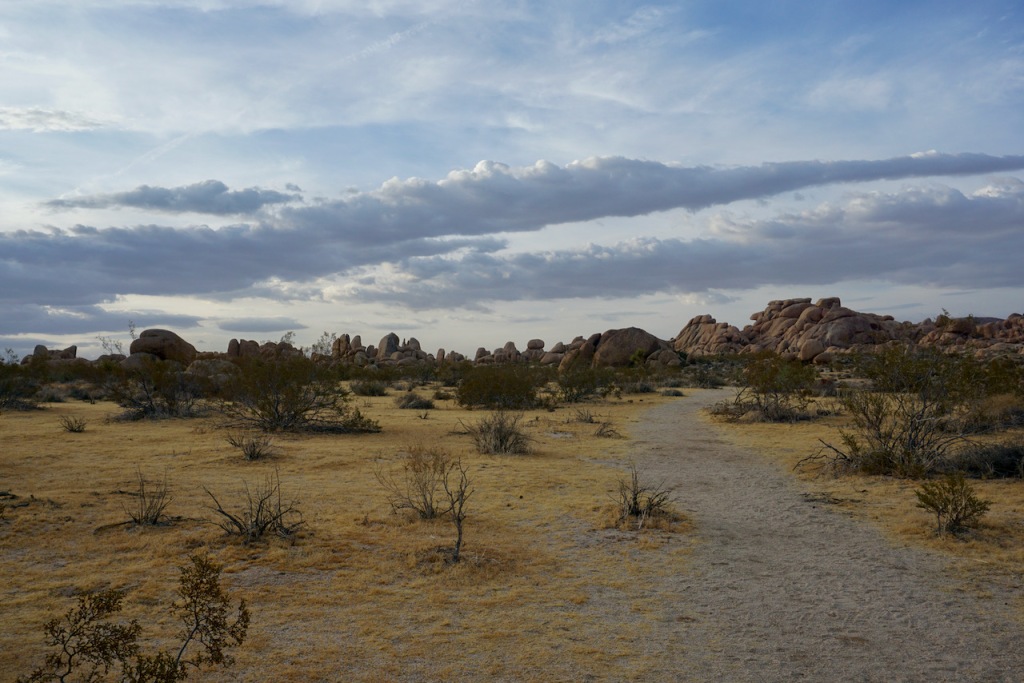
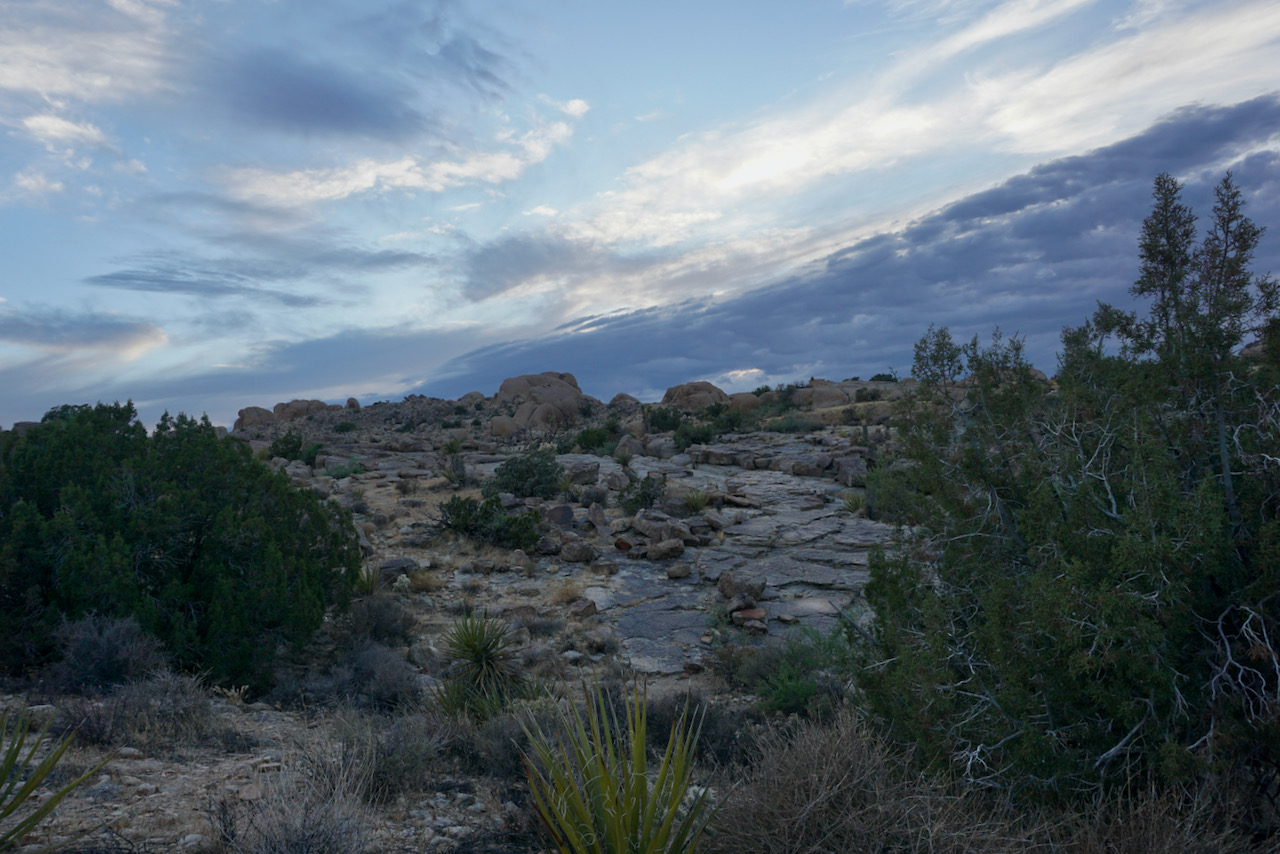
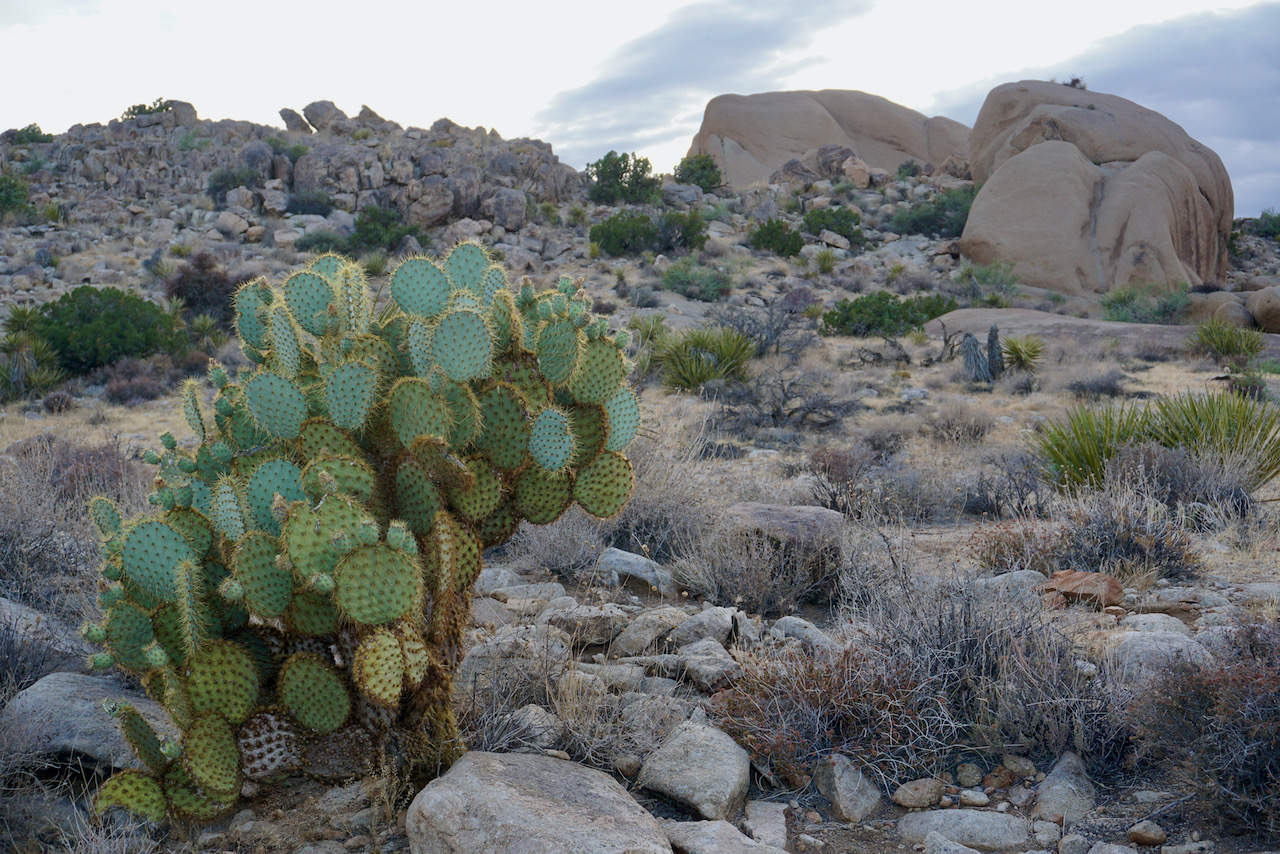
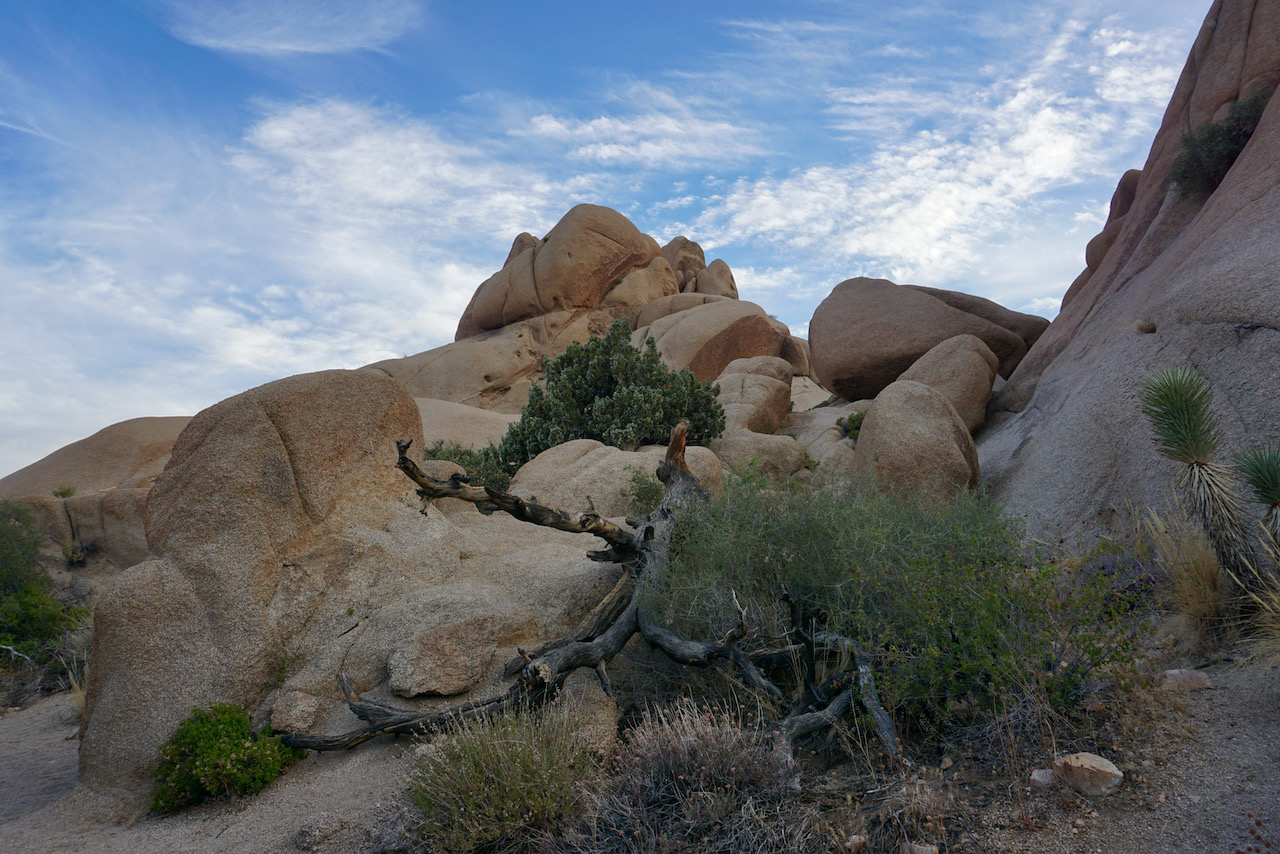
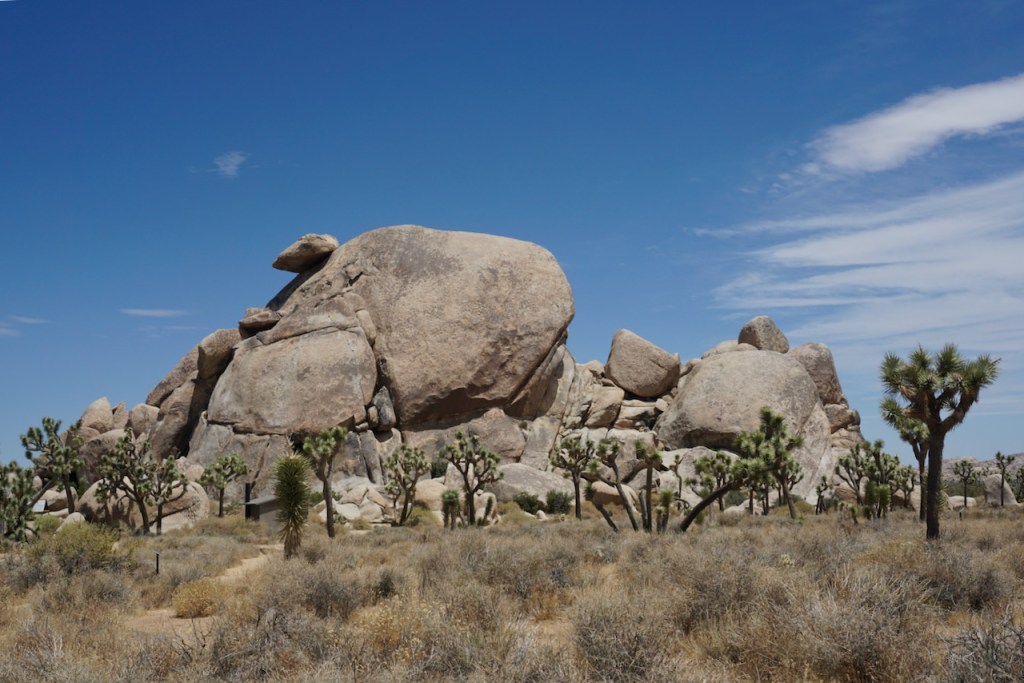
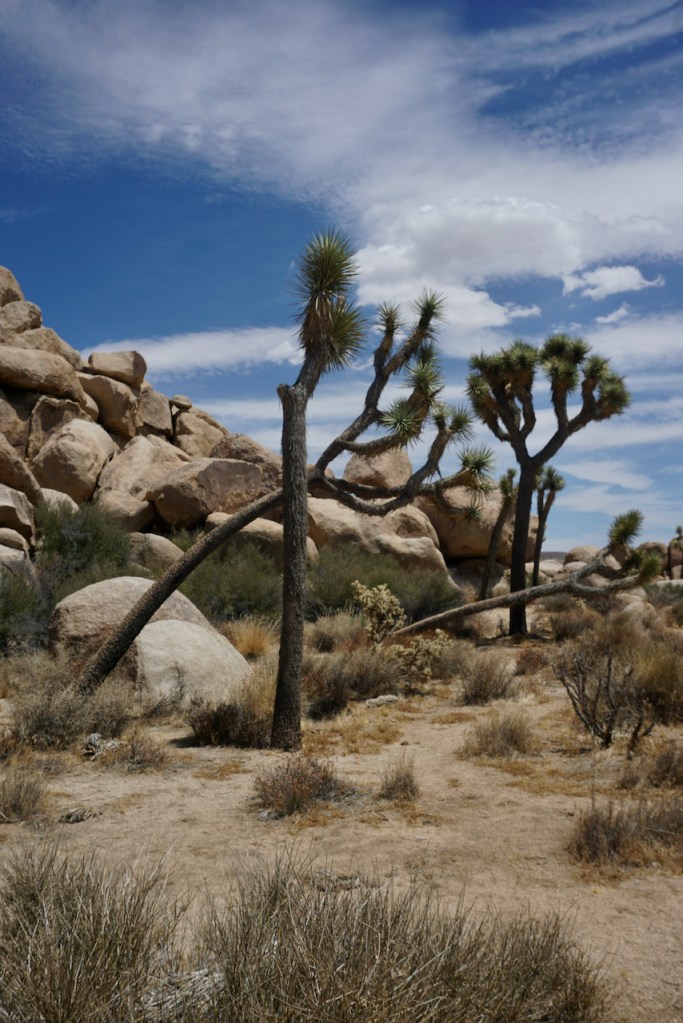
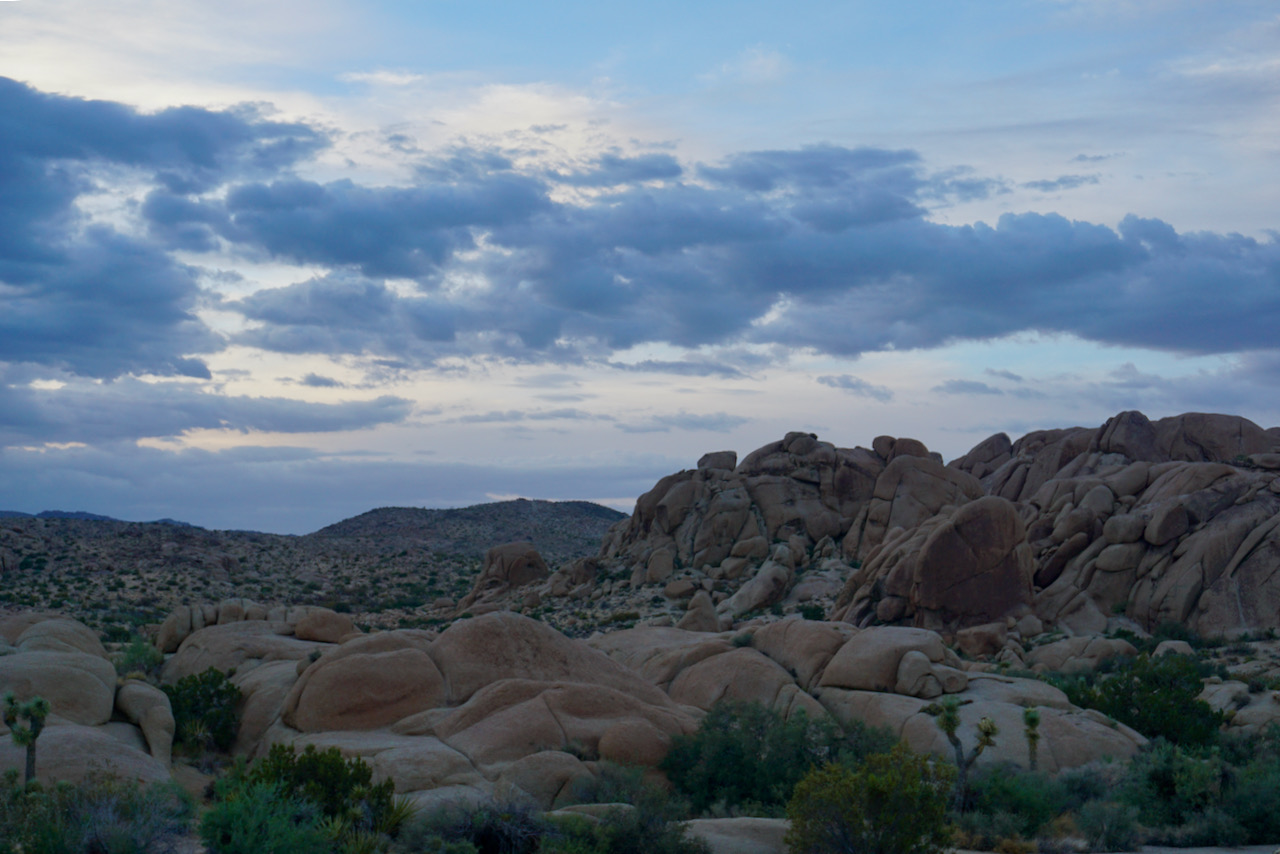
. . . and walked a trail amidst clusters of the pillow-shaped boulders that have far more texture than we originally thought. It’s no wonder there’s so much bouldering and climbing here, and we played around a little in our hiking boots. There were more species of cacti, again making for a different desert than we’d seen previously.

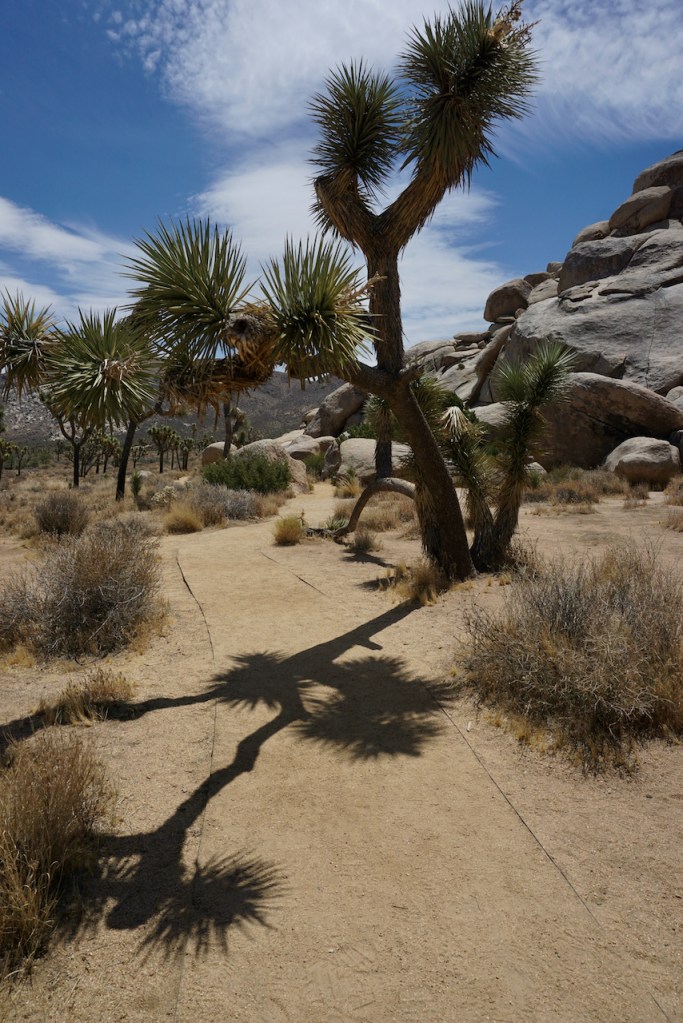
This is also where we finally saw Joshua trees. We had seen them for the first time on the way to the Grand Canyon, but not yet in their eponymous park.

We crossed the road to scramble up the boulders just behind Skull Rock, and then it was truly dusk and time to go.

We returned to the park after staying the night in Twentynine Palms, California. The temperature was relatively comfortable but the sun was intense, dictating short walks rather than longer hikes. We had learned to listen to the desert, and we headed off the in direction of a high viewpoint to look around.

As before, we were really taken by the boulders and found chalk marks mapping out routes. They felt good, those rocks.
The afternoon was spent driving through real desert, yellow and scrubby, becoming hilly and mountainous as we drove further north. By the time we reached Porterville, California to stop for the night, the landscape alternated between yellow rolling hills of nothing and irrigated orchards and farms that were so green by comparison that they almost didn’t seem real.

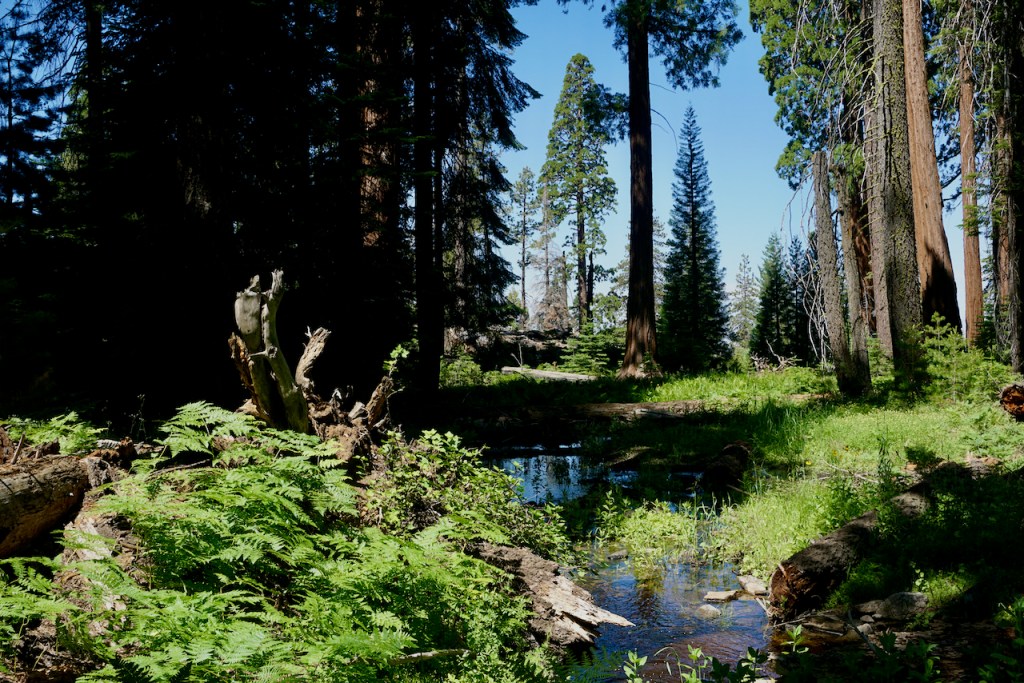
The following morning found us on the way to Sequoia National Park, which definitely made us feel better about missing trees and greenery. We drove serpentines up mountains, ending in lush, cool, aromatic forest.

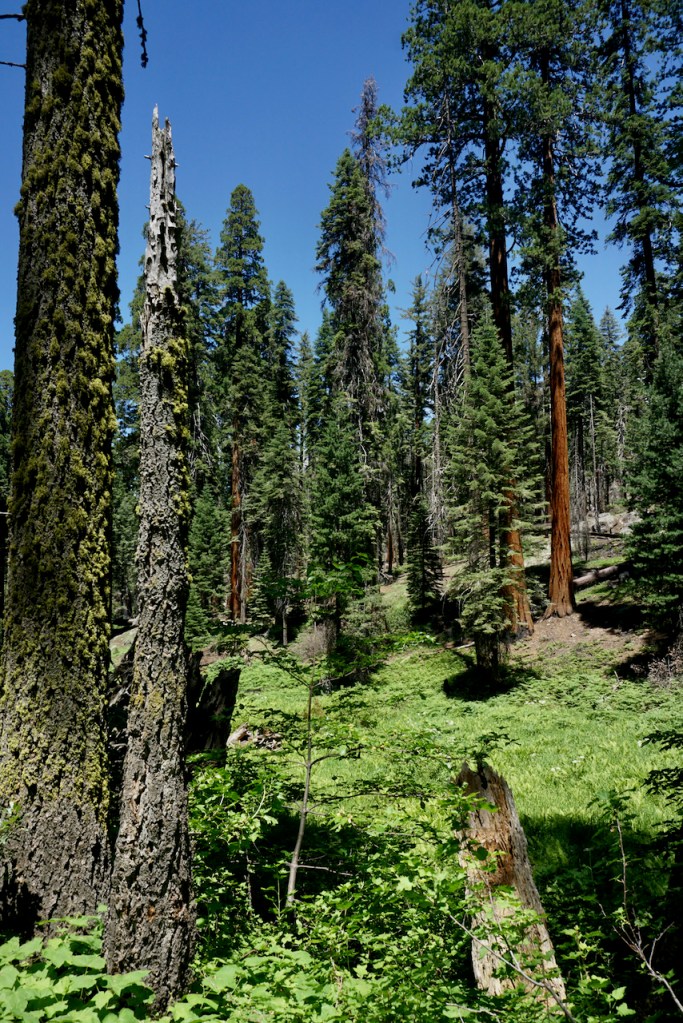
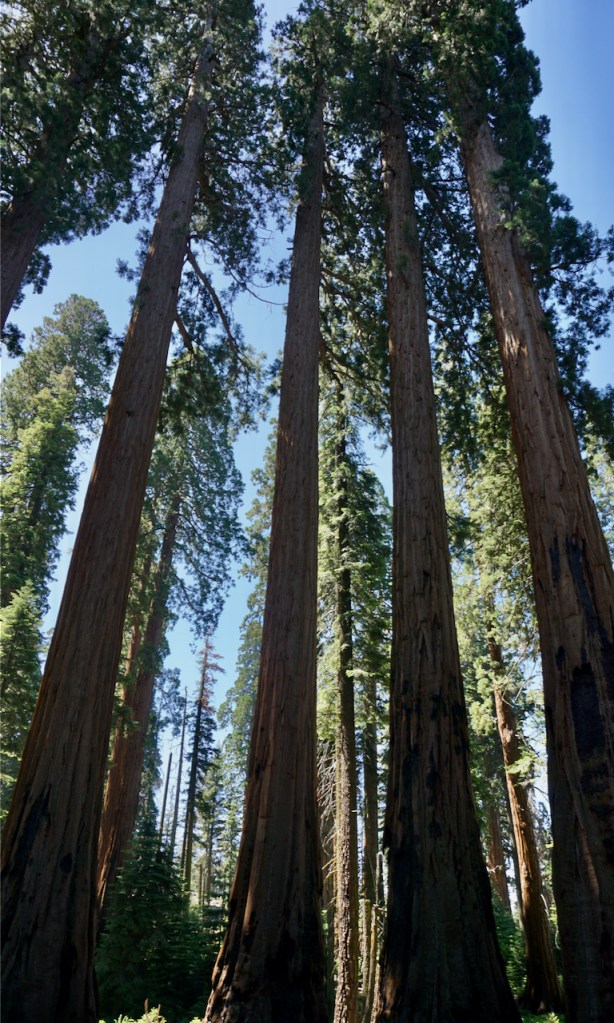
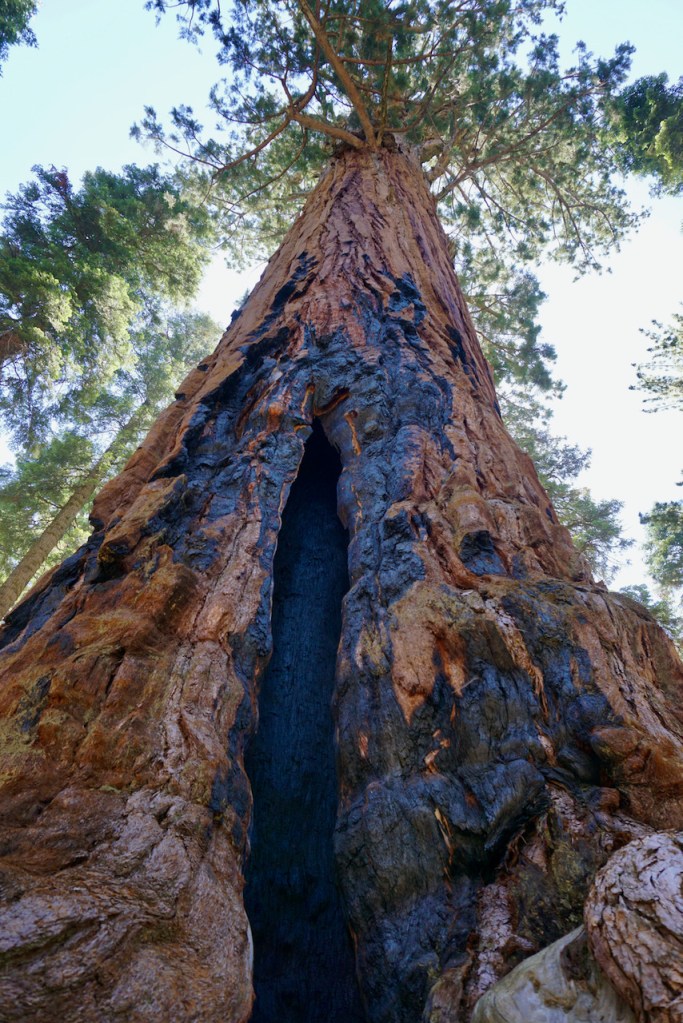
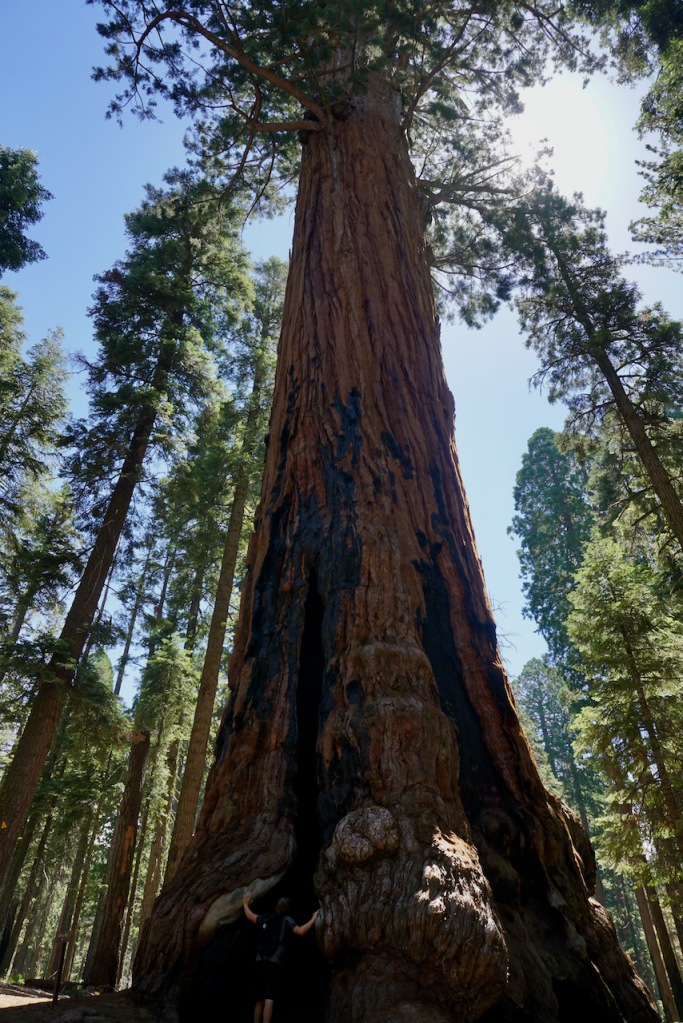
And the sequoias. They are so much larger than what I had imagined, or what I can describe. I could not fit a whole tree into my camera lens, and instead felt myself become nothing beside them. An individual is utterly insignificant in the scale of the world, and the sequoias are a reminder of that. Further amazing, if possible, were the obvious signs of damage and regrowth from fire. A museum exhibit explained the fire protective and regenerative nature of these giants, and it was interesting to see so clearly fire’s role in the life cycle and ecosystem. However, the serpentines leading up to the park were barren in part, entire swaths of forest swallowed, interspersed with tiny, new saplings. Cycle indeed.
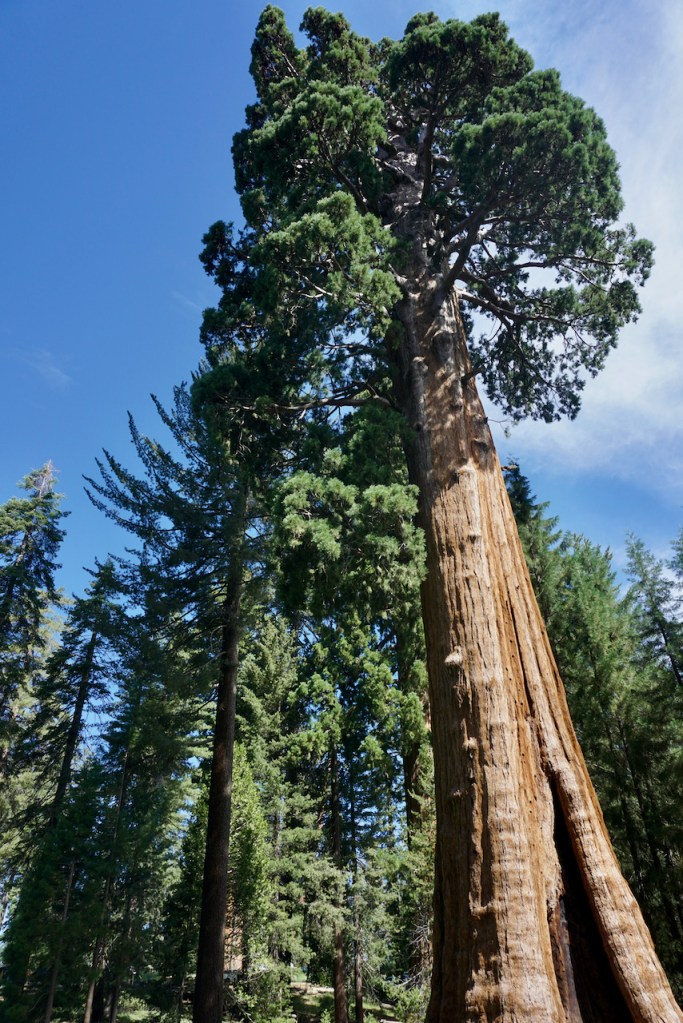
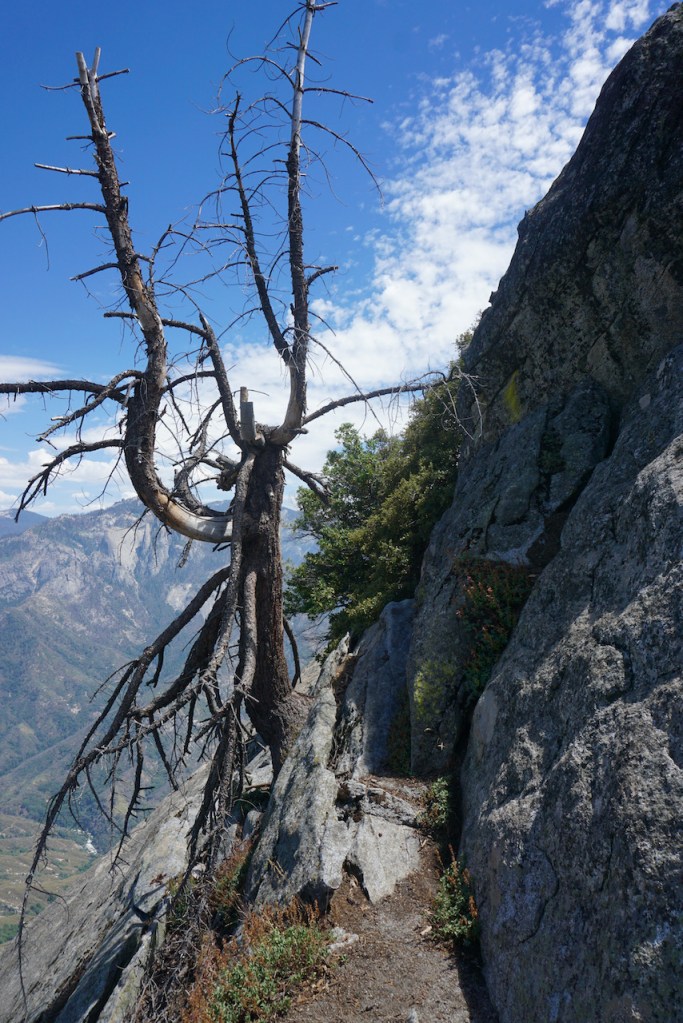
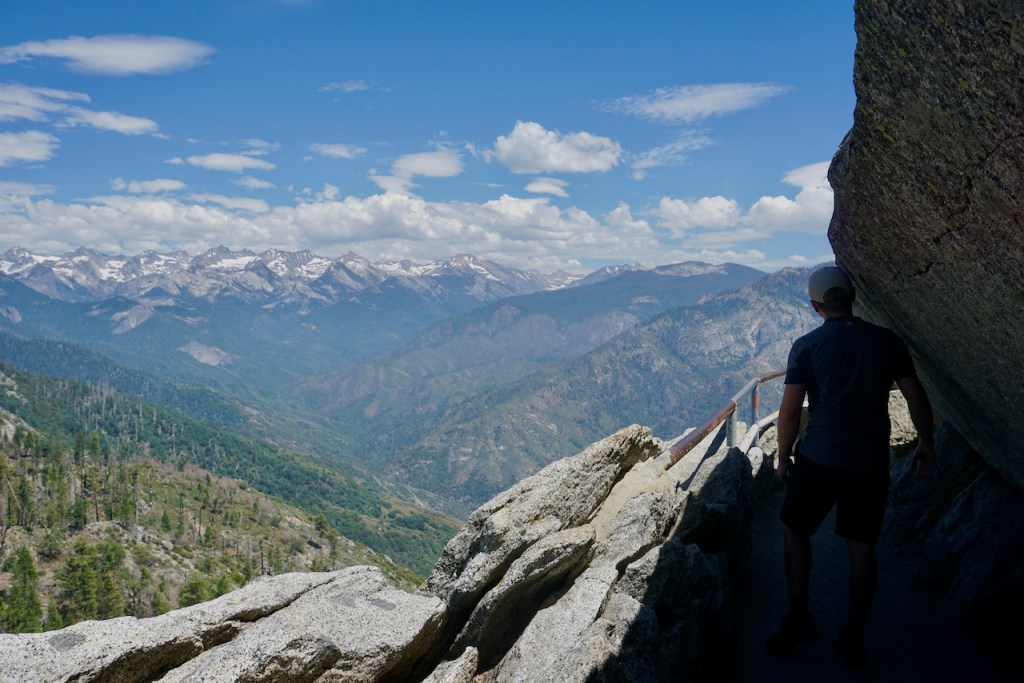
I really love reaching the highest point and looking out, and to that end we climbed up to Moro Rock, respecting the 400-step staircase except in one area where the little climb was too lovely to resist.
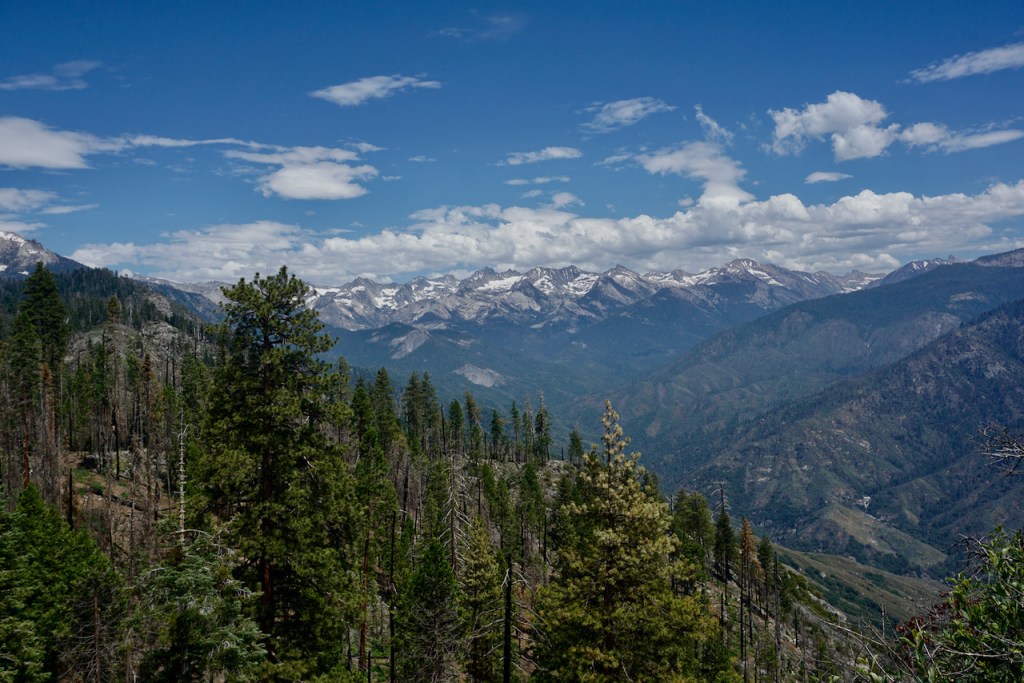
From there, we continued driving north to Oakhurst, California to spend the night as close to Yosemite National Park as we were willing to afford, putting us almost two hours away. The landscape continued to change on our drive, with deep green trees gradually appearing along the rolling hills covered in yellow grass. The trees grew in numbers until it was clear that we were finally out of the desert. And as much as we had enjoyed it, we were glad.

Let me emphasize here, in case it is not yet clear, that we are rock climbers. We met in the climbing hall and had climbed real rocks together before realizing mutual interest. Therefore, the excitement of Yosemite was in seeing Half Dome . . .
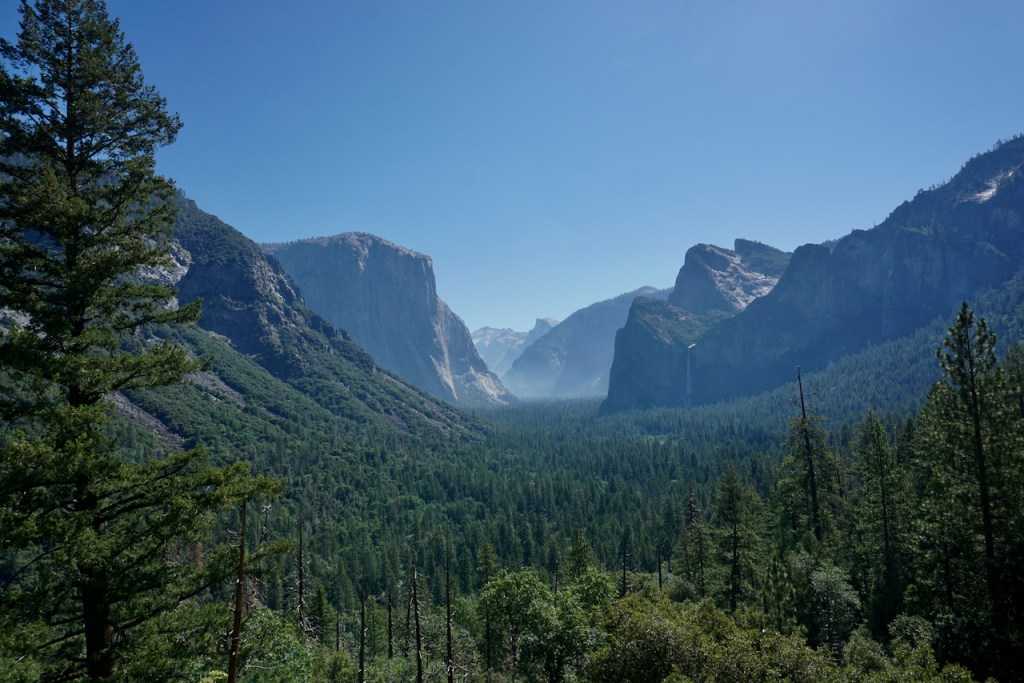
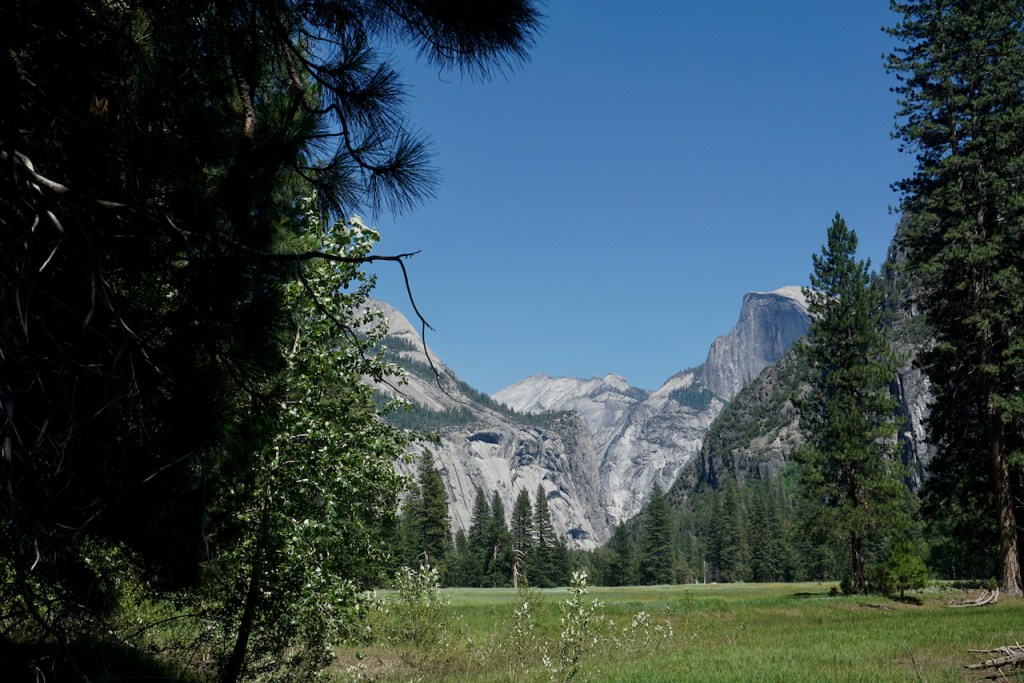
. . . and El Capitan, which did not disappoint. The signs indicating climbing areas where particularly enticing and we followed them to the base of the rock, playing on the first few moves.

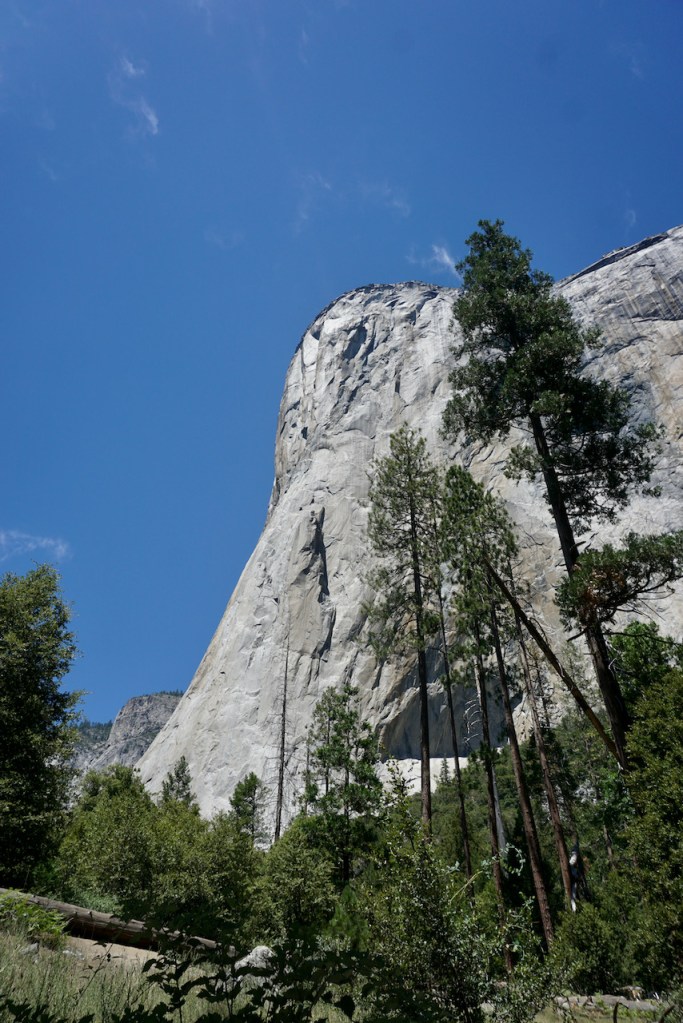
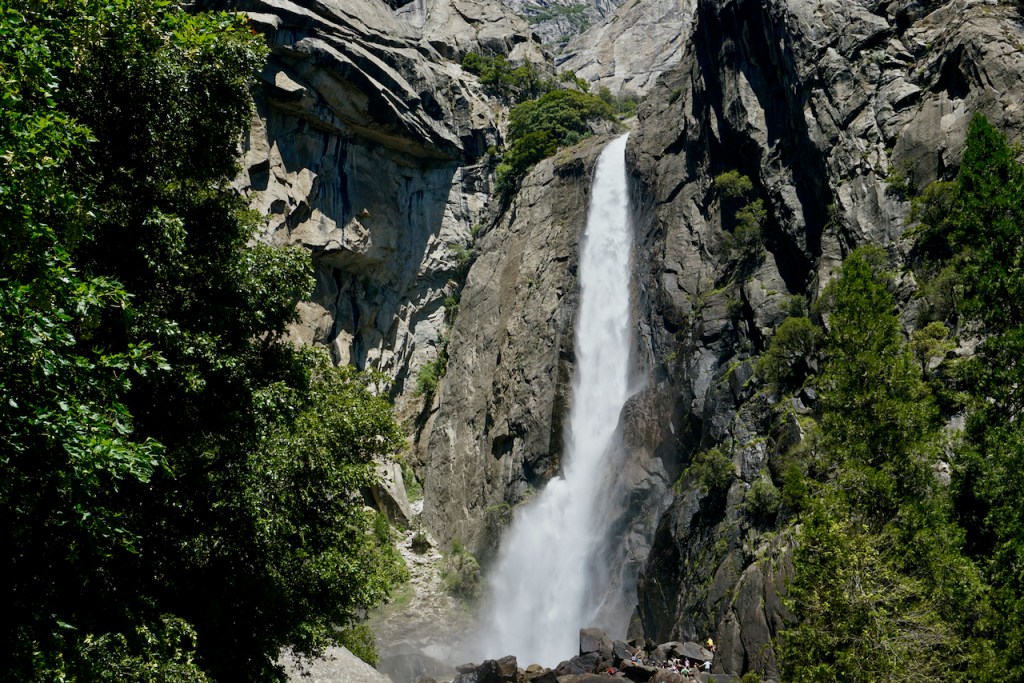
We also followed the largest numbers of tourists that we’d seen at any park to see and hear some of Yosemite’s famed waterfalls.

We had grossly underestimated the number of visitors to Yosemite, thinking of it as a Mecca for climbers and not as a sightseeing destination that, in 2016, received 5 million visitors, most of whom visit during the summer, as we did. With the crowds and the poor layout and transportation of the park, it was almost as though nature faded into the background as people vied for the best spot to take photos. We were glad to escape to the foot of El Cap and to follow a longer walking trail through the valley to get back to our car.
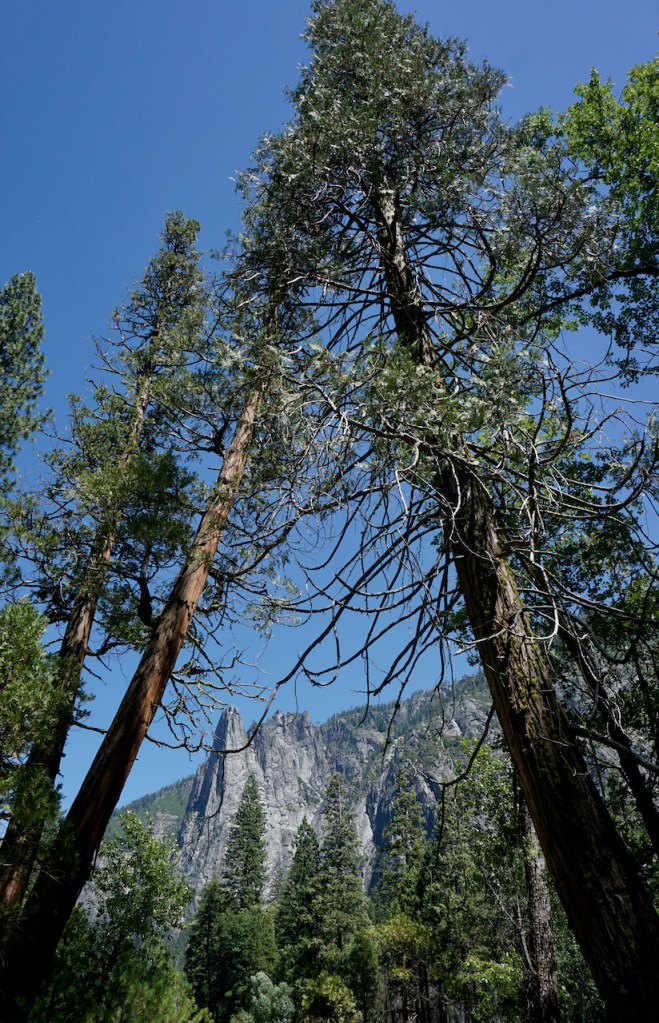
Due to good weather and general difficulties getting around in Yosemite, we were on the road rather late on the way to our final destination. We would spend two nights in Oakland, California before flying home. On the way through the park, we again saw evidence of fire damage everywhere. Entire hillsides were populated only with fire-damaged trees and the grasses that have grown back around them. It was hard to look at, and so much greater in scale than I had imagined, despite being generally aware of California’s fire news.

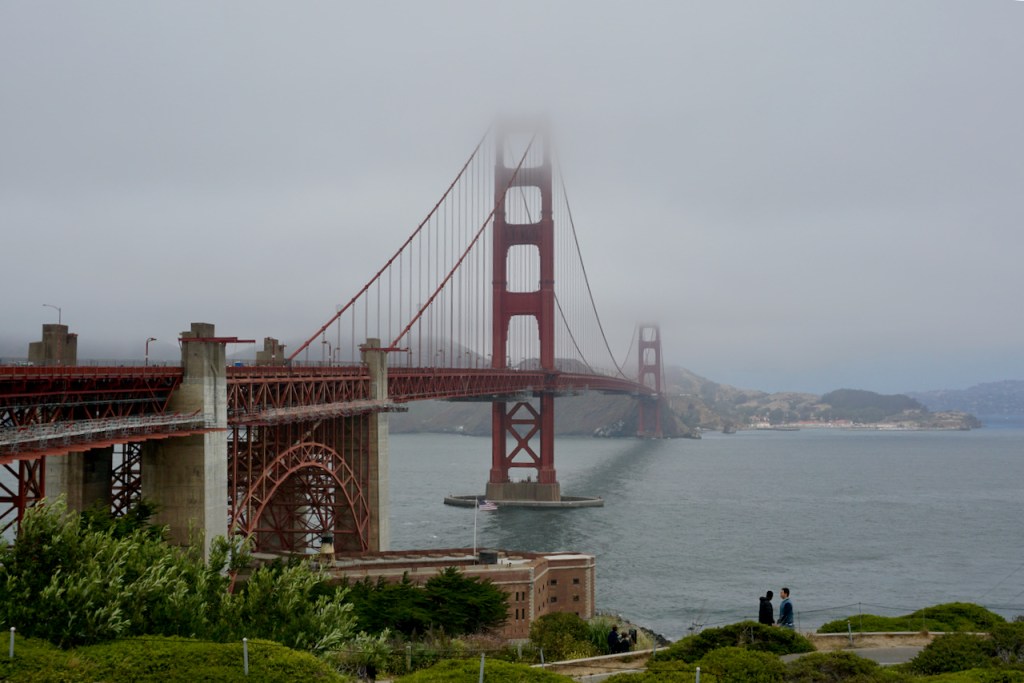
It was summer when we left Yosemite, but we found spring/fall in Oakland and San Francisco. We dug jeans, long sleeves, and windbreakers from the bottoms of our bags and headed out in weather of 14°C (57°F), temperatures we hadn’t experienced in quite a while. This was my second time in San Francisco and I was pleased at how much of the city’s layout I remembered. We did as much as we could in the day that we had, including a windy walk across the Golden Gate Bridge . . .

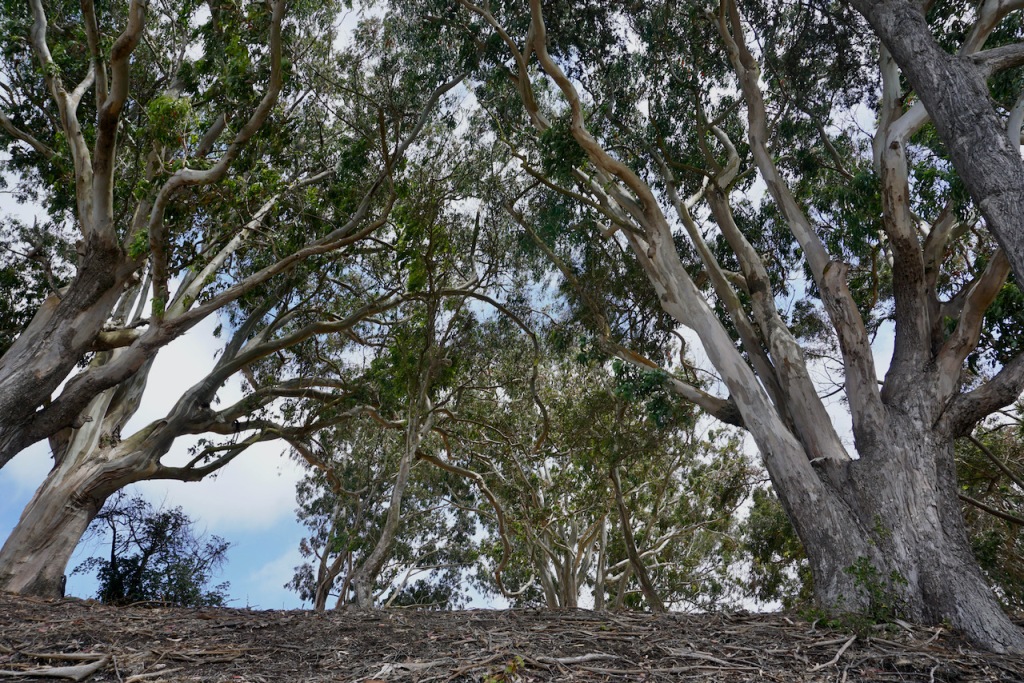
. . . a stroll along the beach and through a park . . .

. . . a stop at Fisherman’s Wharf to look at the boats, seals, and general activity. . .

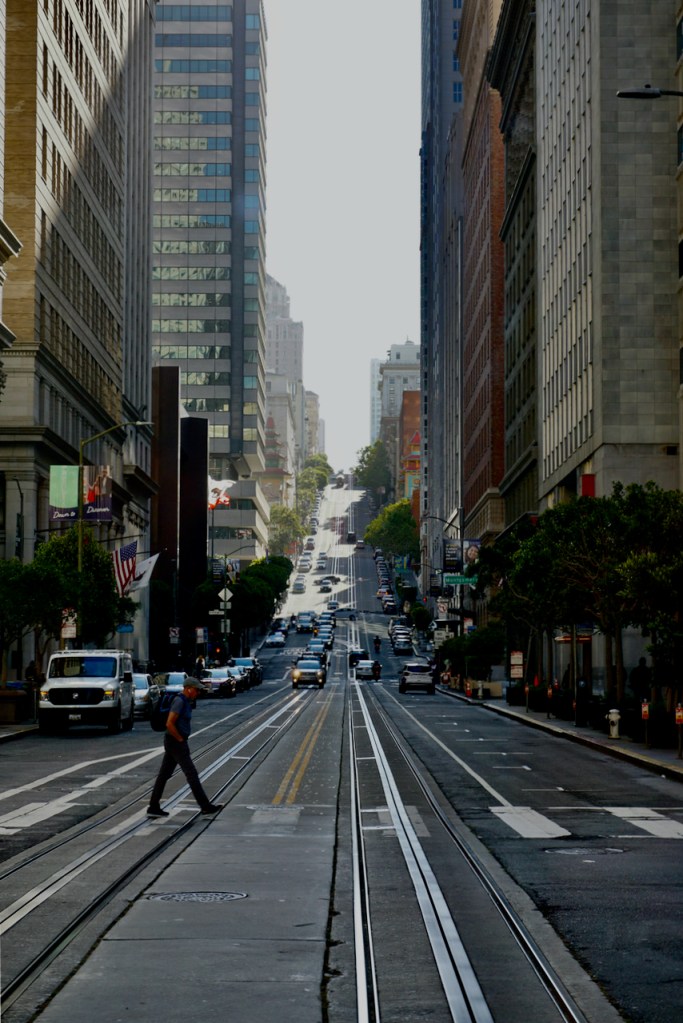
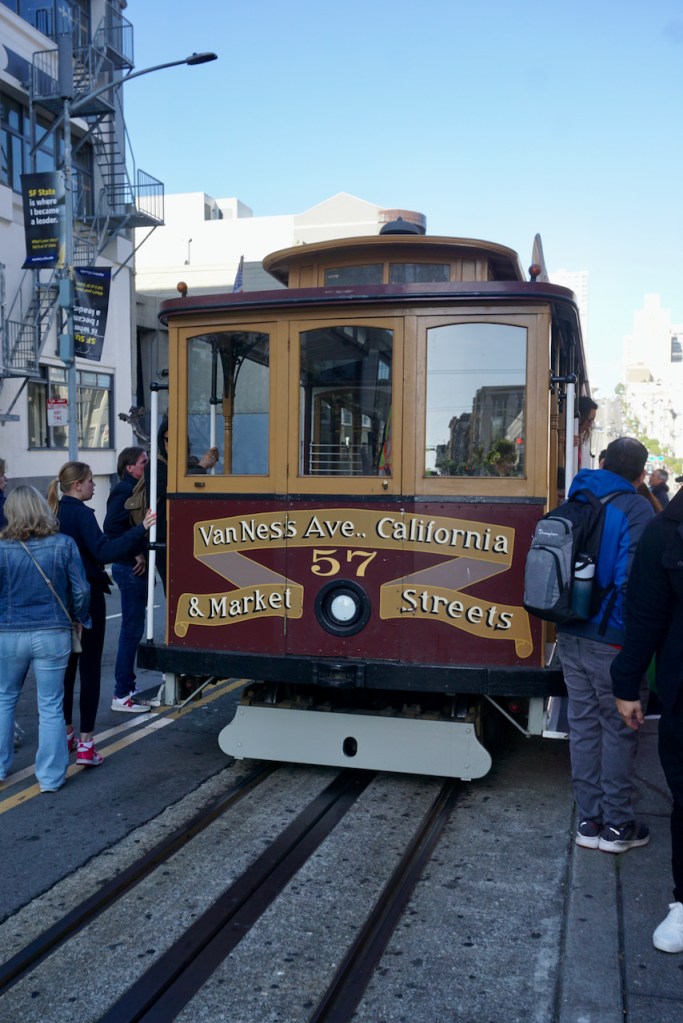
. . . a ride on a cable car up very steep San Francisco hills, complete with all the clanging and banging that is straight out of another century . . .
. . . and a visit to the Painted Ladies, which I now know are the Full House houses.

Within that, we also walked through the Embarcadero and the Mission, got a quick peek at the Chinatown Gate from the cable car and the Tenderloin from a bus, and spent a few minutes in Sausalito after deciding to be adventurous and getting off one stop later than planned without checking the bus route. There is a lot to see and do in San Francisco, and a day doesn’t quite cut it.

That being said, we spent much of the day laughing at the combination of people-watching and the weather. It seemed we weren’t the only ones surprised by needing jackets, but we were luckily not among those who resorted to brand-new souvenir shop sweatshirts. As in any big city, there are all kinds of people in San Francisco, tourists aside, and that was refreshing. What I find difficult about San Francisco, however, is the homelessness. The visibility of the problem seems a mere hint at the scale of the problem, and that makes me sad.


After all that we had seen and experienced on our trip, we were ready to fly home and take the time to process, to think over, to reflect on the opportunities we’d had. It’s a wonderful feeling to go away, and sweet indeed to come home.
13 Pitches

One of the reasons I moved to Germany was to play outside. I did as much of this as I could in Singapore, but the tropics don’t lend themselves to the same sorts of opportunities as this part of Europe. As it was, I scouted out the local climbing hall before moving into my apartment and purchased a bike before I had a bed. The universe smiled and I was very fortunate to meet people with whom to cycle, climb, and go skiing.

It was with these people that I visited Arco, Italy for a week of playing outside on the rocks.

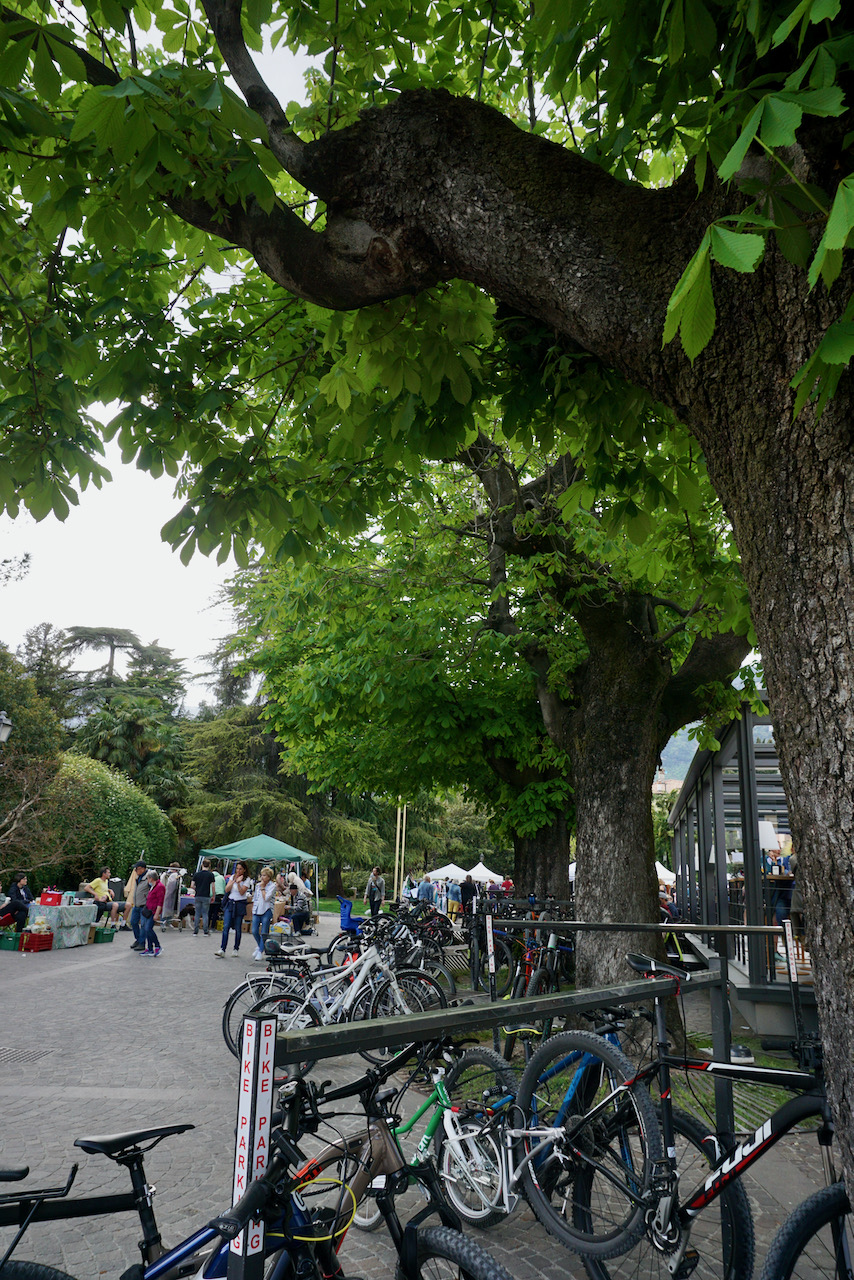
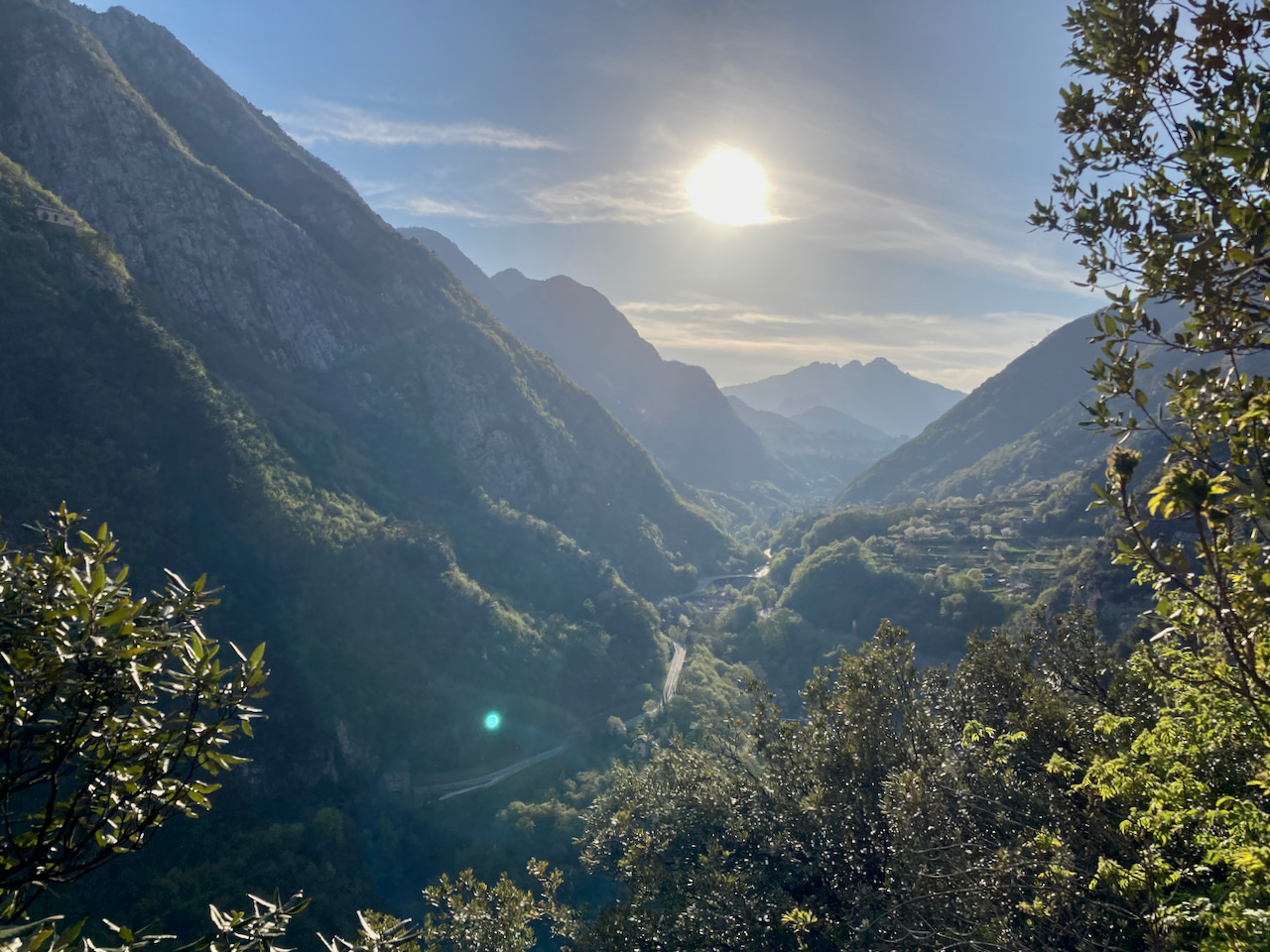
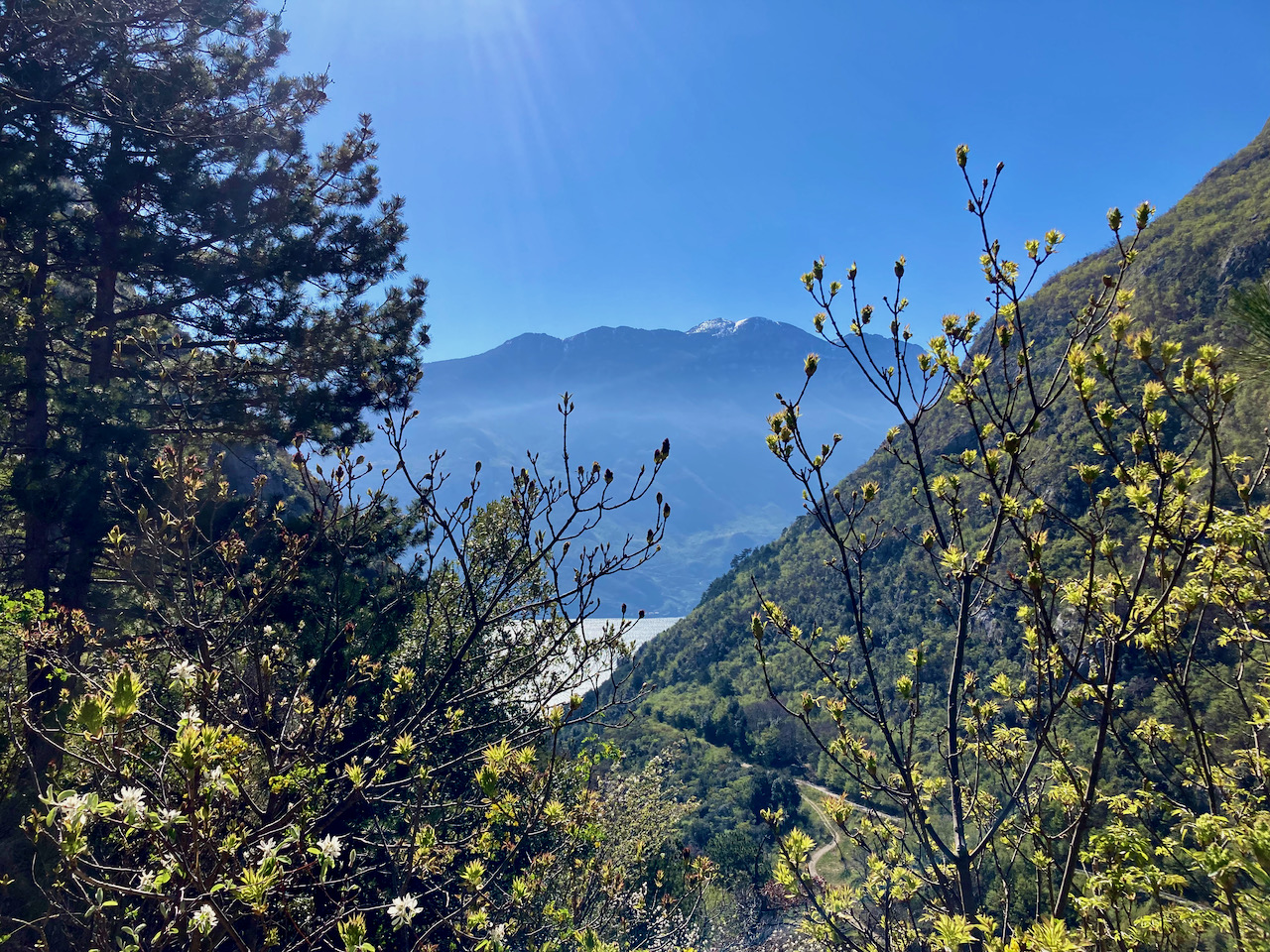
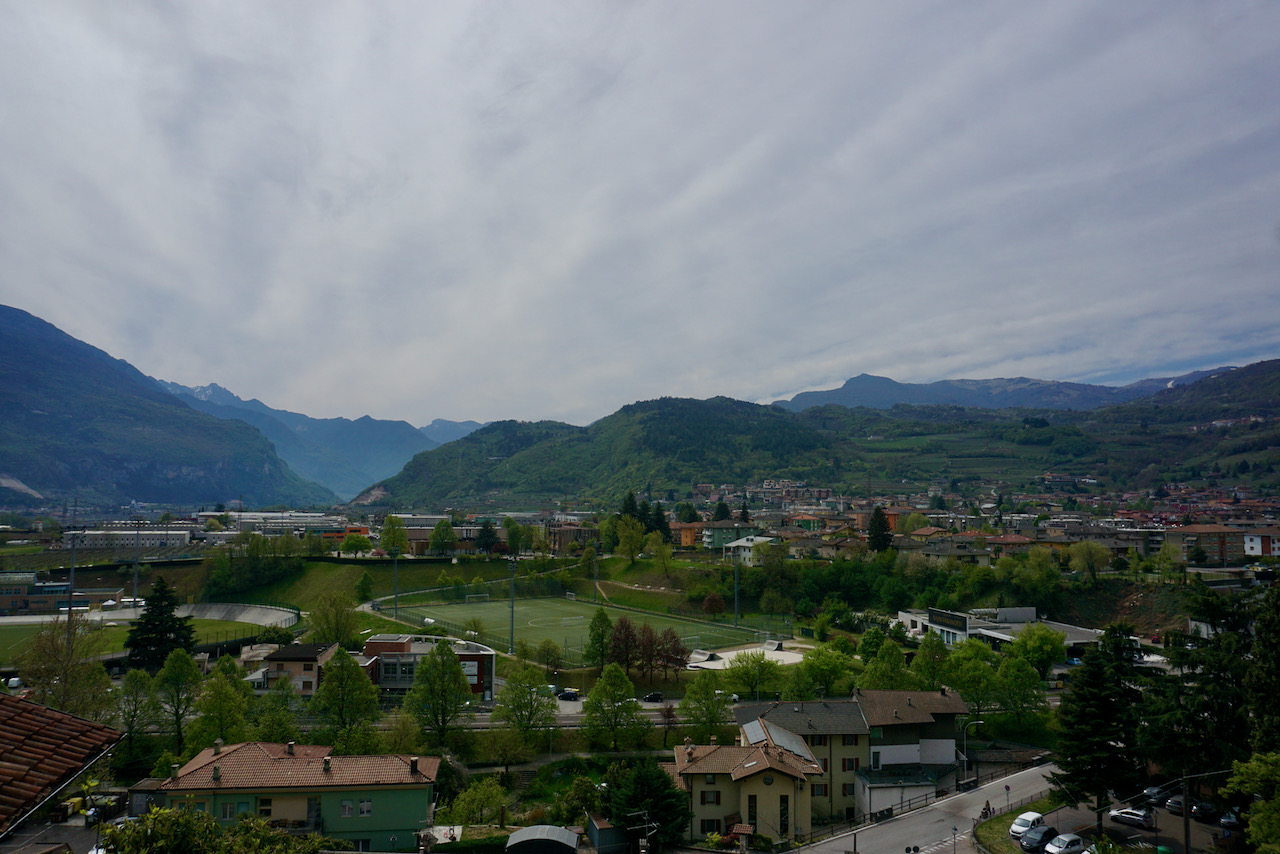
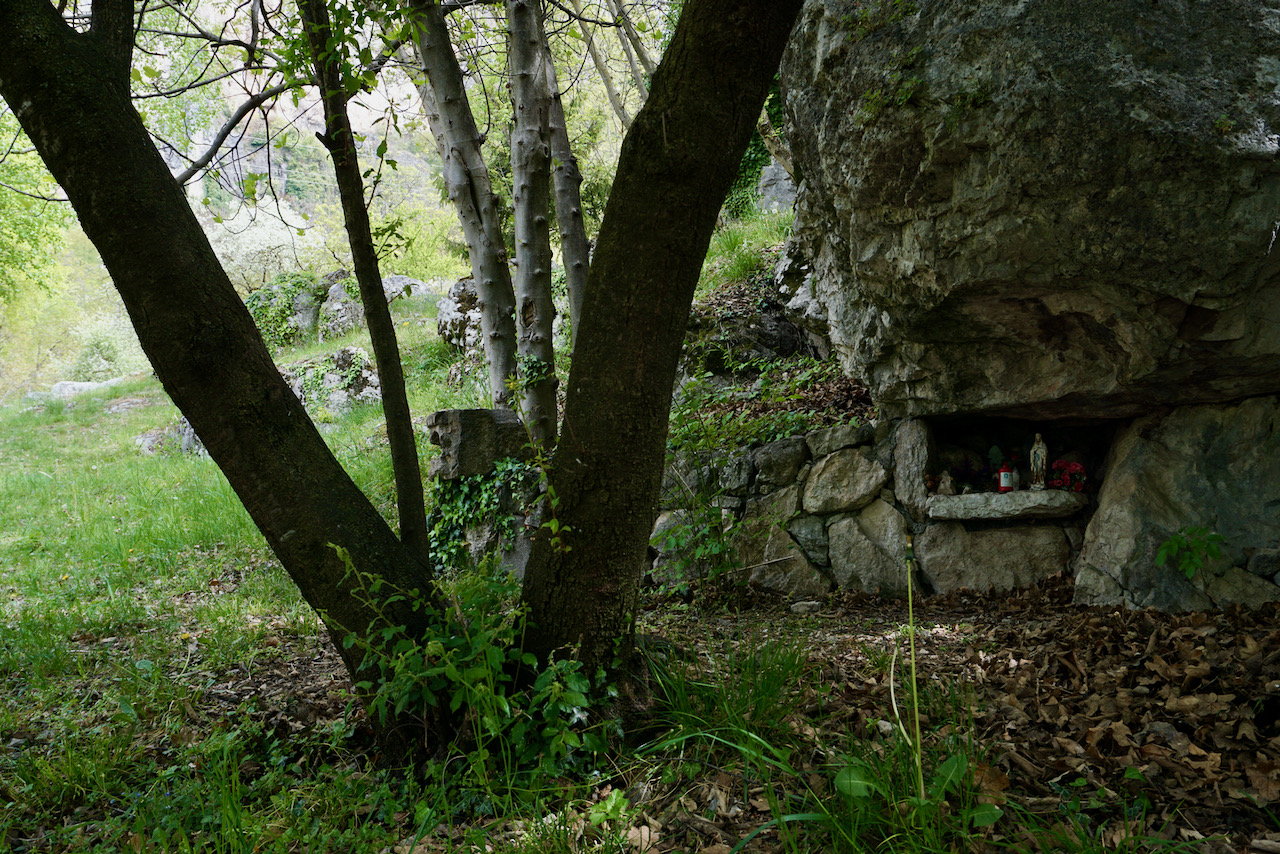
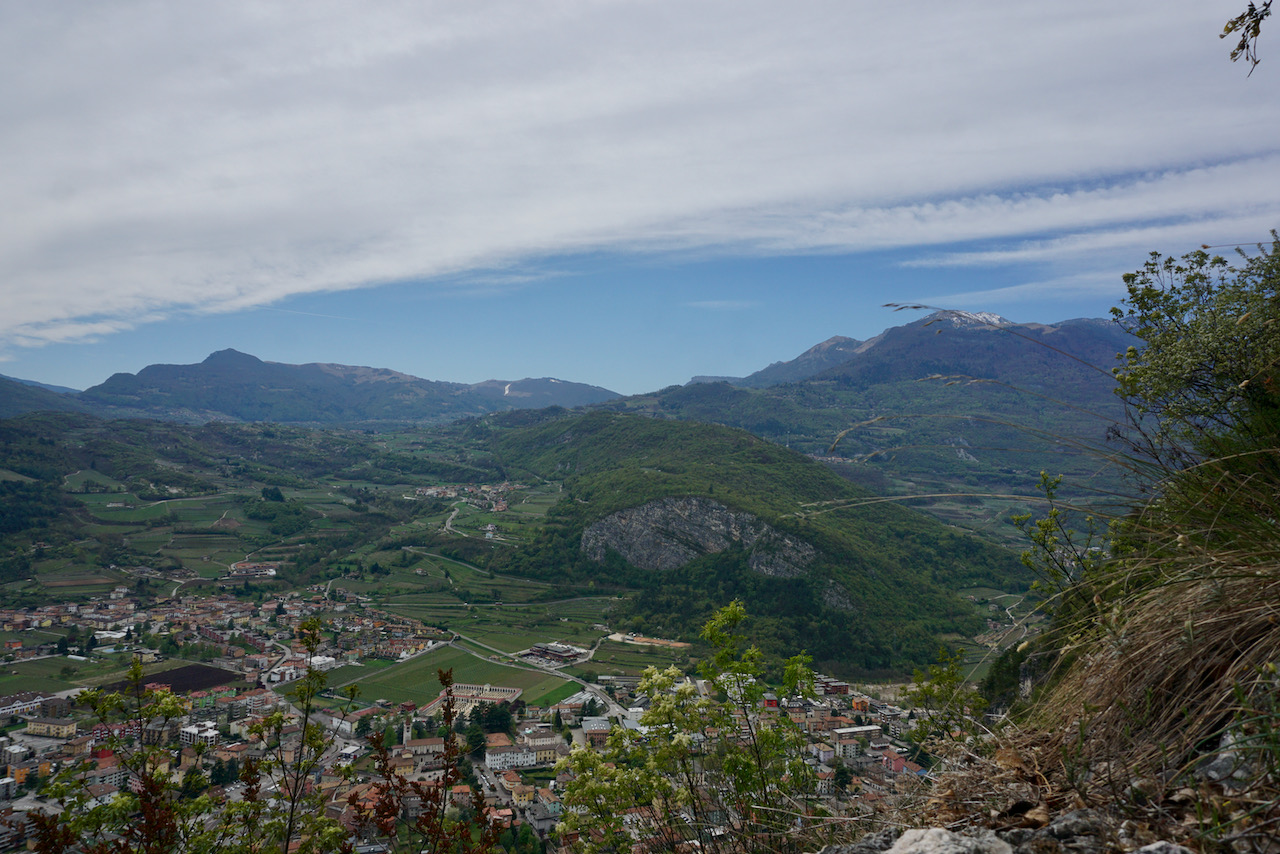
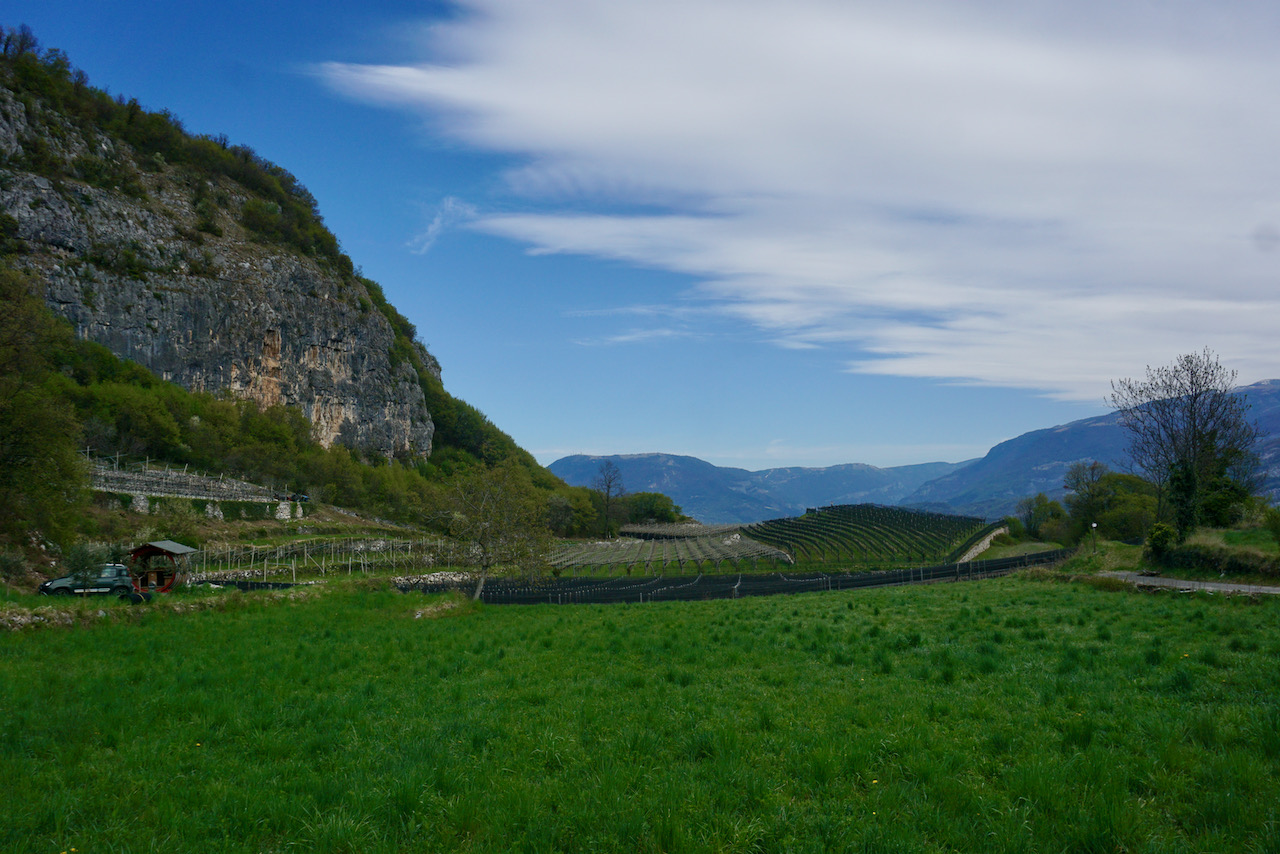
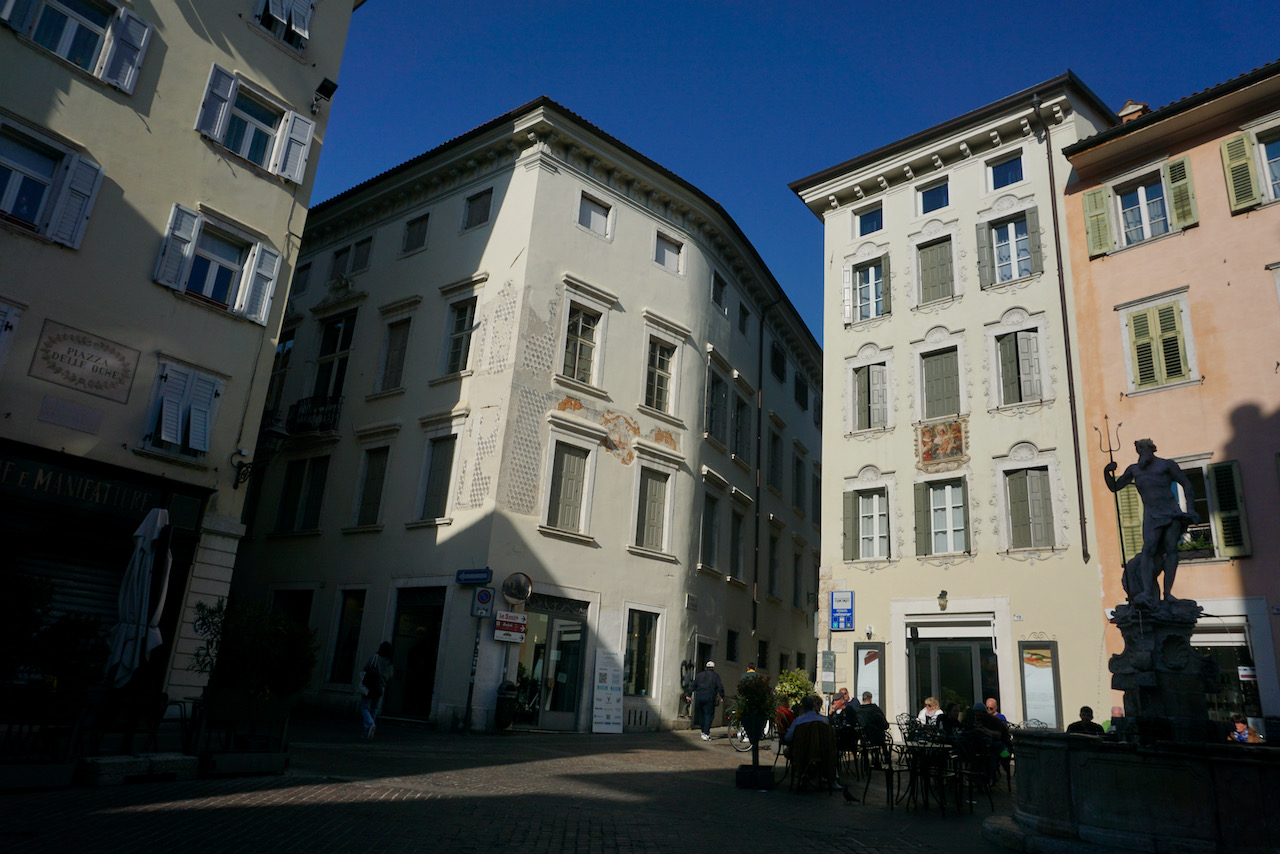
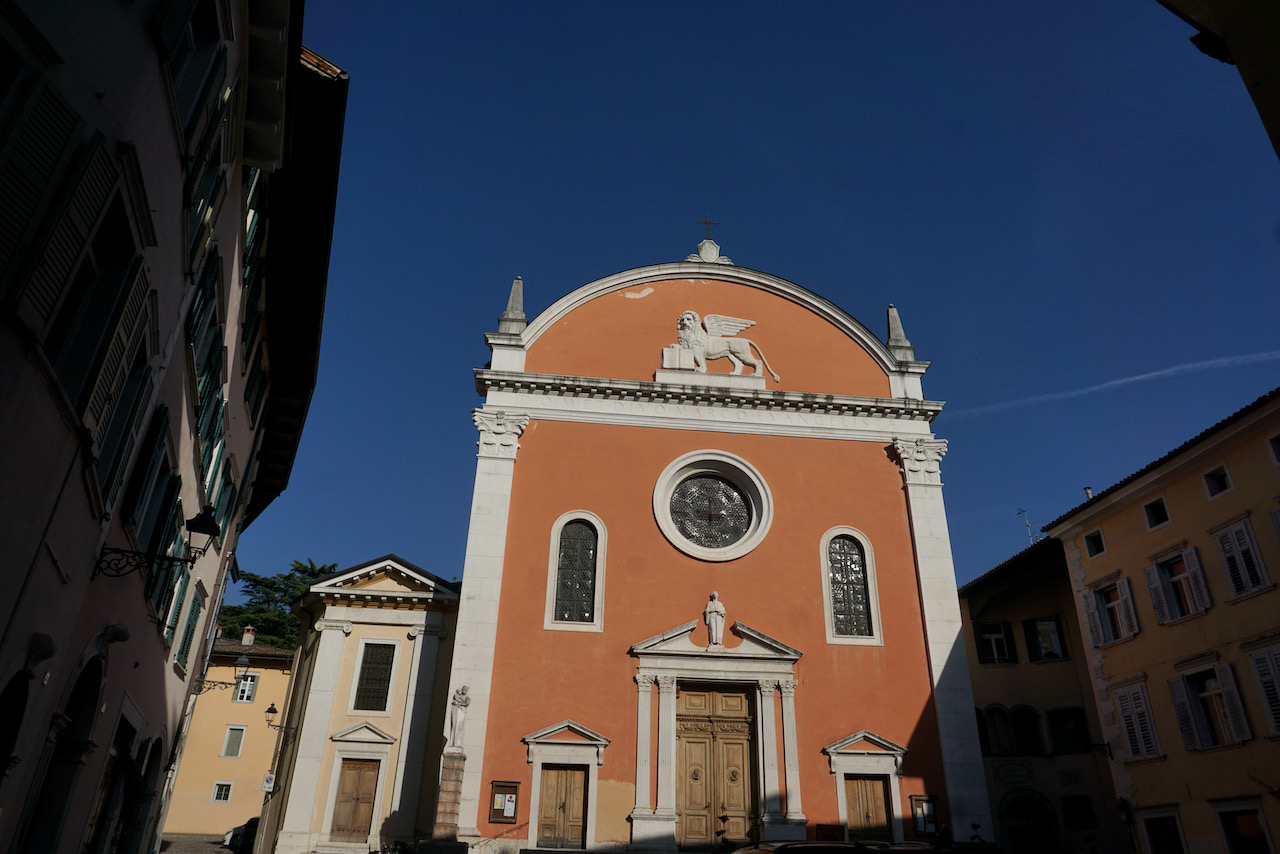
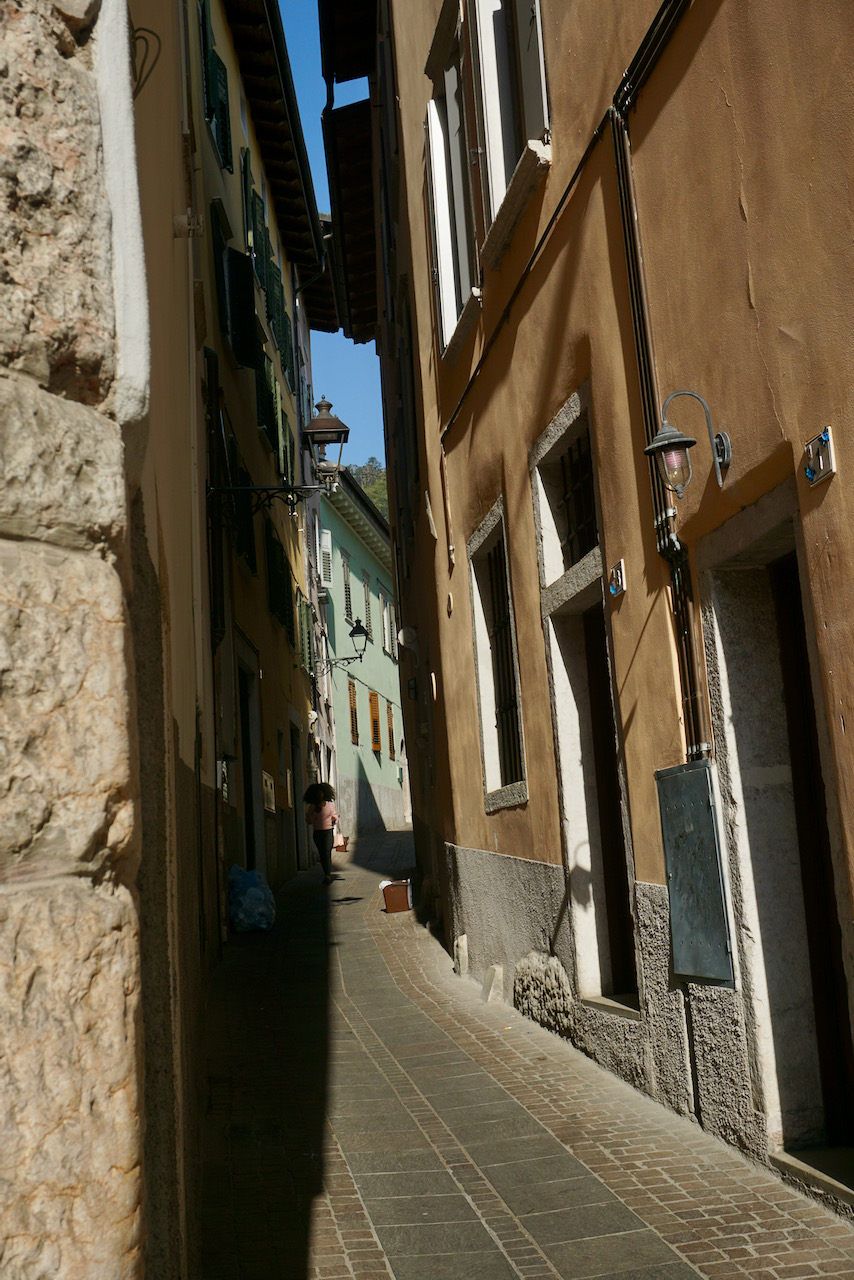
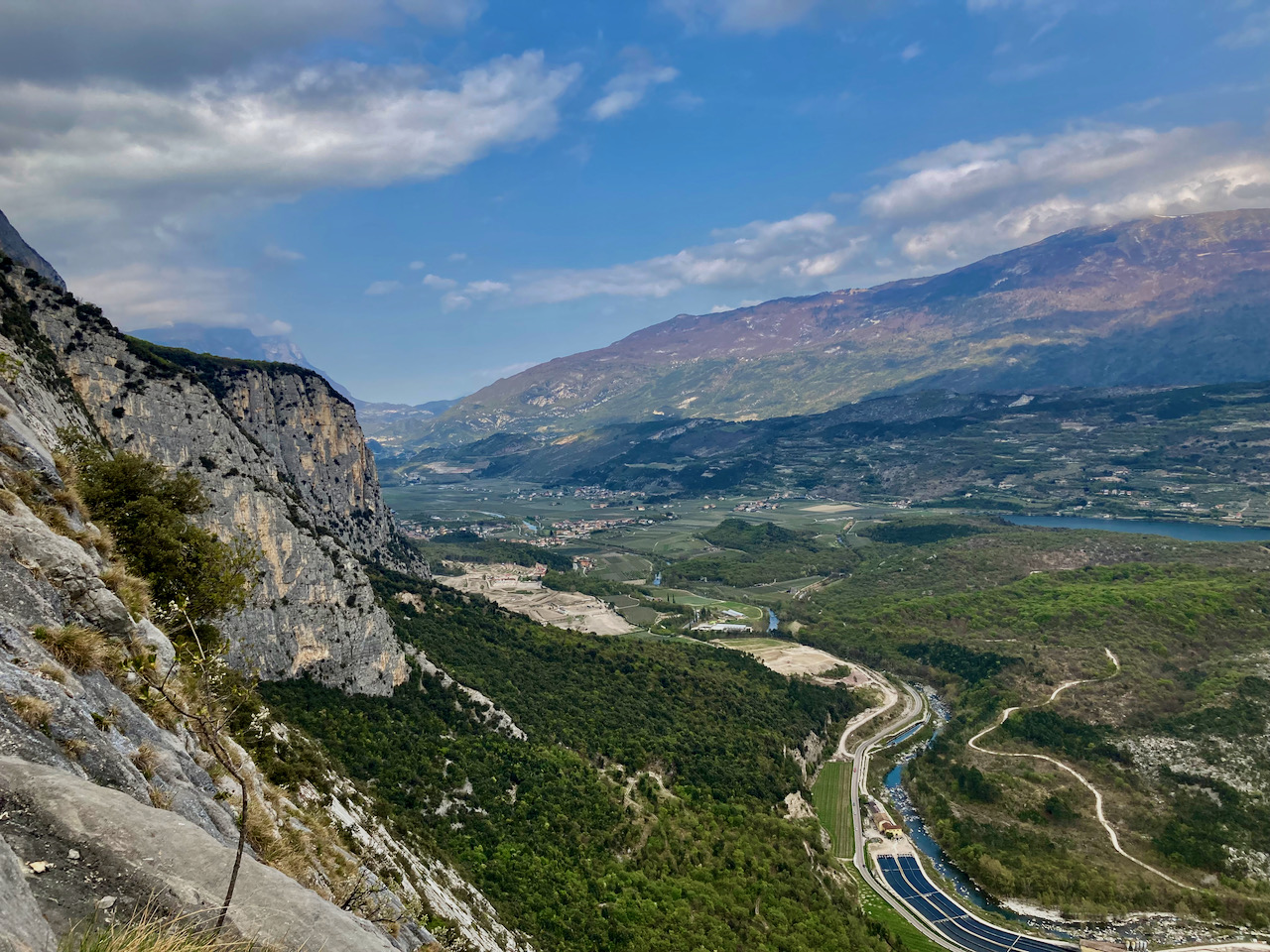
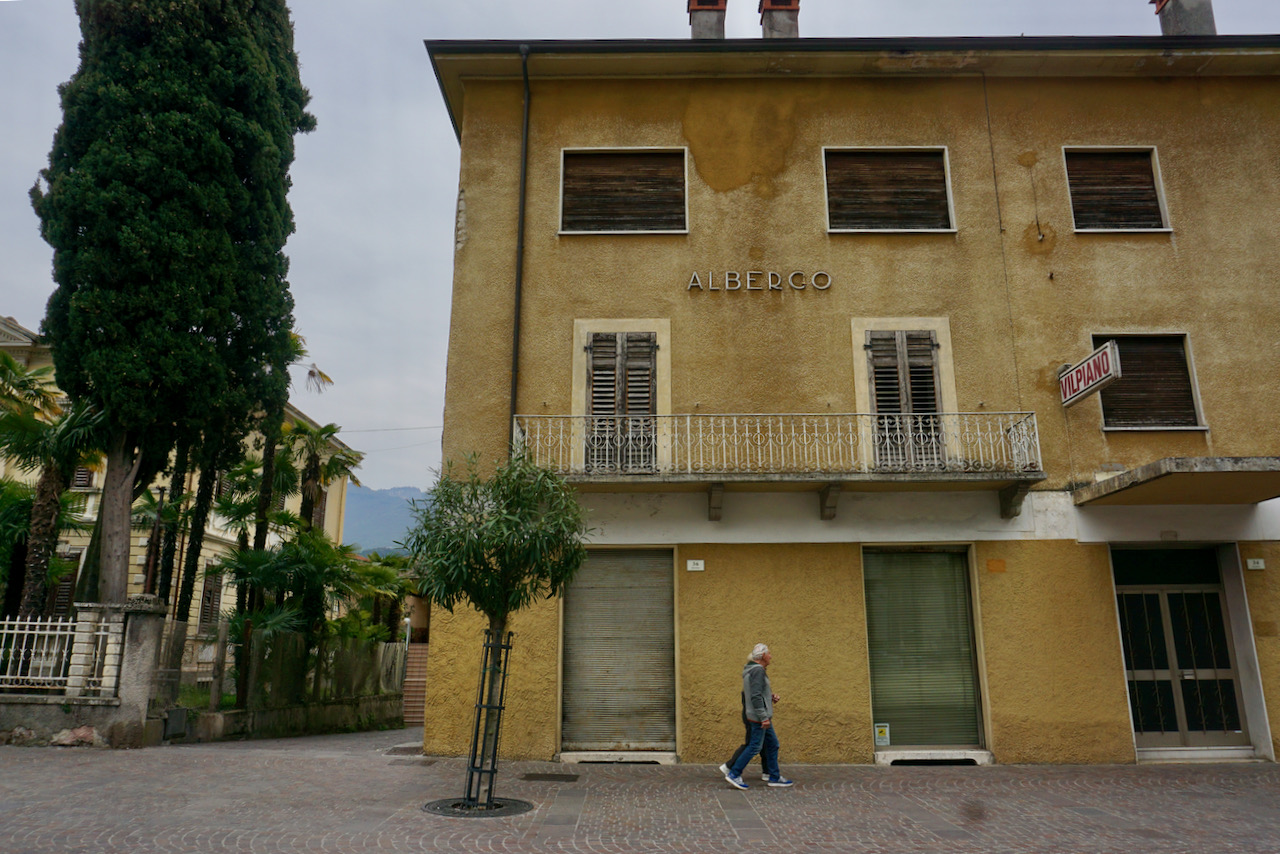
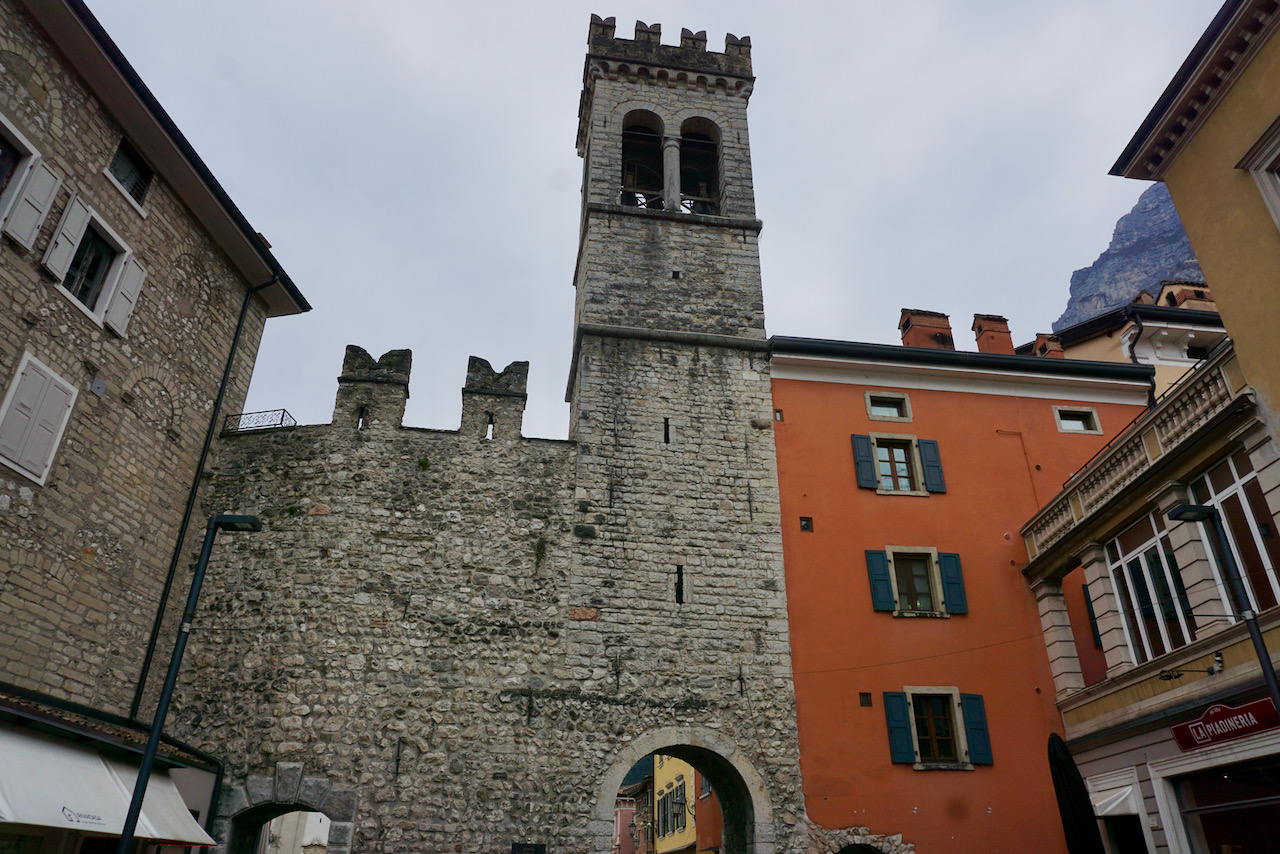
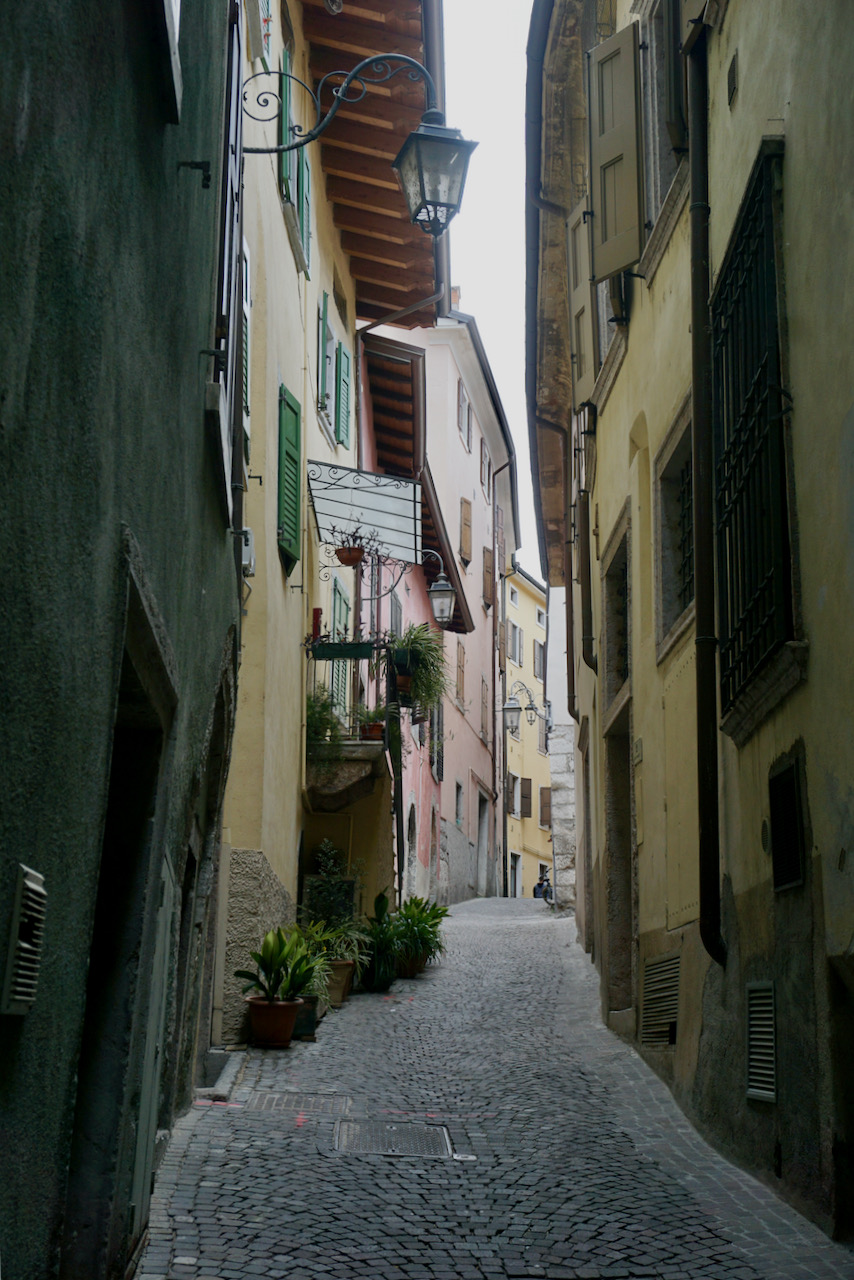
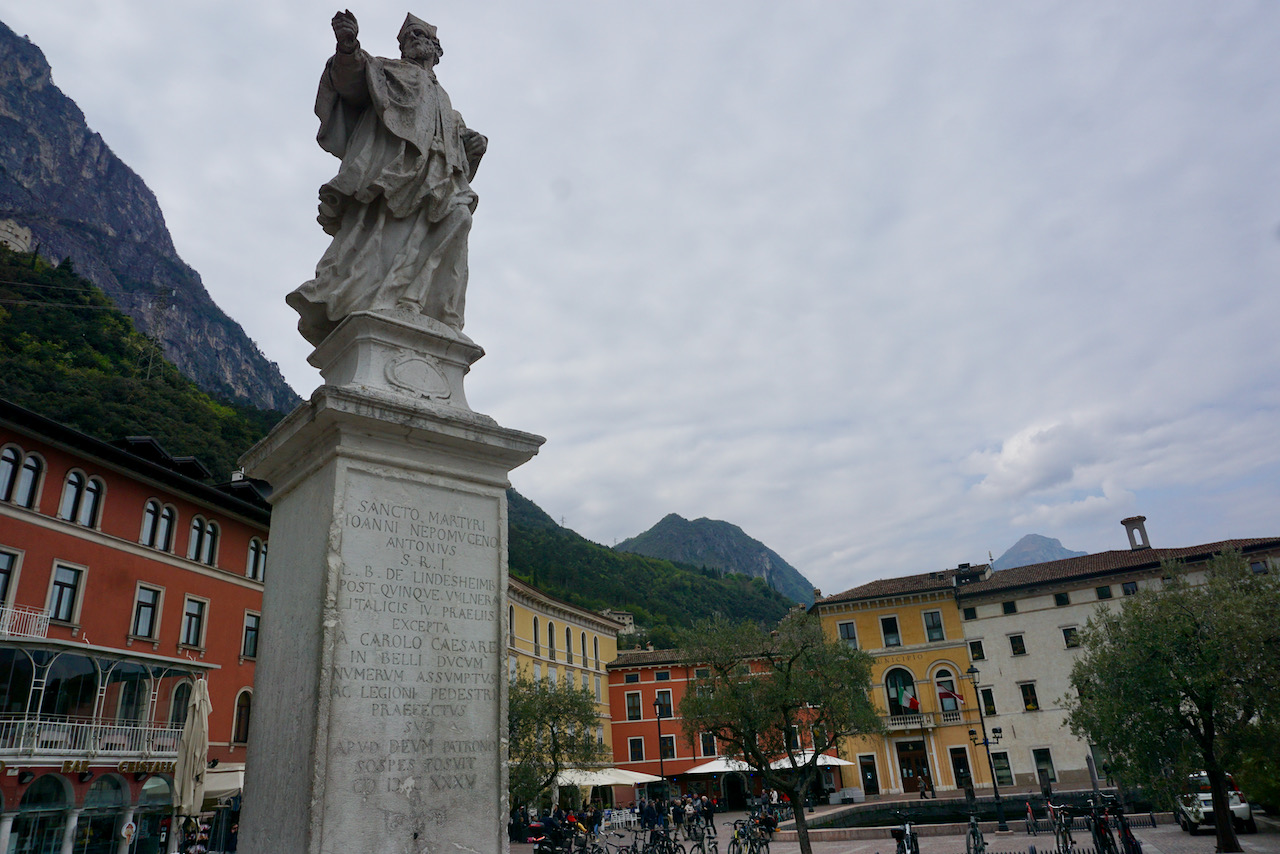
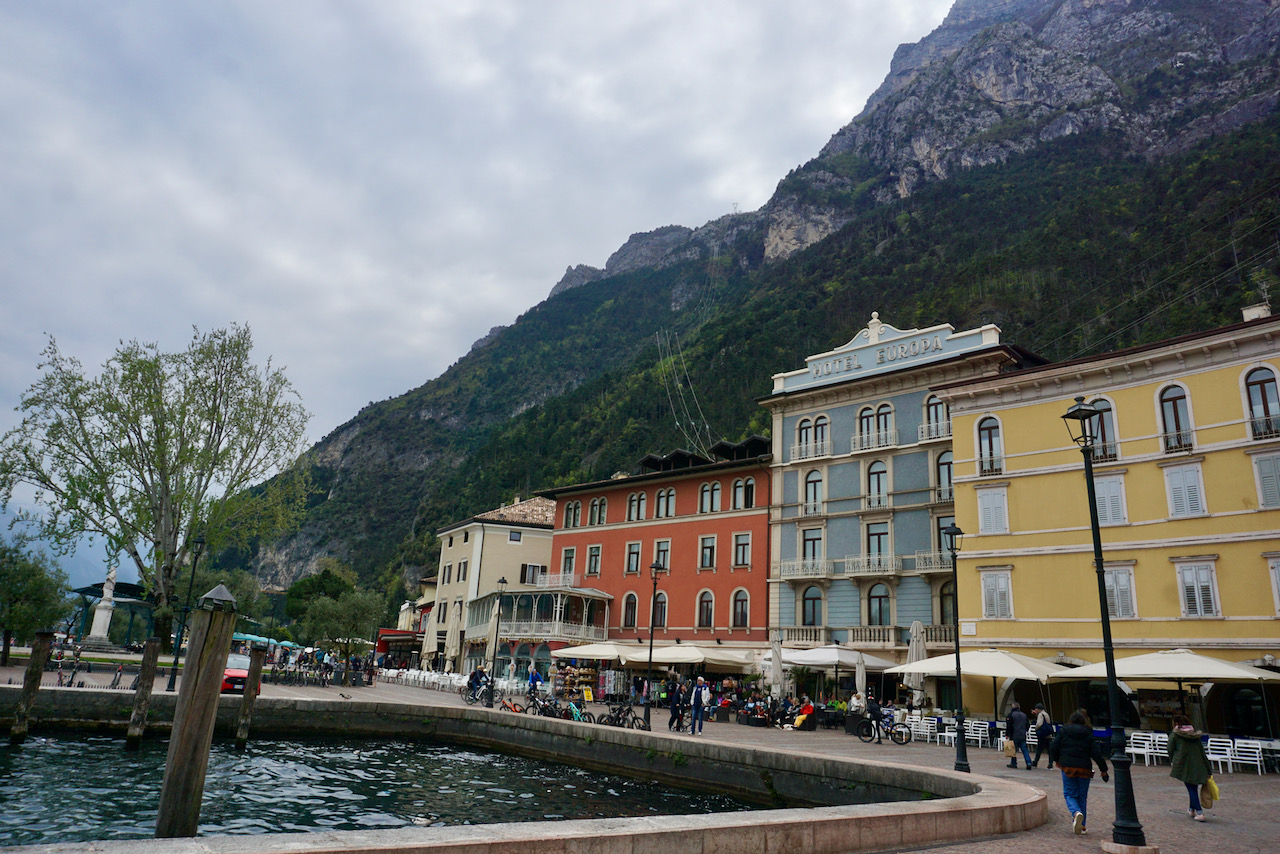
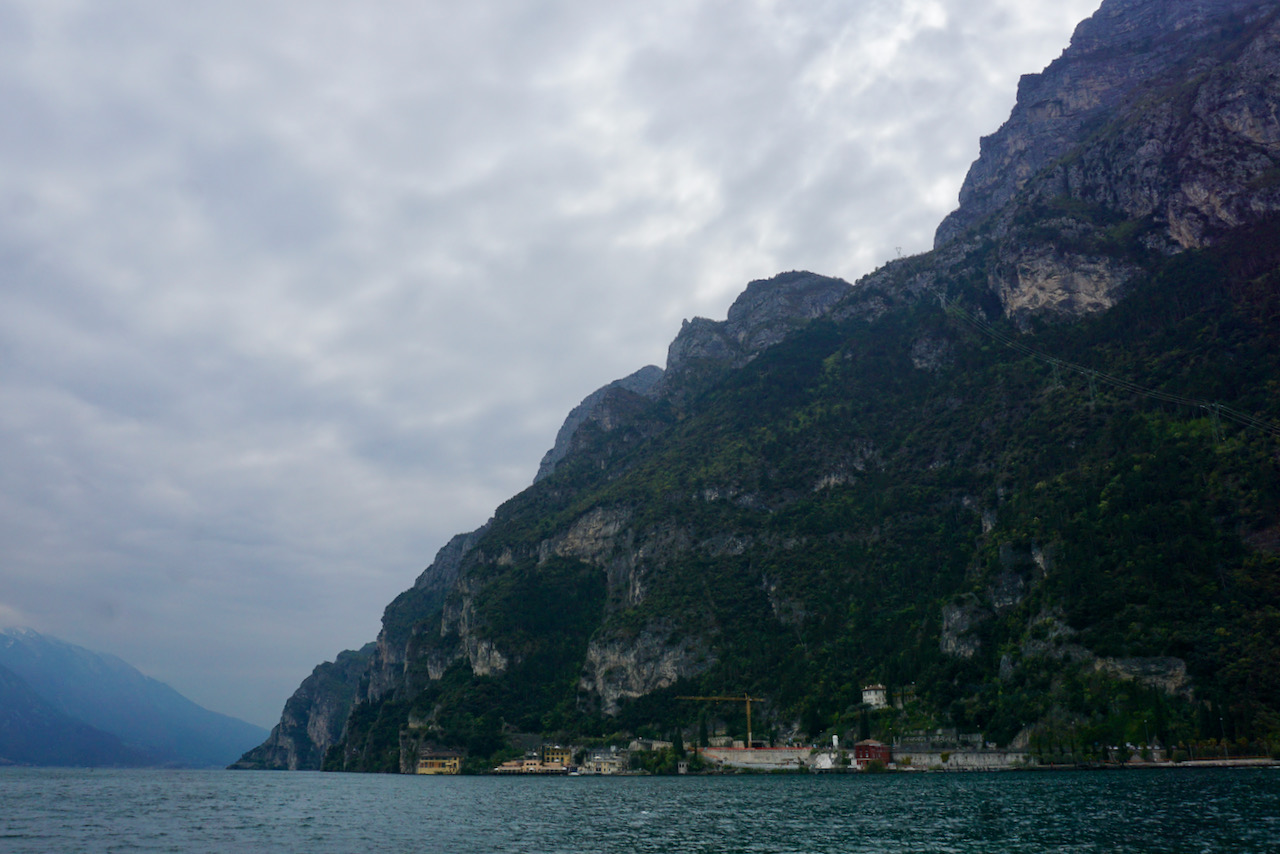
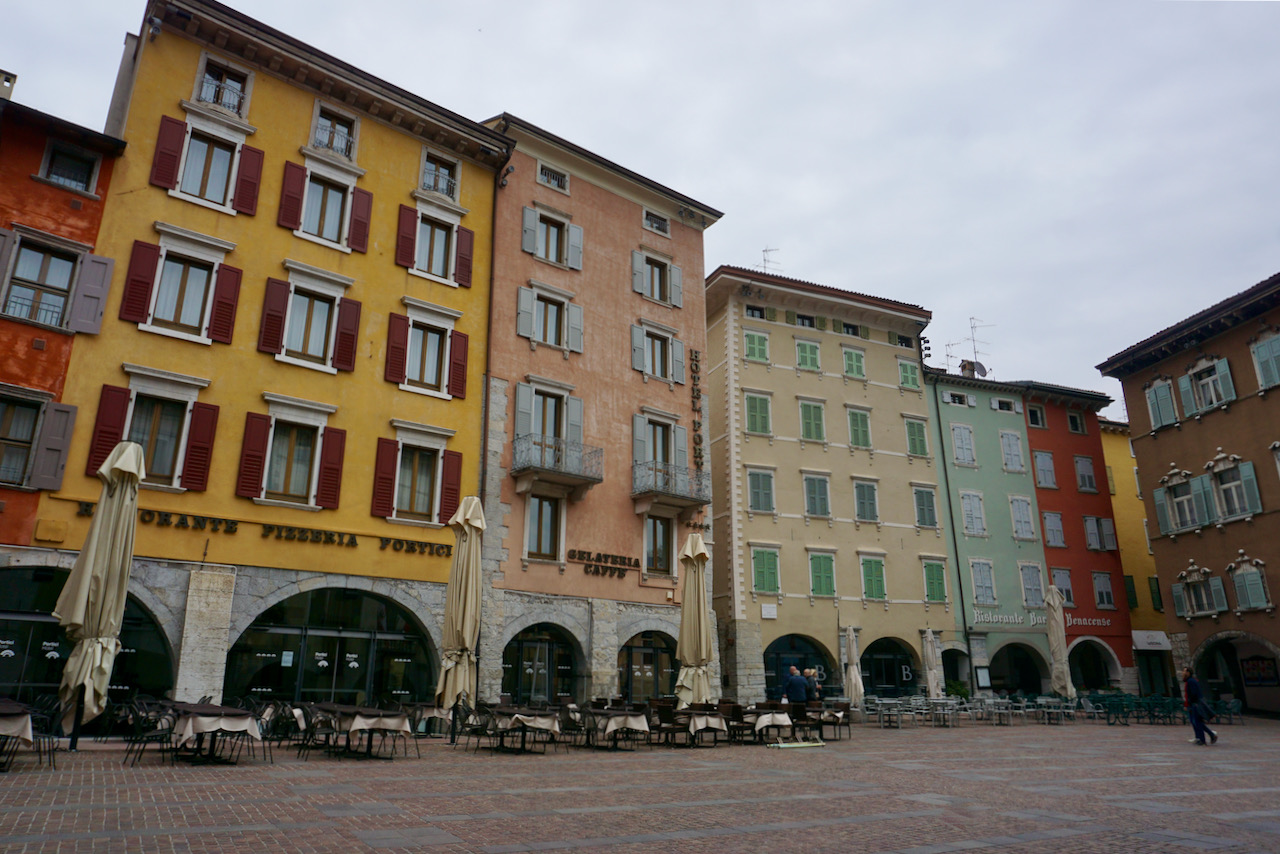
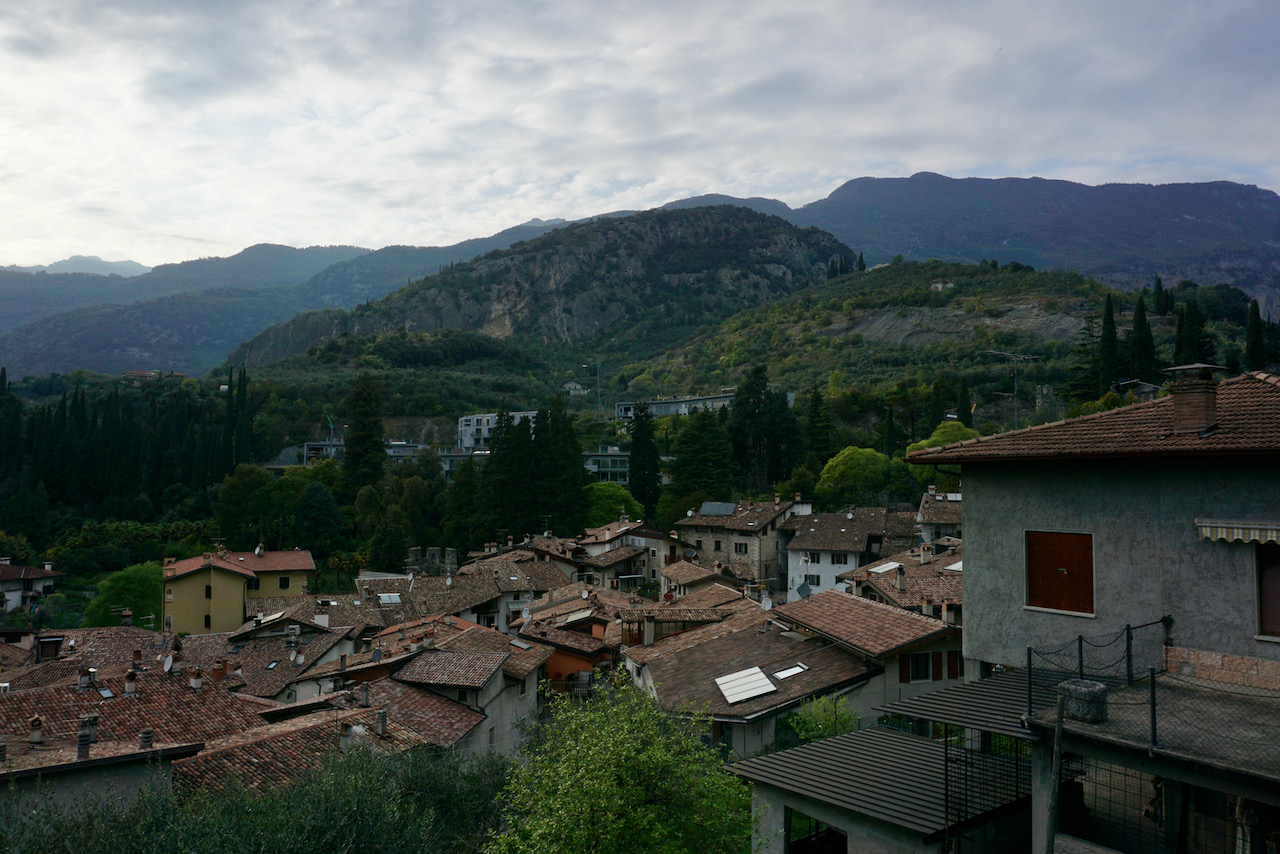
Arco is located in Trento, north of Lago di Garda (Lake Garda), and this provides a beautiful environment in which colourful buildings and a wide range of trees (including palm trees!) are situated within the mountains. We took a walk around town on our first day, both for the purpose of getting the lay of the land and for the first of many breaks for gelato.

Spring was in a different place in Arco than what we had left behind in Germany, as well, and this created a general feeling of excitement among our group.

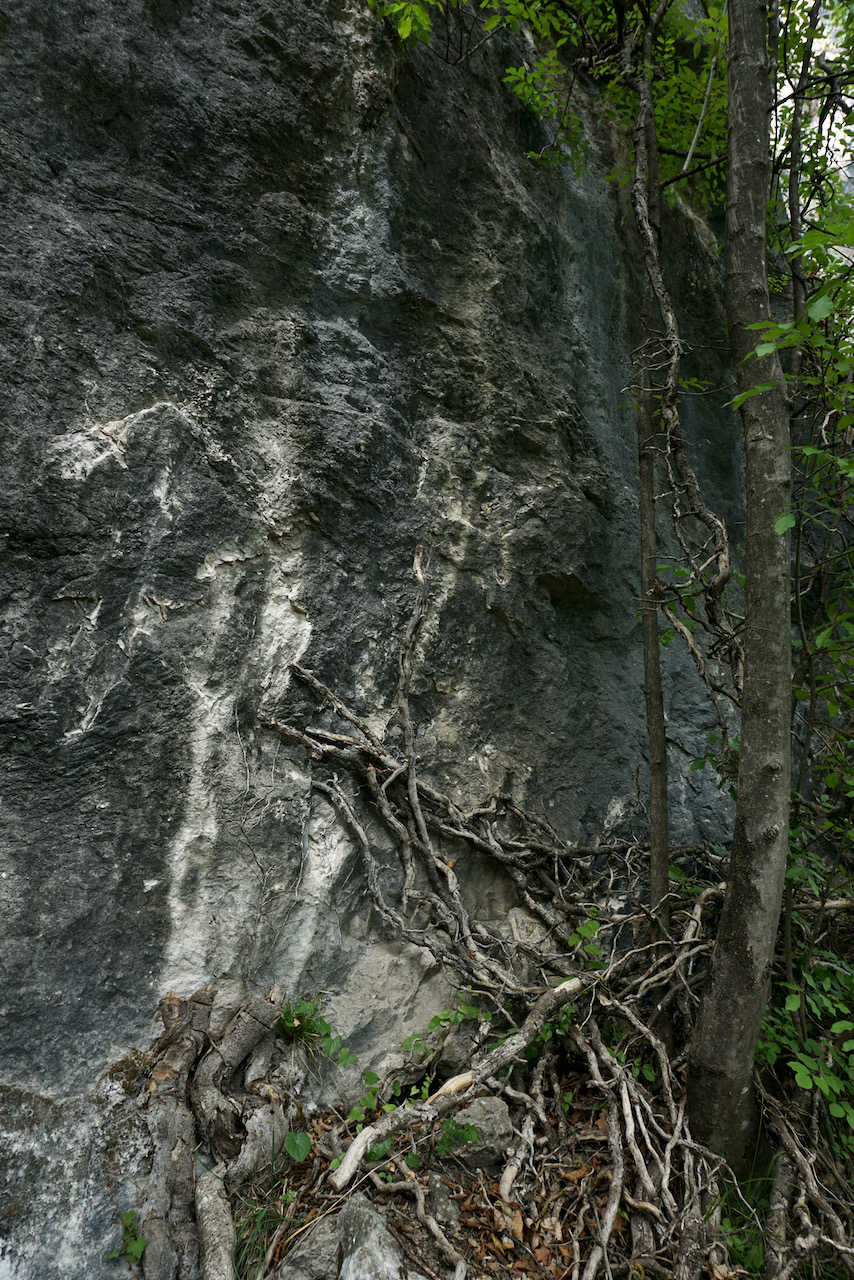
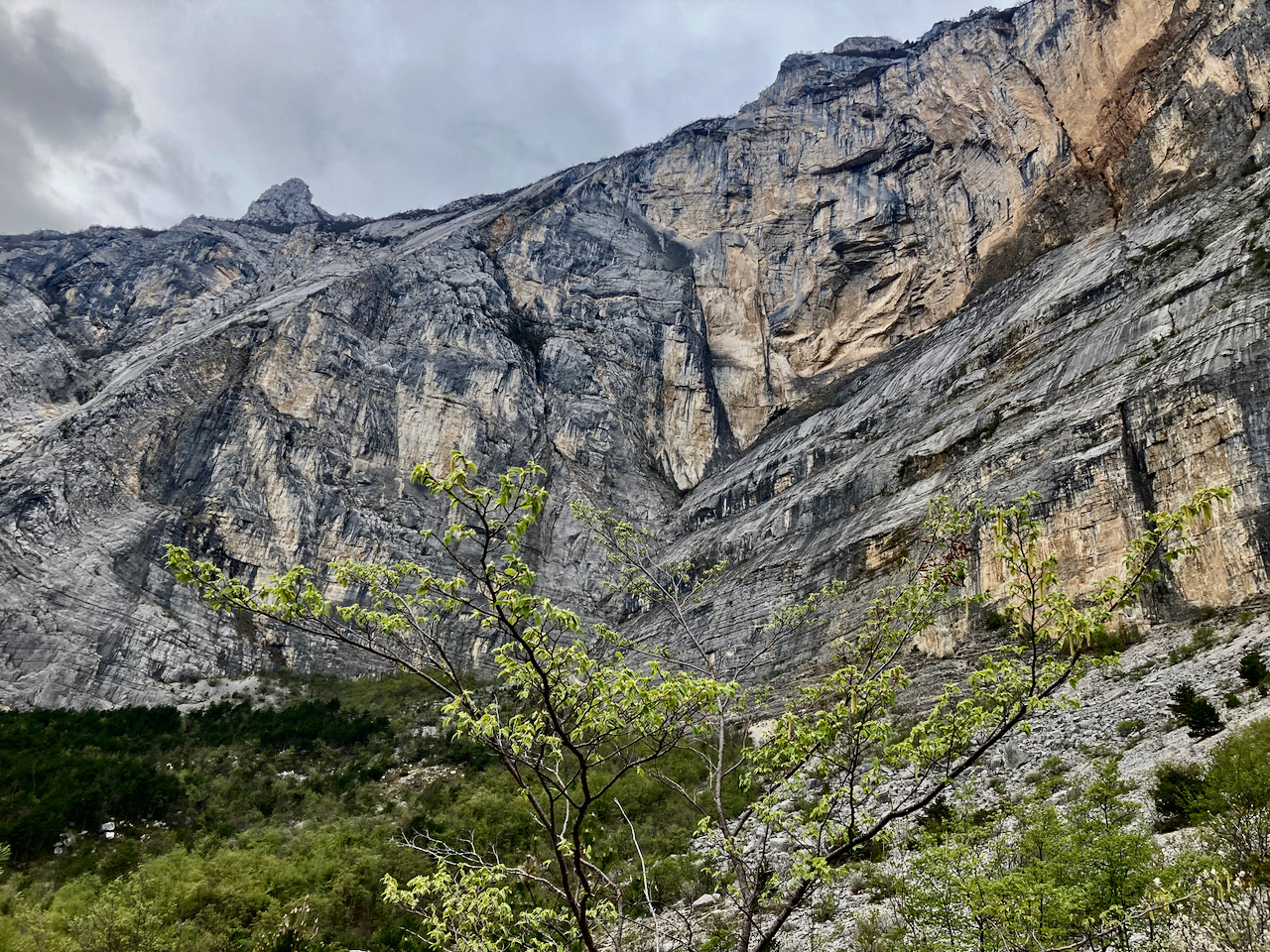
We headed out the following day for sport climbing routes at Regina del Lago. The rock was glossy limestone and very different to the porphyry I’ve previously climbed in the Thüringer Wald. The routes were fun with some challenges, I took my first outdoor lead fall, and the views were stunning. A stop at Lago di Ledro was in order later that evening, as well.

But we had not driven over 800 kilometers to Arco for sport climbing. Rather, we were looking for long multi-pitches, routes we cannot get close to home. Multi-pitch climbing was new to me when I first climbed outside in Germany. At that time, I had never seen anyone set up an anchor from the middle of a route and belay from the top, much less tried to do so myself. And months later, here we were in Arco and this is exactly what we were here to do.

My partner and I climbed our first big multi-pitch, a route called Trento, behind another pair of friends and were ecstatic when we reached the top. Two hundred meters and five pitches, by far the biggest route I’ve ever climbed. Some scary moves with big reaches, some polished rock, and phenomenal energy. It was comforting to meet our friends along the way, helpful to know we could call up to them if we got into trouble during the couple of hours the climb lasted. Safety guidance on multi-pitch climbing suggests that because the climb requires significant stamina, both physically and mentally, multi-pitch routes should be a grade below the climber’s maximum ability. This climb was well within our range but the polished rock made it harder and we were tired, in all the good ways, on the hike down.

The following day, some of us were ready for a break that turned out to be far less of a break than I’d thought. We drove to the nearby town of Mori for a via ferrata (or Klettersteig) on Monte Albano, which can best be described as a climbing route protected with cables and ladders. Rather than climbing attached to rope, you climb with carabiners leashed to your harness and clip yourself into the cables and ladders along the way.

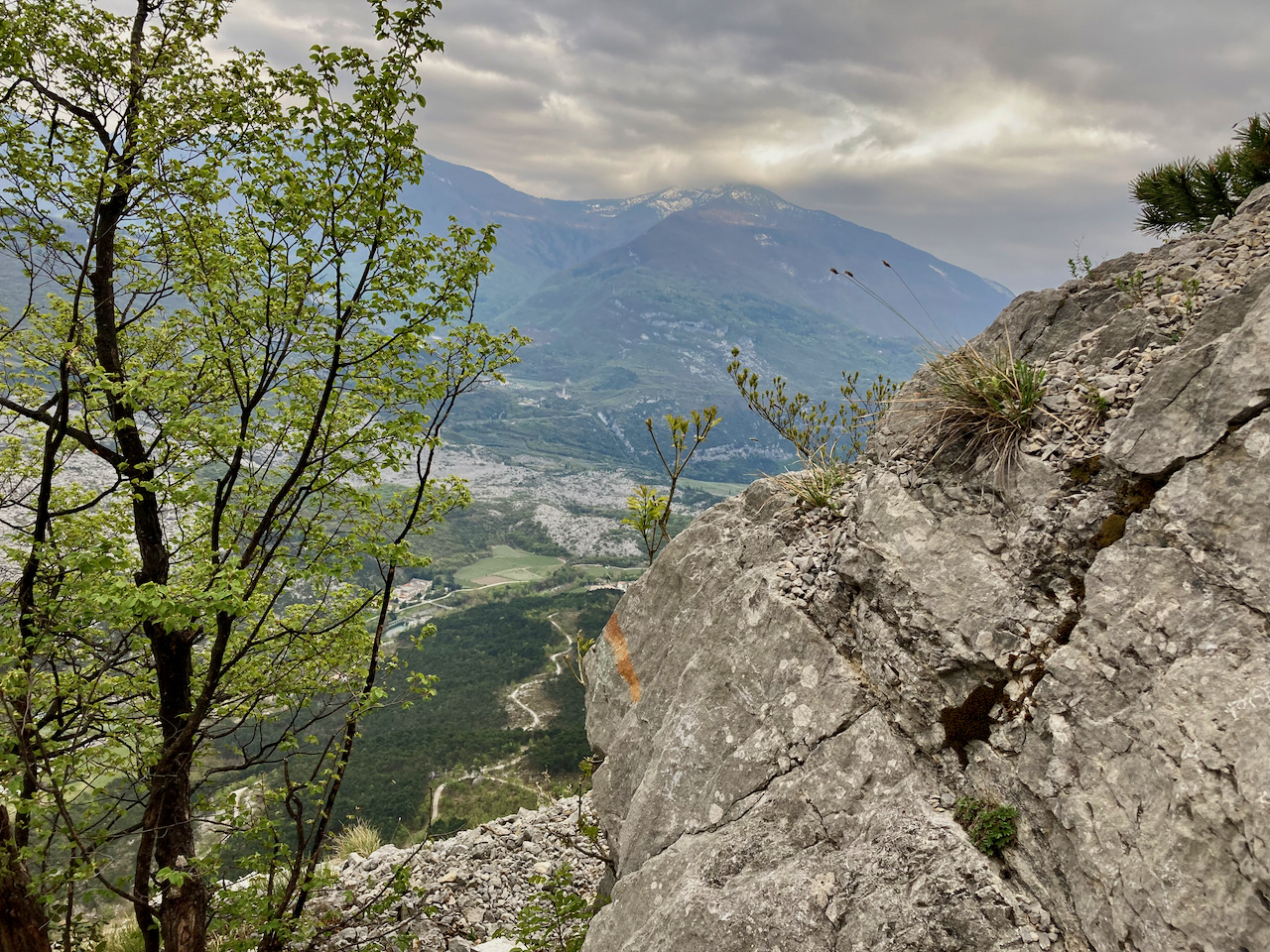
The hike to the starting point was a nice warm up and gave us a taste of the views we could expect along the way.

Right from the start, I was taken off guard. Throughout the route, I was surprised at how scared I was, grateful for being there, and had already decided to do it again. The biggest difference between Klettersteig and climbing, to me, is that of partnership. There’s someone on the other end of a climbing rope who cares about you, and I cannot say the same for cables attached to cliffs.

The hike down was a reward, a journey through yet a different landscape.

Again looking for gelato, we stopped in Rovereto as the sun began to sink lower, creating shadows that could tell stories. I’m inclined to believe in magic, so I suspect that they have.

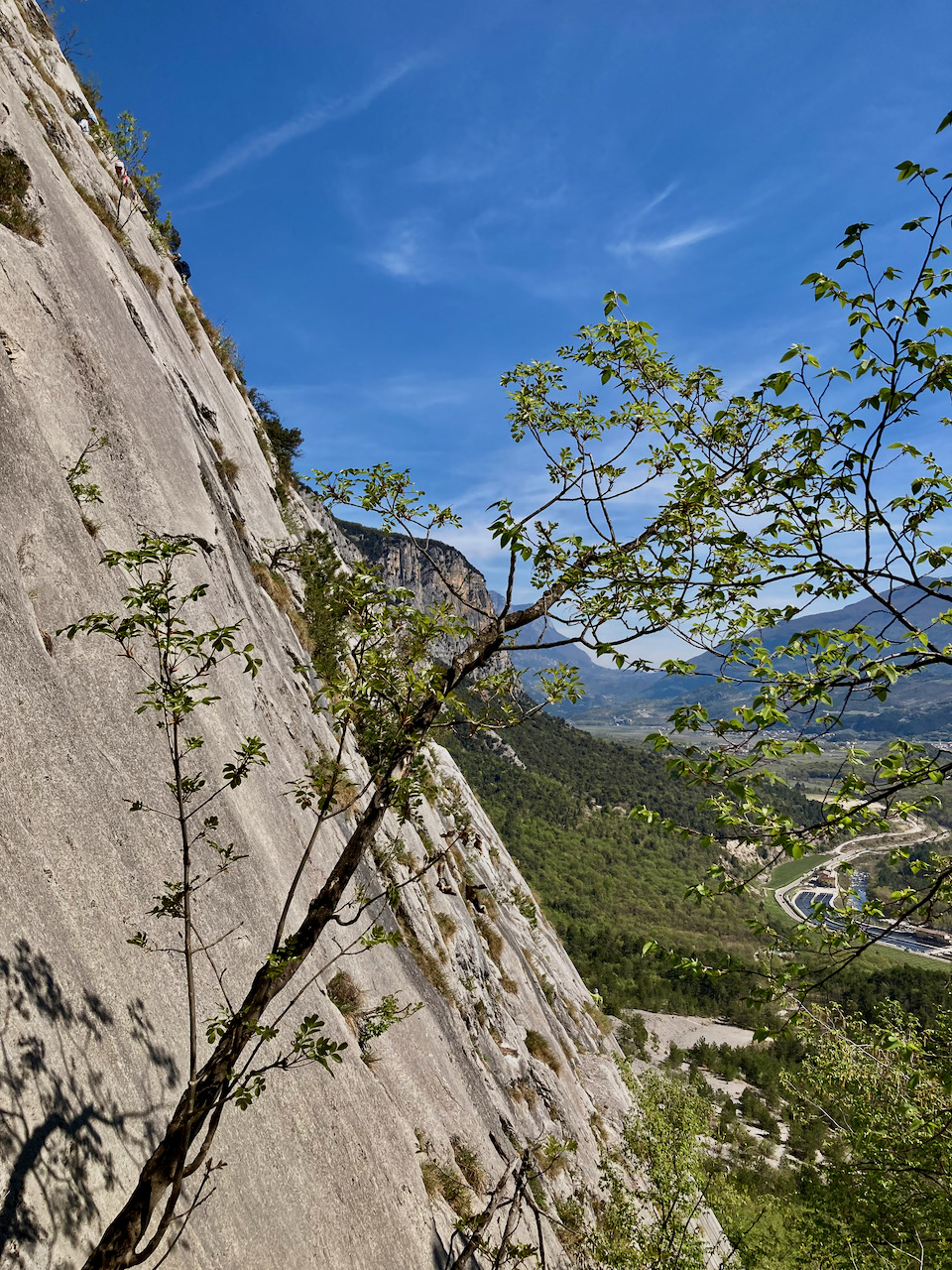
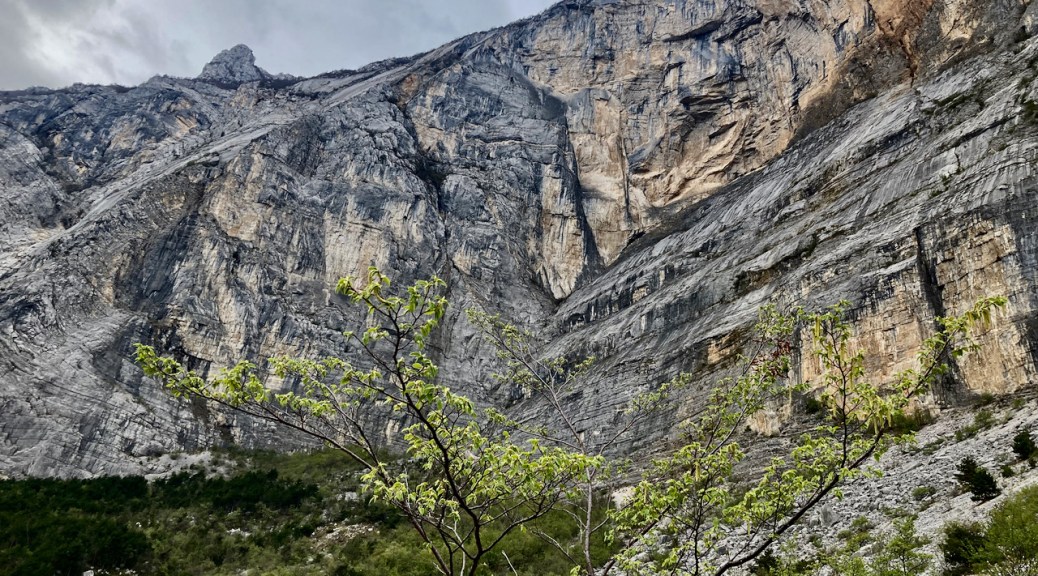
Before arriving in Arco, we had eyes on Claudia, a multi-pitch of thirteen pitches and 455 meters. Much of this route would be a slab climb, meaning a reliance on balance, friction, and making use of tiny footholds when they appeared. Without question, it would be the biggest outdoor adventure I’d ever encountered.

Climbing is about much more than physical strength. It’s about agility and dexterity, about safety, and, perhaps most importantly, about trust. We have systems, we check the systems, and we back up the systems. My life is in my partner’s hands and their life is in mine. Literally. And we know this every time. I have belay scars for a reason. One of the things that makes multi-pitch climbing so spectacular is that the experience is just you and your partner and the rock, and you are in this together for as long as it takes.

Four of us in the group were interested in Claudia and we assembled our gear and decided on pairs the night before. With such a long climb, the length a new experience for all of us, we needed an early start. As we had learned in our shorter multi-pitch routes, we needed to be familiar with the map to determine know how much gear was required at different points, as well as the line we were meant to follow to stay on the correct route. It actually is possible to make mistakes when there are routes bolted alongside each other, and getting into territory that is too difficult or doesn’t lead to an appropriate anchor can be dangerous.

We woke early, left the apartment early, and encountered no one else on our walk to the route’s starting point. We checked everything once more, gave a final round of hugs, and then we started to climb.

For something so enormous, there was remarkably little fanfare. We just did what we knew how to do and worked out the kinks along the way.

The weather remained consistent throughout the day and we were grateful for that because it meant one less thing to manage. Once all of our layers went on, they stayed on. At every snack break, we were surprised at how long we’d been climbing. We kept enough distance between our two pairs that my partner and I couldn’t see our friends below us and periodically strained to hear their commands to one another, just to make sure. We got into a rhythm of checking the map at regular intervals and our anchor setup became more efficient with each pitch. We paused occasionally for photos, celebrated milestones and scary pitches, ate snacks, laughed a lot and listened to the wind around us and the river below.

Six hours and 48 minutes after we started the adventure that was just us and the rock, it was over. We stood 455 meters, thirteen pitches, above where we began and realized how far we’d come. We watched the clouds move, the sky change, and took stock of the state of our feet and hands. The climb had been long and the fact that it was, for the most part, neither difficult nor scary was very important. Claudia required us to be tuned in the whole time, to be aware of ourselves, each other, the rock, the changing sky. We sat in silence for a while as we waited for the moment we’d see our friends, at which point adrenaline took over and carried us through the hike down.

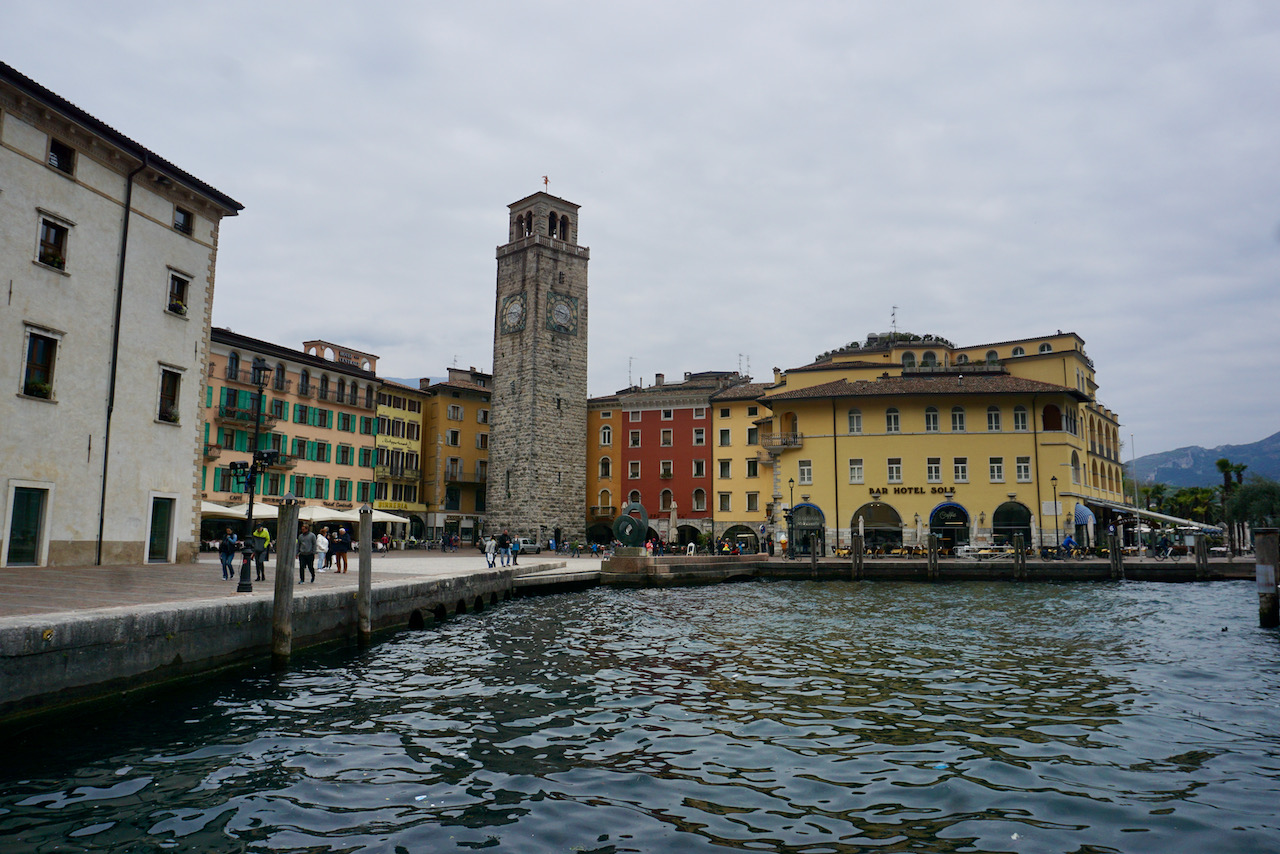
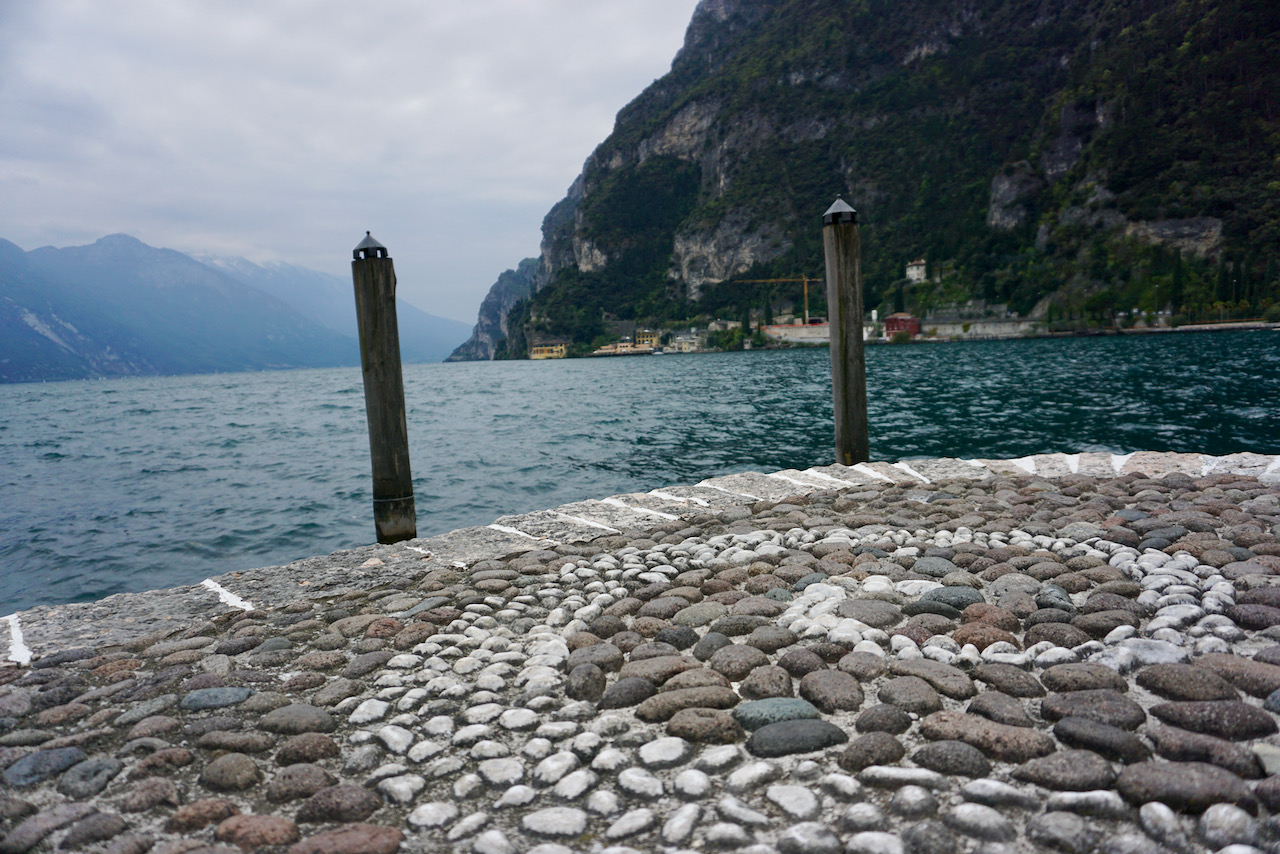
After our day on Claudia, I went to bed with some vague thoughts about climbing again the next day. My body had other ideas, however, and a few of us decided to spend an afternoon in the port town of Riva del Garda instead. The antique bookstore came as a pleasant surprise, and of course I couldn’t resist a look inside.

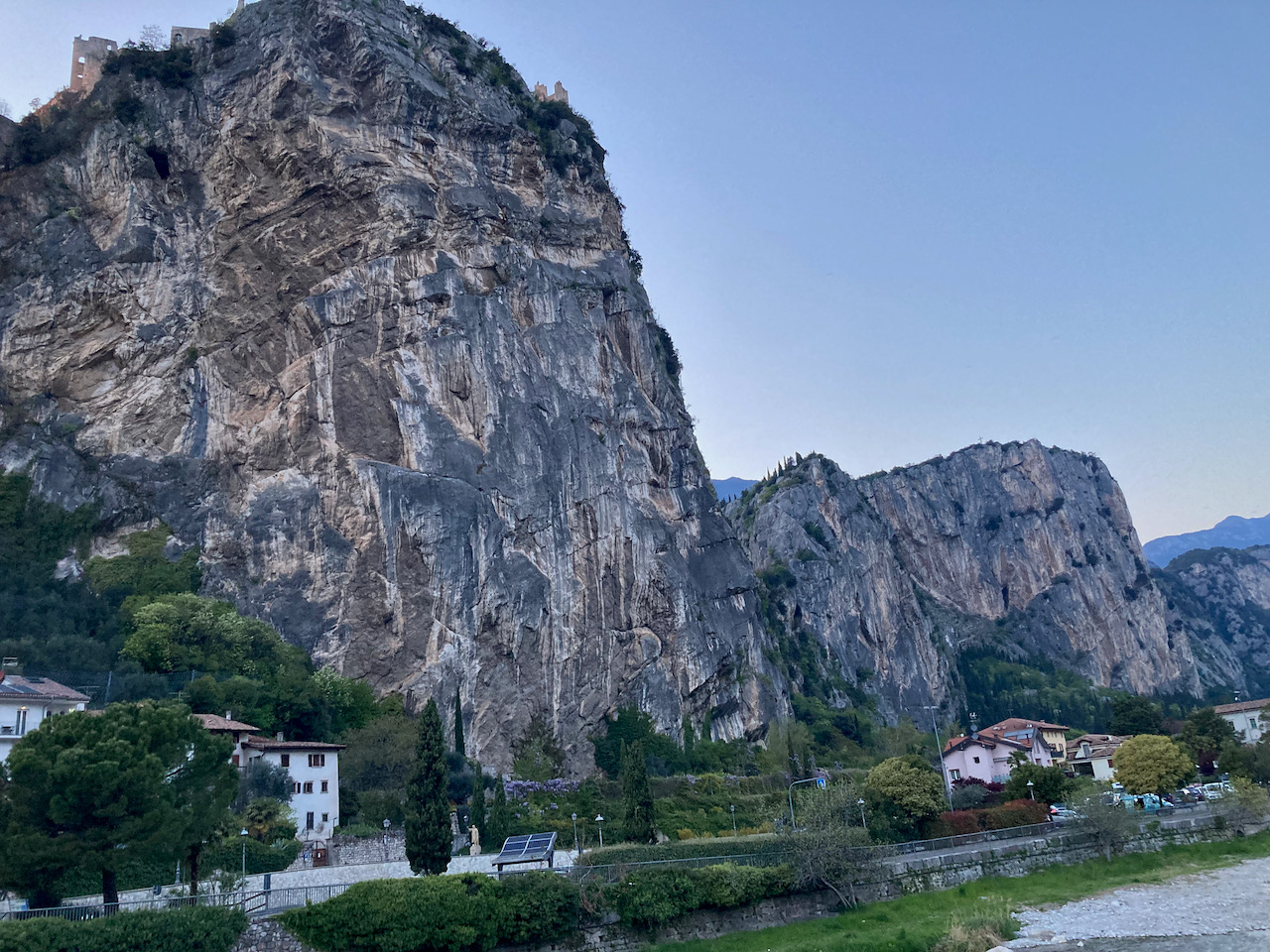
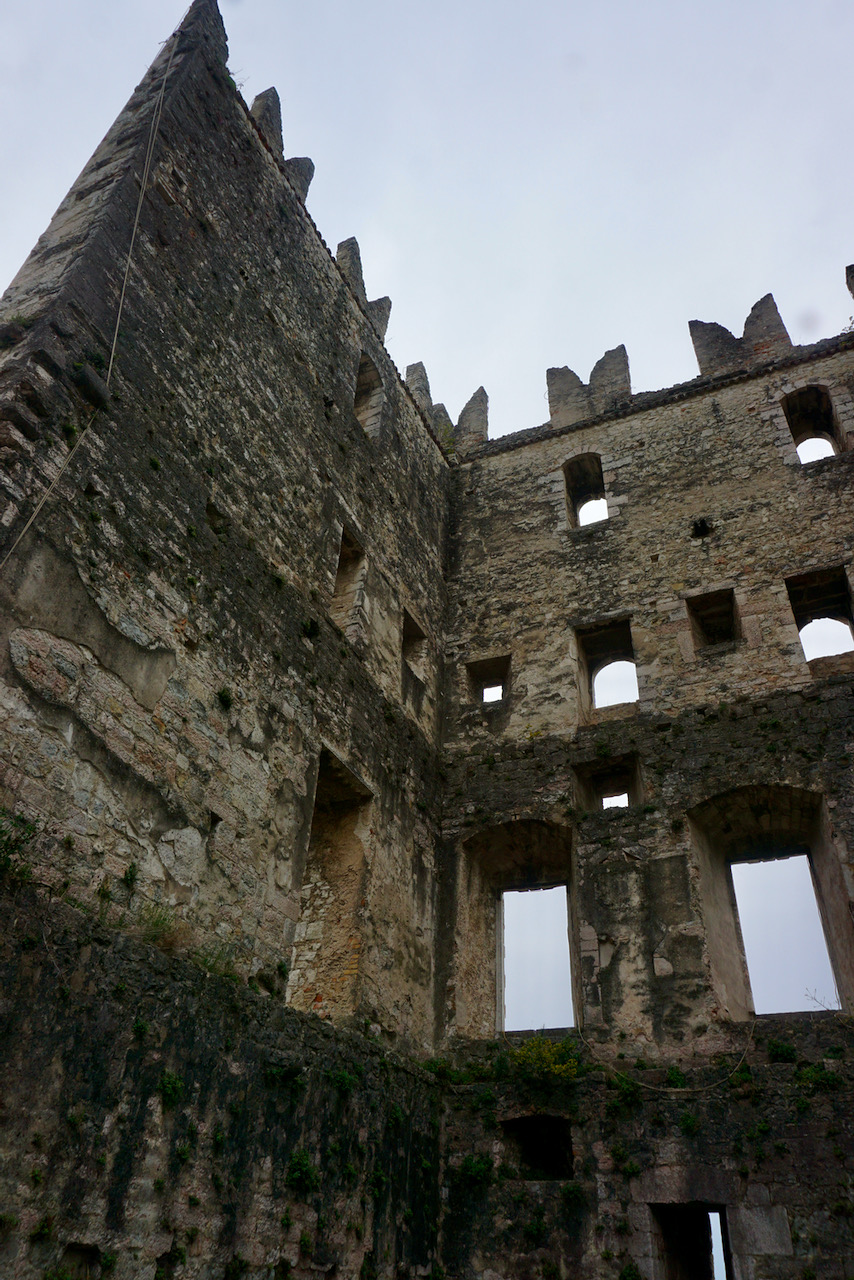
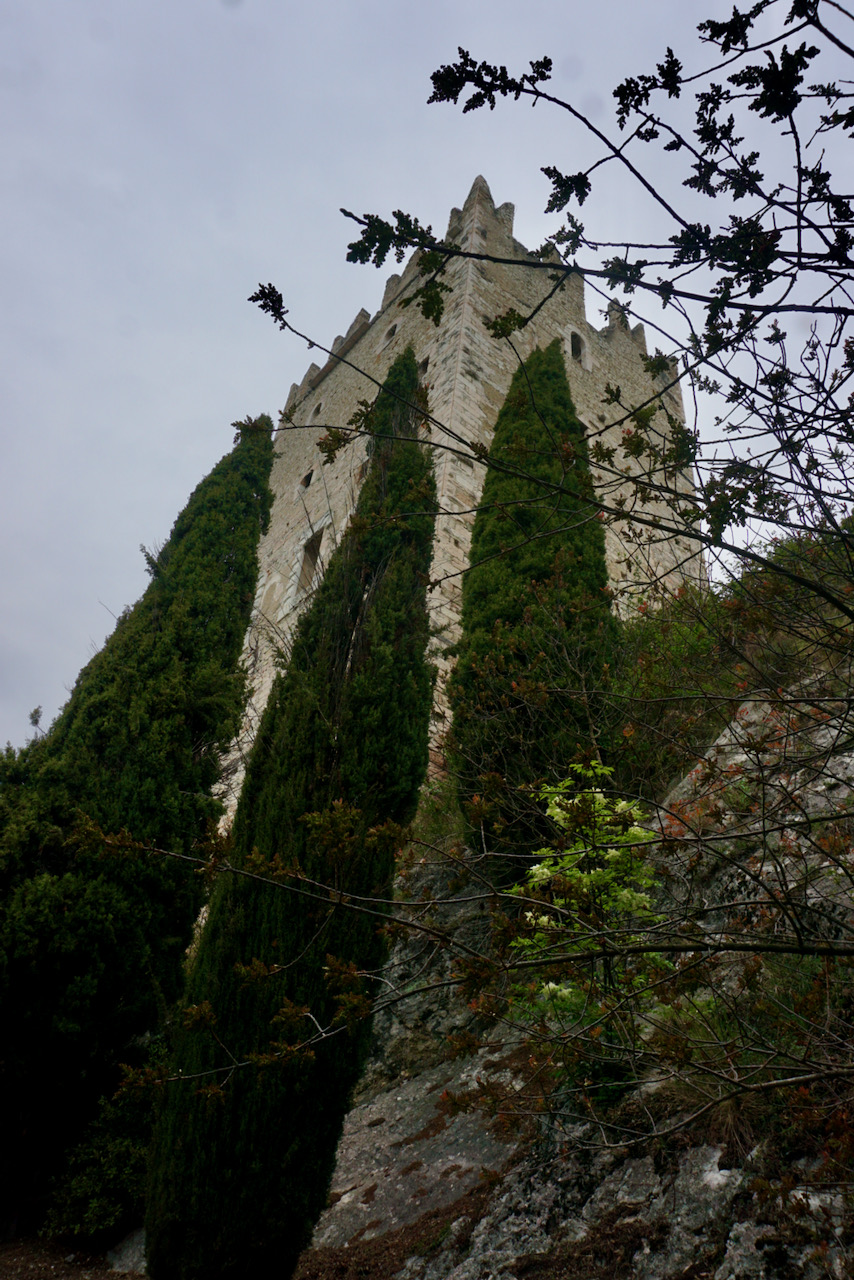
The weather forecast for the last day of our trip had not looked promising, but we were lucky enough to climb for a few hours before it started to drizzle. Upon heading back into town, we made our second visit up the hill to Castello di Arco, this time heeding the sign that very clearly stated the time of last entry. What is left of the castle sits high on a hill, providing a walk and views of the world that had welcomed us to climb.

It was drizzling the next morning, which is always a sign that it’s time to go. I felt like a different person as we loaded the car and drove away, a feeling that remained with me through the next morning when I woke in my own bed. I went to Arco wanting to climb and left Arco having climbed Claudia’s thirteen pitches, after having spent a day with just my partner and the rock. I left Arco confident in my ability to climb, manage rope, set up a variety of anchors, and deal with unexpected situations. This experience made me a better climber for myself, and also for my partner, which is perhaps even more important.

It was almost a surprise to walk around back home and realize that only a week had passed. A week on the calendar but lightyears in what I had managed, physically, mentally, emotionally. And in that week, the trees were greener, the flowers larger, and I found myself changed.

On Strength

I first tried to climb the black route on lane one at the climbing gym some time ago. After weeks of alternately attempting and staring at the tricky holds in dismay, I climbed it. The next day, I tackled the purple route, the one with the big sloping handholds. I got higher than I ever have, fell, and then climbed one hold higher. While I had developed my strength since that first attempt, I have also become more deliberate and more precise. In climbing, as in much of our lives, this makes a difference.

Feeling stronger has me thinking about what strength means and where I have found it over time. As a friend once pointed out, I have written about human fragility and vulnerability but I have not focused nearly as much on strength and resilience. I think there are good reasons for this, but that was then. Now is a different time.


I would like to talk here about physical strength in the sense that it takes mental strength to grow physically stronger. I’m reading The Rock Warrior’s Way by Arno Ilgner right now and much of what I’m reading aligns beautifully with my experiences learning meditation. The mind has a remarkable influence on the body and, as Eastern philosophy suggests, there may not be any separation between the two. When I’m feeling happy and positive, the world looks prettier. So too, my body moves more easily. Conversely, when my shoulders are cramped from hunching over a desk and my mind is already in a rut because my shoulders are sore, my body responds unhappily when I ask it to move and my mind continues to complain.

But there is more to strength than the link between mind and body. There is, for example, the sensation of soaring when the two work in concert.

Strength is the feeling that whatever comes next is within my grasp. It is reachable. It is possible.
Strength is the feeling of trust in myself and courage in the face of difficult choices. Strength is the commitment to this thing right here right now rather than acquiescence, resignation, or tacit agreement.

Strength is the ability to challenge oneself and to ask, as I learned in a Coursera course during Singapore’s circuit breaker, “What would you do if you weren’t afraid?”. Listening to the answer to that question is far more frightening than asking it, but crucial to ask if we are to learn who we are and what we are capable of.


A long time ago, I knew a group of people who measured worth, achievement, and level of respect due someone based on their estimate of the person’s 5k run time. It didn’t matter if you were better than them in any other thing; you couldn’t run a 5k as well as they could. To these young men, speed was the form of strength.

I have been running for about ten years now and I, too, measured my running in terms of speed. A good day was a fast run and a bad day was characterised by a slow run, regardless of how much I might have enjoyed it. Taking time off running, whether for injury or travel or anything else, was sapping the physical strength that defined my understanding of how strong I was or could be. Slowing down, be it physically or mentally, was a sign of weakness, despite how much I might have needed it.

I am older now, older, wiser, and a bit more beaten around by the world than I was back then. I took seven weeks off of running and recently started again, very slowly. But I breathed the air, felt the heat from the sun, and experienced the expansiveness of my heart that comes from being along the water and moving my body in the company of strangers doing the same. Would I have noticed this in the way I did without the time off?

This ability to notice, and then to see, is a sign of strength. Otherwise, I am merely going through the motions without ever doing the hard work of asking why. And without noticing, I fail to take the opportunity to learn.

To be strong means to attempt, to err, and always aim to learn. We are in this life to grow and to leave the world a better place than we found it. Having the humility to recognise that others have things to teach us and that we do not know all is a form of strength.


Recent global events have tested my capacity to tolerate, to embrace, and to be flexible when confronted with things I disagree with, dislike, or wish were different. Personal experience has taught me that while it is important to know what I can and cannot tolerate, there is also a difference between cannot and will not. In many ways, this is a choice.

And I believe I am stronger for having learned that.

And I believe I am stronger for looking at those black and purple climbs and asking, “What if I?” instead of telling myself, “You can’t”.

“Life will break you. Nobody can protect you from that, and living alone won’t either, for solitude will also break you with its yearning. You have to love. You have to feel. It is the reason you are here on earth. You are here to risk your heart. You are here to be swallowed up. And when it happens that you are broken, or betrayed, or left, or hurt, or death brushes near, let yourself sit by an apple tree and listen to the apples falling all around you in heaps, wasting their sweetness. Tell yourself you tasted as many as you could.” -Louise Erdrich, The Painted Drum

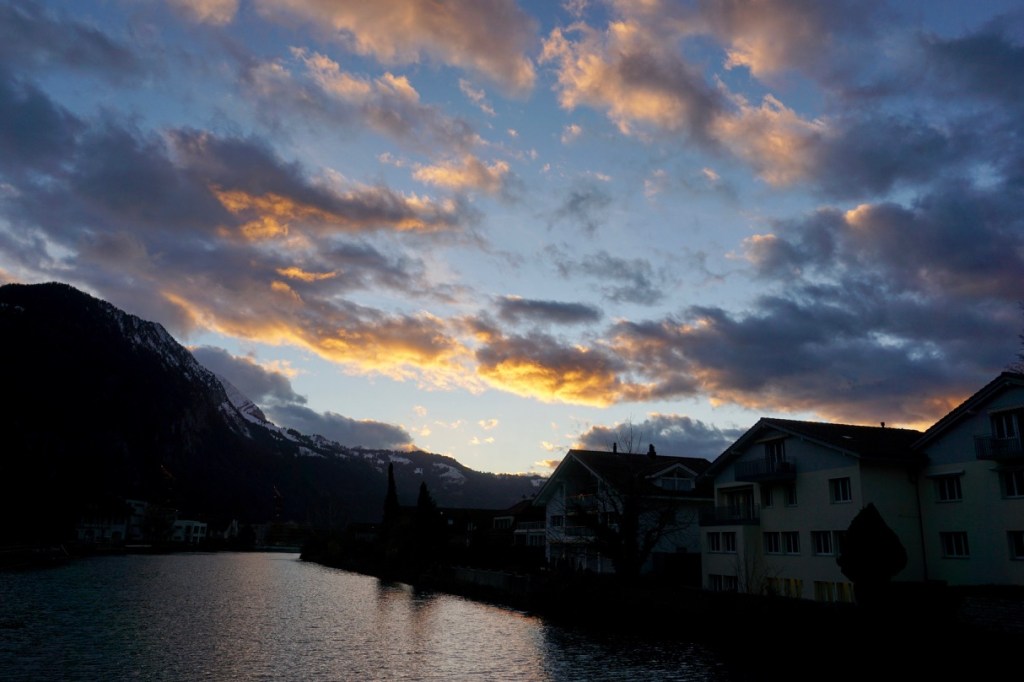
Interlaken, Switzerland – December 2019