The French press isn’t yet empty so we sit and linger a while longer, doing one thing at a time. Coffee first and then onto other things for the day. Warm rolls and butter and jam and cheese on weekend mornings, just because we can, and I find that my body has adjusted to eating that way; I find myself looking forward to it.
It’s rather different from how I was through many years of being on my own, different from the habits formed back when I used to go running, preferably in the mornings when I could. Back then, and since then, mornings were a time to do as much as possible so that the rest of the day was free for everything else. The best light comes through the windows in the morning, the air is fresh, and there’s a pregnant expectation of what the day might bring. I used to set an alarm on weekend mornings to greet all of that, but lately I’ve found that I don’t sleep in anymore. Lingering over breakfast on a weekend morning is a natural part of the day.
Years ago, we used to visit our favourite diner on a Saturday or Sunday, placing our orders of coffee, omelettes, and potatoes wherever we decided the coffee was best or the potatoes crispiest or the service fastest. We were in and out, often after waiting in the obligatory line (always a good sign), having eaten enough to tide us over until dinner. We sought out diners in different parts of town and compared them to each other, once driving all the way across town to wait in a line and be told that we could request modifications to the menu (I wanted two eggs, like in my go-to diner, instead of the standard three), but the kitchen staff probably wouldn’t listen. We loved every moment of that experience.
It’s a different time, a different pace, and a different partnership now.
Almost a year ago I took you to a diner, an old favourite, almost unchanged except for the prices. Cash payments only in a country that runs on credit, coffee as ever nostalgic and a little burnt (a taste I miss until I have it again, and then I stop myself after three refills), plentiful plates of combinations that matched what you’ve seen on television. And then another diner and another where, finally, “What can I get you, sweetheart?” and I grinned at the look on your face. Sometimes real life is just like the movies.
The bakery bag of tomorrow’s rolls is in the oven. And after we’ve finished our coffee, it’ll be time to live in the day.
That’s how it is because it’s always been that way. And because that’s how it is, and they know that’s how it is, they don’t need to explain. And because they don’t need to explain, they don’t talk about it, and that’s how it is.
Which makes it hard to explain because it means thinking about what it is. What it is.
And that’s what I lose when I’m away, and what I slip into when I’m back. It’s the pair of jeans that’s stiff for just a moment when first out of the wash but soon soften completely, fitting the contours of the body as a skin. It’s a flicker of unconscious observation that things are the way they always were before falling into a groove so deep that there’s nothing to see without a point of comparison.
Patterns are comfortable, easy, normal. Evolutionary, after all. Patterns have been expected for so long that there might be observations made but no questions asked, at least not out loud. It’s the changes that are questioned, the things that are no longer the way they were before, the things that are just different enough to seem jarringly out of place. And it’s only with comparison that we notice, the comparison brought by distance or time or the dramatic life events that have us seeing everything with different eyes.
I’ve slipped in and out of many skins and they snag sometimes, like the way leather boots rub the backs of heels used to the freedom of sandals. Sometimes a sweater deemed cozy in one environment is garish in another, or a favourite work dress is suddenly completely out of place. Sometimes the clashis obvious, and sometimes it takes a moment to put a finger on just what doesn’t fit. But once identified, it cannot be ignored. The broken zipper catches in all the wrong places and tugging it closed is an inconvenience that turns into irritation.
Late at night is usually the time when everything feels wrong, where the life chosen and celebrated is under the microscope of inquisition, its only fault being that its course is reality and its outcome unknown. (This is living, after all.) The life not chosen, the path not taken, is the one full of possibility and because nothing is known, anything is possible. The life chosen and experienced in medias res suddenly seems written to conclusion. The allure of the other choice is just that, allure, because we can neatly conclude everything when we know nothing. The mind spins patterns and the patterns reveal themselves in stories, compelling for their certainty despite the gossamer substance of dreams.
In the morning it’s easy to see the dreams for what they are, to dissolve the wisps into smoke and settle back down to earth. But what doesn’t go away, what never goes away, is the swell of questions that comes from the lofty heights of comparison. It’s easy to find fault with what there is when what there could be only exists through rose-coloured glasses. And it’s easy to forget that the forks in the road were once obscured with weeds, or that the signs were old and faded. It’s easy to forget that the choice was to walk through the open door because another door had closed. It’s easy to be nostalgic for what is no longer, and easy to fall for what never was and couldn’t be.
It’s having the courage to look forward instead of sideways, to go confidently while the world turns, that is somehow obscured late at night. To commit to what was chosen and to let that path shape itself around a body that has itself changed. The jeans might need to be let out or taken in, held up with suspenders or cut down into a purse, but the jeans shape themselves to the body they’re given; we either fully embrace where we are or run the risk of forgetting to live at all.
And because it always, always helps to remember, here I end with words borrowed:
I shall be telling this with a sigh Somewhere ages and ages hence: Two roads diverged in a wood, and I— I took the one less traveled by, And that has made all the difference. -Robert Frost
One of the reasons I left Asia for Europe was for a better work-life balance, but I admit to uncertainty over what that actually meant. I knew I was looking for something, but I couldn’t articulate precisely what it was. Nevertheless, stating this as a reason for moving in job interviews always led to vigorous nods. Clearly, the work-life balance in Europe was better – but what would that actually look like?
I have often found it hard to judge the amount of “work” I do in the different contexts in which I have taught, not only in terms of the country or age group of students, but also in terms of my career experience. I remember individual lessons taking hours to plan when I was a new teacher, a time commitment that decreased sharply with each lesson under my belt, but twelve years in, I still consistently find that marking a single essay takes about fifteen minutes. As it has been throughout my career, sometimes it is necessary to work late or at home, and sometimes this is a choice. I am juggling arguably more hats now than ever before, but also finding myself less bogged down by minutiae. And after a dozen years in this profession, I continue getting to school early enough to have 40 minutes of prep time before the students arrive – time to drink my coffee, read over my notes, clear my head, and time just in case.
So while I cannot say that my work habits have changed in this search for a better work-life balance, I have sensed a difference in how time is treated. Working in Singapore, the (un)spoken expectation was that people were busy all the time, including on the weekends. In Germany, despite how busy one might be during the week, weekends are a different time and they are meant to be enjoyed. This is not only clear from conversations with colleagues, but also through interactions with students. Rather than asking me if I’ll be available via email over school holidays, my current students ask if they can email me as questions arise and hurry to clarify that they are not expecting answers. I was profoundly touched the first time a student said, “It’s your holiday, too.”
Recently I’ve been talking with a friend about how people in German and American cultures spend leisure time. My American friends often refer to “being productive” or “adulting” (a term I loathe) and my German friends tend to speak in snapshots of specific moments rather than painting a general picture. Unlike when I lived in New York and felt under constant (and unaffordable) pressure to always do something, preferably something new, living in Germany has taught me that all days have something to enjoy, whether they are work days or weekend days. After all, the park is always pretty, even when cycling to work in the rain.
Something I’ve really noticed, however, might have more to do with living in a small town than living in Europe, though I’ve not lived in small towns elsewhere and this is my first time living in Europe. My work-life balance is doubtless better because it only takes me seven minutes to get to work by bike. A trip to the grocery store after school puts me in reach of all other stores I might want to visit, and I’m only five minutes from home. The minimization of commuting time is doubtless significant and provides much more flexibility during the day than I have previously experienced. I do miss certain aspects of life in a big city, but not enough to want to move back to one.
Before moving to Germany, I had a highly romanticized vision of living in Europe in mind: Sitting in the town square and drinking coffee, strolling along cobblestone streets, travelling by train and staring out the window at a green, rolling landscape. After over a year and a half here, I’ve learned that the picture wasn’t too far from accurate: We have cobblestone streets and four town squares, and I have spent time in all of them, sometimes with a coffee; travelling by train is indeed an opportunity to experience a lovely landscape, but also an exercise in patience with delays and missed connections; our park has featured much more in my life that I would have thought before moving here, and just as much as I knew it would upon seeing it for the first time.
While there are certain measurable differences in my daily life now compared to living in Asia, I think there is mostly a different feeling. The expectation of society is not that one works all the time, and the amount of work one does is not a measure of worth, whether self-imposed or through public pressure. This change in attitude has given me space to breathe, to rest, to relax. This is deemed normal, expected, and an important aspect of one’s life rather than a luxury or “waste of time”. There’s balance rather than constant motion, moderation rather than extremity. And perhaps this is what my interviewers with their vigorous nods knew about living in Europe – that I would not find just a work-life balance, but rather a different way of looking at life itself.
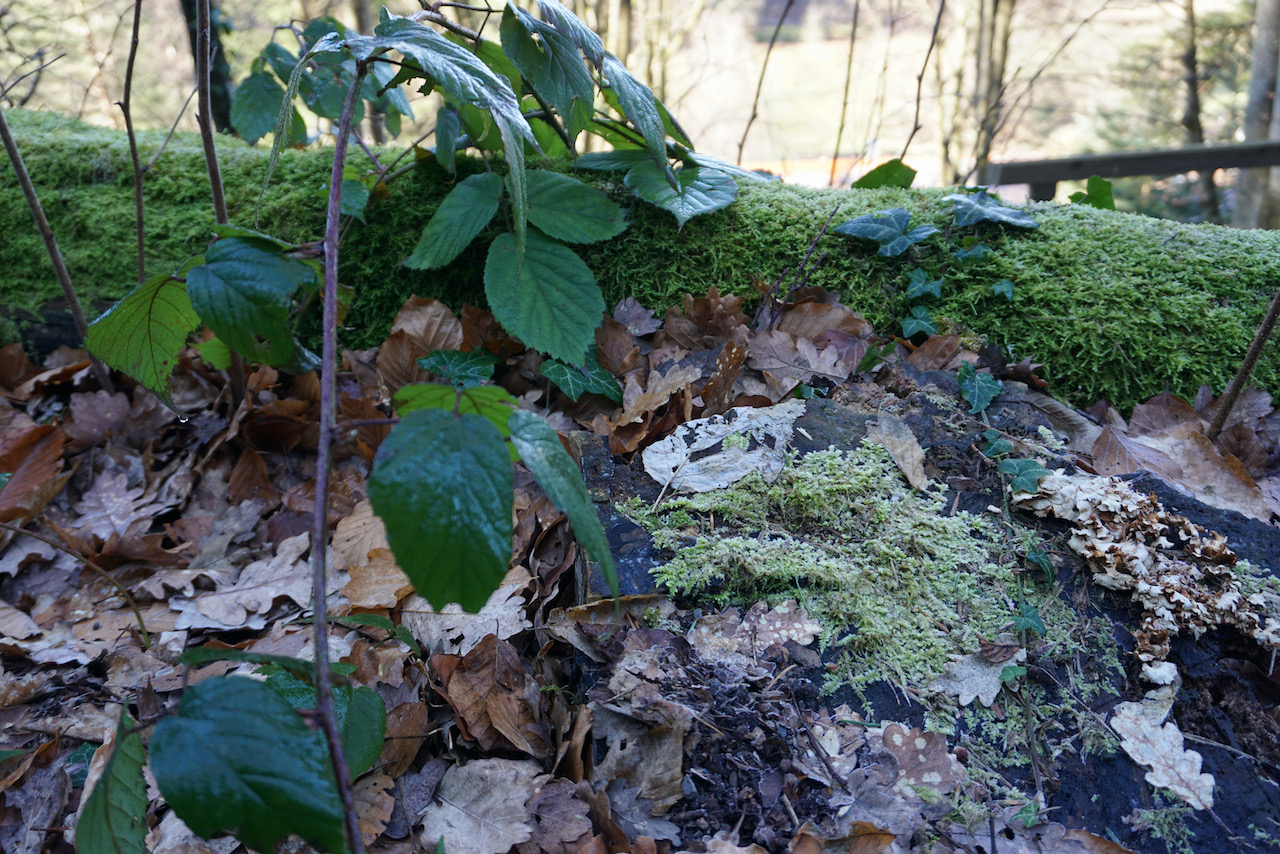
Schwarzwald (Black Forest) – February 2023
Photos, travels, musings, and ideas on education by someone trying to make the world a better and more peaceful place




 By Rebecca Michelle