All posts by Rebecca Michelle

Educator, traveler, reader, blogger. Loves learning, black coffee, and friendly people.

Travel Guide: Penang

I wasn’t sure what I was expecting when I accepted a job here in Malaysia, but then Mitch and I spent the weekend in Penang’s largest city, the UNESCO World Heritage Site George Town, and I found what I’d been hoping to find here – neighborhoods to explore, streets to walk, cafes to sit and eat and drink, bars with really good food, places to visit, and a multicultural, historical society. We had a wonderful weekend and I can’t wait to go back! (In fact, I’d rather like to relocate, but I don’t think there are many opportunities for Mitch there. Actually, I don’t know if there are any opportunities for me there. Anyway, we’re not relocating. At least, not to Penang.)

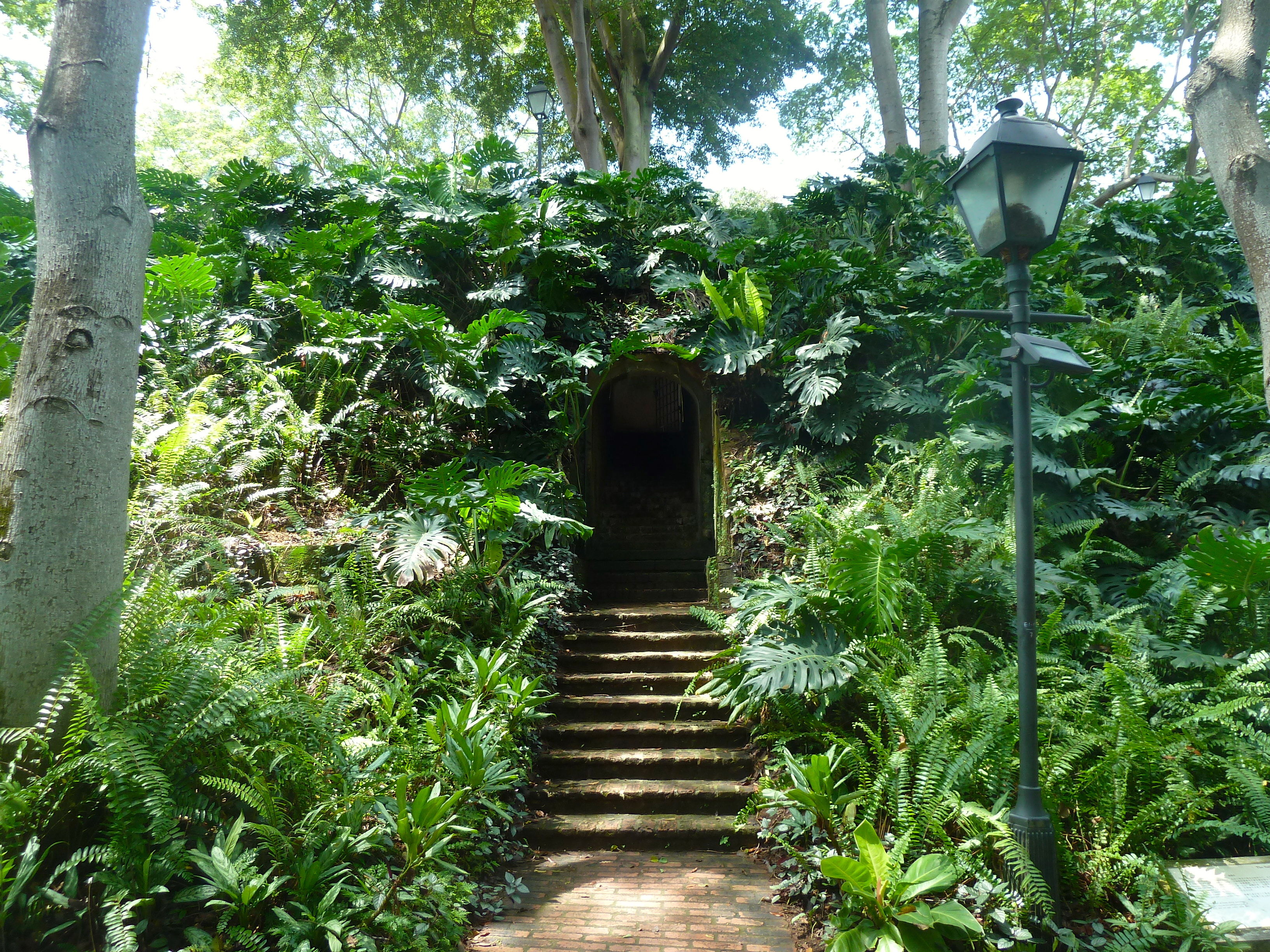
An example of what I thought I'd see in Malaysia
An example of what I thought I’d see in Malaysia

Part of the reason our weekend was so special is because we stayed in a perfectly comfortable, simple bed and breakfast in the heart of George Town. Steven, the proprietor of the Pedal Inn (I highly, highly, highly recommend it), told us what to do, where to go, and, most importantly, what to eat. Penang is famous for its seafood-based street food, most of which I can’t eat, but there are multiple vegetarian places, too! It really is a wonderful place.

We arrived late Friday night and began exploring on Saturday. Street art is both common and famous in Penang, so we spent a good bit of Saturday just wandering around the various historic neighborhoods and looking for it. There are maps to follow, but that would have been too easy. Some of the pieces were funky and fun and others were rather informative about the history of Penang. Still others, my favorites, made excellent use of the space around them.

China Town is a great place to see where real locals buy food. Literally all kids of food. I made it past 3 stalls selling various meats and fish and had to backtrack through a maze of people. The smell. . . . But there were others places to look around!

P1040127 P1040124 P1040130 P1040131

We bumped into a batik-painting museum in China Town that we quite enjoyed. I didn’t know batik is only around 60 years old!

The third floor of the batik-painting museum

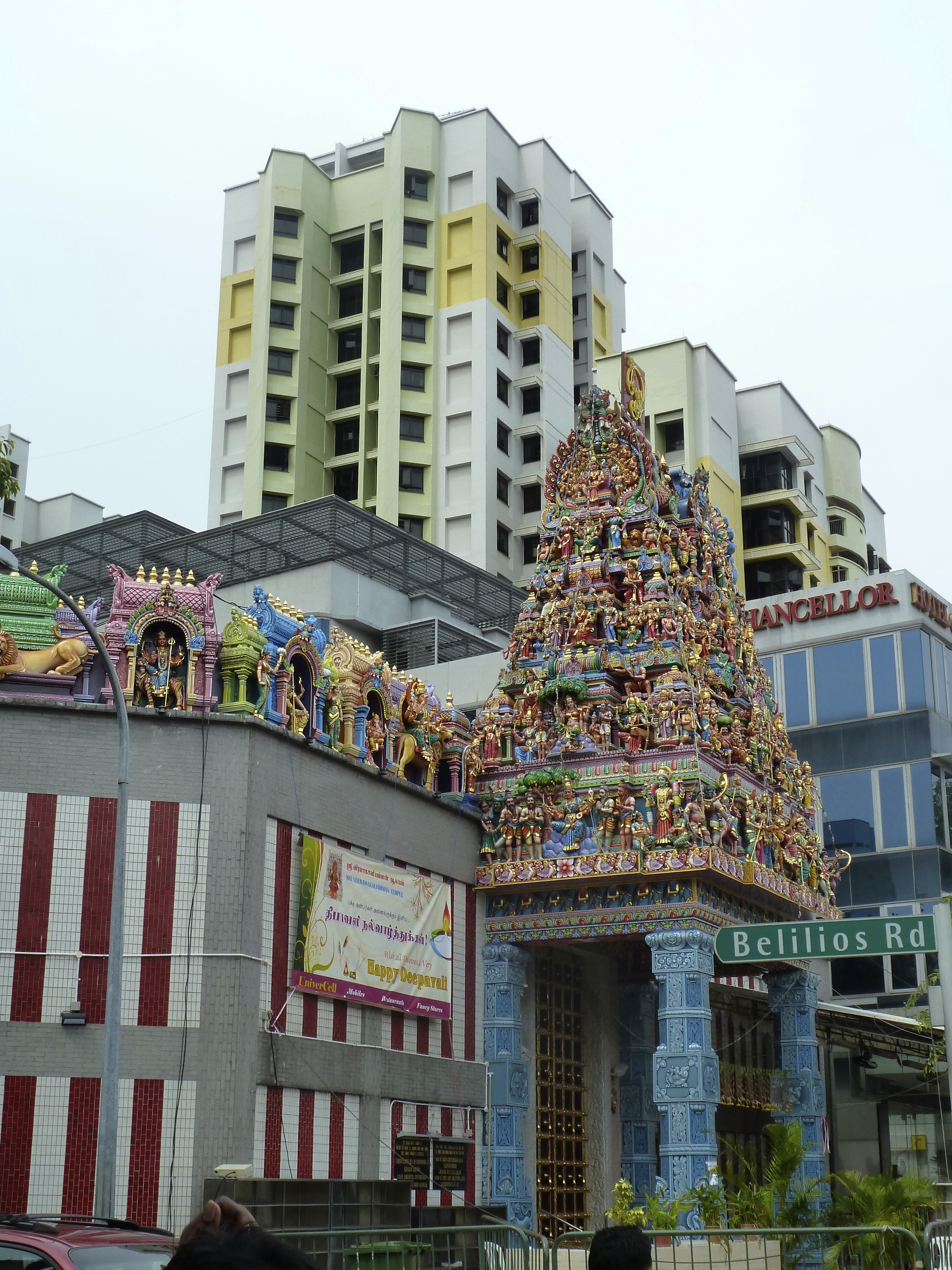
Since Deepavali (also spelled Divali or Diwali) is this coming week, Little India was a hopping place, too. We ended up eating lunch there at a banana leaf place, much like No. 1 Top Curry, my favorite restaurant in Seremban.

P1040134 P1040136 P1040137 P1040138

We walked down to the waterfront and passed some British colonial buildings along the way. My favorite feature was this post box:

Why yes, Malaysia is a former British colony

It was also really neat to see people driving their cars off of the ferry. The mainland is rather close by – right across the Straits of Malacca – and you can see it without trying too hard.

P1040142
Dear Rochester, this is what the fast ferry was supposed to do

Other wanderings took us past various religious buildings that are everywhere. Penang has more churches than I’ve seen elsewhere in Malaysia, even in Malacca. It also had mosques, Buddhist temples, and Hindu temples.

P1040155 P1040156

P1040165

P1040166

We also wandered around Fort Cornwallis, which is one of the most depressing historical sites I’ve seen. This former British fort has not been particularly well maintained and contains very little historical information. It feels a bit stale and cost RM2 per person for a reason.

Statue of Lord Cornwallis

It started to rain (we’re in the rainy season now so that’s a daily event) so we headed to the Blue Mansion for a tour. The Blue Mansion is iconic in Penang because it’s, well, blue. It was designed, built, and lived in by Cheong Fatt Tze, a Chinese immigrant to Malaysia in the late 1800s. Unfortunately, most of it is a hotel now so we weren’t able to see much. The 45-minute tour is mostly about what the architects found when restoring the house in the 1990s. Not worth RM16 per person.

Cool Blue Mansion windows

P1040175P1040180

We went to a British-style pub called SoHo for a while to get out of the rain, wandered in the rain to find dinner, and ended up back at said pub. Great food, not impressed with the drinks, pleased that a cocktail menu existed.

On Sunday we explored Penang Hill and Itam, an open air market neighborhood. It was cloudy (rainy season) when we went up the hill, but it got brighter the longer we were there. We seem to have poor luck with hills. It’s hard to see anything in the fog! When the clouds cleared for a moment, though, it was really beautiful.

P1040198P1040199


P1040219

P1040200
P1040205

Looking down on Georgetown
Looking at another hill in the area
Looking at Penang Hill

We drove through Itam by bus on the way to Penang Hill and much of it had cleared out by the time we went back there to eat, but that didn’t stop us from sampling various vegetarian foods, durian ice cream, and a coconut tart at various stands! When we drove through originally, Itam was swarming with both people and cars. I’m not exactly sorry that we were there at a quieter time.

P1040224

P1040228

P1040235

Our visit ended with a trip to the heavily commercialized Kek Lok Si Buddhist Temple, which combines Chinese, Thai, and Burmese architecture. It opened in 1905 and renovations and additions took place in the 1930 and early 2000s. There were hawkers everywhere, which was weird, but the architecture was beautiful.

Take-home message: Visit Penang!

Travel Guide: Langkawi

This weekend was the first of our three consecutive weekends of travel. As I’m sure you gathered from my last post, I’m not 100% delighted with life here and Mitch and I decided it was high time to begin exploring Malaysia. We chose the island of Langkawi because it has beaches and we wanted to spend some time in clean mountain air, which one can find everywhere in Malaysia except in cities.

Our trip started Friday evening on a pretty amazing AirAsia plane. These are iPhone photos so they’re not the best quality, but I guess AirAsia loves Taylor Swift as much as I do!

IMG_0541 IMG_0542

I’ve never flown AirAsia before and got a good laugh out of just how “budget” the airline is.

Poor Mitch's legs hardly fit!
Poor Mitch’s legs hardly fit!

Our plane arrived about an hour late but the Seaview Guest House where we were staying is pretty close to the airport. Lesson learned: You get what you pay for. We paid $12 a night and had a room with two double beds and use of a shared bathroom located at the bottom of a very steep staircase. It was not pretty and I wouldn’t stay there again. (We do, however, plan to return to Langkawi.) Seaview Guest House isn’t exactly conveniently located (again, you get what you pay for) and we needed to take taxis everywhere we went. Since Langkawi is a very touristy island, each taxi ride cost RM20. It’s only about RM50 to rent a car for the day, so we learned after the fact, so that’s what I’d recommend to other travellers. We will definitely do that on our next trip.

The best part about Seaview Guest House, though, is that it’s attached to a bar so we were able to have our first cocktails since coming to Malaysia. Like the room, the drinks were cheap; unlike the room, they were amazing. There were a handful of people hanging out at the bar when we got in Friday night so we joined two guys from Sri Lanka and had a lot of fun talking to them. We exchanged contact information via Facebook (oh, Facebook, how useful you are) and spent quite a bit of time with them last night, too. Meeting new people is a lot of fun, especially when everyone is brand new to an area and when everyone is on holiday and therefore pretty happy!

We woke up pretty late on Saturday and then ventured to an area called Oriental Village, which is very pretty but also very touristy. Langkawi is famous for a cable car ride from Oriental Village to the closest mountain and we really wanted to go. There’s also a bridge that connects the mountain to its neighbor that adventurous people can walk along. We totally planned on doing that but the bridge was closed for maintenance, another reason we have to go back.

It was sunny when we got to Oriental Village, rained, and got sunny again, which you can see in the photos:

P1040036 P1040037 P1040039 P1040041 P1040046P1040045P1040043

Not only was it beautiful, but we also found recycling!

Recycling?! In Malaysia?! What????
Happy recycler
Happy recycler

Thanks to the weather, our cable car excursion perhaps was not as thrilling as it might have been. Visibility gradually decreased as we went up the mountain, which reminded both of us of skiing out West in the US. On a clear day, one should be able to see the entire island, but this was not a clear day. It was beautiful, though, in a very different way. At times, it honestly looked like the fog was creeping up around us. It was rather sobering to be so small and insignificant and hidden in a cloud when we knew there were mountains around us. The air smelled fantastic, too. If we were going to be in Langkawi longer, we would have waited to see if the weather cleared up but we didn’t have that option. That’s the drawback of short trips, I guess, but it’s better than not going at all. I’d definitely go again on a clear day.

P1040048 P1040049 P1040053 P1040054 P1040056 P1040057 P1040058 P1040059 P1040061

In sharp contrast to Seremban, Langkawi has wildlife! It also has cats and dogs everywhere, but so do we. We passed multiple groups of crab-eating macaques searching for food, picking bugs off each other, and, in the case of this one, pursuing mates.

Macaque on a mission
There were also groups of buffalo and cows grazing in just about every open field (and some not so open fields)

The afternoon remained cloudy but we went to the beach anyway and walked up and down for long enough to watch the beginning of the sunset. We passed a creek of little fishing boats on the way there, which I just loved.

P1040071 P1040072

The beach had some of the softest sand that I’ve ever felt, but we had to go pretty far into the water to find it. Otherwise it was rather rocky. There’s a marina in Langkawi that we passed on the way to the beach and a lot of the boats are fishing boats, so it was fun to watch them move around very slowly and then finally head back to the marina with their catch for the day.

P1040076 P1040078 P1040081 P1040083 P1040084 P1040085

As the sun began to set, it also managed to break through the clouds so we had a spectacular sunset when we got back to Seaview.

I have a thing for pictures of rooftops. I took this as soon as we got back from the beach and I love the way the light from the setting suns reflects on the roofs.

IMG_0543 IMG_0546

Our Sri Lankan friends introduced us to a new arrival at Seaview, a guy from Japan taking a year off from university to practice his English. We all had a few drinks and then we all went to Cenang Beach late Saturday night, once the tide had gone out. The sand was soft and the waves were larger and louder, which I love. We didn’t going into the water because it was 10pm by that point, but next time we visit Langkawi, I’d love to stay at Cenang Beach because that’s where all the action is – restaurants, shops, places to book island tours, etc. Next time, we also plan to visit the city of Kuah and hike up to Seven Wells Waterfall, which we could see from the cable car.

Lessons learned from this trip:

  • In terms of accommodation, you get what you pay for
  • Stay in the city where the action is
  • Taxis are expensive and renting a car is not; therefore, rent a car
  • Be friendly and you’ll make friends

It was a really great weekend. We were very glad to get away from the city, breathe clean air, spend time outside and in nature, meet cool people, and just be somewhere else. Hopefully we’ll return to Langkawi before leaving Malaysia because there’s definitely more to see and do!

Challenges

The subtitle of this blog claims it to be “an honest portrayal of life overseas.” Honestly, I’ve not been that honest. There are two real reasons I’m keeping this blog:
1. To have somewhere to post my photos so I and others can enjoy looking at them rather than letting them get stale in digital iPhoto albums.
2. To show my family and friends and interested others what I’ve been up to on the other side of the world.

In reality, though, there’s a lot about life here that bothers me and a lot about work and housing that has me really, really frustrated. Omitting those details makes this blog not honest, but I don’t think it makes it dishonest, either. There’s always that question about omission: Is it a lie if you don’t tell the whole truth? The US government would say yes, but the US government says yes about a lot of things.

Anyway. That’s a post for another time.

There are a few good explanations for why I choose to keep most aspects of my life private, and these hold true no matter where I’m living:
1. Firstly, I don’t use the Internet as a way of validating every thought and feeling. (i.e. “Wow, 12 likes in 10 minutes! I guess it’s good to be depressed sometimes! Everyone tells me they miss me!” I have never gone for stunts like that.)
2. Secondly, my family and I keep in very close touch over the phone so I don’t need to blog about my worries and woes to ask the people who matter the most to lend an ear; they’re doing that anyway.
3. Additionally, the process of getting a work visa (Oh, wait, I’m not supposed to be working without one?) is very slow and there’s no need to get myself into trouble with anyone who has the capabilities of checking up on me.
4. Finally, the Internet is no place to moan and groan about work. Ever. Work is work. Sometimes it’s wonderful and inspiring and amazing and sometimes it’s not, no matter who you are or where you are.

So I ask again, have I been dishonest in omitting the nitty gritty details about moving to a new country, working in a new school, trying to get working papers, and adjusting to life in a hotel while waiting for the apartments to be built? I don’t think so, but who am I to say? Don’t shoot me, I’m only the piano player blogger. (But I do adore that album.) That said, there are some difficulties, challenges, and frustrations that I’d like to share:

Disabilities and Medical Care

I have a Master’s in inclusive education and as a result, or maybe as a symptom, educational and social inequality for people with disabilities was a major concern for me at home; it is even more so here. Special education does not exist in Malaysia. I don’t know what happens to children with disabilities, but I’m willing to bet they’re not in schools. I say this mostly because there are intellectual disabilities that manifest physically and I can’t honestly say I’ve seen anything in that area. We have several children at school who would definitely have IEPs for a variety of reasons in the US but there’s nothing here. No paperwork, no note from a parent, no comment from the parents when we meet them before and after school. I understand stigmas, I understand cultural pressures, I understand bias, and I understand opportunity. I even understand fear. What I don’t understand is what happens next. I’m teaching at an elite international school where the goal is for children to attend elite Western universities. What happens then? What happens to the children who need services but can’t get them because they don’t exist? Children from affluent families can attend elite schools with Western teachers who at least believe that people with disabilities have a right to an education. What happens to children from poor families?

Interestingly, I’ve seen more people here with physical disabilities than I generally do in the US. Mitch pointed that out to me during our first week in Malaysia. There are a lot more people in wheelchairs, a lot more people with facial growths, a lot more people who struggle with mobility, etc. Mitch wondered if we have better medical care at home and can provide treatment early so that correctable “disabilities” don’t manifest as people get older. (For example, my sister was born with clubbed feet; she had surgery as an infant. I have seen enough here to know that surgery for clubbed feet isn’t, or hasn’t always been, widely available.) On the one hand, the fact that we’ve seen so much means that there’s at least somewhat of an acceptance of physical difference here. On the other hand, let’s talk about medical care, shall we? Let’s have a system of health insurance, perhaps. Just a thought.

Walking

If we’re talking about mobility, Malaysia fails every test. There are no sidewalks. Anywhere. I’ve asked Malaysians and they sigh and tell me to go to Singapore. Since there are no sidewalks, there are obviously no curb cuts. And you’re constantly dodging motorcycles, cars, stray dogs, manholes that have had the covers stolen, and whatever else happens to be in the way. Consequently, Malaysia is a car culture and traffic is a mess because the towns themselves weren’t built to hold as much traffic as they do.

Racism

And I thought the US had problems. Well, the US does have problems but very different problems. People in Malaysia are racist in a way that I’ve never experienced. The Malays themselves are known as Bumiputeras and are given special status in everything (housing areas, interest rates on loans, interest rates on bank accounts, reserved spots in universities, quotas for jobs) as a result of the race riots on May 13, 1969. In brief, Malaysia used to be a British colony (no surprises there) and the British built up cash crops in Malaysia’s tropical environment. To work on the plantations, the British imported workers from India, which led to a flood of immigration from China, as well.  Throughout the mid- to late-1800s, the Chinese in particular became very successful and opened banks and insurance companies that were a) useful to the colonizing British, b) impossible for the Malays to run because of sharia law throughout Malaysia, and c) both useful and harmful to the local sultans ruling Malaysian states alongside the British because they were in constant need of cash.

Long story short, the Chinese rose in British esteem, which led to a divide in wealth and power. Racial tensions boiled over on May 13, 1969, leading to a host of affirmative actions programs (again: housing areas, interest rates on loans, interest rates on bank accounts, reserved spots in universities, quotas for jobs) for the Malays, the Bumiputeras, to put them on even footing with the Chinese. (The Indians are a much smaller group of the population and don’t have the same wealth, influence, or power as the Chinese.) The problem, of course, is that everyone else is upset at these programs because they fail to take merit and changing times into account. They were initially set up as anti-poverty programs but now that the income distribution has levelled out more, the Bumiputeras still receive special benefits. The same programs do not exist for poor Indian-Malaysians or Chinese-Malaysians. People openly bad-mouth people of other races, too.

To top it all off, there’s still a colonial mentality here in which anyone with light skin is automatically deemed superior to anyone with darker skin. Enter bleach in soaps, skin lightening creams, an aversion to the outdoors, and reverence for white foreigners. White people here have a special nickname, as well. We are known as “Mat Salleh,” a possible bastardization of “mad sailor,” because the first white people to land on Peninsular Malaysia were British sailors. As a white person in a suit, Mitch has been able to walk past security desks in office buildings in KL with merely a wave. He tried it more than once just to see if he could. And that brings me to . . .

Staring

Seremban isn’t what I would call cosmopolitan, so the number of foreigners here is much lower than it is in a major financial center like Kuala Lumpur. Therefore, Mitch, my coworkers, and I are novelties. People stare at us when we walk around, giggle, whisper to their friends, stare at us, and giggle some more. People ask me about my hair. People point to my hair. People follow us around stores and constantly ask if they can help us. That would be a mildly irritating gesture if it were simply customer service, but it’s not – it’s because we’re white, which makes it really, really annoying and uncomfortable. No one has asked for pictures yet, but that’s not to say no one has taken any. I don’t stare back so I just don’t know.

Hygeine

Definitely a cultural difference. I really, really, really love toilet paper in bathroom stalls (not just on the wall for everyone to grab on the way in), using soap (that’s not really a thing here), sneezing into elbows instead of hands (we’re literally teaching this to our students), and food workers wearing gloves (I can count the number of times I’ve seen that). As one of my colleagues said after a lunch in a very traditional Malaysian restaurant complete with flies landing on everything, “It’s no wonder people here get typhoid.” And that’s the reason we all got shots!

Environment

I got a job in China and didn’t move there because China is notorious for its problems with pollution. When our flight from Chicago landed in Hong Kong, Mitch and I marvelled over the beautiful fog over the airport at 6am, only to realize several hours later that the fog had not evaporated and was, in fact, pollution. While the air quality is much better here than in much of China, it’s not great. On a bad day, you can feel your lungs burning if you spend too much time walking around outside and on most days we can’t really see the mountains that surround Seremban. But then there are perfect days, too, like yesterday’s hike.

Another major issue for me is recycling. Everything has recycling labels on it and there are “Go Green!” mantras everywhere, but there’s nowhere to recycle! I asked local coworkers about a recycling service and they laughed. Everyone knows you’re supposed to recycle, but I haven’t been able to find any recycling companies! There’s trash pickup, but no recycling pickup so everything goes right into the trash. I’m a fanatic about recycling at home, so this has been very upsetting.


And so, dear reader, there you have it. A more honest portrayal of life overseas is beginning to unfold. You’re probably sorry you asked.