Upon receiving the invitation, my first instinct was to say I couldn’t go. It was too far, I don’t have a job that allows me to choose my holidays, and it would cost a small fortune considering how long I’d be away. So I couldn’t go.
But I couldn’t stop thinking about it, either, which meant I wanted to go. It meant the too far/no holidays/too expensive reasons were not reason enough.
So I spoke to my principal, steeled myself for days of jet lag, cashed in all of my credit cards points, and went to celebrate the wedding of my best high school girlfriend. We met on the first day of school in grade nine in our first period class when she turned to me and observed, “You’re new” and introduced herself. And that was pretty much that.
When I mentioned the trip to my grade twelve students, one asked who my closest friends are and how we keep in touch. I understand this. International school students scatter after completing high school and there is understandable uncertainty over who they will and will not see again, normal for all young people at this age. I admitted that my old friends and I aren’t really in touch, an arrangement that we all understand and that works for us. The beginning of Covid saw us on multiple video calls, which had never happened before and has not happened since. But when we’re together, it’s like nothing has changed. We slot into each others’ lives like no time has passed even though years of space can lie between each meeting. We are comfortable around each other in ways that simply come from years of shared experiences, shared stories, a shared history that fits us all into a place where we understand the intricacies of our relationships to each other.
But, my student pressed on, are my relationships with old friends superficial because we aren’t in regular contact? This was perceptive and gave me pause, but the honest answer is no. No, these relationships are not superficial. They are instead deeply genuine because we remain friends because we want to, not because we have been thrown into a space together; rather, we actively choose to create that space. These friendships are intimate because we don’t need to explain ourselves since we understand one another due to so many years of knowing each other and watching as we all change and evolve. I don’t need to explain my darkest moments and how they have led me to today because these people were there back then.
Similarly, I can ask difficult questions because we’ve done it all before. I can be confronting because these are the people who are still with me, who have chosen to remain part of my life despite all the reasons people lose track of one another. And I can answer difficult questions honestly because old friends are not looking for casual, convenient relationships. It’s okay if times are tough or if the road is rocky. They are asking because they care about me, because they have cared for years about me. These are true friendships not because they are old friendships, but they are old friendships because they stem from deep roots.
I do not have very many old friends, rather many old acquaintances. I reintroduced myself to a few people I had known casually in the past and it was a pleasure to see where they are now, so many years later. But to spend a weekend with old friends, celebrating a beautiful moment in the life of someone we all love, was a truly special experience. The last time we were all together was at another wedding, in another place, in another life. And it was a joy to come together with these people and recognize that, despite the years and the time and the space, we still know each other. We still care about each other. And for that, I still call these people my friends. It is an honour to do so.
The road to the house of a friend is never long. – Danish proverb
Last weekend I had the pleasure of reuniting with old friends and introducing a German to the culinary joys of a typical American Thanksgiving. The top hits were, predictably, pecan pie, pumpkin pie, turkey with cranberries, and stuffing. Green beans, mashed potatoes, sweet potato pie, and bread rolls filled the rest of the table and I heard about more desserts than I was able to glimpse before they were gone. Wine, beer, and Glühwein flowed (we are in Germany, after all), and discussion of the World Cup replaced that of Bowl games. This was a context that just made sense to me and I belonged right there.
The atmosphere was warm, relaxed, and utterly welcoming, bringing the Yiddish word heimish to mind. This word comes from heim or home, and is used to describe the familiar or homey feeling of a place. Heim is also a German word and making this connection reminded me of the Dutch word gezellig, used to describe everything cozy from a physical environment to the feeling of an evening with friends or seeing each other again after a long absence. Gezellig is one of those “untranslatable” words into English and, as I understand it, has a far deeper meaning than its German cousin, gesellig, which refers to the sociability of individuals.
What I enjoyed about the evening was not only watching the reaction to the first tastes of the aforementioned traditional dishes, but also soaking in the atmosphere in which about thirty people, only some of whom knew each other, made themselves at home in a home set up exactly for that. When too many of us were crowded into the kitchen (which is not large enough to accommodate a table and chairs), people moved first to the dining room where they stood or settled into chairs pushed back against the walls, and then to the long picnic tables on the enclosed porch. Acting on a need for a drinks table, more space for desserts, or a different location for the plates required a request for help from the closest person and then the space was modified. Heimish indeed.
I spent the vast majority of my time in the kitchen, my preferred place to be in large gatherings, chatting to whomever came in to drop off an empty plate, fill a glass with Glühwein, ask for another spoon, or check the progress of the stuffed, and unhurried, turkey. The guests came from all over the world and had lived all over the world, and we cheerfully exchanged backgrounds over the common ground question: What is your connections to the hosts? I saw some people for the first time when they were gathering their coats to leave and some names stuck as quickly as others disappeared from my working memory. I didn’t always realize whose partner was whose and found myself in multiple conversations about food in Singapore.
Something that I really like about Thanksgiving is that people are always so appreciative of having somewhere to go and people to celebrate with. For those who grew up with a big American Thanksgiving, introduced to my family during our first year living in the States, this is the time of year when being together is critical. It is a holiday centred on food and harvest, a holiday where we gather to enjoy one another’s company as the days get shorter, darker, colder. Thanksgiving is a time to come together and to remember that communing around food is something that all humans have in common, that harvest and the seasons are a product of the turning of the Earth. I have found that a Thanksgiving amongst strangers does not stay one among strangers for long, and that everyone is there for the same reason: We are all just humans looking to eat, drink, and gather.
I am thankful for being part of the day and I am thankful, especially, for the lovely people who were in the kitchen with me.
It took me a long time to fall asleep the other night and I knew exactly why. I was spinning scenarios in my head of conversations that hadn’t occurred but could occur (although in daylight, it seems far more likely that they would not occur) and how I would feel should that come to pass. I could have listed a variety of negative emotions to describe my mental state that night, including disappointed, frustrated, or sad, but the emotion I kept returning to was fear.
And I realized that the reason I was afraid, the reason I was experiencing the negative emotions of fear, disappointment, frustration, and sadness, was because I had run into something that mattered.
And I took comfort in this thought because we are not bothered by things that don’t matter to us. We do not lie awake at night overthinking, mulling over, fretting about what is meaningless. Rather, we find ourselves troubled precisely because we care. If we didn’t, there would be nothing to think about. Coming to this realization calmed me enough that I fell asleep.
I’d be more bothered, I think, if the thoughts had floated into my mind without my noticing. That would mean there was no depth, no substance, no weight to any of it. And while I don’t need to lie awake to know that something matters to me, while I have practiced enough meditation to know how to recognize a thought and its sensations and then (still with a good deal of effort) set it to rest, the experience was nevertheless a nice affirmation that I haven’t lost track of what I would like my world to hold.
I don’t want to say that experiencing negative emotions is a positive thing, and I don’t want to dismiss the persistent sadness and hopelessness that characterize depression, for example. However, I do want to reframe what it might mean, for instance, to experience stress before an exam or job interview, to deeply miss someone, to feel an ache because a chapter of our lives has ended. Feeling this way means that something important is at stake or has been part of our experience. Life without emotional valence would be hollow indeed.
If the world were nothing but sunshine, I wonder if we’d stop seeing it after a while. And if it were only dark clouds, perhaps we’d stop looking for that break of sunshine. We need the whole spectrum, I think, to appreciate what it is that we have before us and what it is that matters to us. It’s not pleasant to lie awake and ruminate, but I’d gladly take the rumination over not having cared deeply at all.
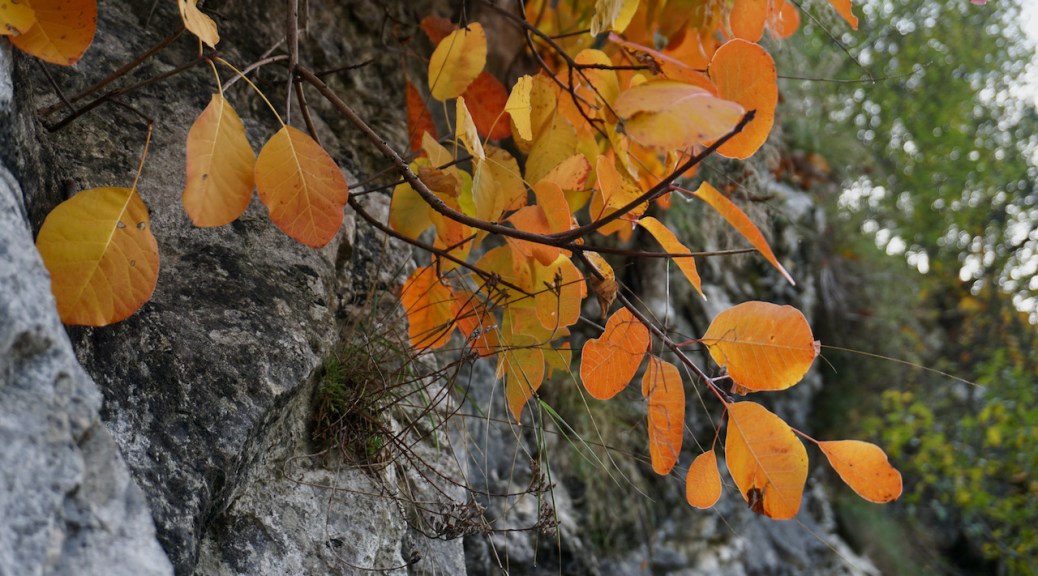
Plitvice Lakes National Park, Croatia – October 2022