Category Archives: On My Mind

Judaism Without Religion

The Most Current Version of You
Being in a new place provides incredible freedom to be the most current version of yourself. We are all constantly learning, changing, growing, and adapting, but sometimes it’s challenging to openly do that around people who have certain expectations of us, certain experiences with who we are and desires for who we should be.

In a new place, however, meeting people who have no experiences with, or expectations for, you and your behavior means that you enter with a clean slate. You present the newest version of yourself because that’s who you fundamentally are in the given moment. There’s no one telling you otherwise, surprised when you respond a certain way, or waiting for you to do A when you really want to do B.

While I’m not new to Singapore, I am meeting new people both at work and outside of work. This has given me an opportunity to present myself with the background of the past year, a year during which I learned a lot, experienced a lot, read a lot, and gained some clarity about the way that I understand the world and myself.

My Jewish Self
About two months ago, I had a conversation with a new friend in which I described myself as culturally Jewish and denied feeling a sense of traditionally “religious” connection to the group that I’ve affiliated with for my entire life. I talked about religious practice as a way of connecting with a community separate from having any sort of “belief” in anything supernatural. I also acknowledged that this understanding, the separation between culture and religion, had been an extended process, one that I was only beginning to feel comfortable articulating.

Recently, my friend reminded me of that conversation. “But,” he added, “I think you’re a lot more spiritual than you said. Maybe not quite religious, but you’re not just doing what you’re doing and thinking what you’re thinking in order to maintain a cultural connection with a group. It seems like there’s something else.”

I smiled. He wasn’t wrong. I had described myself as spiritual rather than religious for years and have only recently (in the current iteration of myself, in fact) stopped doing that, opting instead to speak more broadly of culture. So in that sense, my friend wasn’t right, either.

Reflecting on that conversation, and appreciating both my friend’s perceptivity and his willingness to highlight what he saw as incongruence between what I said about myself and what I did (specifically in reference to taking off work on Rosh Hashanah, the Jewish New Year, so that I could go to synagogue and pray), has left me thinking about my trek from a belief in a higher entity to where I am now.

Religiosity
Being religious means following the letter of a specific text for no other reason than the text is called sacred. It means believing that there’s a higher being, likely omniscient and all-powerful, controlling the Earth and the skies, the world and its people. It’s the tradition of replying, “Blessed is God” when asked how you’re doing, of ceasing all work after sunset on the day of rest, of avoiding certain substances because of their uncleanliness or mind-altering properties.

Being religious means praying about real questions, like whether to go ahead with plans that seem dependent on the weather, and believing that you have been given (though not that you’ve found) a real answer. Often, being religious also means denying scientific explanations for phenomena that we see in nature and in ourselves. Instead of searching for the answers, being religious means trusting (having faith) that the answers will be revealed, all in good time.

Truly, I do not want to sound disparaging. I did not grow up in a religious household but I did attend a religious school. As a child, I was taught many of the views and practices described above and I clung to them because they helped me organize my world. They helped me find comfort in what I did not understand and could not otherwise handle. From that perspective, I appreciate the good that religion does for individuals. I have experienced its calming influence and sense of security.

But, as a student and teacher of history, I have also learned to be wary of religion. Countless wars. Death. Destruction. Avoidance of responsibility. Lack of political action. Barriers to scientific research. Discrimination. Hatred.

No one person’s belief should cause such anguish to others.

What I Used to Call Spirituality
It has been a long time since I’ve held any specific religious views and a very long time since I’ve sighed with resignation and performed (or not) an action because of a supernatural being. But I still find joy in community experiences that have religious origins. What stands out to me in these experiences, however, is not the religion but the collectivism, the understanding that we are all coming together because we value one another as individuals and have chosen to create a community.

An example to illustrate:

I was last in Israel with the grade 8 students at my school and we spent our first Shabbat (Hebrew for Sabbath) together as a group in Jerusalem. According to Jewish tradition, the day begins at sundown (because, as scripture says, “It was evening and it was morning. The . . . day.”) and we walked up to a sort of promenade overlooking the Old City. It was dark and we could see some cars still out and about, but for the most part, it was quiet.

We sat in a circle for the Friday evening prayer service, which is full of singing to welcome Shabbat. At one point, a few of the kids stood up and starting dancing. Before the rest of us quite knew what was happening, we were all on our feet, singing and dancing, laughing in our circle overlooking ancient history, juxtaposed with modernity in the cars and neon lights just below us.

My heart caught in my throat and there were tears in my eyes. To feel so much a part of something, to be in this beautiful place with my friends and my students. There was a very real collective energy in the air, an understanding that each of us had a place in the community we had created.

So for me, it wasn’t the prayer. It wasn’t the religious aspect of ceasing work Friday night to sing songs welcoming the day of rest. It was the fact that we were all together as a group, that everyone was welcomed and valued as an integral part of the community. For many present, this was a religious experience. But for me, this was a moment of transcendence because of the community itself regardless of the religious elements around which the community coalesced.

And that means that none of this has anything to do with spirituality at all.

What is Actually Cultural . . . and Then Some
Talking this over, another friend reminded me that finding joy in shared experiences is a common element of humanity. As humans we strive to connect to others, to relate to them and find a sense of belonging with them. Humans are social, tribal animals and we develop groups to help us feel a sense of safety and security. We like to be together because we survive better in groups than we do on our own. We support others in order to feel a part of their lives and to let them in as a part of ours. Culturally, we seek out connection with those around us because it makes us happier.

Additionally, sharing this experience with students was a moment of pride for me as an educator. My students had set aside their differences for a time and come together out of the sheer joy of the experience, the release of inhibition that comes from total engagement singing and dancing in the open air.

Looking around at my colleagues, I saw my own happiness and love reflected on their faces. We’d been traveling with students for about three days at that point and we were anxious and tired (and getting tired of them) but in that moment, it didn’t matter. That was why we worked as hard as we did. That was why we put up with what we did. We had worked to build a community and we were watching it develop and grow.

What was significant, then, on that promenade overlooking Jerusalem, was the sense of belonging that comes from being part of a group and the joy that stems from positive engagement with others. For me, then, this was a cultural experience.

A cultural experience . . . and then some. We can think about culture in terms of the anything that makes up the way of life of a group of people. This includes what we immediately see (food, clothing, celebrations) and also what we don’t immediately see but might be able to figure out given time (concepts of beauty, ideas of success, what constitutes a good life). Belonging, connection, relatedness, and shared experiences are all part of culture but exist on their own, too. So this experience was cultural, yes, but there’s more than culture that matters here. There’s an emphasis on shared humanity that transcends the culture of any one group.


As always, I’m glad for the dialogue that sparked these reflections. I’m glad to have a deeper understanding of myself from looking through the eyes of others and letting their ideas probe my own. I’m always willing to think, discuss, and clarify and it’s helpful to be around people who are responsive to that.

Pages of Intimacy

Reading
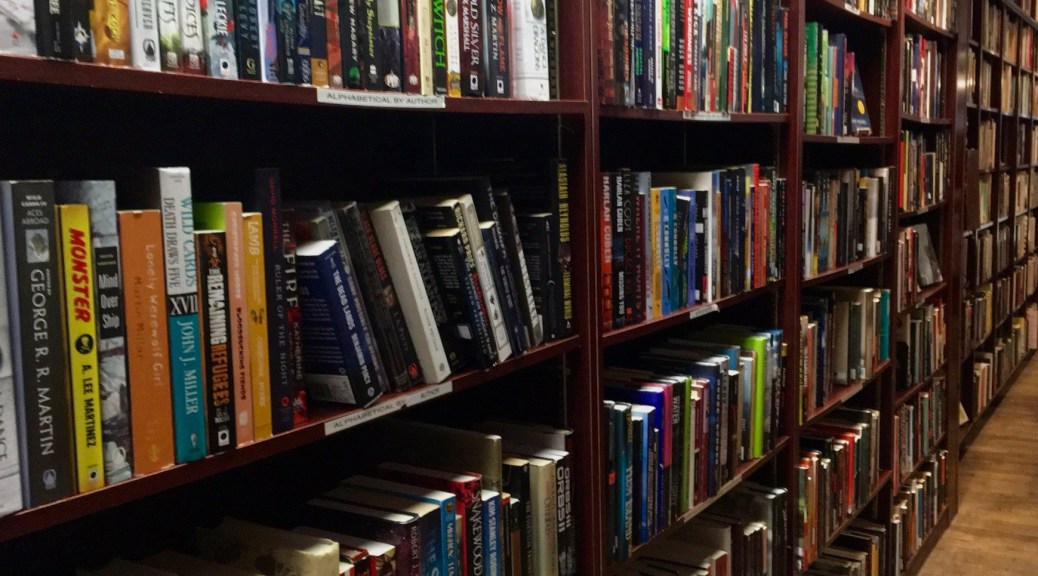
A friend was recently telling me about a book he was reading and we both agreed that the author (who is well-traveled, multilingual, knowledgeable, funny, and articulate) would be fun to spend time with in real life. In conversation, I expressed how nice it was to find a good “book friend” to spend time with regardless of real life.

Book friend.

That’s how I generally think about authors or even characters in novels. I love Haruki Murakami, for example, because he describes the world in ways that make it both bigger than it is and also so uncomfortably close and personal. Reading his books, I see my world through his eyes and I learn from it. I enjoy Robert Sapolsky because he’s funny and engaging, which is not always common practice for scientists writing for lay people. In the fiction world, Hermione Granger remains a favorite female protagonist for her unashamed love of books. Importantly for a book character, she rarely disappoints. If there’s a fact to find and a book to find it in, she will.

Book friends, unlike real people in unedited daily existence, are manufactured. They’re predictable, omniscient where appropriate, developed in a certain way to achieve certain ends. They weave bits of plot together into a neat story that is literally bound and sealed. And that’s what makes them safe. That’s what keeps me coming back to books I’ve read before, authors I’ve spent time with, characters I’ve learned to love or hate. Book friends are there to be heard and I’m here to listen.

Sharing
There’s a feeling of excitement when I read something that is just so perfectly, stunningly, eloquently true. There are passage from books that I highlight, write down, keep track of, and return to over and over. Often I find myself looking to share whatever I’ve just found with someone who will appreciate it as I do. I want to share why I’m so thrilled by what I’ve read or what makes me laugh or cry. I want to share what fills me with awe, dread, or horror. If I’ve learned something new, something that I think is important, I look for people to show it to because it’s too special to keep to myself.

I’m cautious, though, because I see sharing passages from books as an intimate action. I’m handing you a piece of my mind in the form of something that has stood out to me as beautiful, honest, and true. I’m telling you, “This resonates with me.” Sometimes, you haven’t seen that side of me. You didn’t know I was looking for those things, believed that, or had come to such understandings. And here I am, holding out something that excited me and hoping that you’ll accept it, meaning that you will also accept me and who I am, what makes me tick. And I am always hopeful that you’ll return my share with one of your own or with conversation about your own found truths, your own beauties.

But sometimes, the people we share with don’t respond in the ways that we hope they will. Sometimes we try again, we ask again that they take us for who we are. Sometimes they surprise us and they do. And other times, we learn to stop asking.

Breathing
I admit that I am cautious. I love talking about books and hearing what others are reading, but it takes time to feel comfortable enough sharing so much of myself with anyone else. I want to know you and I want you to know me. But I don’t want to overwhelm you. I don’t want to scare you away. Vulnerability is at the forefront in any interactions when we allow ourselves to be seen by others, but vulnerability comes with a balance. We cannot immediately demand that others see us, hear us, let us breathe. We need to give them time to decide that they want to engage in the same way.

We ask for a lot when we say, “These are the words that are meaningful to me and through them, you see my scars. These are the words that I find true, so I am fragile in showing them to you. And these, these are the words that are dark and unspoken and through them, you see what I keep hidden.”

Thought about like this, sharing books with others is intimate in a way that most shared activities are not. It’s a revealing of oneself, a taking off of clothes of sorts. We are unprotected and therefore vulnerable to whatever might be thrown at us. Sharing our inner lives with one another is an act of courage.

But now you know me. Now you see me. And hopefully, you let me see you.

Quite Possibly the Best Run I’ve Ever Had

I didn’t want to run tonight.

I spent all weekend at school covered in dirt and fake blood, learning how to save lives, splint injuries, clean wounds, conduct a full body physical exam and focused spine assessment, and record patient data to pass records off to the helicopter (or car, donkey, or mule) evacuating them from the field once we’re done administering wilderness first aid.

So I was tired. And I didn’t want to run tonight.

But I did, because tomorrow night is back to school night and therefore I’ll probably be even more tired on Wednesday.

Turns out, this run was the best thing I could have done tonight.

I took a long route by mistake. I told myself I’d turn around and then I forgot because the run felt good and steady. I was in East Coast Park, the grass was springy, the breeze that comes every evening smelled like salt and ocean, and there were fewer people around than usual. So I kept running.

About halfway, I stopped. I took a breath. I sat on the rocks in the sand, as low as I could without getting wet, for about 15 minutes. What I began to understand on those rocks qualifies this as perhaps the best run I’ve ever had.

As I always do when I pause in the park, I just looked at the water. I found it in the air and I breathed in it. But waves are mesmerizing , hypnotic, and I felt my eyes close. I let them. And then I listened.

I know that the remaining senses sharpen when one is removed. I know that you can see waves roll and hear them crash. I didn’t realize that you can also hear waves roll. I had never thought about the energy that keeps waves in constant motion. For the first time, I heard the waves rolling down the beach. I heard them crash and I heard the crash ricochet, tumbling down the beach. And when I opened my eyes to see what I was hearing, I lost it. I love watching water, but I’ve never spent much time just listening to it. I sat there on the rock for those 15 minutes, eyes closed with occasional peeking, feeling a giddy smile on my face each time closing my eyes brought the sounds back. Brought the energy back. My rock was just above the tide line but I wasn’t always sure based on the sounds I was hearing, the water pulling back, rolling forward, like rocking a cradle.

I was surprised how quickly time passed and how lost I’d been in the sounds of such a powerful force. It literally swept me away to a different understanding of energy and how it drives all things. Energy is everything there is, everything we touch, everything we are, and the connections we form with each other. I could say those words before, but I understand them now.

Learn something new every day.

Take time to be still and quiet.

On the run home, and even now still in the wake of endorphins, I felt happier, calmer, more connected to the natural world and the people around me. At the end of the day we’re all part of the same thing. And I have to believe that on the most basic, human we’re all just doing the best we can to hold it all together.