Tag Archives: Students

A Few Words from Ms. Frizzle

Children from the 90s (and probably their parents) will likely recognise the line: “Take chances, make mistakes, get messy!”. A bit of internet research told me that The Magic School Bus changed significantly when it was remade in 2017, the twentieth anniversary of its cancellation, and now I feel utterly ancient.

But that line, “Take chances, make mistakes, get messy!”, brings the same smile to my face as it did when I watched the fabulous Ms. Frizzle, the red-haired elementary school science teacher with the wildest themed dresses, bring learning to life. In elementary school I was given the character of Ms. Frizzle for a school play and I could not have been more excited. I had a denim long-sleeved dress that I used to wear with tights (elementary school in the 90s, folks) and my mum pinned toy plastic fruits all over it to create a Ms. Frizzle look. An older student wrapped my hair in bright orange yarn that was a nightmare to remove. But Ms. Frizzle I was.

This came back to me earlier today when I was riding my bike to school. I was feeling extremely pleased with myself for replacing the tube in the rear tire with a tube I’d previously patched, a lifeskill that I had just performed independently for the first time. It might be embarrassing that I’ve only learned to do this at age 30 but I was just so tickled by it. It was a lovely sense of accomplishment and its impact on me led to more significant reflections on my role as an educator.

As a high school teacher, I’ve spent my career encouraging young people to try new things. At my current school, we have gone as far as making our Theory of Knowledge course pass/fail in order to encourage students to take academic risks without having to fear significant consequences. With this model, we can fully live our words: It’s okay to try something and it’s okay if it doesn’t go well because we can try something else next time.

In a broader context, it’s easy to talk about creating safe, supportive, inclusive educational environments. But it is essential (and much harder) to build them with honesty and intentionality. We can’t claim that it’s important to learn from mistakes, for instance, if we don’t allow students the chance to make them without repercussions.

Anyone who has ever learned anything has likely experienced a moment of doubt. Doing something new for the first time certainly has that potential and this can be confronting. Yet, we demand courage of young people far more frequently than we, the adults, are willing to accept for ourselves. And even when we expect the mistakes from young people, we are often not particularly forgiving when they occur.

The gravity of these thoughts are in sharp contrast to my experience in yesterday’s bike fixing endeavours, which ultimately extended to the brakes and the chain once I headed out for a test ride. It took multiple scrubs in the shower to get the grease off my hands, feet, legs, and arms (mhm true story) and I had to wash the freshly washed floor (I wish I were kidding) twice to get the black streaks off porous white tile. I giggled inwardly the whole time.

Imagine if more of our world could be like that.

We know that our early experiences socialize us to the world we live in and inform our understanding for a very long time. Some never learn to think beyond the black-and-white world of childhood, and others cast it all away without recognising its power or value. I think there’s a beautiful place to find in the middle when we have the opportunities to play in the sandbox with abandon, to make a mess knowing that putting it back together is feasible. Had I not been able to fix the bike, a few phone calls would have brought me to a friend’s house or to the uncle shop down the street. If I couldn’t scrub the floor to my satisfaction, they sell cleaning products for far bigger jobs than this.

And what this experience reminded me is that repairing and reconstructing is probably far more possible in most circumstances than we might think. A bit of courage and a lot of humility are appropriate here and this is all part of what it means to live fully. When the world seems too large to handle it not because it is, but because we have not put ourselves in a place where we’re willing to take the risks associated with trying to manage it.

“Take chances, make mistakes, get messy!” Ms. Frizzle taught. Worse comes to worst, we have to take the responsibility of cleaning up.
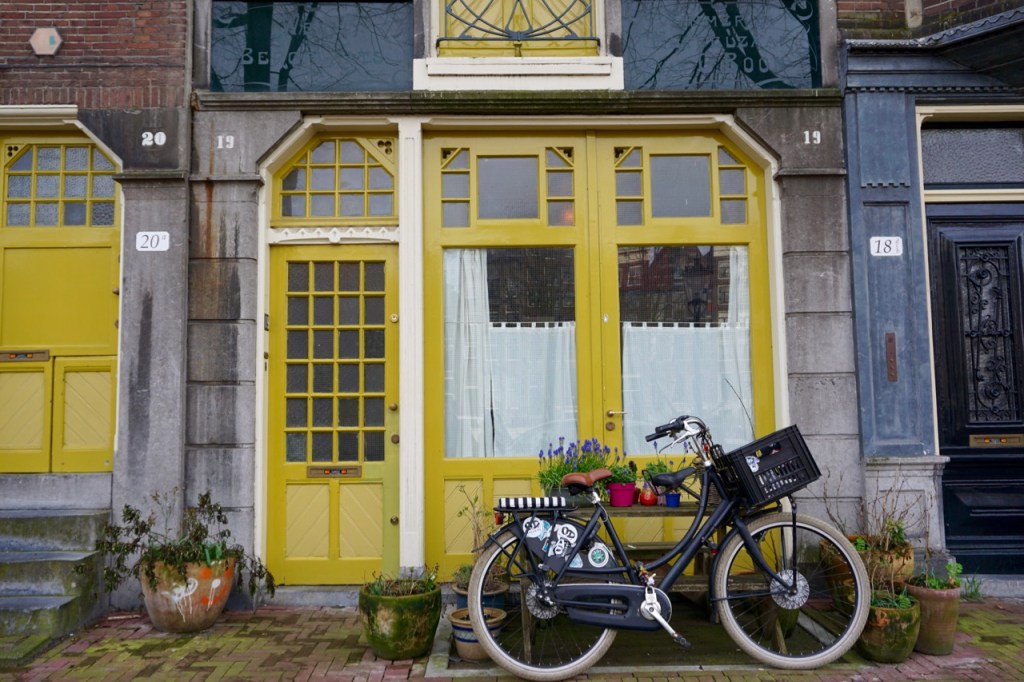
Amsterdam, Netherlands – April 2018

If you like what you read, you might also like these related posts:

How to Have a Conversation

Recently I talked with a student who has a bit of a reputation. I’m teaching this student, we’ll call him Jay, for the second year now and I teach him in two courses, IBDP Psychology and Theory of Knowledge. Like many individuals, young and old alike, Jay behaves differently in different contexts and around different people. When I met his mother for the first time she introduced herself as the mother of this “infamous” (her word) young man and told me to reach out if I had any problems.

I’ve taught more than a few of “those kids” over the years and I really like them. I really just like young people, actually, and that’s among the reasons I have chosen to work with them. My conversation with Jay highlighted the importance of having conversations, real ones about real things, with the young people we are raising and with anyone willing to take part.

Conversation

Oral exchange of sentiments, observations, opinions, or ideas

https://www.merriam-webster.com/dictionary/conversation

It started because Jay asked, while reviewing his psychology notes, whether it’s true that being in an MRI with a nipple piercing can kill you. I answered the question the way I try to answer all questions from all people, which is in the spirit that they are meant. This was a real question for this student and it was important to address it as such.

After MRIs, we talked about tattoos, parents, and schoolwork. This led us to talk of what he actually enjoys and we talked about his experiences in the working world. We talked about what it means to be a good person and what it means to do the right thing, and about global politics and the current state of his country of origin. And through it, I learned a lot about who Jay is and how he sees the world.

Upon leaving the room, I wondered two things. First, would this conversation have happened had I not responded openly and respectfully to the question about piercings and MRIs? And furthermore, how many opportunities like this do we miss?

I have written about this before, particularly in a very old blog post that you can read here. (This is an example of a piece of writing on which I have not wavered, which is not true for everything I’ve written.) It is worth revisiting because conversation is important and conversation with young people is critical to who they become and the world that they know. If we want young people to engage with the world around them and improve it, we as adults need to walk through this world with them. We need to guide, support, facilitate. We need to respect, listen, hear, and respond. We need to do this with young people but also with one another. Without conversation, without connecting with others, we will be unable to make the world a better, more peaceful place.

I worry that authentic conversation is not a priority, however, and perhaps there are good reasons for this. There are indeed times when something else should come first. But do we lay ourselves bare in conversation as often as we could? Do we accept that this is a time for being vulnerable and for welcoming vulnerability in others?

Or are there conversations that we prefer not to have, leading us to shy away from any conversation at all? “I don’t like confrontation,” an old friend used to say. We are no longer in touch and I don’t know why, but I suspect it has to do with a conversation we never had.

Confrontation
A face-to-face meeting; the clashing of forces or ideas

https://www.merriam-webster.com/dictionary/confrontation

This is an important point: Conversation is not confrontation. There are plenty of ways to have what I have learned to call courageous conversations that are not confrontational, are not arguments. There is a resolution in the end but not a winner. The frame of conversation is critical to engagement. I will respond much more openly to an invitation to talk openly with you if I know neither of us are looking to win in a zero-sum argument.

Lately I have become interested in SCARF, a model by David Rock that addresses five domains of human social experience that have profound affects on brain function and therefore our responses to other people. The five domains are: status, certainty, autonomy, relatedness, and fairness. These domains activate either threat or reward networks in the brain, much in the same way as snarling dogs and money. Neuroscience has demonstrated that we are less capable of solving problems and thinking clearly or creatively when we feel threatened. It is no wonder that confrontations and arguments are unpleasant, inconclusive, and often lead to unwelcome changes in relationships between individuals. Along these lines, it is not a surprise that we grow defensive when our status, sense of certainty, personal autonomy, feelings of relatedness, and sense of fairness are threatened. We throw up walls and we become untouchable in order to protect ourselves, and our minds do not work clearly.

This is not the case in conversation. A conversation can be, and important ones often are, confronting to the self without being confrontational towards another person. We can disagree but not argue. Instead of trying to be right or convince someone else that they’re wrong, we can talk with the aim of understanding where, why, and how we’re different. Minds may or may not change but we will all come out wiser, wiser about who we are and about how to understand and interact with the people around us.

There is much we can learn when we are brave enough, strong enough, open enough, to try. Willingness to be vulnerable is essential; it is the way to know ourselves and to show ourselves to others. This is how we must be if we want a world, and I do, in which we hold one another in the palms of our hands. Within such vulnerability is a great strength that allows us to take each other by the hand and forge a path together.

A place to begin is by hearing others and responding in ways that show we are listening. A place to begin is to hear Jay ask about piercings and enter into a conversation about life and the universe.

Looking Forward

The grade 12 students at my school had their last required day of classes last week. Historically, this week would have been their reading week, their time to revise for exams in whatever ways best suited them.

In the present world, however, this week is different.

And we all know this. We also know by now that there is little purpose in dwelling on what might have been or could have been or should be. We know, as a guided meditation reminded me this morning, “This is the way things are right now”.

With this awareness, I have tried to uphold what I have always done when the time comes to say goodbye to my grade 12 students. In lieu of speaking with them in class, I recorded a video in which I told them what I wanted them to know. In the email with the video link, I added that there might be a blog post to follow.

Here is that blog post to follow.


The dates on the faded newspaper clippings tell me that I started my scrapbook when I was 13. In truth, that scrapbook was more of a phase than anything else. Its activity waxed and waned at various points but keeping it up was by no means a practice. The scrapbook probably looks like many scrapbooks by teenage girls: There are articles or comic strips pasted on pages decorated with stickers, attempts at calligraphy, and my commentary in the margins. There are pages of quotes culled from magazines and newspapers, as well as a page cut out of cardboard that may have come from the back of a cereal box. The middle of the scrapbook is devoted to quotes that I remember typing on my dad’s computer, each with a different font. I grouped them by category and wrote a few words of advice to myself on each page.

The change in my handwriting (unfortunately very little of this scrapbook is dated) indicates that time passed. What did not change through the years, however, is what mattered to me and how I understood the world. The comments in the margins of articles still make sense and the comic strips still make me smile. The quotations continue to move me in some way, though I have a more recent list elsewhere.

There is a quote by John Holt on a page that I titled “Character”. It’s typed in a font that I haven’t used in years and the smiley-faced stick figure at the bottom of the page suggests middle school. I just looked up John Holt for the first time and I think it fits.

The true test of character is not how much we know how to do, but how we behave when we don’t know what to do. – John Holt

As we learn to walk in the world, there are times when we know what is expected of us. There are times when we know who we are and where we are. We are confident and comfortable when we feel safe and at home and among friends.

Now, this confidence is not always a good thing. It might stop us from seeing another perspective or asking a challenging question. It might prevent a difficult conversation that could lead to a better understanding of who we are and the world around us.

Holt suggests that character, the way we are made, is best seen in the situations that make us pause. These situations might be uncomfortable or scary, or perhaps just new. We might be facing an unknown time in our lives or a person who is unfamiliar to us. This is when we do not know how to behave. And this is when we see not only who we are, but who others are, as well.

My grade 12 students are about to walk into a new and unfamiliar world full of new and unfamiliar people. This is true for students pursuing higher education, taking a gap year, going to work, or joining the military. This is true for all of us who step outside of what we know and welcome what we do not know. And this is true for everyone right now in this world that we could not have imagined.

This is a good opportunity to watch ourselves closely, carefully, and critically and learn who we are. It is a good opportunity to better understand those around us. Significantly, this is a time where we can look closely, carefully, and critically at the world around us and ask the questions that we might not have asked before when we allowed systems to flow unquestioned.

And once we have watched ourselves, once we understand how to act in the different environments that life presents and around the people we encounter and engage with, we can make a choice. We can choose to remain unchanged by what we see and to continue doing what we have always done. This is easy. This is what we know how to do.

Or we can do the difficult thing, the unknown thing. We can do the hard thing, the right thing, the good thing. We can look at ourselves, the people we know, and the world around us. And as we look, we can make choices about how to act, who to be with, and how to create the world we want to live in.

It is never too late to be what you might have been. – George Eliot

Interlaken, Switzerland – January 2020